Ferrets
What animals can live in a Critter Nation?
The manufacturer names rats, chinchillas, sugar gliders, hedgehogs and degus. Four of those have a published housing figure. Here is the cage against each of them.
MidWest's own listing names rats, chinchillas, sugar gliders, hedgehogs and degus. Measured against published veterinary figures, the double unit genuinely suits rats and sugar gliders, clears the single-animal chinchilla minimum but not the figure for a pair, and is more cage than a hedgehog can use because hedgehogs are solitary ground animals with a published floor minimum of 2 by 3 feet — exactly one Critter Nation level. Degus have no published size figure at all. Ferrets are the one species the double unit fits without qualification, which is the species MidWest sells the one-inch-barred version for.
This page exists because the manufacturer wrote the question. MidWest's Critter Nation listing says that small animal clubs and individual owners around the world use Critter Nation habitats to house their pet rats, chinchillas, sugar gliders, hedgehogs, degus, and more. That is a true statement about what people do. It is not a statement that the cage is the right size for each of them, and four of the five have a published figure you can check it against.
The cage, measured once
Everything below is the same arithmetic applied five times, so it is worth stating the cage's numbers plainly first. The double unit gives 36 by 24 inches of usable floor per level, which is 864 square inches or 6 square feet, on two levels. Bar spacing is half an inch. The listed 63-inch height includes the rolling stand; the cage section itself is about 51 inches, or 130cm, being two 25.6-inch units stacked. The single unit is the same floor on one level at 25.6 inches tall. Those are the manufacturer's dimensions; the floor areas and the cage-section height are our arithmetic from them.
Rats: yes, and it is the reference cage
The MSPCA publishes 24 by 24 by 24 inches with multiple levels for one or two rats, bars half an inch apart, and a solid bottom. The double unit beats that on every term. A 2022 expert consensus in the Veterinary Record sets a stricter bar — nothing below 90 to 120cm in height or width, and a minimum of two tiers — and the double unit clears the bottom of that band at 91cm wide and 130cm of cage, on two tiers.
The single unit does not. At 65cm tall on one tier it fails both the height band and the tier count, which is the main reason we treat it as half of a purchase rather than a purchase. The full working is in how big a rat cage should be, and the product comparison is in the rat cage roundup.
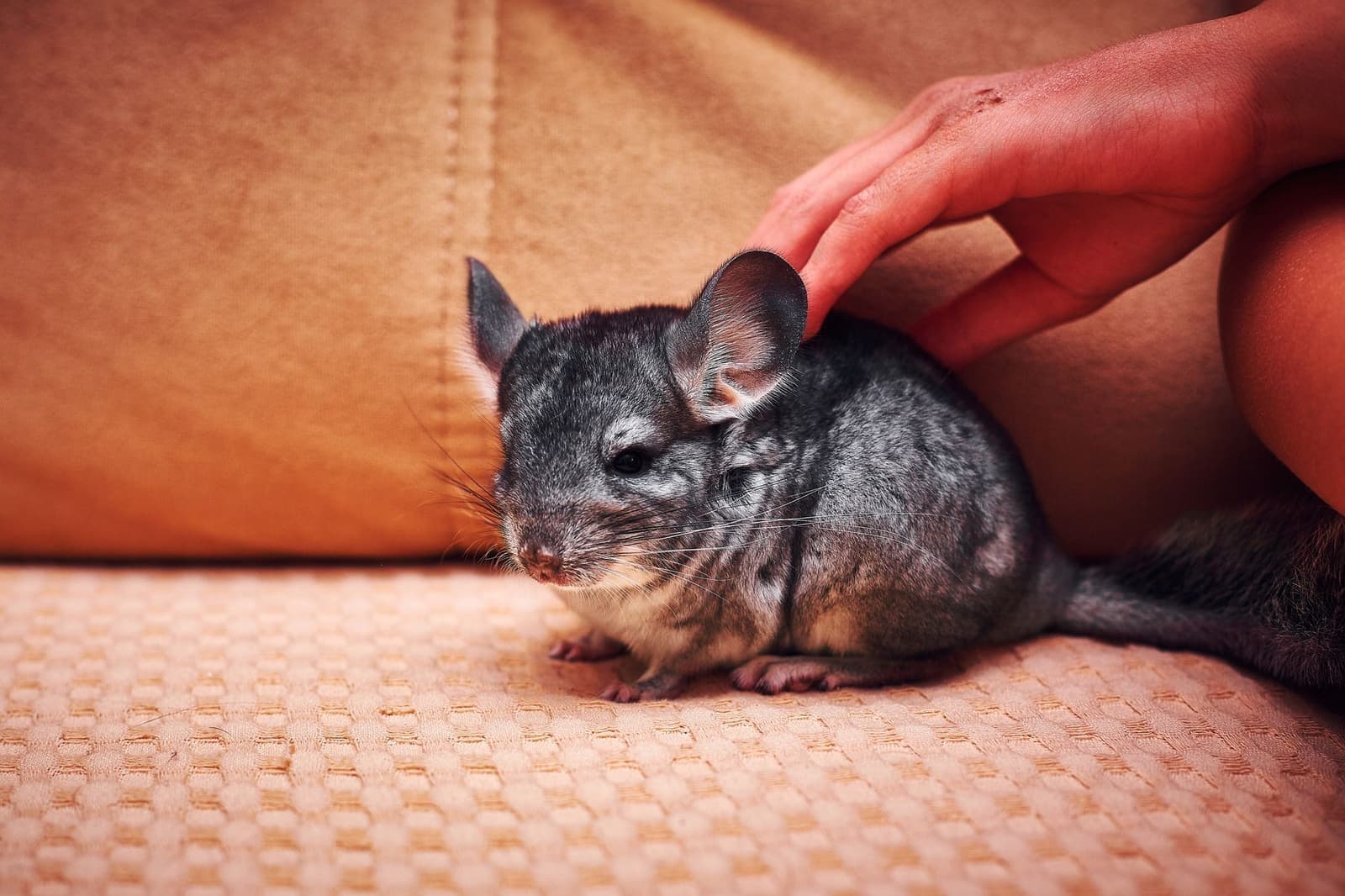
Chinchillas: the single-animal figure, not the pair figure
Chinchilla cage minimum · minimum
a minimum of 3ft x 2ft x 3ft for one chinchilla, and 3ft x 2ft x 5ft for a pair
Our conversion: 864 square inches (6 square feet) of footprint, 36in tall for one and 60in tall for two
This is the most interesting result on the page because the answer changes depending on how many animals you have, and almost nothing written about this cage says so.
VCA publishes a minimum of 3ft by 2ft by 3ft for a single chinchilla and 3ft by 2ft by 5ft for a pair. The Critter Nation double unit is exactly 3ft by 2ft in footprint, so the floor matches both figures. Height is where it parts company: about 51 inches of cage is 4ft 3in, which clears the 3ft single-animal figure comfortably and falls about nine inches short of the 5ft figure for two.
Two further cautions from the same VCA guidance, both of which matter for this cage specifically. It rules out galvanized wire because the zinc is toxic if ingested — the Critter Nation is powder-coated steel, so that is fine, and it is a reason to be careful about aftermarket add-ons, which cage materials and toxicity covers. And it asks that at least part of a wire floor be covered with a solid material, which on this cage means the shelves rather than the pans.
Sugar gliders: yes, on both published numbers
The Merck Veterinary Manual gives a minimum of 24 inches long by 36 inches wide by 36 inches high for sugar gliders, with bar spacing no larger than 1 inch by half an inch, in PVC-coated or powder-coated wire. The Critter Nation double unit is 24 by 36 in footprint, 51 inches of cage height, half-inch powder-coated bars. It clears the published minimum on every term, with 15 inches of height to spare.
The one thing the cage cannot do for this species is temperature. Merck puts sugar gliders at a tolerated range of 60 to 90F with a preference for 80 to 88F, which is warmer than most houses and is a room problem rather than a cage problem.
Hedgehogs: more cage than the animal can use
VCA publishes at least 2 by 3 feet as the minimum floor space for a hedgehog, with bar spacing of 1 inch or less, and warns against wire bottoms because a hedgehog can injure a foot in the wire. A single Critter Nation level is 2 by 3 feet exactly, and the bars are half an inch, so one level satisfies the published floor and the published gap.
Which is the point: one level satisfies it. The same guidance says hedgehogs are solitary and better kept in individual cages because fights occur when they are grouped, so there is no second animal to put on the second level. And we could find no published veterinary guidance recommending multi-level housing or ramps for hedgehogs at all, which is a notable absence in a species that is a ground-dwelling burrower rather than a climber — the same source asks for 3 to 4 inches of substrate in at least part of the cage so it can dig.
Degus: no published figure, and we are not inventing one
The RSPCA's degu guidance publishes no cage dimension at all. What it does publish is directional and useful: the bottom of the enclosure should be solid, there should be a deep layer of bedding material, and the animals need plenty of vertical space with platforms at different levels. It treats degus as a group species throughout, and it asks for a dust bath about 4cm deep, offered two or three times a week for about twenty minutes.
So the honest answer for degus is that the Critter Nation has the right shape — solid pans, vertical space, multiple platforms, group-sized floor — and that there is no number to tell you whether it is large enough. We would rather say that than publish a figure nobody issued. This is the same position the site takes on rat cage size, where the RSPCA is similarly silent, and on the RSPCA's absent hamster floor figure.
The summary table
| Species | Published figure | Issuer | Critter Nation double unit |
|---|---|---|---|
| Rats | 24 x 24 x 24in, multiple levels, 1/2in bars (MSPCA); not below 90-120cm high or wide, two tiers (Vet Record 2022) | MSPCA / Neville et al. | Clears both, at the bottom of the stricter band |
| Chinchillas | 3ft x 2ft x 3ft for one; 3ft x 2ft x 5ft for a pair | VCA | Clears the single-animal figure; about 9in short for a pair |
| Sugar gliders | 24 x 36 x 36in minimum; bars no larger than 1in x 1/2in | Merck Veterinary Manual | Clears it, with about 15in of height spare |
| Hedgehogs | At least 2ft x 3ft of floor; bars 1in or less; no wire bottom; solitary | VCA | One level meets it; the second level has no occupant |
| Degus | No cage dimension published | RSPCA | Right shape; no figure to check it against |
Each figure is the issuing body's own wording, read on 4 October 2026 and linked at the foot of this page. The comparisons in the last column are our arithmetic against the manufacturer's published dimensions.
The three units this question actually comes down to
The double unit for anything that climbs or lives in a group, the single for a solitary ground animal, and the one-inch-barred Ferret Nation version — which is the cage to avoid for every species on this page except an adult ferret.
 Illustrative
Ferrets of any age, and kits especially
MidWest Critter Nation Double Unit (162)
36 x 24 = 864 sq in (6 sq ft) per level, two levels
The half-inch bar spacing is the whole argument: it is the same cage as the Ferret Nation with a gap a ferret kit cannot get its head through.
Check price on AmazonWe do not print prices. #ad Disclosure
- Illustrative
A single ferret, or a first half of a double
MidWest Critter Nation Single Unit (161)
36 x 24 = 864 sq in (6 sq ft), one level
The same 6 sq ft floor and the same half-inch bars in one level, which is the right buy only if you are certain you will add the second unit.
Check price on AmazonWe do not print prices. #ad Disclosure
- Illustrative
Adult ferrets that climb
MidWest Ferret Nation Double Unit (182)
36 x 25 = 900 sq in (6.25 sq ft) per level, two levels
Slightly more floor per level than the Critter Nation and a one-inch bar gap, which is fine for a grown ferret and the reason kits escape.
Check price on AmazonWe do not print prices. #ad Disclosure
The one answer that is the same for every species here
Buy the half-inch version. The Ferret Nation shares the frame, the doors, the pans and the stand, costs less, and has one-inch bars. For a rat, a sugar glider, a degu or a young chinchilla, that gap is a door rather than a wall, and the Merck figure for gliders and the MSPCA figure for rats both rule it out explicitly. The difference between the two cages is set out in Ferret Nation against Critter Nation, and the Critter Nation 161 against the 162 covers whether you want one unit or two.
Questions people ask
What animals can live in a Critter Nation?
Is a Critter Nation big enough for a chinchilla?
Is a single Critter Nation good for 2 rats?
Is a Ferret Nation cage good for rats or chinchillas?
Can a hedgehog live in a Critter Nation?
Is a Critter Nation suitable for degus?
Sources
- MidWest Homes for Pets — Critter Nation — Names pet rats, chinchillas, sugar gliders, hedgehogs and degus among the species the habitat is used for
- VCA Animal Hospitals — Chinchillas, housing — 3ft x 2ft x 3ft minimum for one chinchilla and 3ft x 2ft x 5ft for a pair; multiple levels; no galvanized wire
- Merck Veterinary Manual — Providing a home for a sugar glider — 24 x 36 x 36in minimum, bar spacing no larger than 1in x 1/2in, PVC-coated or powder-coated wire, 60-90F tolerated
- VCA Animal Hospitals — Hedgehogs, housing — At least 2 x 3ft of floor, bars 1in or less, no wire bottom, and hedgehogs better kept in individual cages
- RSPCA — Degu environment — Publishes no cage dimension; asks for a solid floor, a deep layer of bedding, vertical space with platforms, and a 4cm dust bath two or three times a week
- MSPCA — Suggestions for housing small animals — 24 x 24 x 24in with multiple levels and 1/2in bars for one to two rats