Guides
Best small pets for beginners
Judged on one unfashionable criterion: whether a beginner can buy housing that meets a published figure without a project.
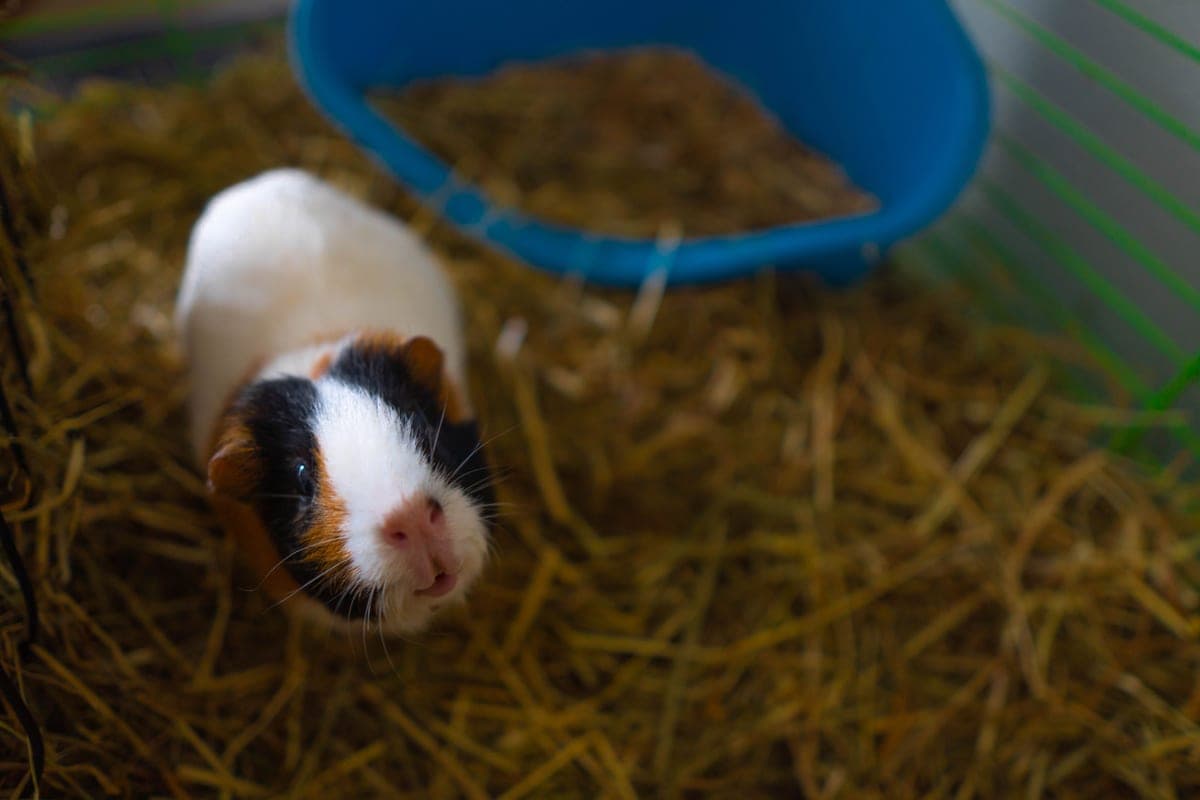
Guinea pigs, for one reason that matters more than temperament: they are the only species on this site where you can buy a cage off the shelf that clears a published preferred area figure, for roughly the price of a large pet-store cage. A hamster is a reasonable second if you are willing to convert a storage tub. Ferrets and rabbits are both demanding first choices, for different reasons.
Beginner guides usually rank species by how easy the animal is. We are going to rank them by how easy it is to house the animal correctly on the first attempt, because that is where most first-time keeping actually goes wrong — not through neglect, but because the retail environment sells enclosures below published minimums and a beginner has no reason to know.
The criterion nobody uses
Can a beginner walk into this decision and end up with housing that meets a published figure, without a project, without a tape measure, and without reading a site like this one first?
| Species | Published figure | Can you buy it off the shelf? | Beginner verdict |
|---|---|---|---|
| Guinea pigs | 10.5 sq ft preferred for a pair | Yes — a 4x2 C&C cage clears it | Easiest |
| Hamster | 775 sq in and 10in of bedding | Barely — three enclosures clear it, none in a typical pet shop | Workable with research |
| Ferret | 6 sq ft per level plus 2-3 hours out daily | Yes for the cage; the time is the constraint | Demanding |
| Rabbits | 64.5 sq ft in one block | No — nothing on sale provides it | Hardest |
Figures and product assessments are on each species' own pages. Verdicts are ours.
That table is the whole argument. Guinea pigs are the easiest species to start with not because they are the easiest animals, but because the market sells adequate housing for them at a sensible price and it does not for the other three.
Guinea pigs: why they win
Guinea pig cage minimum · minimum
7.5 sq ft (about 30in x 36in) bare minimum for one; 7.5 sq ft minimum for two, with at least 10.5 sq ft (30in x 50in) preferred
- You can buy the right cage. A 4x2 C&C clears 10.6 square feet against a published preferred figure of 10.5, for roughly the price of a large pet-store cage. Best guinea pig cages.
- The guidance is unusually specific. Humane World for Animals publishes areas for one to four animals, a wall height, a bedding depth, and three housing types ruled out by name. There is very little left to get wrong.
- They are awake when you are, which matters enormously for whether a household stays engaged.
- Handling is forgiving. They do not bite readily, they are big enough not to be fragile, and they are slow enough to catch.
- The routine is simple and hard to neglect. Hay always available, fresh vegetables daily, spot-clean the wet corner. The daily tasks are visible, which means they get done.
The honest catches: you need two, which doubles space and cost; they need daily fresh vegetables and unlimited hay, which is a shopping commitment; and they need a vitamin C source because they cannot synthesize it, which is a genuine husbandry requirement rather than an upsell.
Hamsters: workable, with one condition
Hamster cage minimum size · minimum
100cm x 50cm
Our conversion: 5,000 cm2, or 775 square inches of continuous floor
A hamster is cheap to house properly, needs the least space of the four, and has the shortest commitment at two to three years. The condition is that you cannot buy adequate housing in a pet shop: the enclosures that clear 775 square inches are an aluminum-framed acrylic box, an MDF-and-glass enclosure, a furniture cabinet or a storage tub you convert.
If you are willing to spend an hour with a drill, a tub conversion clears the figure for less than a pet-store starter kit and a hamster is a straightforward first animal. If you want to buy a cage and be done, hamsters are a worse beginner choice than they appear, which is the opposite of the usual advice.
The other catch: nocturnal. A hamster is asleep for the whole of a child's day and most of an adult's evening. That suits some households very well and disappoints others badly.
Ferrets: the time is the obstacle
Ferret cage suggested minimum · suggested minimum
24in x 24in x 18in high (60cm x 60cm x 45cm)
Our conversion: 576 square inches, or 4 square feet, of floor
Ferrets are the most engaging animals on this site and the hardest to fit into a beginner's life, because of a published figure that is about your day rather than the cage: at least two to three hours out of the cage daily, in a proofed space, with more being better.
You also need to ferret-proof a room properly, which is a bigger job than it sounds — reclining furniture, appliance drums, unblockable gaps and cupboards all count. See ferret escape-proofing. None of that is beyond a beginner. It is more than most beginners expect.
Rabbits: the hardest first choice
Rabbit enclosure minimum · minimum
a single enclosed area of at least 3m x 2m by 1m high
Our conversion: 9ft 10in x 6ft 7in x 3ft 3in, about 64.5 square feet of floor
We will be direct, because the alternative is a household that finds out in month four. Rabbits need 64.5 square feet in one unbroken block, no hutch on sale provides it, and the commitment runs to twelve years. Housing a rabbit properly means assembling an enclosure — a shed and a run, four joined pens, or a proofed room — rather than buying one.
Rabbits are also, contrary to their reputation, generally not keen on being handled. Most dislike being picked up, and a rabbit that is grabbed will scratch and can injure its own spine struggling. They are excellent animals for households that meet them on their terms and a poor match for a household expecting a cuddly pet in a hutch.
If you want a rabbit, do it — read rabbit hutch size first and plan the enclosure before the animal. It is the order that matters.
The three mistakes beginners actually make
- 1.Buying the cage and the animal on the same trip. The cage on the shelf next to the animal is almost never adequate, and once the animal is home the pressure is to make do. Buy and set up the enclosure first, then get the animal.
- 2.Choosing a nocturnal species for a daytime household. This is the hamster problem, and it produces disappointment rather than harm. Decide when you want to interact before you decide what with.
- 3.Underestimating the pair requirement. Guinea pigs must be kept in pairs and rabbits should be. That doubles space, cost and daily work relative to the single-animal picture most people have in mind.
If you are buying for a child, the additional considerations are in best small pets for kids. If space is the binding constraint, best small pets for apartments. And if someone else has just acquired the animal, what to buy a new small-pet owner covers what actually helps.