Ferrets are the one species on this site where the published floor-area figure is not the useful filter. VCA Animal Hospitals suggests a minimum of 24 x 24 x 18 inches, which is about four square feet — and every mainstream ferret cage sold is larger than that. Measuring products against a bar all of them clear separates nothing.
So this section is organized around the specification that does separate them, and that actually costs owners animals: bar spacing. Half an inch holds a ferret kit. One inch does not. That single difference is the whole of the Ferret Nation versus Critter Nation question, and it is the reason two cages that look identical on a shelf are not interchangeable.
Ferret cage suggested minimum · suggested minimum
24in x 24in x 18in high (60cm x 60cm x 45cm)
Our conversion: 576 square inches, or 4 square feet, of floor
Issued by VCA Animal Hospitals, read 27 September 2026. VCA words this as a suggested minimum size rather than a standard. The same page requires at least two to three hours a day out of the cage, and says the more the better.
Why bar spacing is the primary filter
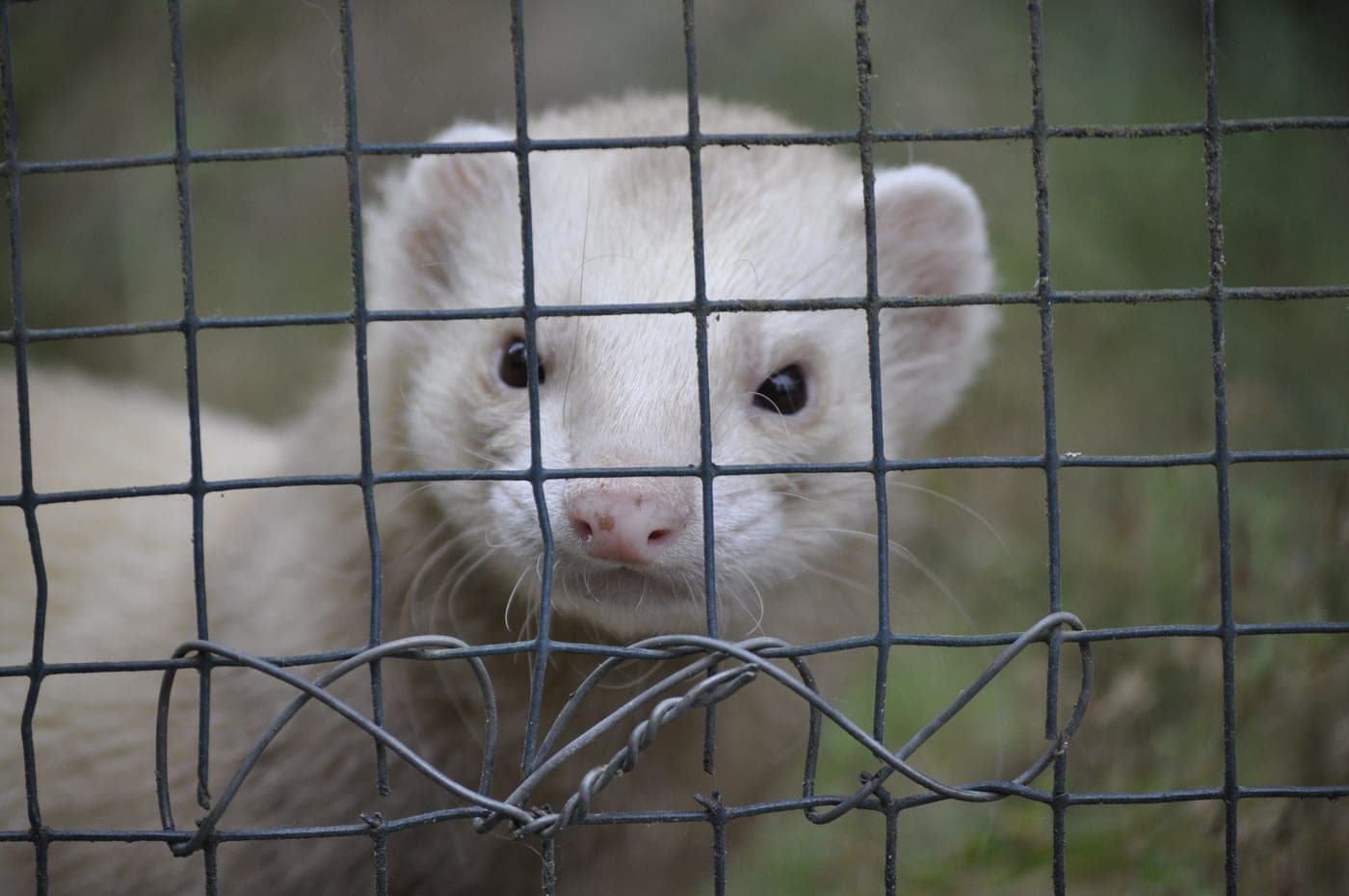
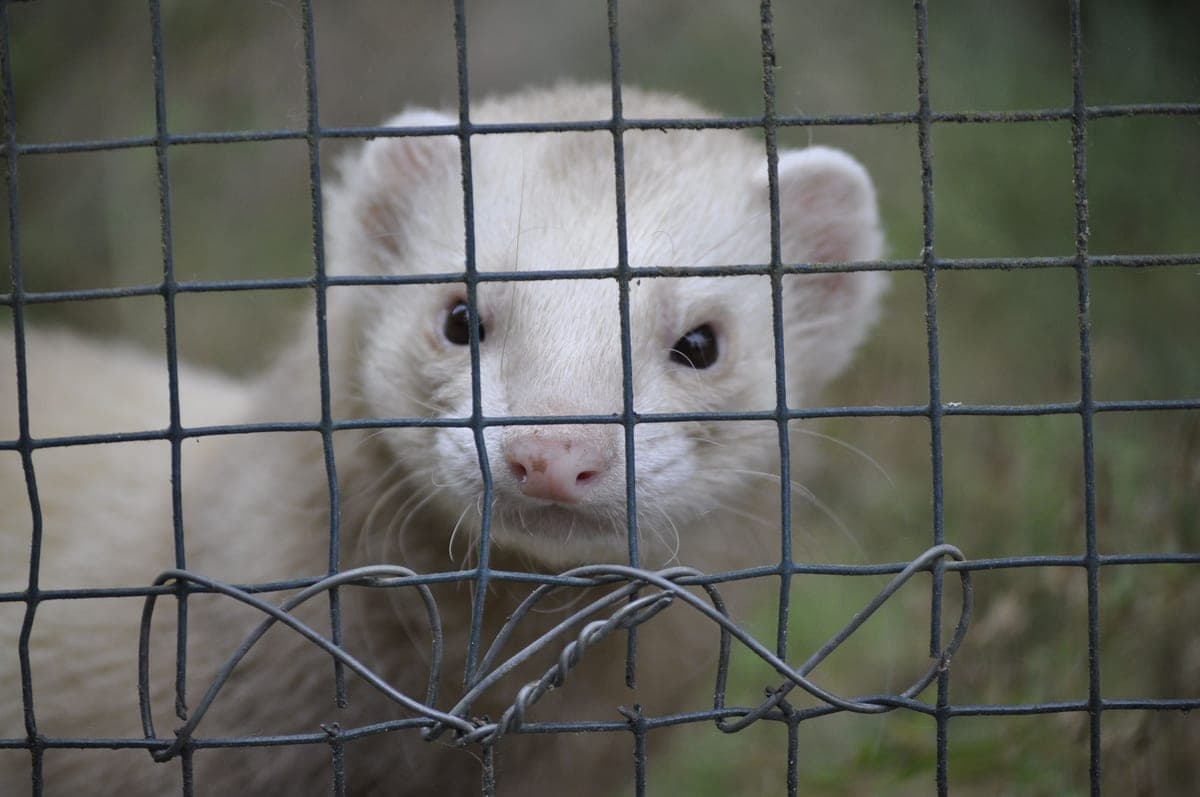
A ferret's skull is the widest part of it, and a ferret assesses a gap by putting its head in. If the head goes through, the ferret goes through, because the rest of the body is compressible in a way the skull is not. A kit's skull is small enough to pass a one-inch gap, which is why the escapes owners report are overwhelmingly young animals from wide-barred cages.
The two MidWest cages make this concrete. The Ferret Nation 182 and the Critter Nation 162 are close to the same cage — 36 inches wide, two levels, full-width doors, deep pans, a rolling stand — and their published bar spacings are one inch and half an inch respectively. On floor the Ferret Nation is marginally larger at 900 square inches per level against 864. On containment they are not comparable. Ferret Nation vs Critter Nation has the full table.
The Savic Royal Suite 95 publishes 13mm, which is functionally the same half-inch, on the largest per-level floor of the three at about 928 square inches. It is the cage we would buy on specification and the hardest of the three to get spares for in the US, which is a real consideration rather than a footnote. All three are assessed in best ferret cages.
Our own threshold, and why it differs from VCA's
We use two figures: at least six square feet of usable floor per level, and half-inch bar spacing. Both are ours, and we label them as ours wherever they appear, because VCA's suggested minimum is too small to be a useful filter and no welfare body publishes a ferret bar-spacing figure at all.
The per-level figure rather than a total is deliberate. Ferrets use vertical space genuinely — they climb, they sleep in hammocks at height, they move between levels constantly — so a multi-level cage is not a way of inflating a floor-area number the way a hamster cage shelf is. What matters is that each level is big enough to be somewhere rather than a landing.
What VCA does publish that matters
Ferret environmental temperature · minimum
at or below 80F (27C)
Issued by VCA Animal Hospitals, read 27 September 2026. Ferrets are heat-sensitive, so this figure is a ceiling rather than a floor.
Two things on the same page are more consequential than the cage dimensions. A temperature ceiling of 80F (27C), because ferrets are heat-sensitive and heat stress develops fast — that rules out a conservatory, a sunny window in summer, or a spot above a radiator. And a requirement for at least two to three hours a day out of the cage, with the note that more is better.
The second is worth dwelling on, because it reframes the whole cage question. A ferret cage is not the animal's world; it is where the ferret is when you are not supervising it. That does not license a small cage, but it does mean a cage decision and a daily-routine decision are the same decision, and a beautiful cage with no out-of-cage time is the worse setup. Placement and temperature are covered further in cage placement.
Bedding, which is a different question for ferrets
Ferrets do not burrow, so the deep-substrate answer that dominates hamster housing does not apply. They nest in fabric, and they back into corners to toilet, which makes them easy to litter-train. The practical setup is washable fleece liners on the cage levels and a litter pan in a corner, which removes the loose-bedding question almost entirely.
That is also a safety improvement rather than just a convenience. The phenol problem that rules out pine and cedar shavings for the other species on this site does not arise if there is no loose softwood in the cage at all. Ferret bedding and cage liners covers what we would use, and the distinctive ferret smell — which comes largely from skin oils on bedding rather than from waste — is why washing fabric does more than scrubbing the cage.
Escape-proofing beyond the bars
Bar spacing is the first containment spec and not the only one. Latch design matters, because ferrets are genuinely good at simple mechanisms and a cage door that lifts is a cage door that will be lifted. Gaps around pans, at ramp openings and where a stand meets a cage are the other common routes out. Ferret escape-proofing works through each in order, with the checks that take a minute each.
If you are choosing a first ferret cage, the short version: start at ferret cage size for the per-level arithmetic, then read Ferret Nation vs Critter Nation, and buy the half-inch spacing unless you are certain your animals are adults and you have measured one against a one-inch gap.
Questions people ask
+−What size cage does a ferret need?
VCA publishes a suggested minimum of 24 x 24 x 18 inches, which is smaller than every mainstream ferret cage sold. Our own threshold is more useful: at least six square feet of usable floor per level, on a multi-level cage, with half-inch bar spacing.
+−What bar spacing does a ferret cage need?
Half an inch. A ferret assesses a gap with its skull, and a kit's skull passes a one-inch gap, which is why reported escapes are overwhelmingly young animals from wide-barred cages. No welfare body publishes a figure, so this is our threshold and we label it as ours.
+−Do ferrets need a big cage?
They need a multi-level cage with real floor on each level, and they need at least two to three hours a day out of it — VCA publishes that figure and notes more is better. A cage decision and a daily-routine decision are the same decision for this species.
+−What bedding should a ferret cage have?
Washable fleece liners on the levels and a litter pan in a corner. Ferrets do not burrow, so loose substrate does little for them, and removing it also removes the softwood phenol question entirely.