Ferrets
How to clean a ferret cage
The published routine is shorter than you think and more frequent than most owners run it. Daily on the pans, weekly on the cage, and the fabric is the part people forget.
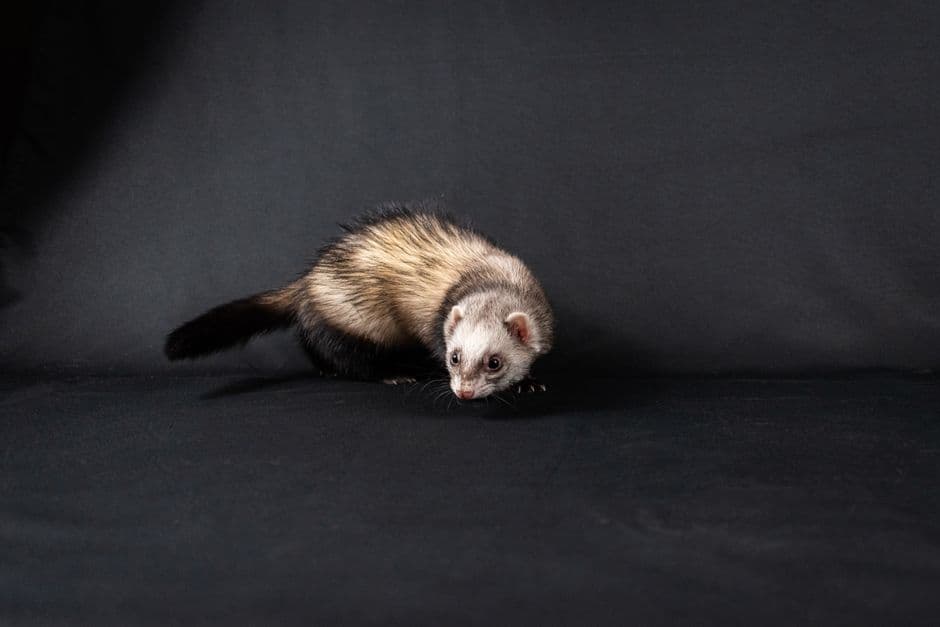
Daily: remove all feces, urine and uneaten food, and clean and disinfect the litter boxes — VCA specifies both of those as daily jobs, and the litter box instruction is the one most owners run weekly instead. Weekly: wash the cage itself with soap and water, which is VCA's stated minimum frequency, and wash all bedding and hammocks, which is PDSA's. PDSA's overall framing is a daily spot clean and a weekly or more frequent full clean. If your cage still smells after all that, the problem is almost never the cage — it is a litter corner the ferrets have stopped using, a fabric item that has absorbed urine, or a porous surface under the pan.
Ferret cages smell more than other small-pet housing, and the reason is not dirtiness. Ferrets have scent glands, they toilet in corners rather than in a spot they bury, and they sleep in fabric that holds everything. So the routine that works is built around the three things that actually hold odor — the pan, the fabric and the corners — rather than around scrubbing bars.
The published routine, by source
| Job | VCA Animal Hospitals | PDSA |
|---|---|---|
| Feces, urine, uneaten food | Remove all of it daily | Daily spot clean |
| Litter boxes | Clean and disinfect daily | Part of the daily spot clean |
| The cage itself | Soap and water at least weekly | A weekly or more frequent full clean |
| Bedding and hammocks | Remove immediately if chewed | Wash all bedding and hammocks weekly |
| Ventilation and temperature | Keep well ventilated, at or below 80F (27C) | Keep between 15 and 24C, out of direct sun, wind and rain |
Quoted from each issuer's own page, linked below and read 10 October 2026. The two sources agree on the shape of the routine and differ only in how they phrase it.
Note the one instruction that is stricter than people run it: VCA says clean and disinfect the litter boxes daily. Not empty, not scoop — clean and disinfect. That is a thirty-second job with a pan you can lift out and a minute-long job with one you cannot, which is the practical reason we rate deep removable pans so highly in the ferret cage roundup.
The daily pass, in order
- 1.Lift the litter pans out. Tip, rinse, wipe with a dilute pet-safe disinfectant, rinse again, dry, refill with a paper-based litter.
- 2.Scan the corners the ferrets are actually using. If there is waste in a corner without a pan, move a pan there rather than cleaning that corner every day for a year.
- 3.Pull out uneaten food. Ferrets cache food in bedding; this is why it goes in the daily pass and not the weekly one.
- 4.Shake out the hammocks. Thirty seconds, and it tells you which fabric item is about to need washing.
- 5.Wipe any wet patch on the pan liner rather than leaving it to the weekly wash.
The weekly clean, in order
- 1.Strip all fabric — liners, hammocks, sleep sacks, blankets — and put it in the machine. PDSA asks for all bedding and hammocks weekly.
- 2.Take the pans right out and wash them properly rather than wiping them in place.
- 3.Wash the cage with soap and water, which is what VCA specifies. Bars, shelves, ramps and the frame, not just the floor.
- 4.Rinse everything thoroughly and let it dry before the fabric goes back. A rinse that is not thorough is the most common way a safe cleaner becomes an unsafe cage — see cage cleaning safety.
- 5.Check the ramps and shelves while they are bare for tooth marks and for bare wire, which MSD warns may harm the pads on a ferret's paws.
- 6.Run the fabric audit from what not to put in a ferret cage while everything is out and visible.
What to clean with
VCA's instruction is soap and water, which is the honest baseline: it is enough for the cage itself, weekly, and it carries no risk. For the litter pans, where VCA asks for disinfection, use a disinfectant sold for animal housing at the dilution on the label, rinse it off completely and let the pan dry before it goes back. Never mix products, and never use anything containing phenols on a surface a ferret will lick.
The surface matters more than the product. A molded plastic pan can be returned to clean; bare timber and unsealed MDF cannot, which is why wooden ferret furniture is a mistake and why ferret cage flooring argues for washable fabric over a solid pan. Cage cleaning safety has the full material-by-material account.
What makes the routine shorter
A fitted fleece liner for the Nation pans so the weekly strip is one item rather than five, and two paper-based beddings for the litter corner — the part of the cage that holds the odor and the part the published guidance asks you to deal with daily.
 Illustrative
Lining a Ferret Nation or Critter Nation pan
Nation Accessories Fleece Liner Set
Covers a full Nation level
The right answer to ferret bedding, because ferrets do not burrow and a washable liner removes the whole loose-substrate question at once.
Check price on AmazonWe do not print prices. #ad Disclosure
 Illustrative
The litter corner of a ferret cage
Small Pet Select Paper Bedding
Not applicable
A paper bedding for the one place a ferret cage needs loose material, which is the litter corner and nowhere else.
Check price on AmazonWe do not print prices. #ad Disclosure
- Illustrative
The toilet corner of a deep-bedded enclosure
Oxbow Pure Comfort Bedding
Not applicable
A paper bedding with better odor behavior than most, which matters in the one corner of the enclosure that always needs it.
Check price on AmazonWe do not print prices. #ad Disclosure
If it still smells
Work through these in order, because the usual answer is near the top and cleaning harder is never the fix.
- A corner without a pan. The commonest cause by a distance. Ferrets pick corners; put a pan in the one they picked.
- Too few pans for the number of animals. Four ferrets and one pan will smell no matter what you do. How many ferrets per cage covers the group case.
- Fabric that has stopped coming clean. Fleece and towelling have a life. If a liner smells out of the machine, replace it.
- Urine under the pan or on the floor beneath the cage. Carpet under a ferret cage is a mistake; a wipeable mat is not.
- An un-neutered male. Intact hobs have a markedly stronger odor. This is a veterinary conversation rather than a cleaning one.
- Over-cleaning. A ferret that re-marks after every deep clean is responding to the loss of its own scent. Leave one item unwashed.
One thing not to do: mask it. Scented sprays, deodorizing litter additives and air fresheners near the cage all add an irritant to a space the animal cannot leave, and they do nothing about the pan. The reasoning is the same one that rules scented bedding out across this site — see ferret bedding safety.
Questions people ask
How often should you clean a ferret cage?
How often should ferret bedding be washed?
What can I use to clean a ferret cage?
Why does my ferret cage still smell after cleaning?
Should I clean the whole cage at once?
Does a fleece liner make cleaning easier?
Sources
- VCA Animal Hospitals — Ferrets: Housing — Remove all feces, urine and uneaten food daily; clean and disinfect the litter boxes daily; clean the cage with soap and water at least weekly; keep the cage well ventilated at or below 80F (27C)
- PDSA — The ideal home for your ferret — A daily spot clean and a weekly or more frequent full clean, with all bedding and hammocks washed weekly, and the 15 to 24C temperature range, read 10 October 2026
- MSD Veterinary Manual — Providing a Home for a Ferret — That bare wire may harm the pads on a ferret's paws, which is the reason the weekly clean includes a check of the bare ramps and shelves