Ferrets
What size cage a ferret actually needs
The published figure is smaller than every cage on sale, which makes it useless as a filter. Here is what to measure instead.
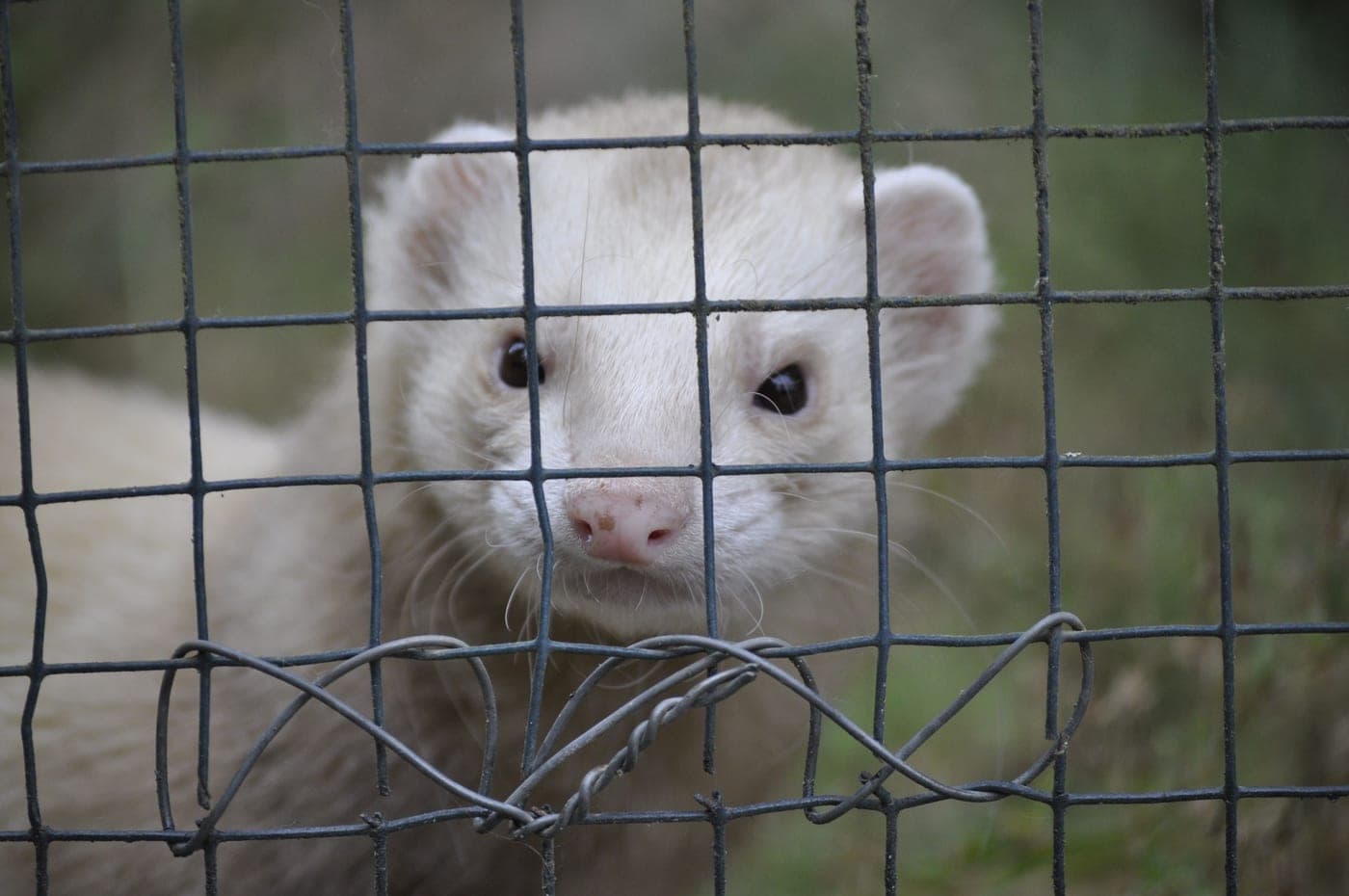
VCA Animal Hospitals suggests a minimum ferret cage of 24 x 24 x 18in (60 x 60 x 45cm), which is about four square feet — and every mainstream ferret cage sold is larger than that, so the figure separates nothing. Our own thresholds, labeled as ours: at least 6 square feet of usable floor per level on a multi-level cage, and half-inch bar spacing, because a half-inch gap holds a kit that a one-inch gap does not.
Ferret cage suggested minimum · suggested minimum
24in x 24in x 18in high (60cm x 60cm x 45cm)
Our conversion: 576 square inches, or 4 square feet, of floor
Ferrets are the one species on this site where the published floor-area figure is not the useful filter, and we would rather say that than pretend a number is doing work it is not. Measuring the Critter Nation, the Ferret Nation, the Savic Royal Suite and the Prevue Feisty Ferret against four square feet tells you that all four pass, which tells you nothing about which to buy.
What VCA does publish that matters more
Ferret environmental temperature · minimum
at or below 80F (27C)
Two things on the same VCA page are more consequential than its cage dimensions. A temperature ceiling of 80F (27C), because ferrets are heat-sensitive and heat stress develops quickly — which rules out a conservatory, a south-facing window in summer, or a spot above a radiator. And a requirement for at least two to three hours a day out of the cage, with the note that more is better.
That second figure reframes the whole question. A ferret cage is not the animal's world; it is where the ferret is when nobody is supervising it. That does not license a small cage — it means the cage decision and the daily-routine decision are one decision, and a beautiful cage with no out-of-cage time is the worse setup of the two.
Our thresholds, and why they are these
Half-inch bar spacing
No welfare or veterinary body publishes a ferret bar-spacing figure, so this is ours. The mechanism: a ferret assesses a gap with its skull, and if the skull passes, the animal passes, because the ribcage compresses in a way the skull does not. A kit's skull passes a one-inch gap.
This single specification is the difference between two cages that look identical on a shop floor. The MidWest Ferret Nation publishes 1 inch; the Critter Nation publishes 1/2 inch; the Savic Royal Suite publishes 13mm, which is functionally the same half-inch. Full comparison in Ferret Nation vs Critter Nation.
Six square feet of usable floor per level
Per level rather than as a total, and that is deliberate. Ferrets use vertical space genuinely: they climb, they sleep in hammocks at height, they move between levels constantly. So a multi-level ferret cage is not inflating a floor-area figure the way a hamster cage shelf does — each level is real usable space.
What matters is that each level is big enough to be somewhere rather than a landing. Six square feet is roughly 36 x 24 inches, which is the footprint the two MidWest cages and the Savic all work around, and the Prevue at 620 square inches per level falls below it.
The cages, measured
| Cage | Dimensions | Usable floor per level | Bar spacing | Levels |
|---|---|---|---|---|
| Savic Royal Suite 95 | 95 x 63 x 159cm | about 928 sq in (6.4 sq ft) | 13mm | 2, splittable |
| MidWest Ferret Nation 182 | 36 x 25 x 62.5in | 900 sq in (6.25 sq ft) | 1in | 2 |
| MidWest Critter Nation 162 | 36 x 24 x 63in | 864 sq in (6 sq ft) | 1/2in | 2 |
| MidWest Critter Nation 161 | 36 x 24 x 25.625in | 864 sq in (6 sq ft) | 1/2in | 1 |
| Prevue Feisty Ferret 485 | 31 x 20 x 54in | 620 sq in (4.3 sq ft) | 7/8in | Multi-level |
| VCA suggested minimum | 24 x 24 x 18in | 576 sq in (4 sq ft) | Not published | Not specified |
Dimensions as published by each manufacturer or its retailer, read 27 September 2026. Per-level floor is our arithmetic from the published footprint; actual usable floor is slightly less once pan lips are accounted for.
Two observations. Every commercial cage exceeds the VCA suggestion, which is why we do not use it as a filter. And the floor-area differences between the top three are small — 6, 6.25 and 6.4 square feet — while their bar spacings differ by a factor of two. The specification with the small spread is the one everyone compares, and the specification with the meaningful spread is the one that decides safety.
How many ferrets per cage
No published figure exists for this either, so here is our reasoning. A double-unit cage with two levels of six square feet gives twelve square feet of usable floor across two stories plus the climbing between them, and that is a reasonable home for two ferrets given the out-of-cage requirement is being met.
Beyond two, the constraint becomes resources rather than area: more hammocks, more litter trays, more places to sleep separately. A third ferret in a double unit is workable; four means either a third unit stacked on or considerably more out-of-cage time. The Savic's ability to split into two independent cages is genuinely useful here, and that is covered in Critter Nation vs Savic Royal Suite.
What a ferret cage needs beyond size
- Solid flooring on every level. Wire floors and wire ramps cause foot injuries. All three of our recommended cages ship with solid pans and ramp covers.
- Full-width doors. Not a luxury: a cage you cannot reach the far corner of is a cage that does not get cleaned properly, and you will be doing this weekly for up to a decade.
- Deep pans. Ferrets kick litter, and a shallow pan spreads it across the room.
- A latch a ferret cannot operate. They are genuinely good at simple mechanisms. See ferret escape-proofing.
- Somewhere to sleep dark and enclosed. Ferrets sleep 12 to 18 hours a day per VCA, and they want to do it in a hammock or a sleep sack rather than in the open.
The three cages worth considering
All three clear our per-level floor threshold. Two clear the half-inch bar spacing threshold and one does not — which is the decision. Full assessments in best ferret cages.
 Illustrative
Two ferrets that sometimes need separating
Savic Royal Suite 95 Rat and Ferret Cage
95 x 63 cm = 5,985 cm2, about 928 sq in (6.4 sq ft) per level
The most floor per level of the three big ferret cages and the only one that splits into two separate cages, at 13mm spacing that is functionally the Critter Nation's half-inch.
Check price on AmazonWe do not print prices. #ad Disclosure
- Illustrative
Ferrets of any age, and kits especially
MidWest Critter Nation Double Unit (162)
36 x 24 = 864 sq in (6 sq ft) per level, two levels
The half-inch bar spacing is the whole argument: it is the same cage as the Ferret Nation with a gap a ferret kit cannot get its head through.
Check price on AmazonWe do not print prices. #ad Disclosure
- Illustrative
Adult ferrets that climb
MidWest Ferret Nation Double Unit (182)
36 x 25 = 900 sq in (6.25 sq ft) per level, two levels
Slightly more floor per level than the Critter Nation and a one-inch bar gap, which is fine for a grown ferret and the reason kits escape.
Check price on AmazonWe do not print prices. #ad Disclosure
If you are buying a first ferret cage and want the short version: buy the half-inch bar spacing unless your ferrets are adults and you have measured one against a one-inch gap. The floor-area difference between the cages is a rounding error; the bar spacing difference is the one that loses animals.
Questions people ask
What size cage does a ferret need?
How much space does a ferret need?
Do ferrets need a big cage?
How many ferrets can share a cage?
What is the most important ferret cage specification?
What temperature should a ferret's cage be kept at?
Sources
- VCA Animal Hospitals — Ferrets, housing — Suggested minimum 24 x 24 x 18in; temperature at or below 80F; 2-3 hours out of cage daily; 12-18 hours of sleep
- MidWest Homes for Pets — Critter Nation — 1/2in bar spacing; 36 x 24in footprint
- MidWest Ferret Nation 182 product listing — 36 x 25 x 62.5in, 1in bar spacing, two levels
- Savic Royal Suite 95 — retailer listing — 95 x 63 x 159cm, 13mm bar spacing, splittable into two cages