Ferrets
The best flooring for a ferret cage
The published rule is short: solid or wire, never wood. What that leaves you choosing between is washable fabric, bare pan and paper, and they fail in different ways.
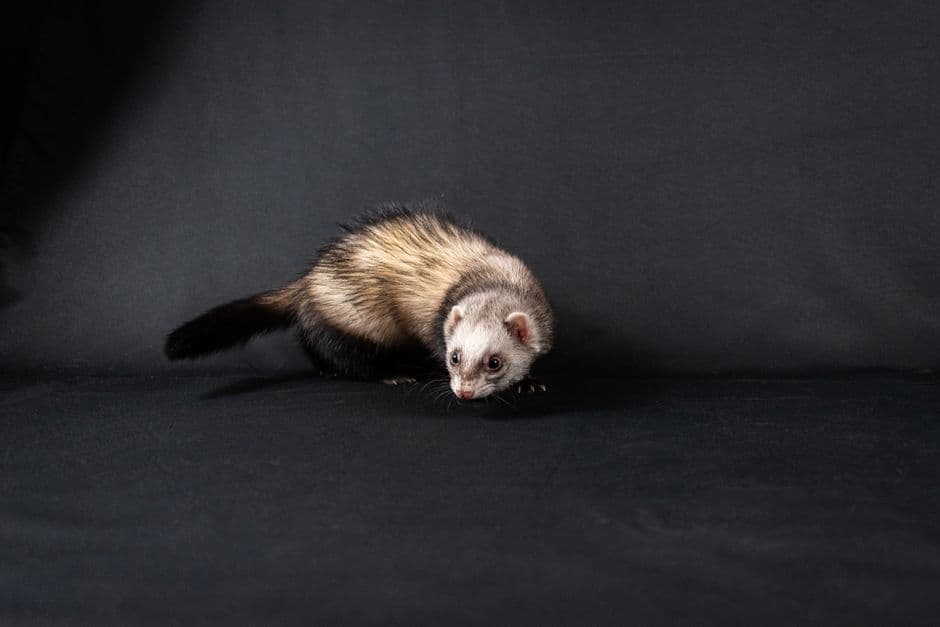
Line the pan with washable fleece. VCA's published rule for ferret cage flooring is that it can be solid or wire but that wooden flooring should be avoided, which rules out the bare plywood shelf a lot of DIY builds use and leaves you choosing what goes on top of a plastic pan. Fleece over an absorbent layer wins on every count that matters daily: it gives a ferret grip, it does not get kicked out of the cage, it goes in a washing machine, and it does not add dust to a species with a sensitive respiratory tract. Keep loose paper bedding for the litter corner, where it belongs, and nowhere else.
This is a smaller decision than hamster or guinea pig substrate, for one reason: a ferret does not burrow in its floor. A hamster needs ten inches of substrate because digging is most of what it does. A ferret needs a surface it can run and turn on, and somewhere separate to sleep. That makes the flooring question about grip, absorbency and cleaning rather than about depth.
What the published guidance actually says
Very little, and the little it says is worth reading precisely. VCA writes that cage flooring can be solid or wire and that wooden flooring should be avoided. The wood exclusion is the useful part: untreated wood soaks up urine, cannot be disinfected, and in a ferret cage it is the component that makes a room smell. Everything else is left to judgment, which is why this page exists.
One thing that rule does not say is that wire floors are fine in practice. They are permitted, and a wire floor is harder on feet than a solid one across every small species we cover — the same reasoning that puts solid pans at the top of our rat cage assessments. Every cage we recommend has deep solid pans, and if yours has wire, covering it is the first job rather than an optional upgrade.
The four options, and how each one fails
| Floor | Grip | Absorbency | Odor control | Weekly effort | How it fails |
|---|---|---|---|---|---|
| Washable fleece over an absorbent layer | Good | Good, wicks away from the surface | Good while dry | Machine wash | Gets chewed by some individuals; needs two sets |
| Bare plastic pan | Poor | None | Poor once urine sits | Wipe out | Slippery, and urine pools in the corners |
| Loose paper bedding across the whole pan | Fair | Good | Good | Scoop and replace | Kicked out of the cage within hours; costly at pan scale |
| Wire floor, uncovered | Fair | None | Fair, waste drops through | Hose the tray | Hard on feet; permitted by VCA but not kind |
Our assessment of each format against the published rule that flooring can be solid or wire and that wood should be avoided. Not a product test: the comparison is of formats, and the specific products we recommend are below.
The pattern in that table is that every failure mode except chewing is fixed by fleece, and chewing is fixed by watching the animal for a week. That is why we land where we do.
What we would put in the cage
Two liners cut to specific cage footprints rather than folded to fit — the Nation set to the 36 x 24in pan on a Critter Nation or Ferret Nation, the Kavee to C&C grid sizes — plus the paper bedding we would use in the litter corner. Buy two of whichever liner fits your cage: one is in the wash while the other is in use.
 Illustrative
Lining a Ferret Nation or Critter Nation pan
Nation Accessories Fleece Liner Set
Covers a full Nation level
The right answer to ferret bedding, because ferrets do not burrow and a washable liner removes the whole loose-substrate question at once.
Check price on AmazonWe do not print prices. #ad Disclosure
- Illustrative
Anyone already running a Kavee cage
Kavee Fleece Liner for C&C Cages
Covers the cage base it is sized for
The liner that actually fits the cage, which sounds trivial until you have chased a folded corner full of urine around a 4x2 for a week.
Check price on AmazonWe do not print prices. #ad Disclosure
 Illustrative
The litter corner of a ferret cage
Small Pet Select Paper Bedding
Not applicable
A paper bedding for the one place a ferret cage needs loose material, which is the litter corner and nowhere else.
Check price on AmazonWe do not print prices. #ad Disclosure
Why the litter corner is a separate decision
Ferrets back into a corner, which is the single most useful fact about them from a cleaning point of view. Put a tray in the corner they have chosen, fill it with a paper-based bedding or a paper pellet litter, and the fleece on the rest of the pan stays dry for days instead of hours.
What not to put in that tray is cat litter. VCA is unusually blunt about it: cat litter is a no-no, because ferrets may ingest it and suffer serious and in some cases life-threatening intestinal upset or ulceration. That rules out clumping clay litter completely, and clay dust is a respiratory problem on top of the ingestion one. Paper pellets or paper bedding, every time.
Covering a wire floor or a ramp
If the cage you already own has wire shelves or an uncovered ramp, the standard fix needs no tools: cut fleece a couple of inches larger than the surface, lay it over, and cable-tie it through the mesh at the corners with the tie heads on the outside of the bars. No adhesive, nothing for a claw to get under, and it comes off for a wash in seconds. Plexiglass or an untreated-free solid panel cut to the shelf works too and is harder to launder.
What not to use is lino offcuts, vinyl tile or anything with an adhesive backing. A ferret will get a corner up, and once a corner is up the adhesive and the backing are both things that can be swallowed. Cage materials: what is safe and what is not carries the cross-species version of that argument.
The weekly routine this produces
- 1.Daily: scoop the litter tray and shake out the fleece. Thirty seconds.
- 2.Mid-week: swap the fleece for the clean set if there has been an accident outside the tray.
- 3.Weekly: liners out and into a hot wash with no fabric softener, pans wiped, tray emptied and washed. Inspect every piece of fabric against the light for holes and frayed edges while it is out.
- 4.Monthly: pans out of the frame and scrubbed, bars wiped down, ramp covers washed.
Fabric softener is worth one more sentence, because it is the mistake that quietly undoes the whole system: it coats the fibers, and a coated fleece stops wicking. A liner that has been through softener feels softer and leaves the surface wet, which is exactly the problem you bought it to solve.
Questions people ask
What is the best flooring for a ferret cage?
Can a ferret cage have a wire floor?
Why should wooden flooring be avoided in a ferret cage?
Can I use cat litter in a ferret cage?
Should I put bedding across the whole cage floor?
How often should ferret cage flooring be cleaned?
Sources
- VCA Animal Hospitals — Ferrets, housing — States that cage flooring can be solid or wire, that wooden flooring should be avoided, that the cage should be well ventilated, and that cat litter is a no-no because of ingestion and ulceration risk
- House Rabbit Society — The dangers of softwood shavings — The softwood phenol evidence this site applies across species, and the reason pine and cedar shavings are not on this page