Ferrets
Can I put a blanket in a ferret cage?
Yes — VCA names a blanket as one of the things a ferret will sleep in. The fabric and the weekly inspection are what decide whether it stays safe.
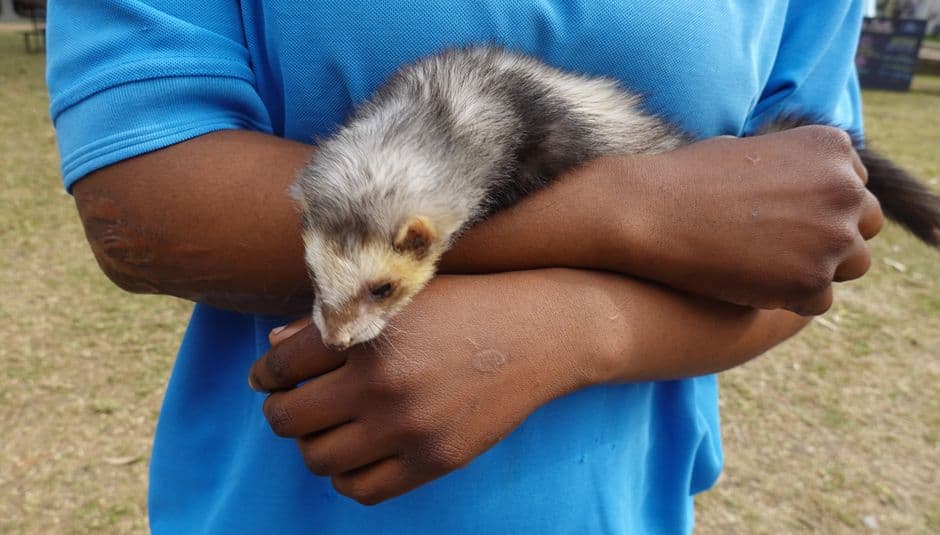
Yes. VCA names a blanket as one of the things a ferret will sleep in, alongside a t-shirt, a towel, a cloth bag and a commercial hammock or tent, so a blanket in a ferret cage is normal rather than risky in itself. What makes it safe or unsafe is the weave and the individual animal. Fleece and tightly woven cotton are fine. Terry towelling, loose knits, crochet, anything with visible loops and anything with a loose binding are not, because a claw goes through a loop and a tooth pulls a thread out. And VCA's own instruction overrides all of it: if you see your ferret chewing cloth bedding, it must come out.
Which blankets are fine
- Polar fleece. No loops, no weave to unravel, cuts without fraying, washes hot and dries fast. This is why almost every purpose-made ferret liner and sack is fleece.
- Tightly woven cotton. A plain flannel sheet, a pillowcase, a worn-in t-shirt. Nothing for a claw to catch.
- A fleece blanket with the binding removed. Many cheap fleece throws have a satin or stitched edge that frays into exactly the kind of long thread you do not want. Cut it off; fleece needs no hem.
Which blankets to keep out of the cage
- Terry towelling. Every pile on a towel is a loop, and a ferret's claw is the right size to go through one and not come back out. Towels are fine for drying a ferret and wrong for living in a cage.
- Knitted or crocheted blankets. One pulled stitch unravels into meters of thread.
- Anything with stuffing, wadding or batting. Once the outer layer is breached the filling gets eaten, and that is a foreign-body risk rather than a mess.
- Electric blankets and heat pads of any kind. A ferret chews cables, and the animal's problem is overheating rather than cold.
- Anything with a loose button, bow, pompom or embroidered patch. All of them come off, and all of them are swallowable.
If this list reads like a shorter version of a bigger page, that is because it is: safe and unsafe ferret bedding carries the full material assessment, including the softwood and dust questions a blanket does not raise.
If you would rather buy fabric cut to the cage
A blanket folded into a pan works and shifts around. These two are fleece over an absorbent layer, cut to specific cage footprints — the Nation set to the 36 x 24in pan on a Critter Nation or Ferret Nation, the Kavee to C&C grid sizes — so there is no loose edge at the corners for a claw to find. Neither is a substitute for the weekly inspection below.
 Illustrative
Lining a Ferret Nation or Critter Nation pan
Nation Accessories Fleece Liner Set
Covers a full Nation level
The right answer to ferret bedding, because ferrets do not burrow and a washable liner removes the whole loose-substrate question at once.
Check price on AmazonWe do not print prices. #ad Disclosure
- Illustrative
Anyone already running a Kavee cage
Kavee Fleece Liner for C&C Cages
Covers the cage base it is sized for
The liner that actually fits the cage, which sounds trivial until you have chased a folded corner full of urine around a 4x2 for a week.
Check price on AmazonWe do not print prices. #ad Disclosure
The chew test, which is the only test that matters
Material rules get you to the starting line. The individual animal decides the rest. Some ferrets live with fleece for years and never touch it; some will strip a corner off a new blanket on the first night. VCA's wording is deliberately absolute on this — if you observe your ferret chewing on its bedding, it MUST be removed — because what gets swallowed does not pass, and an intestinal obstruction in a ferret is an emergency.
So the first week with any new fabric in the cage is a trial. Put it in, look at it every day, and look specifically at the corners and the edges rather than the middle. A ferret that is chewing will start at an edge. If the edges are intact after a week, the blanket is probably fine with that animal indefinitely; if they are not, you have learned something cheap.
The weekly check, and what you are looking for
- 1.Take every fabric item out of the cage on the same day each week.
- 2.Hold each one up to a window or a lamp. Light through the fabric shows thinning and small holes before your fingers find them.
- 3.Run a hand around every edge and seam. Anything frayed, anything with a thread you can pull more than a couple of inches of, gets trimmed or retired.
- 4.Check for a hole big enough for a head. A ferret that gets into a hole in a doubled blanket and cannot turn round is a genuine hazard, not a nuisance.
- 5.Wash hot with no fabric softener, and dry fully. Softener coats the fibers and makes fleece noticeably less absorbent.
Blankets in winter, and the temperature question
People reach for a blanket in a ferret cage in October, and the instinct is slightly off. Ferrets are the heat-sensitive species in this house, not the cold-sensitive one: VCA sets the ceiling for a ferret's environment at 80F (27C), and a thick winter coat plus a well-insulated sleeping sack in a warm room is a heat problem rather than a comfort one. Add fabric for the animal to burrow into, by all means, and let it choose the height it sleeps at. Do not add a blanket on top of the cage to keep the warmth in — that is where it stops being bedding and starts being a cover, which covering a ferret cage at night deals with separately.
Ferret environmental temperature · minimum
at or below 80F (27C)
The other blanket question that comes up in winter is whether a hutch outdoors can be made warm enough with bedding. The answer on this site is that it should not have to be: ferrets housed outdoors need a construction answer rather than a textile one, and ferret travel and outdoor cages sets out what that looks like.
Questions people ask
Can I put a blanket in a ferret cage?
What kind of blanket is safe for a ferret?
Why are towels bad for ferret cages?
What if my ferret chews its blanket?
Do ferrets need a blanket in winter?
How often should I replace a blanket in a ferret cage?
Sources
- VCA Animal Hospitals — Ferrets, housing — Names a blanket among the materials a ferret will sleep in, states that cloth bedding a ferret chews MUST be removed, and sets the environmental ceiling at 80F (27C)
- RSPCA — Ferrets — General ferret welfare guidance, including the need for secure housing and somewhere to hide and sleep