Ferrets
How big does a ferret cage have to be, including travel and outdoors?
Three different questions wearing one search. The home figure, the carrier rule and the outdoor requirements are not the same, and only one of them is a floor area.
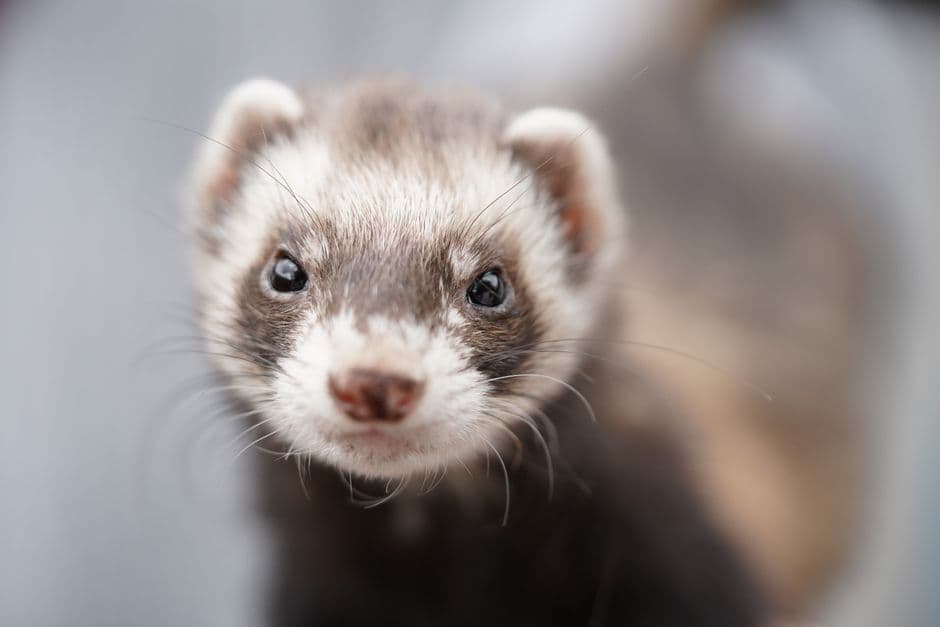
For a cage the ferret lives in, VCA's suggested minimum is 24 x 24 x 18 inches high — 576 square inches of floor — and multi-tiered cages are preferred, which in practice means 6 square feet per tier on the cages people actually buy. A travel carrier is not held to that figure and should not be: it is a short-term container where the right size is small enough that the animal is not thrown around, with bedding, a secure door and no water bottle in transit. Outdoor housing is not a size question at all — it is a construction one, decided by shade, ventilation, predator-proofing and the 80F ceiling rather than by square inches.
Ferret cage suggested minimum · suggested minimum
24in x 24in x 18in high (60cm x 60cm x 45cm)
Our conversion: 576 square inches, or 4 square feet, of floor
The reason the search runs the three together is that they feel like one problem — how much space does this animal need — and they are governed by completely different things. It is worth separating them before you buy anything.
1. The cage the ferret lives in
This is the only one of the three with a published figure, and it is a suggested minimum rather than a recommendation: VCA writes that a suggested minimum size might be 24 x 24 x 18 inches high (60 x 60 x 45cm), that the cage should be well ventilated, that flooring can be solid or wire but wooden flooring should be avoided, and that multi-tiered cages are preferred.
Our position, stated on what size cage a ferret actually needs, is that the published figure is a floor and not a target. A ferret is awake for six to twelve hours a day, and much of that is in the cage. Every cage we recommend is three to six times the VCA footprint, not because the figure is wrong but because the cages that exist are bigger than it and there is no reason to buy down to a minimum.
The three sizes this actually comes down to
A double unit at two tiers of 864 square inches, the same cage as a single tier, and the compact 620-square-inch-per-tier option for a room that will not take 36 inches of width. All three clear the VCA footprint several times over; what separates them is tiers and bar spacing.
 Illustrative
Ferrets of any age, and kits especially
MidWest Critter Nation Double Unit (162)
36 x 24 = 864 sq in (6 sq ft) per level, two levels
The half-inch bar spacing is the whole argument: it is the same cage as the Ferret Nation with a gap a ferret kit cannot get its head through.
Check price on AmazonWe do not print prices. #ad Disclosure
- Illustrative
A single ferret, or a first half of a double
MidWest Critter Nation Single Unit (161)
36 x 24 = 864 sq in (6 sq ft), one level
The same 6 sq ft floor and the same half-inch bars in one level, which is the right buy only if you are certain you will add the second unit.
Check price on AmazonWe do not print prices. #ad Disclosure
- Illustrative
A smaller room and a single adult ferret
Prevue Pet Products Feisty Ferret Home 485
31 x 20 = 620 sq in (4.3 sq ft) per level
A cheaper multi-level cage whose 4.3 sq ft per level and 7/8 in bars both land below the standards we apply, which is the honest reason it is last here.
Check price on AmazonWe do not print prices. #ad Disclosure
2. The travel carrier
No welfare body publishes a floor area for a ferret travel carrier, and that absence is correct rather than a gap. A carrier is judged on different things: it has to hold the animal securely, stay stable in a moving car, and be small enough that the ferret is not sliding around inside it. A large cage in a car is worse than a small carrier, not better.
- Small enough to brace, big enough to turn round in and lie flat. A cat carrier is usually the right scale. Bar gaps are the thing to check, not liters.
- Bar or vent spacing a ferret cannot get its head through. A ferret in a carrier is a ferret pushing at every edge of it. Ferret escape-proofing is the page on what that actually takes.
- A latch that cannot be worked from inside. Ferrets open things. Clip or zip-tie the door for anything longer than a drive to the vet.
- Fleece or a worn t-shirt inside, nothing loose. Enough to burrow into and nothing with loops or long threads — the same rule as putting a blanket in the cage.
- No water bottle attached during the drive. It leaks onto the bedding. Offer water at stops instead.
- Out of direct sun and never a parked car. The 80F (27C) ceiling is a figure a car interior passes in minutes.
Ferret environmental temperature · minimum
at or below 80F (27C)
For a longer trip — a move, a holiday, a few days at someone else's house — the sensible setup is the carrier for the journey and a proper cage at the other end, rather than one compromise container for both. A Critter Nation 161 breaks down to flat panels and is a realistic thing to take with you; the double unit is not.
3. Outdoor housing
Ferrets are kept outdoors, legitimately and commonly, particularly as working animals. But the decision is not made on floor area, and a hutch that would be generous for a rabbit can be lethal for a ferret for reasons that have nothing to do with size.
| Requirement | Indoors | Outdoors |
|---|---|---|
| Size | VCA suggests 24 x 24 x 18in as a minimum; multi-tiered preferred | Same floor logic, plus a separate sheltered sleeping compartment |
| Temperature | Keep at or below 80F (27C) | Permanent shade is mandatory; a sunny run is the main outdoor killer |
| Ventilation | Mesh top and sides | Ventilated shelter that is still draft-free at sleeping level |
| Flooring | Solid or wire; avoid wooden flooring | Solid, and dig-proof at the perimeter |
| Security | Latch a ferret cannot work | Predator-proof: a mesh gauge and latch that resist a fox, not just a ferret |
| Bedding | Fleece or woven cotton, inspected weekly | The same, plus dry: wet bedding outdoors is a health problem |
The indoor column is VCA's published guidance. The outdoor column is our own assessment, extended from the indoor requirements and from the predator-proofing standards we apply to outdoor rabbit housing. No welfare body we could find publishes a numeric outdoor ferret enclosure size, and we are not going to supply one.
Two of those rows deserve emphasis. The first is shade. The 80F ceiling is not a guideline outdoors, it is the thing that kills ferrets in July, and a run in full sun reaches it on a mild day. Permanent shade over the whole enclosure, not a roof over one corner. The second is the predator question, which is identical in kind to the one we work through for rabbits: the mesh gauge, the latch type and the dig line are what matter, and a fox tests five things on a rabbit hutch is the page that sets out how we assess them.
The short version
- At home: clear 576 square inches as an absolute floor, and buy a two-tier cage at 6 square feet per tier instead.
- Traveling: small, braced, secure, ventilated, fleece inside, no water bottle, never a parked car.
- Outdoors: shade first, predator-proofing second, a dry sheltered sleeping compartment third. Size is the easy part.
Questions people ask
How big does a ferret cage have to be?
How big should a ferret travel carrier be?
Can ferrets live outdoors?
What temperature is too hot for a ferret?
Should I take a water bottle in the carrier?
Is a rabbit hutch suitable for a ferret outdoors?
Sources
- VCA Animal Hospitals — Ferrets, housing — Publishes the 24 x 24 x 18in suggested minimum, the preference for multi-tiered cages, the 80F (27C) environmental ceiling, and the guidance that cage flooring can be solid or wire but wooden flooring should be avoided
- RSPCA — Ferrets — General ferret welfare guidance including the need for secure housing and shelter