Standards
Cleaning a small-pet enclosure without poisoning it
What to use, what to keep away from an animal with lungs this small, and why a full strip-out every week is usually the wrong routine.
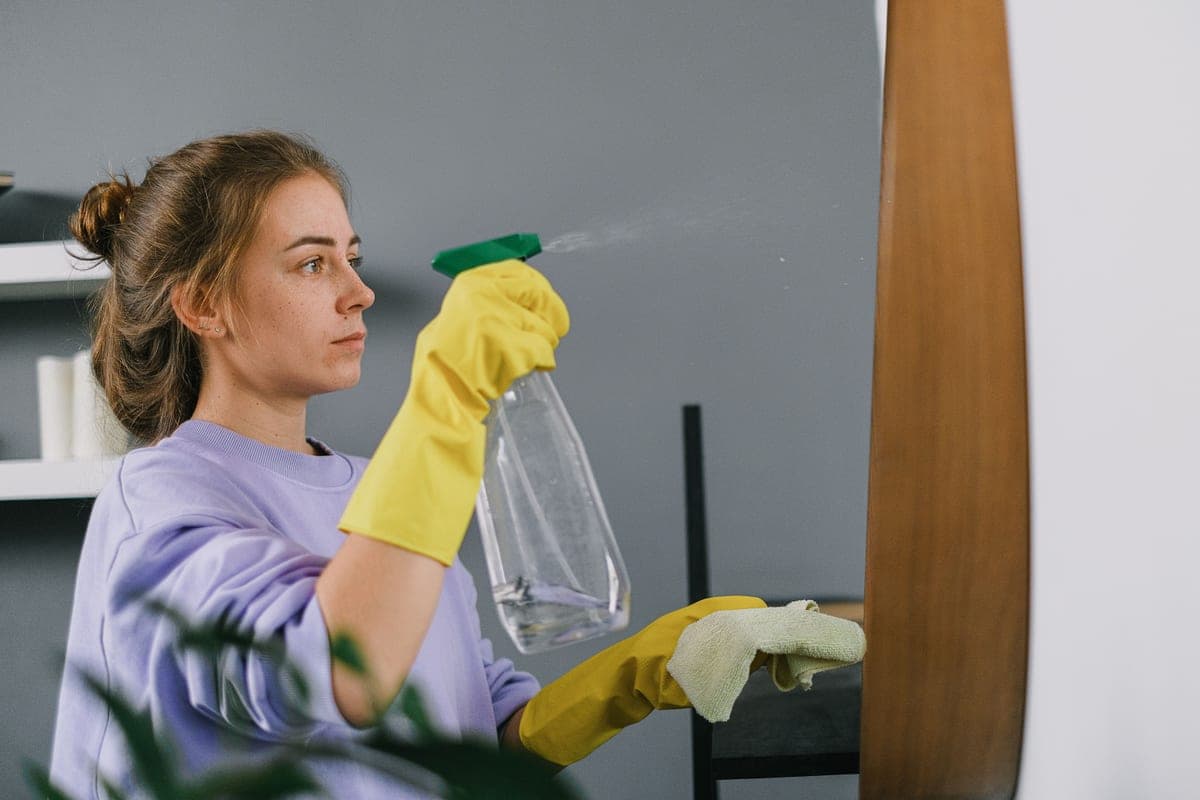
Clean small-pet housing with dilute white vinegar or a fragrance-free small-animal-specific cleaner, rinse thoroughly, and dry before bedding goes back. Never use an ammonia-based cleaner, because urine already contains ammonia and you cannot smell the difference between clean and worse. Never mix bleach with anything. And spot-clean the wet corner often rather than stripping the whole enclosure weekly.
Small pets have small lungs and spend twenty-plus hours a day at floor level with their noses in the substrate. That is the whole of the argument for being careful here: a residue you would not notice in a kitchen is, for a hamster, a residue it is breathing at close range all day.
What to clean with
- Dilute white vinegar (roughly one part to three parts water). The default. It shifts the calcium scale that builds up where a rabbit or guinea pig urinates, which is the deposit that actually holds odor, and it rinses away completely.
- Fragrance-free small-animal cage cleaner. Formulated for the job and convenient. Read the label for fragrance: a scented cleaner leaves a residue the animal cannot get away from.
- Unscented dish soap and hot water. Fine for plastic bases, trays and hides. Rinse well.
- Boiling water on wooden items (chews, bridges, wheel surfaces) rather than detergent, because wood holds detergent residue and gives it back slowly.
What not to clean with
- Anything ammonia-based. Urine is already an ammonia source. An ammonia cleaner adds to the load you are trying to remove and, worse, removes your ability to smell whether the job worked.
- Bleach mixed with anything. Bleach plus ammonia produces chloramine gas; bleach plus acid produces chlorine. Both are genuinely dangerous in a small room. Dilute bleach used alone, rinsed thoroughly and dried completely, is used in shelter settings and is defensible for a deep clean of a plastic base — but it must be alone, and it must be rinsed.
- Scented multi-surface sprays, air fresheners and plug-ins. These exist to leave a residue, which is the opposite of the goal. Keep them out of the room entirely rather than just off the cage.
- Essential oils, including tea tree and lavender. Marketed as natural, and several are documented as toxic to small mammals. There is no cleaning job here that needs them.
- Pine or cedar-scented products. Same phenol question as the bedding, for no benefit.
The routine most people get backwards
The instinctive routine is a full weekly strip-out: everything removed, base scrubbed, fresh bedding in. For a deep-bedded hamster enclosure this is both a lot of work and actively counterproductive.
A hamster with ten inches of substrate builds a burrow structure and uses one corner as a latrine. A full strip-out destroys the burrow, removes the scent-marked material the animal uses to navigate, and typically prompts it to rebuild from scratch — which is stressful and wastes bedding you have just paid for. Meanwhile the corner that actually needed attention gets no more of it than the rest.
The routine that works: remove the latrine corner and any damp patch every two or three days, top up with fresh substrate, and leave the burrow alone. Do a full change only when the substrate has broken down or when there is a specific reason. For a deep-bedded setup that is often a matter of months rather than weeks, and the enclosure smells better than a weekly-stripped one because the thing generating the smell is being removed continuously.
Per-species notes
Hamsters
Spot-clean the latrine corner, leave the burrow. Wipe a glass or acrylic wall where substrate has been pressed against it. The wheel needs wiping more often than anything else in the enclosure, because a hamster that urinates while running spreads it around the track.
Rabbits and guinea pigs
These are the two species where cleaning is genuinely frequent, because both produce a lot of urine and both deposit it in one place. Vinegar is close to essential for the calcium scale. Humane World for Animals recommends two to three inches of paper bedding for guinea pigs, which is shallow enough that a full change is quick — daily attention to the wet corner and a full change weekly is a reasonable rhythm.
Ferrets
Ferrets back into corners to toilet, which makes them easy to litter-train and means the litter pan is the whole job. Change it daily. Fleece liners on the cage levels go in the wash every two or three days. The distinctive ferret smell is largely from skin oils on bedding rather than from waste, so washing the fabric does more than scrubbing the cage.
A sequence that does not waste your time
- 1.Move the animal somewhere secure. A carrier or a pen, not loose in a room you have not proofed.
- 2.Remove everything you intend to clean, and take a photograph if the layout matters — animals settle faster in a familiar arrangement.
- 3.Dry-remove waste and soiled substrate first. Cleaning solution over dry mess makes a paste.
- 4.Wash, then rinse, then rinse again. Residue is the risk, not dirt.
- 5.Dry completely. Damp substrate on a damp base is how you get mold, which is a worse problem than the one you were solving.
- 6.Return the layout, then the animal. Put a handful of the old, unsoiled bedding back so the enclosure still smells like its own.
Questions people ask
What is a hamster-safe cage cleaner?
Can I use bleach to clean a cage?
How often should I clean a hamster cage?
Are essential oils safe around small pets?
Why does my cage still smell after cleaning?
Sources
- Humane World for Animals — Guinea pig housing requirements — Bedding depth of 2 to 3 inches, and the cedar and pine recommendation
- House Rabbit Society — The dangers of softwood shavings — Phenol mechanism, cited here for the pine-scented-product caution