Hamsters
Hamster cage setup checklist
Nine things, each with a number attached, plus the four commonly sold items we would leave out.

A hamster enclosure needs nine things: 775+ square inches of floor, 10 inches of safe substrate, a solid-surface wheel of 12 inches for a Syrian or 8 for a dwarf, at least two hides, loose nest material, a sand bath, chew material, a water source, and a scatter-feeding area. Everything else is optional, and four commonly sold items are worth leaving out entirely.
The nine, each with its figure
1. The enclosure: 775 square inches of continuous floor
Hamster cage minimum size · minimum
100cm x 50cm
Our conversion: 5,000 cm2, or 775 square inches of continuous floor
Measured on the inside of the base, with nothing added for shelves, levels or tubes. This is the item that cannot be fixed by anything else on the list. How to measure.
2. Substrate: at least ten inches, paper or aspen
Hamster bedding depth · minimum
at least 25cm (10 inches)
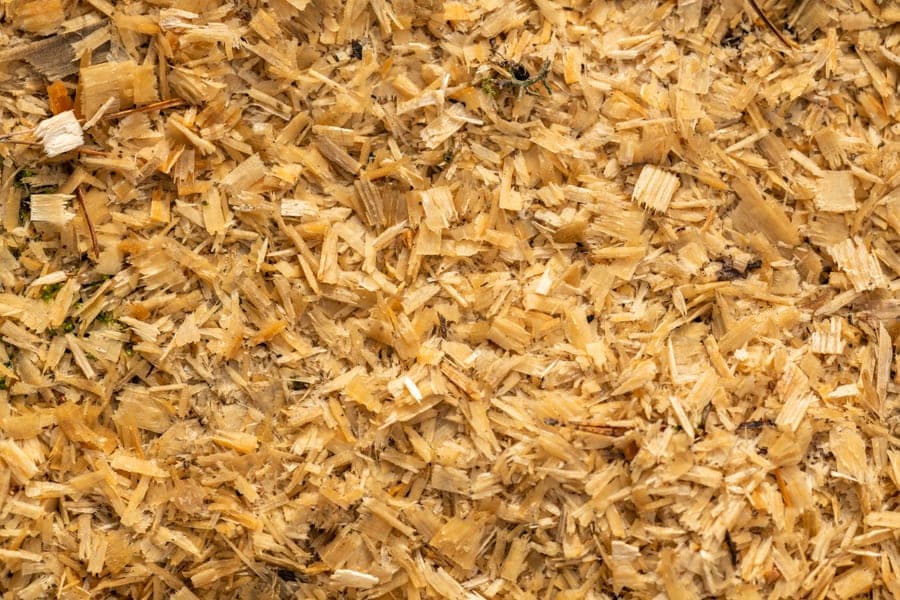
About 127 liters to fill 775 square inches to depth. Aspen for the structural bottom layer, lightly damped so a tunnel holds; kraft paper for the top three or four inches. Deep bedding and best bedding.
3. A wheel: 12 inches for a Syrian, 8 for a dwarf, solid surface
Wheel diameter, Syrian hamster · minimum
at least 30cm (12 inches)
Solid running surface, no slats, no bars, no cross-axle. The wheel that came with the cage almost certainly fails this. Wheel size and the safest wheels.
4. At least two hides, in different places
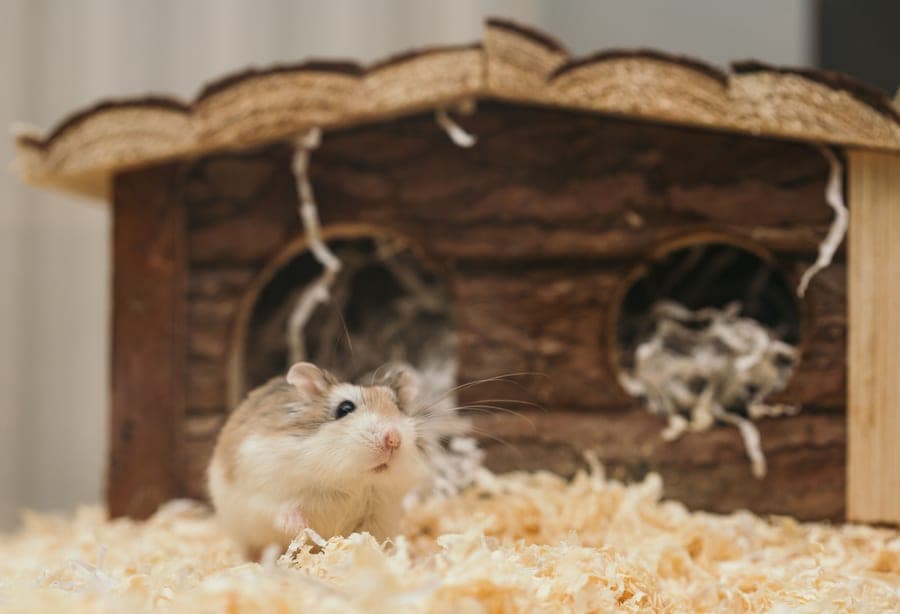
Not one. A hamster with a single hide has one option; with two it has a choice, which is what reduces stress. Put them at opposite ends, ideally one buried in the substrate and one on the surface. Multi-chamber hides are good; a simple ceramic or wooden one works.
5. Loose nest material, offered rather than installed
Plain white toilet paper, unscented, offered in a heap. The hamster shreds and builds the nest itself, which is both the behavior you want and a better nest than anything pre-made. Never fibrous nesting fluff, which tangles around limbs — see safe and unsafe bedding.
6. A sand bath
A shallow dish of reptile-grade or children's play sand, at least six inches across. Hamsters roll in sand to clean their coats, and it also gives most animals a preferred toilet corner — which makes spot-cleaning easier. Use sand, not dust: chinchilla dust is too fine and is a respiratory irritant. Bake or rinse and dry play sand before use.
7. Chew material
Untreated wood, cork bark, or a plain cardboard tube. Hamster incisors grow continuously and need wearing down. Avoid painted or varnished wood, and avoid the sugary compressed chew sticks sold for this purpose, which are largely confectionery.
8. Water
A bottle or a shallow dish, and either is fine. A bottle stays clean and can jam; a dish is more natural and gets substrate in it. If you use a bottle, check it flows every day — the failure is silent. If you use a dish, make it shallow and heavy.
9. A scatter-feeding area
Scatter part of the daily food across the surface rather than putting it all in a bowl. Foraging is a large part of what a hamster does with its night, and a bowl removes it. A bowl for the rest is fine; do not make it the only source.
What to leave out
- Exercise balls. A hamster in a ball cannot see where it is going, cannot stop, and cannot leave. The enclosure should be big enough that a ball is not the animal's exercise.
- Fibrous nesting fluff. The one item on this page that causes injuries rather than irritation.
- Chinchilla dust in place of sand. Too fine, and a respiratory irritant at that particle size.
- Wire-floored platforms and ramps. Feet get caught, and bare wire on a walking surface is hard on a hamster's pads.
The order to build it in
- 1.Site the enclosure first, before it is heavy. Check for drafts at enclosure height, direct sun, and vibration from appliances. Cage placement.
- 2.Fit the lid and check it with a torch for gaps before anything else goes in.
- 3.Fill the substrate, layered and lightly damped, graded deeper where the animal will burrow.
- 4.Place the wheel and check it spins freely and clears the substrate.
- 5.Add the hides, one partly buried, one on the surface, at opposite ends.
- 6.Add the sand bath, chew material and water, keeping the sand away from the water.
- 7.Scatter the first feed and leave the setup a few hours before the animal moves in.
- 8.If this is a move from another enclosure, put a handful of the old unsoiled bedding in, so the new space smells partly familiar.
The three purchases that matter most
A wheel that clears the published diameter, aspen for the structural substrate layer, and kraft paper for the top. Everything else on the checklist can be improvised or is cheap.
 Illustrative
Any Syrian hamster
Niteangel Super-Silent Hamster Exercise Wheel, 12.8 in
Occupies roughly 13 x 6 in of enclosure floor
The only wheel in this range that clears PDSA's 30cm minimum for a Syrian, which makes the size choice within the range more important than the choice of range.
Check price on AmazonWe do not print prices. #ad Disclosure
 Illustrative
Deep burrowing on a budget
Kaytee Aspen Small Animal Bedding
Not applicable
The cheapest substrate we are willing to recommend, and the best tunnel-holder of the three, at the cost of visible dust in the bag.
Check price on AmazonWe do not print prices. #ad Disclosure
 Illustrative
Reaching a 10 in burrow depth without buying six bags
Kaytee Clean & Cozy White Paper Bedding
One 85 L bag fills roughly 10 in deep over a 500 sq in footprint
Paper, dust-controlled and sold in a volume large enough to actually reach 10 in of depth, which is the spec that matters and the one most bedding bags fail on.
Check price on AmazonWe do not print prices. #ad Disclosure
One thing worth noticing about that list: the three most important items are the enclosure, the substrate and the wheel, and none of them is an accessory. Most of what is sold for hamster cages is decoration, and a large enclosure with ten inches of bedding, a compliant wheel and two hides beats a small cage full of accessories every time.
Questions people ask
What do hamsters need in their cage?
What should a hamster cage look like?
Do hamsters need a sand bath?
Are hamster exercise balls safe?
Bottle or bowl for hamster water?
How many hides does a hamster need?
Sources
- PDSA — The ideal home for your hamster — Cage size, bedding depth and wheel diameter figures used throughout this checklist
- San Diego Humane Society — Hamster care — Bedding depth and wheel size bands
- RSPCA — Hamster environment — Qualitative requirements for nesting, digging and enrichment