Hamsters
Safe and unsafe hamster bedding
Paper and aspen are safe. Two commonly sold products cause injuries rather than irritation, and one of them is sold as bedding.
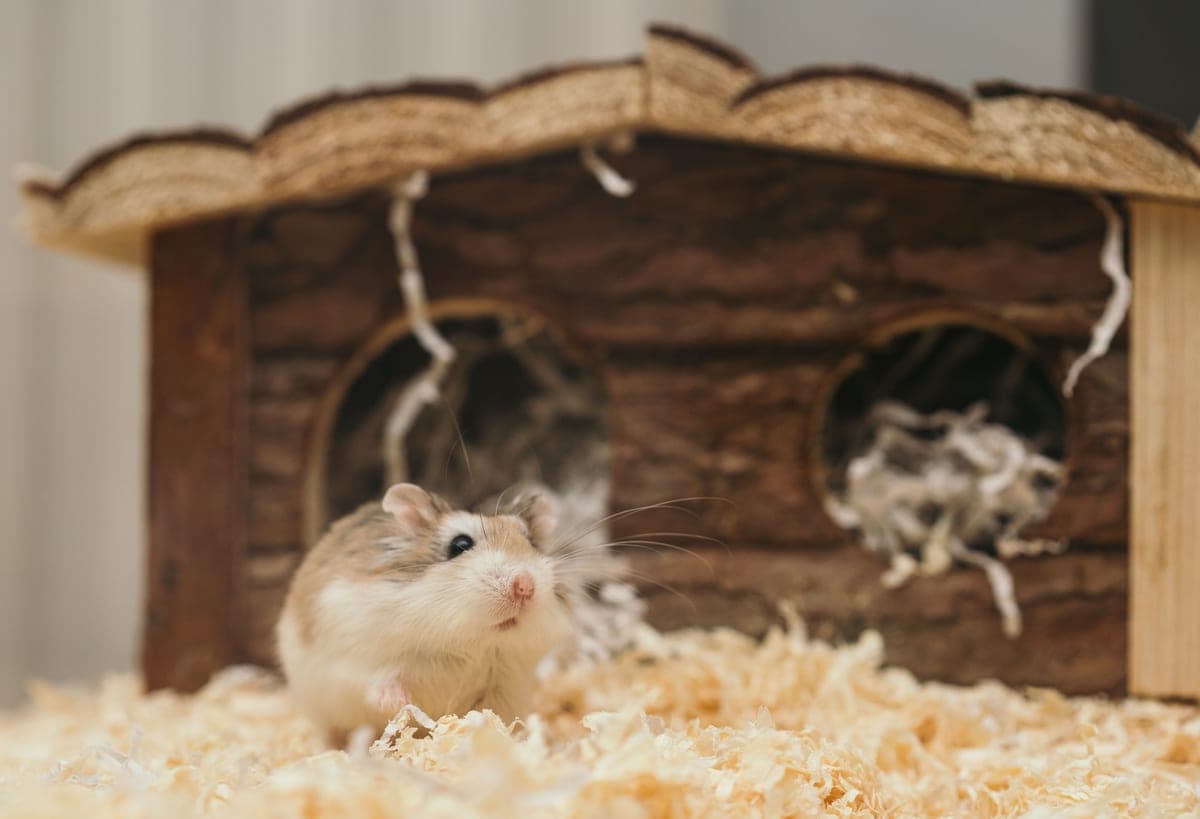
Safe hamster bedding is paper or aspen, unscented, offered deep. Avoid pine and cedar shavings, which release phenols; avoid any scented bedding; and get fibrous nesting fluff out of the cage entirely, because it tangles around limbs and is the one product on this list that causes injuries rather than irritation.
Safe
| Material | Use it for | Watch for |
|---|---|---|
| Kraft paper bedding | The top layer, the nest, the latrine corner | Scented variants in the same product range |
| Reclaimed paper fiber | Nest material and general substrate | Compacts, so deep burrows collapse more readily |
| Aspen shavings | The structural bottom layer of a deep setup | Dust in cheap bales; sift before use |
| Screened aspen | The same job with much less dust | Costs more per liter |
| Plain white toilet paper | Nest material, offered loose | Nothing; this is the safest nest material there is |
| Hay (timothy, meadow) | Nest material and enrichment | Buy pet-grade; agricultural hay can carry mites |
Avoid, and why
Fibrous nesting fluff — the injury risk
This is the one to act on immediately if you have it. Cotton-wool-style and synthetic-fiber nesting products are sold specifically as hamster bedding, and the fibers wrap around limbs and toes. A hamster that has built a nest from it and moves through it repeatedly can end up with a fiber tourniquet on a foot, which restricts circulation. It also does not break down if swallowed.
There is no version of this product we would use, and the replacement is free: plain white toilet paper, offered loose, which a hamster will shred and build with itself. That is a better nest than anything sold in a packet.
Pine and cedar shavings
Pine and cedar shavings · recommendation
phenols in softwood shavings raise liver enzyme levels; in rodents, constant exposure to phenol-containing litters is reported to have reduced drug effectiveness by more than 40 percent
Softwoods release phenols, and the House Rabbit Society's veterinary-authored account documents raised liver enzymes and interference with drug metabolism in exposed rodents. Humane World for Animals states plainly in its guinea pig guidance that cedar and pine are not recommended because of chemicals they both contain. Aspen is a hardwood, costs about the same, and holds a tunnel better — so there is no case left for softwood. The kiln-dried question, which is where this gets genuinely uncertain, is in is pine bedding safe for hamsters.
Scented bedding of any kind
Lavender, vanilla and generic "odor control" fragranced beddings exist to solve a human problem in a way the animal cannot escape. A hamster spends twenty hours a day with its face in this material, and an added fragrance is a sustained respiratory exposure. If odor is the issue, the answer is removing the latrine corner more often — see cleaning a small-pet enclosure.
Corn cob
Poorly absorbent, molds readily when damp, and offers no structure for a burrow. Not actively dangerous, and there is no reason to choose it over paper or aspen.
Cat litter, including paper pellets
Clumping clay litters are the serious one: ingested clay clumps in the gut. Paper pellet litters are not dangerous and are unsuitable as a whole-cage substrate because a hamster cannot dig in pellets. If you want a litter for a latrine corner, a pelleted paper product is fine there specifically.
Sawdust
Too fine. It is a respiratory irritant at the particle size sawdust sits at, and it compacts into something a hamster cannot tunnel through. Shavings, not dust.
Garden soil and compost
Soil mixes do hold tunnels beautifully, which is why the idea keeps coming up. Garden soil introduces mites and pathogens, and bagged compost usually contains fertilizer. Slightly damp aspen gets you most of the structural benefit with none of the risk.
The safe setup
- 1.Six to seven inches of aspen at the bottom, lightly damped so a tunnel holds.
- 2.Three to four inches of kraft paper on top, where the animal starts digging and where you can see the state of things.
- 3.A more absorbent paper in the latrine corner, changed every two or three days.
- 4.Loose plain toilet paper for the nest, and nothing else.
- 5.Total depth: at least ten inches, which is PDSA's figure.
Hamster bedding depth · minimum
at least 25cm (10 inches)
The three we would buy
Kraft paper for the top layer and latrine, standard aspen for the structural layer, screened aspen if dust is a consideration where the enclosure lives. Full assessments in best hamster bedding.
 Illustrative
Reaching a 10 in burrow depth without buying six bags
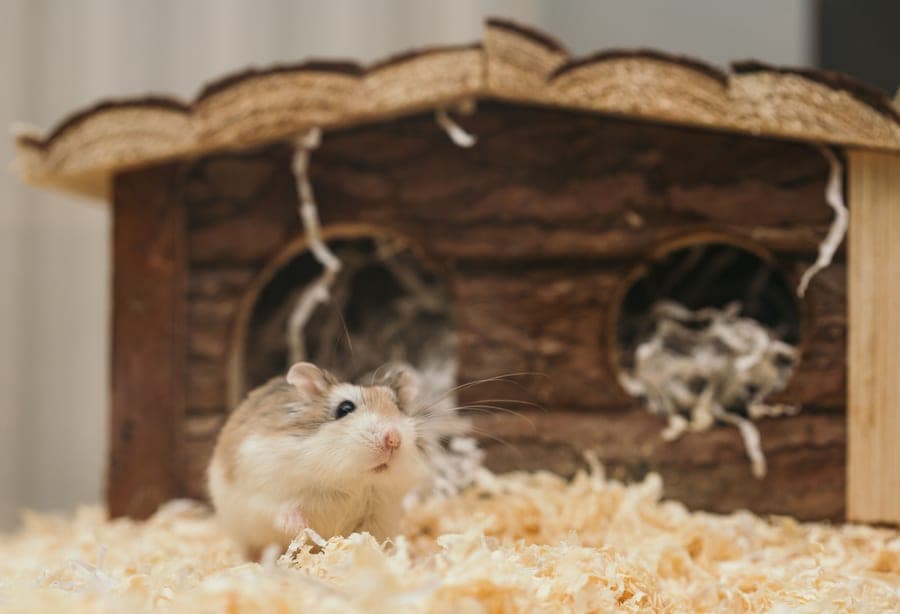
Kaytee Clean & Cozy White Paper Bedding
One 85 L bag fills roughly 10 in deep over a 500 sq in footprint
Paper, dust-controlled and sold in a volume large enough to actually reach 10 in of depth, which is the spec that matters and the one most bedding bags fail on.
Check price on AmazonWe do not print prices. #ad Disclosure
 Illustrative
Deep burrowing on a budget
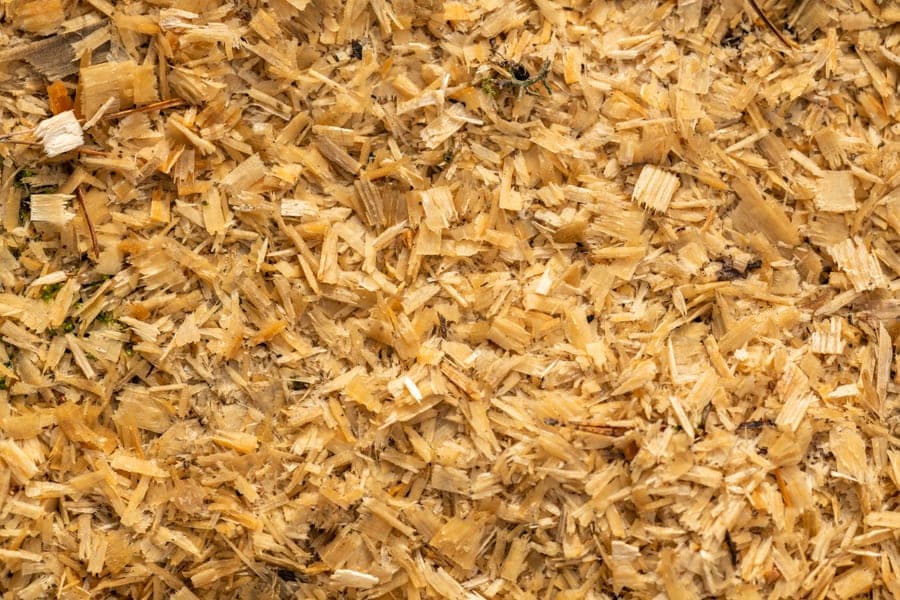
Kaytee Aspen Small Animal Bedding
Not applicable
The cheapest substrate we are willing to recommend, and the best tunnel-holder of the three, at the cost of visible dust in the bag.
Check price on AmazonWe do not print prices. #ad Disclosure
- Illustrative
Aspen without the dust
Small Pet Select Aspen Bedding
Not applicable
Aspen with the dust problem largely solved, which is the one reason to pay more than the supermarket bale costs.
Check price on AmazonWe do not print prices. #ad Disclosure
Questions people ask
What bedding is safe for hamsters?
Is fluffy nesting material safe for hamsters?
What not to put in a hamster cage?
Is scented bedding bad for hamsters?
Can I use hay as hamster bedding?
Sources
- House Rabbit Society — The dangers of softwood shavings
- Humane World for Animals — Guinea pig housing requirements — Cedar and pine not recommended
- PDSA — The ideal home for your hamster — Bedding at least 25cm (10in)