Hamsters
Aspen vs paper bedding
One holds a tunnel open. The other keeps a cage cleaner. The right answer for most setups is both, in layers.
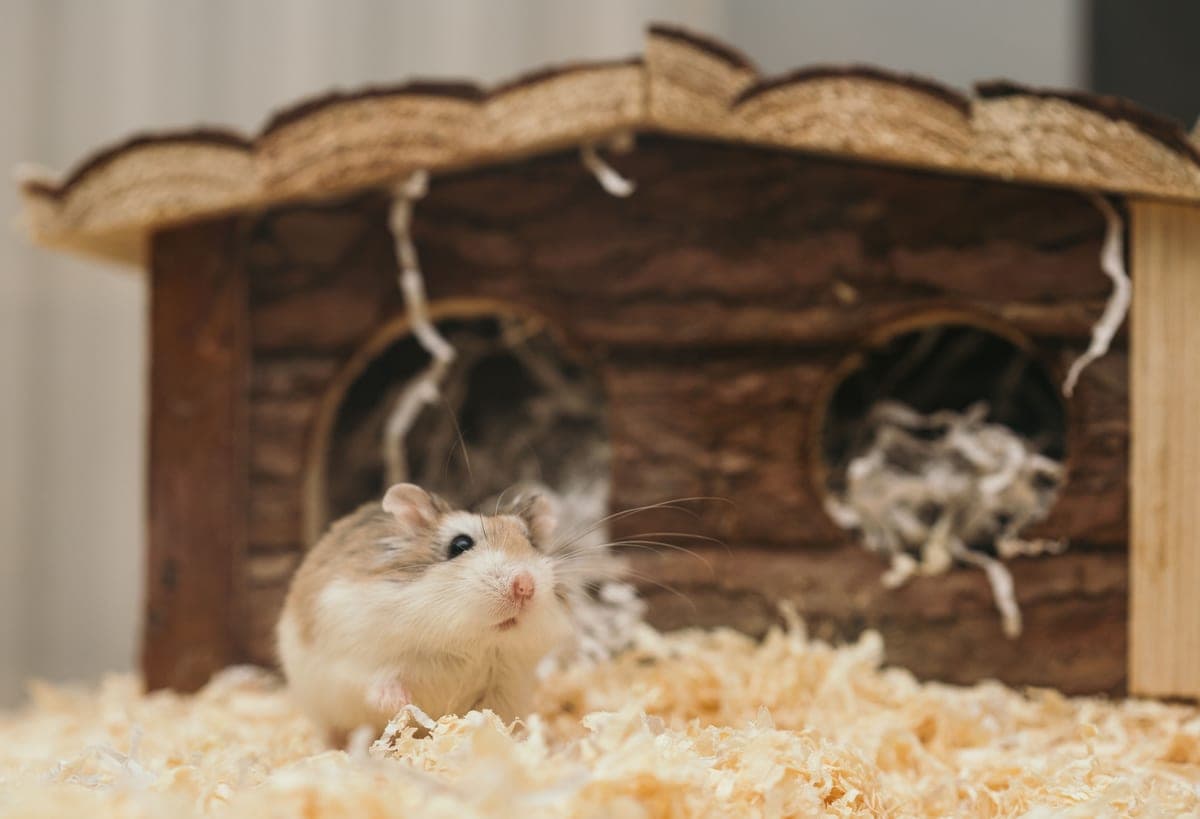
Aspen holds a burrow structure better and costs less per liter; paper is less dusty, more absorbent and cleaner to handle. For a deep-bedded hamster enclosure the best answer is both — aspen for the structural bottom six or seven inches and paper for the top three or four and the latrine corner. Both are safe; neither has the phenol problem that rules out pine and cedar.
This comparison gets asked for hamsters, rabbits and guinea pigs, and the answer differs by species for one reason: how deep the bedding needs to be. A hamster needs ten inches and therefore needs structure. A guinea pig needs two to three inches and therefore does not. Everything below follows from that.
The comparison
| Aspen (hardwood shavings) | Paper (kraft or reclaimed fiber) | |
|---|---|---|
| Holds a tunnel open | Yes, coarse shavings interlock | Partly; compacts under its own weight |
| Dust in the bag | Noticeable in budget bales; less in screened products | Low; leading products claim 99 percent dust-free |
| Absorbency | Moderate | High; one manufacturer states six times its weight |
| Cost per liter | Lowest of the safe options | Higher, sometimes considerably |
| Available in large volumes | Yes, compressed bales | Yes, up to 85 liter packs |
| Softwood phenol concern | None; aspen is a hardwood | None; paper is not wood |
| Shows soiling | Poorly, it hides it | Immediately, especially white |
| Best used for | The structural bottom layer of a deep setup | The top layer, the nest and the latrine corner |
Why structure matters more than it sounds
Hamster bedding depth · minimum
at least 25cm (10 inches)
Ten inches of substrate is not a requirement about softness. It is a requirement about a burrow, and a burrow is a structure — a tunnel with walls that stay where the animal put them. Substrate that collapses back into the tunnel behind the hamster has not provided a burrow; it has provided a deep pile the animal keeps re-digging.
Coarse aspen shavings interlock, so a tunnel wall holds. Short-fiber paper compacts, so it does not hold as well. That is the single most important difference between them, and it is the reason we would not build a deep setup on paper alone even though paper is better on every other measure.
Why paper wins on everything else
Dust. Aspen bales vary enormously and the cheap ones are visibly dusty. A hamster spends its life with its face in this material and dust is a respiratory irritant, so this is not a trivial preference. Screened aspen products largely solve it at a price premium; paper mostly does not have the problem to begin with.
Absorbency. Paper holds substantially more liquid, which matters in the one corner of the enclosure that is always wet. A latrine corner in aspen needs attention more often than the same corner in paper.
Visibility of soiling. White paper bedding shows a problem immediately. Aspen hides it, which is pleasant and is not an advantage — you want to see the wet patch before you smell it.
The layered answer
- 1.Bottom six to seven inches: aspen, lightly damped and packed. This is the structural layer doing mechanical work, and it is where the cost advantage matters because it is most of the volume.
- 2.Top three to four inches: kraft paper. Where the hamster starts digging and where you check the state of things. Cleaner and easier to assess.
- 3.Latrine corner: the most absorbent paper you are willing to buy, changed every two or three days. This is the only part of the enclosure that needs frequent attention and the only place a premium product earns its price.
- 4.Nest material: plain unscented paper, offered loose so the animal builds the nest itself. Never cotton wool or fibrous nesting fluff, which tangles around limbs.
What we would buy for a layered setup
Standard aspen for the structural layer, kraft paper for the top and the latrine corner, and screened aspen if the enclosure lives somewhere you would notice dust. Full assessments in best hamster bedding.
 Illustrative
Deep burrowing on a budget
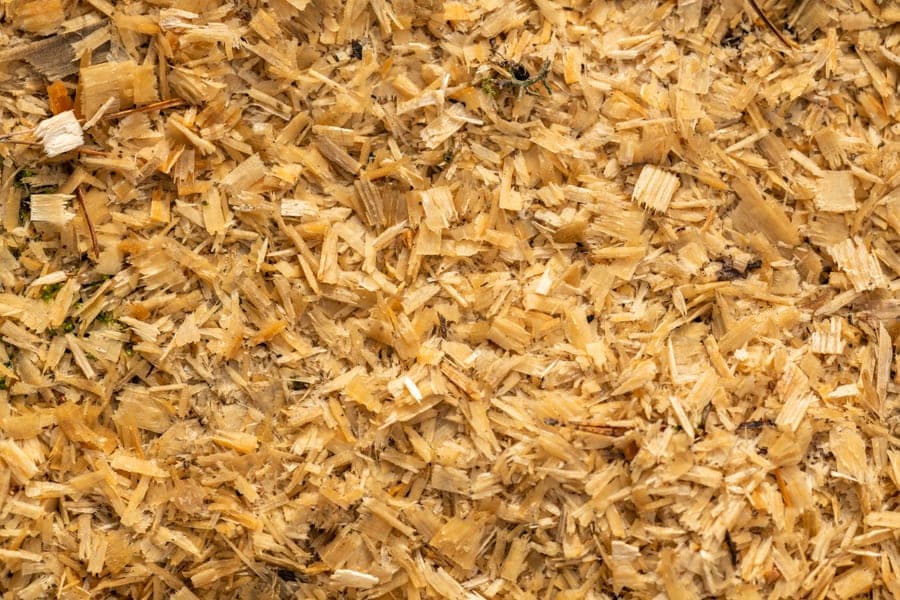
Kaytee Aspen Small Animal Bedding
Not applicable
The cheapest substrate we are willing to recommend, and the best tunnel-holder of the three, at the cost of visible dust in the bag.
Check price on AmazonWe do not print prices. #ad Disclosure
 Illustrative
Reaching a 10 in burrow depth without buying six bags
Kaytee Clean & Cozy White Paper Bedding
One 85 L bag fills roughly 10 in deep over a 500 sq in footprint
Paper, dust-controlled and sold in a volume large enough to actually reach 10 in of depth, which is the spec that matters and the one most bedding bags fail on.
Check price on AmazonWe do not print prices. #ad Disclosure
- Illustrative
Aspen without the dust
Small Pet Select Aspen Bedding
Not applicable
Aspen with the dust problem largely solved, which is the one reason to pay more than the supermarket bale costs.
Check price on AmazonWe do not print prices. #ad Disclosure
The same question for other species
Guinea pigs
Guinea pig bedding · recommendation
2 to 3 inches of paper bedding; cedar and pine shavings are stated to be not recommended because of chemicals they both contain
Paper, clearly. Humane World for Animals specifies two to three inches of paper bedding for guinea pigs and names cedar and pine as not recommended. At that depth there is no structural requirement, so aspen's one advantage does not apply and paper's absorbency advantage dominates. This is also the depth at which washable fleece liners become a real alternative — see liners versus disposable bedding.
Rabbits
Paper for a litter area, and hay for everything else. Rabbits are not burrowers in a hutch context and they eat their bedding, so the substrate question is smaller than it is for a hamster. The material caution is the same: no pine or cedar shavings, for the reasons the House Rabbit Society documents and which we cover in is pine bedding safe. Flooring, rather than bedding, is the real rabbit question — see rabbit hutch flooring.
Ferrets
Neither, mostly. Ferrets do not burrow, they nest in fabric, and they back into a corner to toilet. Washable fleece liners plus a litter pan removes the loose-substrate question almost entirely, which is a safety improvement as well as a convenience — see ferret bedding and liners.
What both of them beat
Pine and cedar shavings · recommendation
phenols in softwood shavings raise liver enzyme levels; in rodents, constant exposure to phenol-containing litters is reported to have reduced drug effectiveness by more than 40 percent
Pine and cedar. Aspen is a hardwood and has no phenol issue; paper is not wood at all. Since aspen costs about the same as pine and holds a tunnel better, there is no case left for softwood beyond habit. The mechanism, and the parts of the evidence that are weaker than commonly claimed, are in is pine bedding safe for hamsters.
Questions people ask
Is aspen or paper bedding better for hamsters?
Is aspen or paper bedding better for guinea pigs?
Is aspen bedding dusty?
Can you mix aspen and paper bedding?
Why not just use pine shavings, they are cheaper?
Sources
- PDSA — The ideal home for your hamster — Bedding at least 25cm (10in)
- Humane World for Animals — Guinea pig housing requirements — 2 to 3 inches of paper bedding; cedar and pine not recommended
- House Rabbit Society — The dangers of softwood shavings
- Kaytee — Clean & Cozy White — Virgin kraft paper, 99 percent dust-free, absorbs up to six times its weight