Hamsters
Best aspen bedding for hamsters and small pets
Aspen is the right material and the wrong aisle to shop in blind, because the thing that decides the bill is the published volume and most bags do not have one.
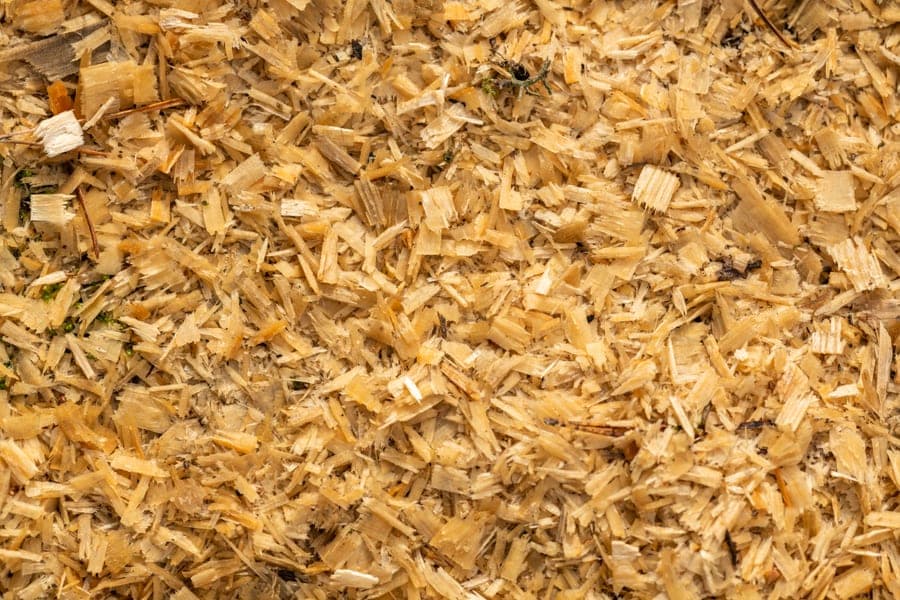
Buy the Small Pet Select 141 liter box if you are filling a properly sized enclosure, and the Kaytee 52.4 liter bale if you are topping one up. Aspen is already the right answer on material: it is a hardwood, so the phenol problem the House Rabbit Society documents for pine and cedar does not apply, and it holds a tunnel wall better than paper does. The decision inside the category is not safety, it is volume. PDSA publishes a 775 square inch floor minimum for one hamster and a 25cm bedding depth, and filling that floor to that depth takes about 127 liters of substrate. Exactly one aspen pack on sale holds it in a single bag. Two of the five products here publish no volume at all, only a weight, which means you cannot work out what you are buying before it arrives.
Hamster bedding depth · minimum
at least 25cm (10 inches)
If you have not settled on aspen yet, two other pages come first. Aspen vs paper bedding is the material comparison and lands on layering both. The best hamster bedding covers the whole category, paper included. This page assumes you have decided on wood shavings and want to know which bag to put in the cart — which is what the search queries that bring people here actually ask.
Why aspen, in one paragraph
Softwood shavings are the thing to avoid, and the reason is published rather than folklore. The House Rabbit Society hosts an article by George Flentke, PhD, on phenols in pine and cedar shavings: phenols raise liver enzyme levels, and in rodents constant exposure to phenol-containing litters is reported to have reduced drug effectiveness by more than 40 percent. The same article describes the cancer evidence as at best only suggestive, and recommends recycled paper and aspen shavings as the safer alternatives. We report both halves of that, because the honest version of the softwood argument is narrower than the version the internet repeats.
Pine and cedar shavings · recommendation
phenols in softwood shavings raise liver enzyme levels; in rodents, constant exposure to phenol-containing litters is reported to have reduced drug effectiveness by more than 40 percent
Aspen is a hardwood — specifically a poplar, Populus tremuloides — so it is not in the phenol category at all. That is the whole safety case, and it is why every product on this page clears the material test. What separates them is everything after the material: how much you get, whether the pack says how much you get, and what the maker is willing to state about dust. Pine and cedar bedding is the page that works through the softwood evidence in full, and bedding safety covers the rest of the aisle, including the materials that are genuinely dangerous rather than merely worse.
The number this category is sold against, and never prints
PDSA publishes two hamster figures that have to be satisfied at the same time, and almost nobody multiplies them together. The first is floor area: a cited minimum of 100 x 50cm, which is 775 square inches. The second is depth: at least 25cm, around 10 inches, stated as the depth needed for burrowing, sleeping and food storage. Multiply them and you get 7,750 cubic inches of substrate, which is 127 liters. That is the volume a single hamster, housed to the published minimum, needs in the cage.
| Aspen | Published volume | Packs for a 775 sq in floor (127 L) | Packs for a 400 sq in cage (66 L) | Volume on the pack? |
|---|---|---|---|---|
| Small Pet Select Premium Aspen | 141 L | 1 | 0.5 | Yes, in liters |
| Kaytee Aspen | 52.4 L | About 2.4 | About 1.3 | Yes, in liters |
| So Phresh Natural Aspen | 56.6 L (3,456 cu in) | About 2.2 | About 1.2 | Yes, in liters and cubic inches |
| Galapagos Aspen Digs | 8 quarts (7.6 L) | About 17 | About 9 | Yes, in quarts |
| Sukh Aspen Shavings | Not published (14 oz by weight) | Cannot be calculated | Cannot be calculated | No, weight only |
Published volumes are each maker's own figure, read from its listing on 29 October 2026 and linked on every product card below. The packs-per-fill columns are our arithmetic: 775 sq in x 10 in = 7,750 cu in = 127 L, and 400 sq in x 10 in = 4,000 cu in = 66 L, at 61.024 cubic inches per liter. They assume the full published depth across the whole floor, which is the strictest reading of PDSA's wording and the one we think is right. The Sukh pack states a weight and no volume, and no maker publishes a bulk density for loose aspen shavings, so the conversion cannot be done honestly and we have not done it.
The four things we buy aspen on
- 1.A published volume, in volume units. This is the first filter and it eliminates a surprising amount of the aisle. Bedding fills a space, so the only useful figure is liters, quarts or cubic inches. A pack sold in ounces or pounds cannot be checked against a depth, because the bulk density of loose shavings is not published by anyone and varies with how coarse the cut is and how hard the bale was compressed. Two products on this page state a volume in two different units and the figures agree with each other, which is the standard the rest should meet.
- 2.Enough volume to matter. 127 liters is the full published fill for one hamster. A 7.6 liter bag is 6 percent of it. There is nothing wrong with a small pack as a top-up, and we have included one on that basis, but a buyer searching for aspen bedding is usually filling an enclosure and needs to know that a shelf of small bags costs several times what one bale does.
- 3.What the maker will state about dust and oils. Every aspen listing says low-dust or dust-free, and none of them publishes a measurement, so the claim is weak evidence on its own. What is worth something is the narrower statement: So Phresh states scent-free with no aromatic oils, Galapagos states no added chemicals, oils or parasites, Small Pet Select describes its product as screened. Those are specific claims a maker can be held to. Dust-free on its own is a slogan.
- 4.Coarseness, because aspen's job is structure. The reason to pick wood over paper in a deep-bedded enclosure is that coarse interlocking shavings hold a tunnel wall where shredded paper slumps. Fine, almost sawdust-grade aspen loses that advantage and keeps the dust. None of these makers publishes a flake size, so this is a judgment from the material and the listing photography rather than a measurement, and it is labeled as ours.
| # | Product | Best for | Score | Price |
|---|---|---|---|---|
| 1 | 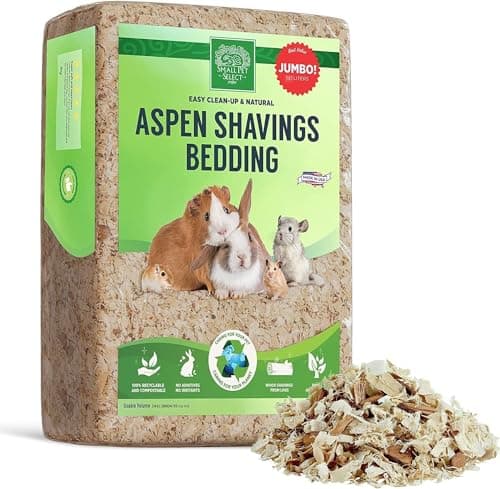 Small Pet Select Aspen BeddingNot applicable | Aspen without the dust | 8.7out of 10 | $34.99View on Amazon Price as of October 29, 2026. #ad Disclosure |
| 2 | 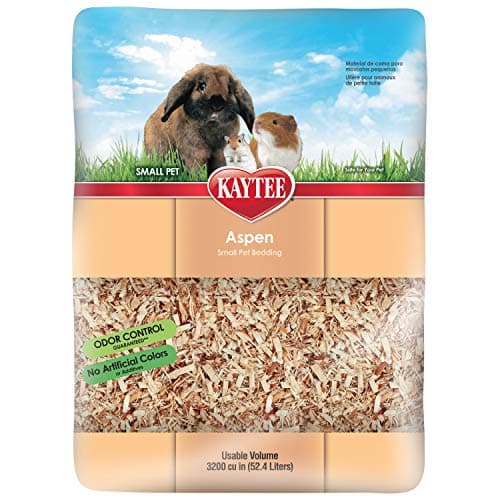 Kaytee Aspen Small Animal BeddingNot applicable | Deep burrowing on a budget | 8.3out of 10 | $13.74View on Amazon Price as of October 29, 2026. #ad Disclosure |
| 3 | 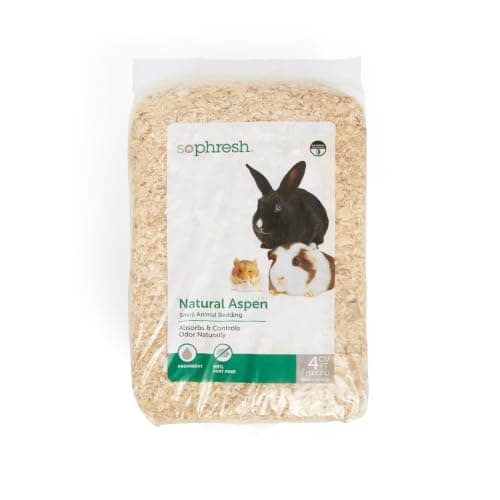 So Phresh Natural Aspen Small Animal Bedding, 56.6 L2.2 bales fill PDSA's 775 sq in minimum floor to its published 25cm depth - about 127 L, our arithmetic | A buyer who wants the volume stated, not inferred | 8.4out of 10 | $24.99View on Amazon Price as of October 29, 2026. #ad Disclosure |
| 4 | 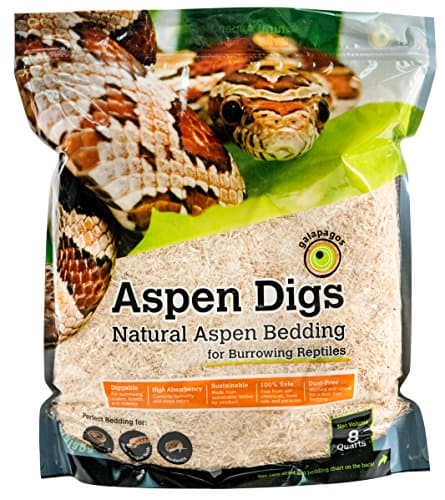 Galapagos Aspen Digs Shavings Bedding, 8 QuartAbout 17 bags to fill PDSA's 775 sq in minimum floor to 25cm deep - our arithmetic, and the reason this is a top-up pack | Topping up, or testing aspen before committing to a bale | 6.4out of 10 | $8.99View on Amazon Price as of October 29, 2026. #ad Disclosure |
| 5 | 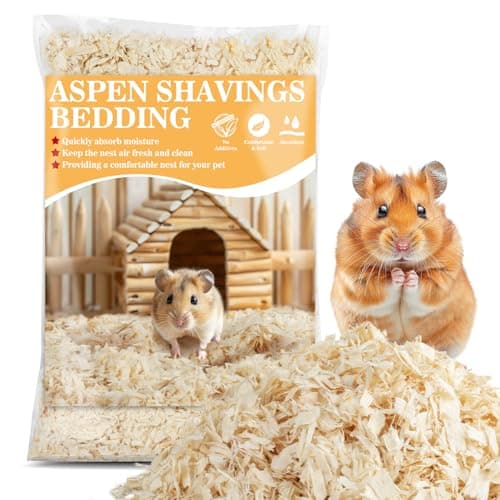 Sukh Aspen Shavings Small Pet Bedding, 14 ozNot calculable - the pack states a weight and no volume, and no bulk density for loose aspen is published anywhere we could find | A single nest corner or a very small enclosure | 5.8out of 10 | $6.59View on Amazon Price as of October 29, 2026. #ad Disclosure |
Scores are our own assessment of published specifications against the thresholds set out in how we assess products. They are not test results and not customer ratings. Tap a row to read the full assessment.
The five, and what each one is for
These are ranked for a buyer filling an enclosure to the published depth, which is what we think the category is for. If you are buying a nest corner's worth of shavings the order reverses, and we say so on each card.
1. Small Pet Select Premium Aspen, 141 L - the only single-bag fill
141 liters in one box, against a 127 liter full fill. That is the whole argument, and nothing else on sale makes it. It is also screened rather than merely claimed low-dust, which is the one place aspen is genuinely worse than paper and the one place a premium is worth paying. The catch is the single outlay, which is the largest in the category even though the volume makes it the strongest value per liter of the five, and the fact that it is harder to find in a physical store - so an emergency top-up usually ends up being a different brand.
2. Kaytee Aspen, 52.4 L - the one you can actually buy locally
The most widely stocked aspen on sale, in the pack size most people actually buy, and consistently in the cheapest bracket per liter alongside the Small Pet Select box. 2.4 bales is a full fill, which is an awkward number: in practice you buy two and run slightly shallow, or three and keep a reserve. Kaytee also publishes a 19.7 liter bale of the same bedding, which is the one to avoid on value grounds unless your enclosure is small. The listing's claim is 99.9 percent dust-free and our assessment is that standard aspen is visibly dusty in the bag whoever makes it; shake a bale out before it goes in.
3. So Phresh Natural Aspen, 56.6 L - the best-documented bale
This is the only aspen we found that publishes its volume twice, in liters and in cubic inches, and the two figures agree: 3,456 cubic inches is 56.6 liters. It also publishes a pack weight and an explicit scent-free, no-aromatic-oils statement. For a buyer whose first instinct is to check whether the numbers add up, it is the most reassuring bag in the category. It is also the most expensive per liter of the three mid-size bales, which is why it is third rather than first.
4. Galapagos Aspen Digs, 8 quarts - a good aspen in the wrong size
Marketed for burrowing and digging, coarse enough to deserve that, with a model number, a published quart figure and a clear no-added-chemicals statement. It is also 7.6 liters, so filling a minimum enclosure takes about 17 bags. We have kept it on the page because a small pack of known volume is genuinely useful for a spot change or a dig box, and because it is honest about what is in it. As a main bedding purchase it is the most expensive way to buy aspen on this page by a wide margin.
5. Sukh Aspen Shavings, 14 oz - cheapest to buy, impossible to plan with
The lowest entry price here and the clearest illustration of the problem this page exists to solve. The pack states 14 ounces and no volume, so there is no way to work out how much depth you are buying. The listing's own detail line calls the contents poplar shavings while the title says aspen; aspen is a poplar, so both words are accurate, but a listing that cannot keep its own species name consistent across two lines is not a listing to buy a 127 liter fill from. Fine for a nest corner. Not fine as a plan.
| Product | Continuous floor | Bar spacing | Dust handling | Material |
|---|---|---|---|---|
| Small Pet Select Aspen Bedding | Not applicableclears our threshold | Not applicable | Screened product; noticeably cleaner in the bag than budget aspen | Kiln-dried aspen, screened for dust |
| Kaytee Aspen Small Animal Bedding | Not applicableclears our threshold | Not applicable | Coarse shavings interlock and hold tunnel walls well | Aspen, a hardwood, so no softwood phenols |
| So Phresh Natural Aspen Small Animal Bedding, 56.6 L | 2.2 bales fill PDSA's 775 sq in minimum floor to its published 25cm depth - about 127 L, our arithmeticclears our threshold | Not applicable | Yes, in both liters and cubic inches, and the two agree - 3,456 cu in is 56.6 L. The only aspen bale we found that publishes both | Aspen wood shavings; listing states scent-free with no aromatic oils |
| Galapagos Aspen Digs Shavings Bedding, 8 Quart | About 17 bags to fill PDSA's 775 sq in minimum floor to 25cm deep - our arithmetic, and the reason this is a top-up packclears our threshold | Not applicable | Yes, 8 quarts, which is 7.6 L - the smallest pack of aspen we assess | Pure aspen wood; listing states no added chemicals, oils or parasites |
| Sukh Aspen Shavings Small Pet Bedding, 14 oz | Not calculable - the pack states a weight and no volume, and no bulk density for loose aspen is published anywhere we could find | Not applicable | No. Weight only, which is the single biggest problem with budget bedding listings | Aspen, though the listing's own detail line calls the contents poplar shavings; aspen is a poplar, so both words describe the same wood |
Dimensions as published by each manufacturer or its retailer, read 27 September 2026 and linked in each assessment below. A tick marks a product that clears our own floor-area threshold; a cross marks one that does not. Where a manufacturer does not publish a figure, the cell says so rather than estimating it.
Aspen alone, or aspen under paper?
Our position has not changed from the aspen versus paper comparison: in a deep-bedded enclosure the best result is layered, with aspen doing the structural work in the bottom six or seven inches and paper on top and in the latrine corner. Aspen holds the tunnel; paper absorbs better and is cleaner to handle. Neither has the softwood problem.
What that means for this page is that you rarely need 127 liters of aspen. A sensible split across a 775 square inch floor is something like 80 liters of aspen and 45 liters of paper, which turns the Small Pet Select box into a comfortable single purchase with reserve left over, or two Kaytee bales into enough. How deep hamster bedding should be works through the depth side of this, including what to do when a cage's own walls will not physically hold 25cm.
The layered buy
One box of screened aspen for the structural layer and one bale of paper for the top and the latrine corner. Between them they fill a 775 square inch floor to the published depth with reserve left over, which is cheaper than buying either material alone in the quantity a full fill takes.
Aspen without the dust
Small Pet Select Aspen Bedding
Not applicable
Aspen with the dust problem largely solved, which is the one reason to pay more than the supermarket bale costs.
$34.99View on AmazonPrice as of October 29, 2026. #ad Disclosure
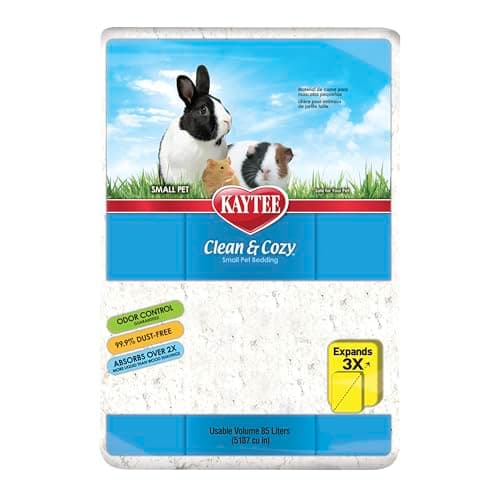
Reaching a 10 in burrow depth without buying six bags
Kaytee Clean & Cozy White Paper Bedding
One 85 L bag fills roughly 10 in deep over a 500 sq in footprint
Paper, dust-controlled and sold in a volume large enough to actually reach 10 in of depth, which is the spec that matters and the one most bedding bags fail on.
$23.95View on AmazonPrice as of October 29, 2026. #ad Disclosure
What the RSPCA asks for, and what it does not
The RSPCA's hamster environment advice asks for a dust-free substrate deep enough for burrowing and safe nesting material, and it does not name a wood. PDSA publishes the depth and the floor area and does not name a wood either. So no welfare body on this site's source list tells you to buy aspen specifically — what they tell you is the depth, the floor and dust-free, and aspen is simply the cheapest material that satisfies all three without the softwood phenol question hanging over it.
That matters for how you read the dust claims on this page. Dust-free is a published welfare requirement and an unmeasured marketing claim at the same time, which is an uncomfortable combination. If anyone in the household reacts to wood dust, the honest answer is paper rather than a better aspen — the paper bedding brands compared is the page for that, and the best hamster bedding covers both sides of the aisle together.
It is not only a hamster decision
Aspen is the default wood substrate across most of the species on this site, and the volume arithmetic travels with it. Gerbil bedding runs the same calculation against the RSPCA's 20 to 30cm depth over Woodgreen's 100 x 50cm floor and lands between 100 and 125 liters, which is why a gerbilarium costs more to fill than a hamster cage of identical floor area. For guinea pigs the picture is different again, because a fleece liner replaces the substrate entirely rather than sitting on top of it.
The one species where aspen is a judgment call rather than an obvious yes is the chinchilla, because VCA names paper-based bedding and fleece specifically. Best chinchilla bedding explains why we treat aspen as acceptable but second-choice there, and the chinchilla dust bath is the separate purchase that the bedding does not cover.
What we would actually buy
One Small Pet Select 141 liter box and one large bale of paper bedding, layered, for a properly sized enclosure. That is the least expensive route to the published depth that also solves the dust problem, and it is one delivery rather than a standing order of small bags.
If budget is the constraint, three Kaytee bales get you there for less and you shake each one out before it goes in. If you are topping up a burrow that has settled, the Galapagos quart bag is the only small pack here whose volume you can actually check. And if a bag does not tell you how many liters are in it, put it back on the shelf — that is the single most useful habit in this category, and it is the one thing none of these listings will tell you.
Questions people ask
Is aspen bedding safe for hamsters?
How much aspen bedding does a hamster cage need?
Is aspen or paper bedding better?
Why do some aspen bedding packs not list a volume?
Is aspen bedding dusty?
Can I use aspen bedding for gerbils, rats and guinea pigs?
Sources
- PDSA — The ideal home for your hamster — The cited 100 x 50cm floor minimum and the at-least-25cm bedding depth that together give the 127 liter figure this page is built on
- RSPCA — Hamster environment — The dust-free substrate and safe nesting material requirement, and the absence of any named wood
- House Rabbit Society — The dangers of softwood shavings (George Flentke, PhD) — The phenol evidence for pine and cedar, the more-than-40-percent drug effectiveness figure, the at-best-suggestive cancer wording, and the recommendation of aspen and recycled paper as alternatives
- So Phresh Natural Aspen Small Animal Bedding — listing — The 56.6 L and 3,456 cu in volume figures, the 12 lb pack weight and the scent-free, no-aromatic-oils statement
- Small Pet Select Premium Aspen Bedding — listing — The 141 L pack volume used for the single-bag-fill comparison, and the screened, low-dust description