Guides
Best gerbil bedding
Gerbil bedding is a volume problem first and a brand problem second, and the volume is bigger than almost anyone expects.
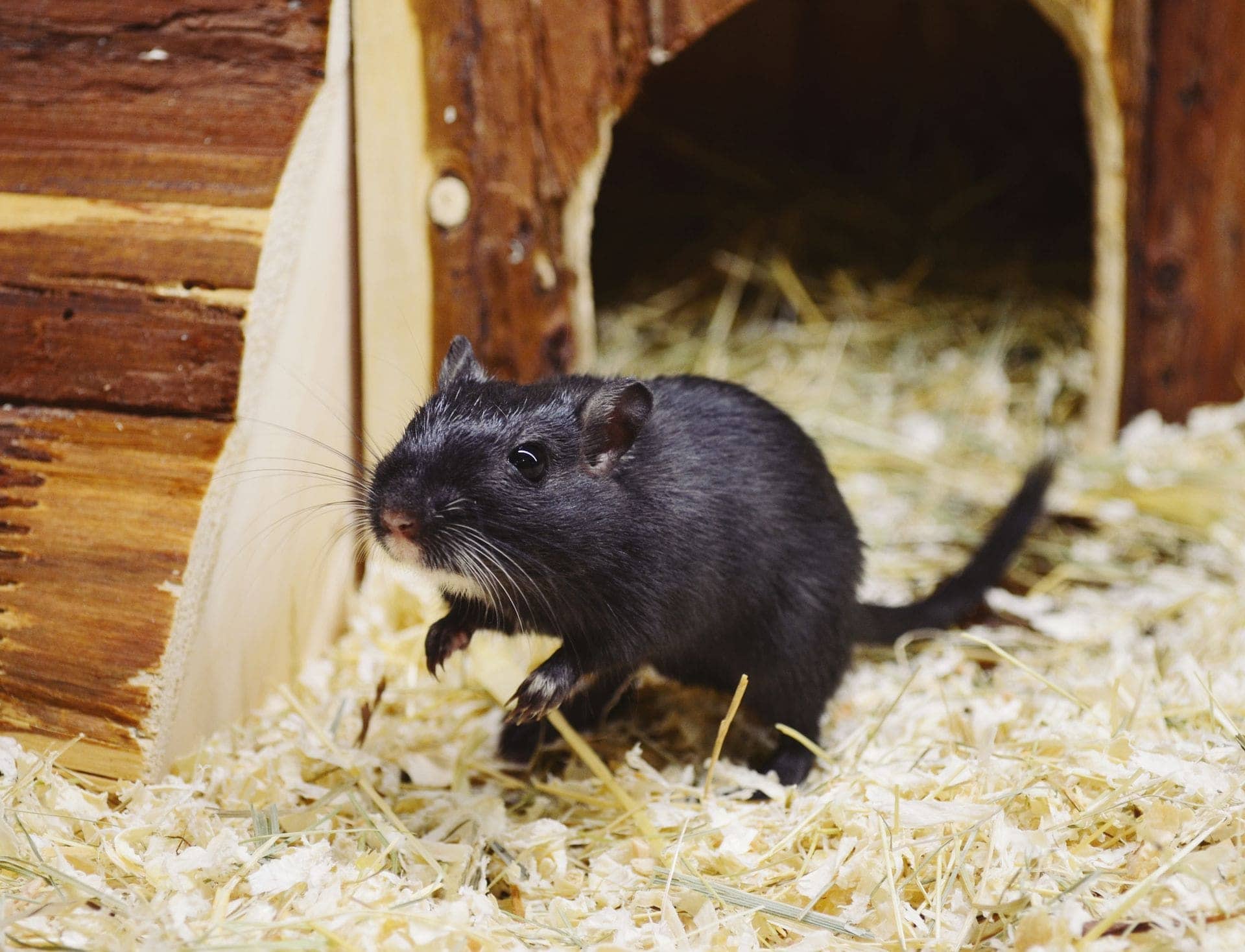
Buy Kaytee Clean & Cozy White in the 85 liter pack, and buy two of them. The RSPCA recommends a gerbil bedding depth of 20 to 30cm, and Woodgreen's minimum enclosure for a pair is 100 x 50cm — multiply those together and the first fill of a minimum-sized enclosure is 100 to 125 liters of substrate. That is more than the largest pack any brand on this page sells, which is the single fact that should change how you shop: the question is not which bedding is nicest, it is which one gets you to the published depth without six trips to a pet store. Clean & Cozy's 85 liter pack is the biggest single purchase available and the fiber holds a tunnel well once lightly damped. If cost is the binding constraint, aspen is a third of the price per liter and interlocks better than any paper — Small Pet Select's screened aspen if you mind the dust, Kaytee's if you do not.
Gerbil bedding depth and enclosure type · recommendation
a bedding depth of 20-30cm, in a gerbilarium ideally around 50cm high
Our conversion: roughly 8 to 12 inches of substrate under about 20 inches of height
Every other bedding page on this site is about material safety. This one is mostly about arithmetic, because gerbils are the species where the depth figure and the floor figure collide. A hamster burrows in a deep corner of its enclosure; the RSPCA and Woodgreen both describe gerbil substrate as something that goes throughout the enclosure, which turns a bag of bedding into a bulk purchase.
So this page works the volume out first, explains the one piece of published gerbil advice that nobody else on the internet seems to act on, and then ranks five substrates on the four things that actually separate them: liters per pack, how well a tunnel holds, dust, and price per liter. Best gerbil cages is the enclosure half of the same decision, and you want to read it first — the substrate bill is set by the box you buy.
The number: 100 liters, and why nobody tells you
Woodgreen Pets Charity publishes 100cm long by 50cm wide by 50cm high as the minimum enclosure for two gerbils, and asks for at least 8 to 10 inches (20 to 25cm) of bedding throughout it rather than heaped in one area. The RSPCA puts the depth at 20 to 30cm. Take the smaller of those depths across the smallest compliant floor and the sum is simple:
| Enclosure | Floor area | At 20cm deep | At 25cm deep | At 30cm deep |
|---|---|---|---|---|
| Woodgreen minimum for two, 100 x 50cm | 5,000 cm2 | 100 liters | 125 liters | 150 liters |
| Woodgreen minimum for three, 120 x 50cm | 6,000 cm2 | 120 liters | 150 liters | 180 liters |
| Niteangel Vista Large, 119.6 x 57.7cm | 6,897 cm2 | 138 liters | 172 liters | 207 liters |
| BUCATSTATE 3.0 47in, 119.4 x 59.9cm | 7,152 cm2 | 143 liters | 179 liters | 215 liters |
| IKEA DETOLF on its back, 162.8 x 42.9cm | 6,984 cm2 | 140 liters | 175 liters | 210 liters |
Floor areas are each manufacturer's published dimensions, and the Woodgreen rows are the charity's stated minimums. The volumes are our arithmetic — floor area multiplied by depth, with 1,000 cubic centimeters to the liter — shown so you can redo them for whatever enclosure you own. Real-world quantities run higher again, because loose substrate settles.
The largest pack of anything on this page is 85 liters. The largest aspen bale most retailers stock is about 52 liters. carefresh tops out at 60. There is no single purchase that fills a minimum-sized gerbil enclosure to the minimum published depth, which is why almost every gerbil setup photographed online is shallower than the guidance asks for — not because owners do not care, but because the shelf does not sell you enough bedding to get there and nobody ever did the multiplication out loud.
What PDSA recommends that nobody acts on
PDSA's gerbil housing advice contains a sentence that is unusual enough to be worth quoting. On filling the tank with burrowing material, it says potting compost is ideal.
That is not a sentence any pet store will repeat to you, and it is the honest explanation of why a pure paper fill disappoints gerbil keepers. Gerbils dig tunnels that hold their shape. A burrow in dry shredded paper collapses as soon as it is wide enough to turn around in, and a gerbil that cannot hold a tunnel open will dig the same corner over and over. Soil binds. The common practice among experienced keepers — mixing a plain, additive-free topsoil or coir into the paper or aspen at perhaps a quarter to a third of the volume — follows directly from what PDSA names, and it also stretches the bedding bill, since soil is sold by the 50 liter bag at a fraction of bedding prices.
We are naming the proportion as common practice rather than as a published figure, because no charity publishes one. What is published is the material: PDSA names potting compost, and it names what to keep out of the nest — not newspaper, because of the ink, and not cotton wool, which it warns can cause gut blockages and entanglement. Shredded white kitchen roll is what it recommends instead.
If you go the compost route, the rule is plain and unimproveable: nothing added. No fertilizer, no wetting agents, no perlite, no bark chunks. A bag that lists any of those is a bag for a houseplant.
What we ranked these on
- 1.Liters per pack. First because of the arithmetic above. A bedding that is marginally nicer per handful and sold in a 14 liter bag is a worse buy for this species than a merely good bedding sold in 85 liters, and that is not a close call when the fill is 100 liters.
- 2.Tunnel stability. The specification gerbils care about and no manufacturer publishes. Coarse, interlocking material holds a burrow wall; short, soft, compacting fiber does not. This is the one place aspen genuinely beats paper.
- 3.Dust. Twenty centimeters of substrate is a lot of surface area for an animal whose nose lives in it. Dust-extracted and screened products cost more and are worth it in a sealed glass enclosure, where dust has nowhere to go.
- 4.Price per liter. Normally a tiebreaker; here it is a main criterion, because you are buying five to ten times the volume a hamster setup needs.
- 5.Material safety. Last only because it is a gate rather than a ranking. Paper and aspen both pass. Pine and cedar do not, for a reason set out in pine and cedar bedding that concerns phenols rather than wood as such.
Pine and cedar shavings · recommendation
phenols in softwood shavings raise liver enzyme levels; in rodents, constant exposure to phenol-containing litters is reported to have reduced drug effectiveness by more than 40 percent
| # | Product | Best for | Score | Price |
|---|---|---|---|---|
| 1 |  Illustrative IllustrativeKaytee Clean & Cozy White Paper BeddingOne 85 L bag fills roughly 10 in deep over a 500 sq in footprint | Reaching a 10 in burrow depth without buying six bags | 9.0out of 10 | Check price on Amazon We do not print prices. #ad Disclosure |
| 2 |  Illustrative IllustrativeSmall Pet Select Aspen BeddingNot applicable | Aspen without the dust | 8.7out of 10 | Check price on Amazon We do not print prices. #ad Disclosure |
| 3 | Illustrative Kaytee Aspen Small Animal BeddingNot applicable | Deep burrowing on a budget | 8.3out of 10 | Check price on Amazon We do not print prices. #ad Disclosure |
| 4 | Illustrative carefresh Small Pet BeddingNot applicable | Availability and softness | 8.0out of 10 | Check price on Amazon We do not print prices. #ad Disclosure |
| 5 | Illustrative Oxbow Pure Comfort BeddingNot applicable | The toilet corner of a deep-bedded enclosure | 8.1out of 10 | Check price on Amazon We do not print prices. #ad Disclosure |
Scores are our own assessment of published specifications against the thresholds set out in how we assess products. They are not test results and not customer ratings. Tap a row to read the full assessment.
The five, on volume and behavior
| Bedding | Largest pack | Material | Tunnel stability | Packs for a 100 L fill |
|---|---|---|---|---|
| Kaytee Clean & Cozy White | 85 liters expanded | Virgin kraft paper | Good, better once lightly damped | 2 |
| Small Pet Select Aspen | Large-volume boxes | Screened kiln-dried aspen | Best of the five | Varies by box size |
| Kaytee Aspen | About 52 liters expanded | Aspen hardwood | Best of the five | 2 to 3 |
| carefresh Small Pet Bedding | About 60 liters expanded | Reclaimed paper fiber | Weakest, compacts | 2 |
| Oxbow Pure Comfort | About 72 liters expanded | Paper fiber | Moderate, compacts | 2 |
Pack volumes are each manufacturer's own expanded-volume claims as listed, and the pack counts are our arithmetic against the 100 liter first fill calculated above. Small Pet Select sells by box rather than to a single published expanded volume, so that cell is left honest rather than filled in.
Paper or aspen, for a tunneling species
For hamsters we treat this as close to a coin flip, and aspen vs paper bedding sets out why. For gerbils the balance shifts, and in both directions at once.
Aspen wins on structure and on cost. Coarse shavings interlock, which is exactly what a tunnel wall needs, and at roughly a third of paper's price per liter the difference across 100 liters is the kind of number you notice. Its weakness is dust, and dust matters more here than in a wire cage, because the enclosure the RSPCA describes — solid glass walls, mesh lid — has no cross-ventilation at substrate level.
Paper wins on dust and on absorbency, and it is sold in the only pack sizes that approach a one-trip fill. Its weakness is that dry paper does not hold a burrow; it needs light damping, or mixing with something that binds, before a gerbil gets a tunnel that survives the night.
Which is to say: the honest answer for this species is both. A base layer of aspen for structure and cost, a top layer of paper for the nest and the dust, and — if you follow what PDSA actually names — a proportion of plain topsoil through the lower half for the tunnels. That is a mix rather than a brand, and it is cheaper than any single-material fill of the same depth.
Nest material, separately from substrate
PDSA recommends shredded white kitchen roll for the nest and warns against newspaper and cotton wool. If you would rather buy it than tear it, these are the two we would use: undyed and unscented, crumbled rather than stranded, so nothing can wrap a toe.
- Illustrative
Loose nest material a hamster arranges itself
Kaytee Clean & Cozy Natural Paper Bedding
49.2 L pack is about 3,000 cu in expanded, per the retailer listing
The nest material we would buy first: undyed, unscented paper in short crumbled pieces that a hamster can carry and pack, with none of the strand behavior that makes fluffy nesting products dangerous.
Check price on AmazonWe do not print prices. #ad Disclosure
- Illustrative
Reaching a 10 in burrow depth without buying six bags
Kaytee Clean & Cozy White Paper Bedding
One 85 L bag fills roughly 10 in deep over a 500 sq in footprint
Paper, dust-controlled and sold in a volume large enough to actually reach 10 in of depth, which is the spec that matters and the one most bedding bags fail on.
Check price on AmazonWe do not print prices. #ad Disclosure
What we would not put in a gerbil enclosure
- Pine and cedar shavings. The one bedding category with published physiological evidence against it, and it is still the cheapest thing on the shelf. Aspen is a hardwood and does not carry the same question.
- Fluffy nesting floss, of any brand or color. The strands do not break. They wrap toes and they do not pass through a gut. PDSA's cotton wool warning is the same hazard under a different name, and this applies to gerbils exactly as it does to hamsters.
- Anything scented. Lavender, vanilla, 'odor-neutralizing' — all of it is there for the owner. The animal's nose is in the substrate for most of the day, and a scented bedding in a sealed glass enclosure has nowhere to vent.
- Dyed confetti bedding. No evidence of harm that we can cite, and no benefit either; the dye exists for the shelf. Where a product range sells undyed and dyed versions in similar bags, buy the undyed one and read the label twice, because they are easy to confuse.
- Potting compost with additives. Soil is the right idea and a bag of fertilized, wetting-agent-treated houseplant mix is the wrong execution. Plain topsoil or coir, nothing added, or skip it.
- Hay as a substrate. Fine as nesting and foraging material on top; useless as the 20cm of digging material the guidance is asking for, and it molds when damp.
Keeping it, once it is in
The instinct with a big enclosure is a big weekly clean, and for a deep-bedded setup that is the wrong routine. Stripping 100 liters of substrate every week destroys the tunnel system the animals spent days building, costs a fortune in bedding, and removes the scent marking a stable gerbil group depends on. Cage cleaning safety covers the products; the routine for a deep fill is spot-clean the soiled areas, replace what you take out, and strip the whole thing only every few months.
One gerbil-specific extra, and it is cheap: PDSA recommends setting up a dust bath, and names chinchilla sand as the material, to keep the coat in condition. We do not carry a sand product in our registry yet — the one widely-sold chinchilla bath sand we looked at is no longer listed on its manufacturer's own site, and we are not going to point you at something we cannot confirm is current. Buy a sand sold for chinchilla bathing, in a heavy shallow dish, and note that sand and dust are different products: the fine dust marketed for chinchillas is the one to avoid in an enclosure with no ventilation at floor level.
And check the depth rather than trusting it. Substrate settles by a surprising amount in the first fortnight, and the front glass of a Vista or a BUCATSTATE exists precisely so you can see the line without digging. If it has dropped below the 20cm mark, top it up — that is the entire maintenance task this species asks of you.
The assessments
Our pick · Reaching a 10 in burrow depth without buying six bags
Kaytee Clean & Cozy White Paper Bedding
Paper, dust-controlled and sold in a volume large enough to actually reach 10 in of depth, which is the spec that matters and the one most bedding bags fail on.
- Dimensions
- Sold in sizes up to 85 liters (5,184 cu in) expanded
- Continuous floor
- One 85 L bag fills roughly 10 in deep over a 500 sq in footprint
- Bar spacing
- Not applicable
- Material
- Virgin kraft paper; manufacturer states 99 percent dust-free
- Absorbency
- Manufacturer states it absorbs up to six times its weight
What it gets right
- Paper, so none of the softwood phenol question applies
- 99 percent dust-free by the manufacturer's own claim
- 85 L pack is one of the few that fills a large enclosure in a single bag
- Holds a burrow shape well once slightly damped
What it gets wrong
- Paper is more expensive per liter than aspen
- The white version shows soiling immediately, which some owners dislike
- Scented variants exist in the range and we would avoid all of them
Who should buy something else
Not for anyone who wants the cheapest possible substrate by volume. Aspen costs less; the trade-off is dust and a less stable tunnel structure.
Specifications read from Kaytee product listing on 27 September 2026. Floor-area arithmetic is ours and is shown above so you can redo it.
Illustrative- Material safety10
- Dust9
- Burrow stability9
- Volume per pack9
- Value per liter7
We do not print prices. #ad Disclosure
Number 2 · Aspen without the dust
Small Pet Select Aspen Bedding
Aspen with the dust problem largely solved, which is the one reason to pay more than the supermarket bale costs.
- Dimensions
- Sold in large-volume boxes
- Continuous floor
- Not applicable
- Bar spacing
- Not applicable
- Material
- Kiln-dried aspen, screened for dust
- Dust handling
- Screened product; noticeably cleaner in the bag than budget aspen
What it gets right
- Screened, so appreciably less dust than standard aspen bales
- Same hardwood safety position and the same good tunnel structure
- Large boxes suit a deep fill
What it gets wrong
- Costs more per liter than standard aspen
- Less widely stocked in physical stores
Who should buy something else
Not worth the premium if the enclosure lives in a garage or utility room where a little dust is irrelevant.
Specifications read from Manufacturer listing on 27 September 2026. Floor-area arithmetic is ours and is shown above so you can redo it.
Illustrative- Material safety9
- Dust8
- Burrow stability10
- Volume per pack9
- Value per liter7
We do not print prices. #ad Disclosure
Number 3 · Deep burrowing on a budget
Kaytee Aspen Small Animal Bedding
The cheapest substrate we are willing to recommend, and the best tunnel-holder of the three, at the cost of visible dust in the bag.
- Dimensions
- Sold in compressed bales, commonly 8 L to 52.4 L expanded
- Continuous floor
- Not applicable
- Bar spacing
- Not applicable
- Material
- Aspen, a hardwood, so no softwood phenols
- Burrow behavior
- Coarse shavings interlock and hold tunnel walls well
What it gets right
- Aspen is a hardwood, so the phenol issue that rules out pine and cedar does not apply
- Coarse shavings interlock, so a 10 in burrow holds its shape
- Much cheaper per liter than paper
What it gets wrong
- Noticeably dusty; sift or shake it out before it goes in
- Absorbs less than paper, so spot-cleaning is more frequent
- Bale sizes vary between retailers, so plan the fill volume before you buy
Who should buy something else
Avoid if anyone in the household reacts to wood dust, or if the enclosure sits in a bedroom where you would notice it.
Specifications read from Manufacturer listing on 27 September 2026. Floor-area arithmetic is ours and is shown above so you can redo it.
Illustrative- Material safety9
- Dust5
- Burrow stability10
- Volume per pack8
- Value per liter10
We do not print prices. #ad Disclosure
Number 4 · Availability and softness
carefresh Small Pet Bedding
The most widely stocked paper bedding, and a safe default whose only real weakness is that it compacts rather than holding an open tunnel.
- Dimensions
- Sold in compressed packs from 14 L to 60 L expanded
- Continuous floor
- Not applicable
- Bar spacing
- Not applicable
- Material
- Reclaimed paper fiber
- Handling
- Soft, short fiber that packs down more than kraft paper
What it gets right
- Paper fiber, so the softwood phenol question does not arise
- Stocked almost everywhere, which matters when you need a bag today
- Very soft, and good in nest boxes
What it gets wrong
- Compacts under its own weight, so deep burrows collapse more readily
- Short fiber means more dust in the bag than kraft-paper products
- Smaller pack sizes make a 10 in fill expensive
Who should buy something else
Not the choice if deep burrowing is the point of your setup. Use it in the nest and a kraft-paper or aspen substrate for the depth.
Specifications read from Manufacturer listing on 27 September 2026. Floor-area arithmetic is ours and is shown above so you can redo it.
Illustrative- Material safety10
- Dust7
- Burrow stability6
- Volume per pack7
- Value per liter8
We do not print prices. #ad Disclosure
Number 5 · The toilet corner of a deep-bedded enclosure
Oxbow Pure Comfort Bedding
A paper bedding with better odor behavior than most, which matters in the one corner of the enclosure that always needs it.
- Dimensions
- Sold in compressed packs up to 72 L expanded
- Continuous floor
- Not applicable
- Bar spacing
- Not applicable
- Material
- Paper fiber, unbleached options available
- Odor handling
- Marketed on odor control; performs well in a urine corner
What it gets right
- Paper, so no softwood question
- Handles a concentrated urine corner better than aspen
- Unbleached versions avoid the optical brighteners in white paper beddings
What it gets wrong
- Premium price per liter
- Compacts more than kraft paper, so it is not the best deep-burrow substrate
Who should buy something else
Not the whole-enclosure substrate at this price. Buy it for the wet corner and something cheaper for the other nine inches.
Specifications read from Manufacturer listing on 27 September 2026. Floor-area arithmetic is ours and is shown above so you can redo it.
Illustrative- Material safety10
- Dust8
- Burrow stability6
- Volume per pack8
- Value per liter6
We do not print prices. #ad Disclosure
What we would buy
Two 85 liter packs of Kaytee Clean & Cozy White if you want one order and no thinking. It is the largest single pack available, the kraft fiber holds a burrow better than any other paper here, and 170 liters covers the first fill of a minimum enclosure with enough left to top up. The real cost is that it is the most expensive route per liter, and the white shows every soiled patch — which some owners find useful and some find depressing.
Aspen for the bottom two thirds if the bill matters, and it usually should at this volume. Small Pet Select's screened aspen is the one to buy if the enclosure is in a bedroom or anyone in the house reacts to wood dust; Kaytee's standard bale is a third of the price and perfectly safe, it just arrives dusty enough that you will want to shake it out before it goes in.
carefresh if a pet store today is the constraint rather than cost or structure — it is the most widely stocked bedding in the category and a safe default, and it compacts, so it is a better nest than a tunnel. Oxbow Pure Comfort for the corner the animals choose as a toilet, where its odor behavior is worth the premium across a small area and would be hard to justify across all 100 liters.
And whatever you fill it with, read best gerbil cages before you buy the bedding rather than after. The enclosure sets the volume, the volume sets the bill, and buying those two in the wrong order is how people end up with four inches of substrate and a gerbil digging the same corner all night.
Questions people ask
How deep should gerbil bedding be?
How much bedding do two gerbils need?
What is the best bedding for gerbils?
Can gerbils have paper bedding?
Is aspen safe for gerbils?
Do gerbils need a sand bath?
How often should gerbil bedding be changed?
Sources
- RSPCA — Gerbil environment — The 20-30cm bedding depth, the roughly 50cm gerbilarium height and the solid-glass-walls-with-mesh-top construction that the dust discussion on this page depends on
- Woodgreen Pets Charity — How to house your gerbils — The 100 x 50 x 50cm minimum for two gerbils and 120 x 50cm for three, and the at-least-8-to-10-inches-throughout bedding depth the volume table is calculated from
- PDSA — The ideal home for your gerbils — Potting compost named as ideal burrowing material, shredded white kitchen roll for the nest, the warnings against newspaper ink and cotton wool, and the chinchilla sand dust bath