Guides
Best small pets for apartment living
The enclosure footprint in square feet, the noise at 3am, and the smell. Three things a flat makes unavoidable.
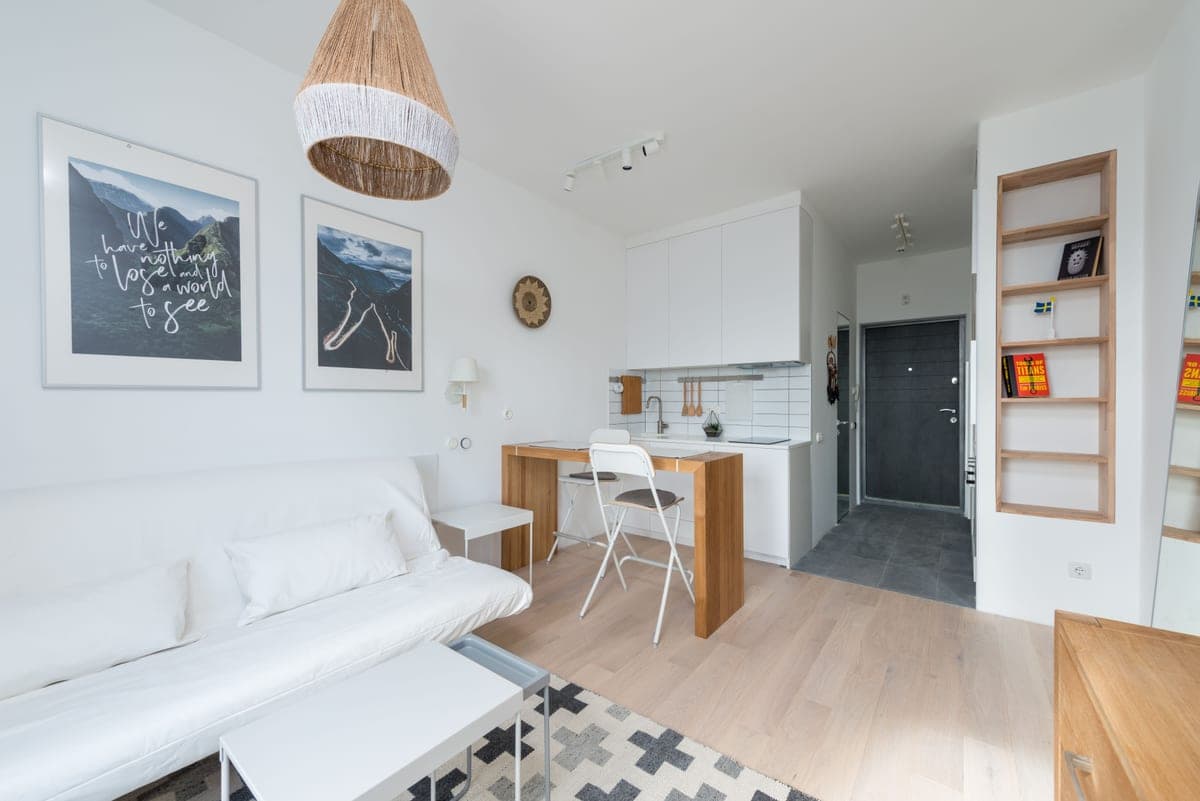
In a flat, a hamster is the best fit: 5.4 square feet of enclosure fits along a wall, and it is silent by day. Guinea pigs are next at 10.5 square feet for a pair, awake when you are and noisier in the day rather than at night. Ferrets need a proofed room and 2-3 hours out of the cage daily. Rabbits need 64.5 square feet in one block, which in most flats means giving over a room.
Apartment guides in this category tend to conclude that all small pets are fine in a flat because they are small. The animals are small; the published enclosure figures are not, and the difference between 5.4 and 64.5 square feet is the difference between a sideboard and a spare room.
The footprints, in furniture terms
| Species | Published enclosure minimum | Roughly equivalent to | Fits in a flat? |
|---|---|---|---|
| Hamster | 775 sq in (5.4 sq ft), plus 10in of bedding depth | A four-foot sideboard | Yes, along a wall |
| Guinea pigs (pair) | 10.5 sq ft preferred | A 4ft 7in by 2ft 4in table | Yes, with a table or stand |
| Ferret | A multi-level cage plus a proofed room for 2-3 hours daily | A tall cabinet, plus a room you can close | Possible, with the routine |
| Rabbits (pair) | 64.5 sq ft in one unbroken block | An eight-foot square, or most of a small bedroom | Only by giving over a room |
Figures are cited and linked on each species' pages. Furniture equivalents are our conversions.
Hamsters: the best apartment fit
Hamster cage minimum size · minimum
100cm x 50cm
Our conversion: 5,000 cm2, or 775 square inches of continuous floor
5.4 square feet is a four-foot enclosure along a wall, which almost any flat can find. And a hamster is asleep all day, which in a flat with thin walls is a genuine advantage — a hamster makes no noise while you or your neighbors are trying to work.
The flat-specific catch is the night. A hamster runs for hours in the small hours, and a cheap wheel on a hard floor transmits through a floor and a wall. This is entirely solvable and worth solving before it becomes a problem:
- A ball-bearing wheel rather than one spinning on a plastic post. The difference is not subtle, and it is the single most effective measure. The safest hamster wheels.
- Deep bedding, which absorbs vibration as well as serving the animal. Ten inches of substrate is a lot of damping.
- Not on a shared wall or directly on a hard floor. A rug or a mat under the enclosure stops vibration transmitting into the structure.
- Not in your bedroom if you are a light sleeper, and not against a neighbor's bedroom wall.
The other flat advantage: the cheapest enclosures that clear the published figure — a converted tub or a DETOLF cabinet — are also the ones that look most like furniture or least like a pet cage, which matters in a room you also live in.
Guinea pigs: workable, and plan the table
Guinea pig cage minimum · minimum
7.5 sq ft (about 30in x 36in) bare minimum for one; 7.5 sq ft minimum for two, with at least 10.5 sq ft (30in x 50in) preferred
10.5 square feet for a pair is about a 4ft 7in by 2ft 4in footprint, which fits along most walls. The thing to plan is what it stands on: a C&C cage's correx base needs support along its whole length, so you need a table or a purpose-made stand rather than a shelf.
Noise: guinea pigs are loud in the daytime — whistling, squeaking when they hear a fridge open — and quiet at night. In a flat that is the right way round. They are also the species most likely to be noticed by a visitor, which is a preference rather than a problem.
Smell: the honest flat consideration. Guinea pigs produce a lot of urine in one corner and hay gets everywhere. A fleece liner plus an absorbent pad in the toilet corner, changed often, manages it — see liners versus disposable bedding. A neglected guinea pig cage in a one-bedroom flat is noticeable from the hallway.
Ferrets: the room is the constraint
Ferret cage suggested minimum · suggested minimum
24in x 24in x 18in high (60cm x 60cm x 45cm)
Our conversion: 576 square inches, or 4 square feet, of floor
The cage fits in a flat — a double unit has a 36-inch footprint and goes up rather than out, which is ideal for small spaces. The published requirement for two to three hours a day out of the cage is what needs a flat to have a room that can be closed and proofed.
Ferret-proofing a flat is in some ways easier than a house: fewer rooms, fewer gaps. The specific flat hazards are worth naming: the gap under a front door, appliance drums in a kitchen you cannot close off, and pipe runs through walls. See ferret escape-proofing.
Smell is the real flat question for ferrets. They have a distinctive musky odor that comes largely from skin oils on bedding, and in a small space it is noticeable. It is manageable with a strict fabric-washing routine — ferret bedding and liners — and it does not disappear.
Rabbits: only if you will give over the space
Rabbit enclosure minimum · minimum
a single enclosed area of at least 3m x 2m by 1m high
Our conversion: 9ft 10in x 6ft 7in x 3ft 3in, about 64.5 square feet of floor
64.5 square feet in one unbroken block, with platforms explicitly excluded. In a flat that means either most of a small bedroom given to a pen, or a rabbit-proofed room with free access — which is genuinely the best rabbit housing there is and requires you to have a room to give.
If you have that, a flat is a good place for a rabbit: no predators, no weather, stable temperature, and the daily contact that catches illness early. If you do not, the honest answer is that a flat and a pair of rabbits do not fit, and a species that does is a better outcome for everyone. See best indoor rabbit housing.
The flat-specific hazard is cables. A rabbit chewing a live cable is the most serious risk in indoor rabbit keeping, and a flat tends to have more cable per square foot than a house. Hard conduit, not cable tidies.
The three things a flat makes unavoidable
- 1.Noise travels. Through floors to the flat below and through walls to the one beside. A hamster wheel and a rabbit thumping are both transmitted structurally, and a mat or rug under the enclosure does more than you would expect.
- 2.Smell has nowhere to go. In a house an enclosure can be in a utility room. In a flat it is in a room you live in, which means the cleaning routine is not optional and the bedding choice matters more.
- 3.Check your tenancy. Many agreements cover pets in terms that include caged animals, and finding out afterwards is a bad way to find out. This is worth five minutes before rather than a problem later.
And one thing a flat makes better, which is worth ending on: everything is close. You walk past the enclosure constantly, you notice an animal that is off its food, and the daily tasks happen because they are in front of you. For small pets, whose illnesses are easy to miss and fast-moving, that proximity is a genuine welfare advantage over a hutch at the end of a garden.