Guides
The best small pets, compared on what they need
Most species guides compare temperament. This one starts with the published space figure, because that is the constraint you cannot negotiate.
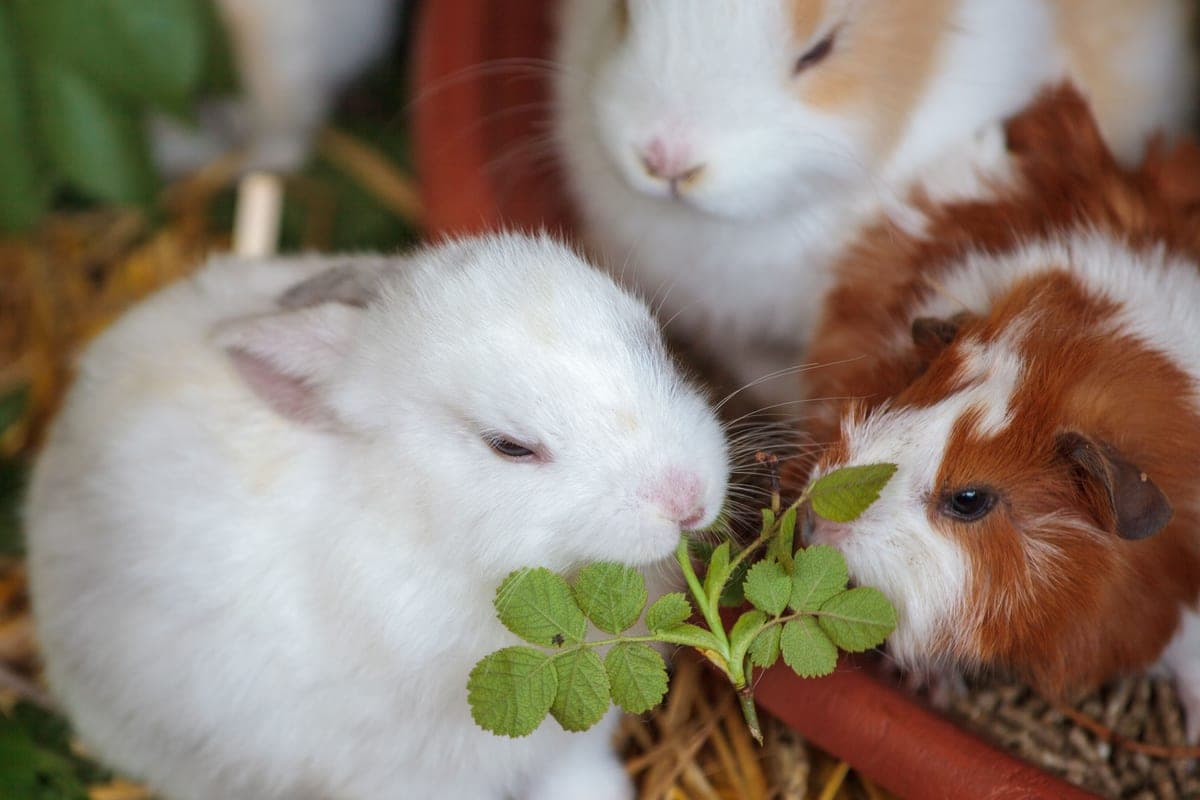
On published housing requirements: a hamster needs 5.4 square feet and lives 2-3 years. Two guinea pigs need 10.5 square feet preferred and live 5-7 years. A ferret needs a multi-level cage plus 2-3 hours a day out of it and lives 6-10 years. Two rabbits need 64.5 square feet in one unbroken block and live 8-12 years. Those four figures eliminate most options for most households before temperament comes into it.
Almost every guide to choosing a small pet compares temperament first: which is friendlier, which is easier to handle, which is awake when you are. Those are real considerations and they are the wrong place to start, because temperament is a preference and floor area is a constraint. A species you would love that needs 64 square feet you do not have is not a good match, and no amount of enthusiasm changes the arithmetic.
The four species, on the numbers
| Species | Published minimum | Issuing body | Typical lifespan | Daily time |
|---|---|---|---|---|
| Hamster (one) | 775 sq in (5.4 sq ft) of continuous floor | PDSA | 2 to 3 years | 10-15 min plus spot-cleaning |
| Guinea pigs (a pair) | 7.5 sq ft minimum, 10.5 preferred | Humane World for Animals | 5 to 7 years | 20-30 min, hay and veg daily |
| Ferret | VCA suggests 4 sq ft; our threshold is 6 sq ft per level, multi-level | VCA / our own | 6 to 10 years | 2-3 hours out of the cage, published |
| Rabbits (a pair) | 64.5 sq ft in one unbroken block, 3ft 3in high | RWAF and the RSPCA | 8 to 12 years | 30-60 min plus daily litter |
Floor-area figures are cited and linked on each species' own pages. Lifespan ranges are widely published husbandry figures rather than a single sourced statistic, given as an order of magnitude for planning. The ferret out-of-cage figure is published by VCA.
The striking pattern is that space requirement and lifespan run together. The species needing the least floor lives the shortest time; the species needing an eight-foot square is a commitment of up to twelve years. So the honest first question is not which animal appeals, but which combination of space and years your household can actually hold for the whole of it.
Hamsters
Hamster cage minimum size · minimum
100cm x 50cm
Our conversion: 5,000 cm2, or 775 square inches of continuous floor
Space: 775 square inches of continuous floor, plus ten inches of bedding depth, which together rule out almost every cage sold as a hamster cage. The good news is that floor area is cheap here: a converted storage tub or an IKEA display cabinet clears the figure for less than a pet-store starter kit.
Who it suits: an adult or older child who wants an animal to watch rather than hold, and who is up in the evening. Hamsters are nocturnal and solitary, and a Syrian will fight another Syrian at any enclosure size.
Who it does not suit: a young child who wants to play with an animal in the daytime. This is the single most common mismatch in small-pet keeping, and it is not the child's fault or the hamster's.
Start here: hamster cage size.
Guinea pigs
Guinea pig cage minimum · minimum
7.5 sq ft (about 30in x 36in) bare minimum for one; 7.5 sq ft minimum for two, with at least 10.5 sq ft (30in x 50in) preferred
Space: 10.5 square feet preferred for a pair, and it is always a pair — guinea pigs are obligately social. A 4x2 C&C cage clears the preferred figure for roughly the price of a large pet-store cage, which makes this the species where the published guidance and the available products line up best.
Who it suits: most households, and children in particular, because guinea pigs are awake during the day and tolerate gentle handling better than the alternatives. They are also the species where you can straightforwardly buy housing that clears a published preferred figure, which is not true of the other three.
Who it does not suit: anyone who wants one animal, anyone unwilling to buy fresh vegetables daily, and anyone housing them outdoors in a climate outside 17-20C for much of the year.
Start here: guinea pig cage size.
Ferrets
Ferret cage suggested minimum · suggested minimum
24in x 24in x 18in high (60cm x 60cm x 45cm)
Our conversion: 576 square inches, or 4 square feet, of floor
Space: the published cage figure is small and not the real constraint. The real constraint is the other figure on the same page: at least two to three hours a day out of the cage, in a ferret-proofed space, with the note that more is better.
Who it suits: someone at home for much of the day who wants an interactive animal, and who will genuinely ferret-proof a room. Ferrets are the most engaging of the four by a distance.
Who it does not suit: anyone who cannot provide the out-of-cage time, which is a published requirement rather than a nicety. Also anyone whose home cannot be proofed — reclining furniture, accessible appliances and unblockable gaps are genuine hazards for a ferret.
Start here: ferret cage size and ferret escape-proofing.
Rabbits
Rabbit enclosure minimum · minimum
a single enclosed area of at least 3m x 2m by 1m high
Our conversion: 9ft 10in x 6ft 7in x 3ft 3in, about 64.5 square feet of floor
Space: 64.5 square feet in one unbroken block, and RWAF states explicitly that platforms and tunnels do not count towards it. No hutch on sale provides it, so housing a rabbit properly means assembling an enclosure rather than buying one.
Who it suits: a household with a spare room or a garden and a willingness to build. Rabbits are intelligent, litter-train readily and make genuinely good indoor companions for people who commit to the space.
Who it does not suit: most first-time small-pet households, which is worth saying plainly. Not because rabbits are difficult animals but because 64.5 square feet for up to twelve years is a large commitment, and because rabbits — contrary to their reputation — are generally not keen on being handled by children.
Start here: rabbit hutch size.
Housing cost, which is most of the real cost
We do not publish prices on this site, for the reasons in how we assess products, so this is about relative cost. The pattern is consistent across all four species: the enclosure that clears a published figure costs several times the enclosure sold on the shelf next to the animal, and it is the single largest purchase you will make.
The good news is that floor area is the cheapest specification to satisfy if you will assemble rather than buy. A converted tub clears the hamster minimum for less than a starter cage. Four joined exercise pens clear the rabbit minimum for less per square foot than any hutch. A modular C&C cage clears the guinea pig preferred figure for less than a smaller purpose-built habitat. In every case the premium product is selling convenience and finish, not space.
Choosing
- Least space: hamster, at 5.4 square feet — still larger than almost every cage sold for one.
- Best fit for children: guinea pigs, because they are awake in the daytime. Best small pets for kids.
- Most interactive: ferret, if you can provide the out-of-cage time.
- Most demanding: rabbits, on space and on years.
- Easiest to house well off the shelf: guinea pigs, by a clear margin.
- If you are new to all of this: best small pets for beginners.
One closing framing, because it is what this whole site is for. The question is not whether you can house an animal at the published minimum. It is whether you can do that and keep doing it for the species' whole life, including the years when the novelty has worn off. The species whose minimum you can clear comfortably is a better match than the species whose minimum you can only just reach.