Guides
Chinchilla vs guinea pig
The pet aisle shelves them together and almost nothing they need is the same. One wants height, cool and fifteen years; the other wants floor, company and vitamin C.
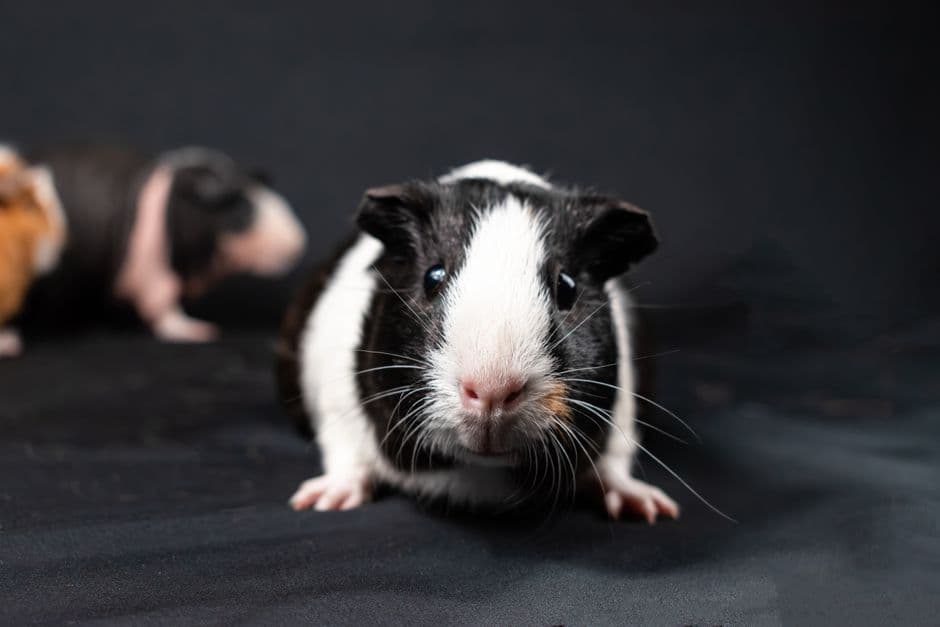
Get a pair of guinea pigs if you want an animal you can handle daily, that is awake when you are, that lives five to seven years and that is housed on one level of 10.5 square feet. Get chinchillas if you can give them a cool, dry room, a cage three to five feet tall, fifteen to twenty years, and the patience to bond with a nocturnal animal that is quiet, shy and rarely bites but does not want to be picked up. The two requirements barely overlap: a chinchilla's allowance is height and a guinea pig's is floor, and the single biggest practical difference is that a chinchilla is a two-decade commitment in a room most houses run too warm.
These two get compared because they look adjacent on a shelf — similar size, similar price, both in the small-pet aisle, both sold with a bag of pellets. Almost nothing else about them matches, and the mismatches are all in the published figures rather than in anything subjective.
The two sets of figures, side by side
| Chinchilla | Guinea pig | |
|---|---|---|
| Minimum housing, one animal | 3ft x 2ft x 3ft, multiple levels (VCA) | 7.5 sq ft, about 30 x 36in (Humane World) |
| Minimum housing, a pair | 3ft x 2ft x 5ft, multiple levels (VCA) | 7.5 sq ft minimum, at least 10.5 sq ft preferred (Humane World) |
| What the extra animal buys | Two more feet of height | Three more square feet of floor |
| Enclosure height | 36in for one, 60in for a pair | Sides at least 12in high |
| Temperature | 55-68F (10-20C), below 80F (27C), humidity under 40-50% (VCA) | 17-20C ideal, indoors below 15C, heatstroke risk above 26C (RSPCA) |
| Activity pattern | Nocturnal (VCA) | Active in short bursts through the day and night |
| Adult weight | 400-600g (VCA) | 700-1,200g, widely published husbandry range |
| Life expectancy | 15-20 years (VCA) | 5-7 years, widely published husbandry range |
| Handling | Quiet, shy, rarely bites; fur slip if grasped tightly (VCA) | Handled daily by most keepers; tolerates being held |
| Diet specifics | Hay-based; a daily dust bath is a husbandry requirement | Unlimited low-calcium hay plus 10-50mg vitamin C a day (VCA) |
| Wheel | Required, solid-floored, 15in diameter (VCA) | Not appropriate; guinea pigs do not use wheels |
Chinchilla figures are VCA's published housing and ownership guidance, read 2026-10-06. Guinea pig housing figures are Humane World for Animals, temperature is RSPCA, and diet is VCA, all previously recorded on this site. Adult weights and the guinea pig lifespan are widely published husbandry ranges rather than a single sourced statistic, and are labeled as such.
Read down that table and the pattern is consistent. The guinea pig requirement is horizontal, social and short-term. The chinchilla requirement is vertical, environmental and very long-term. They are not two versions of the same pet.
The four differences that actually decide it
1. Fifteen to twenty years against five to seven
VCA publishes a life expectancy of 15-20 years for a chinchilla. That is longer than many dogs and it is the single most under-weighted fact in the comparison. A chinchilla bought for a ten-year-old is an animal that outlives their time at home, and our best small pets for teens page makes the same argument about lifespan from the other direction. Guinea pigs at five to seven years are a real commitment and a different order of one.
2. A cool, dry room against a normal one
VCA's chinchilla figures are 55-68F (10-20C), below 80F (27C), with humidity under 40-50 percent. That is cooler and drier than most homes, and it rules out a kitchen, a conservatory and a south-facing room in summer. Guinea pigs want 17-20C with the RSPCA's heatstroke warning above 26C, which is broadly the temperature a house already is. If the only space you have for a cage is warm, the species question is already answered.
3. Height against floor
This is the most practical difference and it changes what you buy entirely. A chinchilla needs a tall multi-level wire cage, which is the ferret and rat cage market. A guinea pig needs a long low open-topped enclosure with sides at least 12 inches high, which is the C&C market, and Humane World is explicit that glass aquariums, plastic tubs and wire floors are not acceptable guinea pig housing. The cages are not interchangeable in either direction.
4. Handling against admiring
VCA describes chinchillas as quiet, shy animals that rarely bite, and notes fur slip — a defensive shedding of fur — when they are handled roughly or their fur is grasped too tightly. They are agile, fast, and most of the relationship is watching rather than holding. Guinea pigs are routinely picked up, sat with and handled daily by children. If the person the pet is for wants to hold it, that is the whole answer.
The cages each answer points at
Two tall multi-level wire cages for a chinchilla — the only verified cage that meets VCA's pair height, and the one most people in the United States buy — and the 4x2 C&C cage at 10.6 square feet for a pair of guinea pigs. They are different products for different shapes of animal, which is the point of this page.
 Illustrative
Two ferrets that sometimes need separating
Savic Royal Suite 95 Rat and Ferret Cage
95 x 63 cm = 5,985 cm2, about 928 sq in (6.4 sq ft) per level
The most floor per level of the three big ferret cages and the only one that splits into two separate cages, at 13mm spacing that is functionally the Critter Nation's half-inch.
Check price on AmazonWe do not print prices. #ad Disclosure
- Illustrative
Ferrets of any age, and kits especially
MidWest Critter Nation Double Unit (162)
36 x 24 = 864 sq in (6 sq ft) per level, two levels
The half-inch bar spacing is the whole argument: it is the same cage as the Ferret Nation with a gap a ferret kit cannot get its head through.
Check price on AmazonWe do not print prices. #ad Disclosure
 Illustrative
A pair of guinea pigs, indoors
Kavee 4x2 C&C Cage for Guinea Pigs
55.1 x 27.6 = 1,521 sq in, about 10.6 sq ft
10.6 sq ft in one unbroken block clears the preferred figure for a pair rather than the bare minimum, which no pet-store guinea pig cage does at any price.
Check price on AmazonWe do not print prices. #ad Disclosure
What they do have in common
- Both are hay-first herbivores. Unlimited grass hay is the base of both diets, and both have continuously growing teeth that the chewing wears down.
- Both are social. Guinea pigs should be kept at least in pairs; chinchillas are commonly kept in pairs and VCA publishes a specific cage figure for two.
- Neither should be on softwood. Cedar and pine are ruled out for chinchillas by VCA and not recommended for guinea pigs by Humane World, for the same phenol and respiratory reasons.
- Both need a solid floor. Wire floors are out for guinea pigs entirely, and for chinchillas VCA asks for at least part of a wire floor to be covered with a solid, easily-cleaned surface.
- Neither is a starter pet in the sense the aisle implies. Both need more space than the kit cage sold alongside them, which is the argument this whole site exists to make.
What we would pick
For a family, a first small pet, or anyone who wants to handle the animal: a pair of guinea pigs in a 4x2 C&C cage or larger. The figures are achievable in a normal room, the lifespan is a realistic horizon, and the best guinea pig cage for two is the shopping list.
For someone with a cool, dry, spare room, a tall ceiling, a twenty-year horizon and no requirement to pick the animal up: chinchillas, in the tallest cage that fits, with a 15-inch solid-floored wheel and a daily dust bath. The best chinchilla cages sets out which cages actually clear the published figures, and only one of them clears the pair version.
If neither description fits, the best small pets compared on what they need runs the same arithmetic across every species on this site.
Questions people ask
Is a chinchilla or a guinea pig a better pet?
Can a chinchilla and a guinea pig live together?
How long do chinchillas live compared with guinea pigs?
Which needs more space, a chinchilla or a guinea pig?
Are chinchillas good pets for children?
Do chinchillas and guinea pigs eat the same food?
Sources
- VCA Animal Hospitals — Chinchillas, housing — The 3ft x 2ft x 3ft single and 3ft x 2ft x 5ft pair minimums, the 55-68F and sub-40-50 percent humidity figures, the 15in solid-floored wheel, the dust bath routine and the solid-flooring recommendation
- VCA Animal Hospitals — Chinchillas, owning a chinchilla — The 15-20 year life expectancy, the 400-600g adult weight, that chinchillas are nocturnal, that they are quiet shy animals that rarely bite, and the fur slip response to rough handling
- Humane World for Animals — Guinea pig housing requirements — 7.5 sq ft for one guinea pig and at least 10.5 sq ft preferred for two, sides at least 12in high, and the statement that plastic tubs, glass aquariums and wire floors are not acceptable guinea pig housing
- VCA Animal Hospitals — Guinea pigs, feeding — Unlimited timothy or other low-calcium hay as the most important part of the diet, and the 10-50mg a day vitamin C requirement with the 90-day pellet freshness note