Guides
Which small pets are not nocturnal
Nine published statements about when small animals are awake, and the uncomfortable conclusion: almost every pet in this category is asleep whenever you are home.
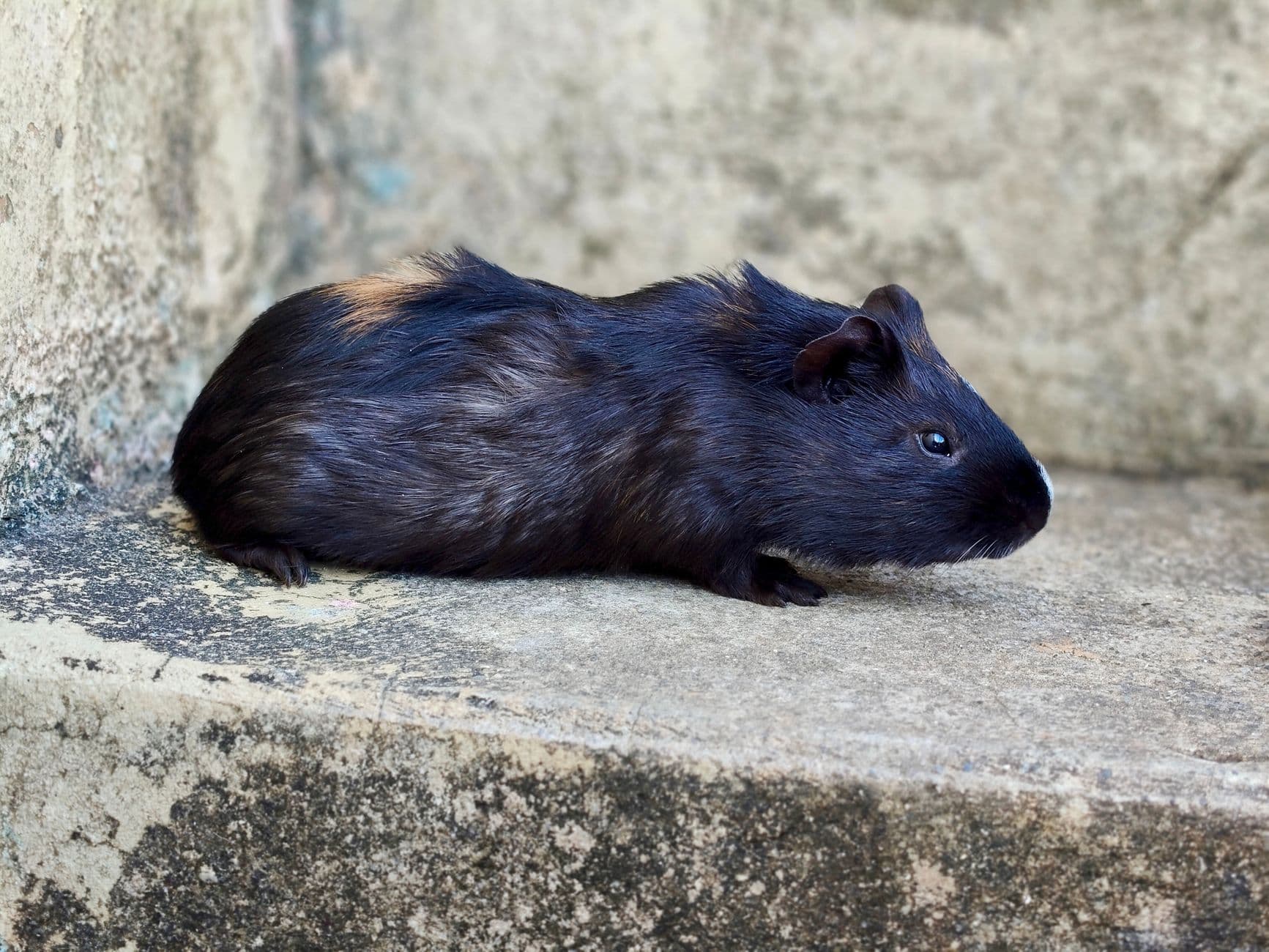
Of the species this site covers, only the guinea pig is described by a welfare body as active in the daytime — the RSPCA's wording is that guinea pigs are active animals during the day and night. Everything else is published as nocturnal or crepuscular: PDSA says hamsters tend to sleep during the day and are active in the evenings and at night, and that mice are active at night; the RSPCA says rats are nocturnal and most active at night, dawn and dusk, and that rabbits' most active periods are early morning, late afternoon and overnight; VCA says chinchillas are nocturnal and prefer to sleep during the day, and that ferrets sleep 12 to 18 hours a day. If you want a small pet that is genuinely awake while you are, the answer is a degu — and PDSA publishes no enclosure figure for one, which is why this site has no degu buying page.
This page exists because the search term is usually answered with a list of animals and no sources, and because the honest answer is mostly negative. Nobody wants to read that the pet they have chosen will be asleep every time they walk past the cage, but it is better to read it before the purchase than after. Everything below is a direct quote from a named welfare body or veterinary group, with the link, and where two issuers describe the same species differently we print both rather than picking.
What each body actually publishes
| Species | What the issuer publishes | Issuer | Reading |
|---|---|---|---|
| Guinea pig | Active animals during the day and night, and need to be able to exercise each day | RSPCA | The only daytime-active species on this site |
| Guinea pig | Tend to be most active in the morning and evening when it may not be convenient to take them out for playtime | Humane World for Animals | Crepuscular - a different claim from the RSPCA's |
| Degu | Diurnal, meaning they are awake during the day and asleep at night | PDSA | Genuinely diurnal, and no cage figure published |
| Rabbit | Most active periods, when they like to graze, forage and be sociable, are early morning, late afternoon and overnight | RSPCA | Crepuscular, plus overnight |
| Rat | Nocturnal, so are most active at night, dawn and dusk | RSPCA | Nocturnal with crepuscular peaks |
| Hamster | Tend to sleep during the day and are active in the evenings and at night | PDSA | Nocturnal |
| Mouse | Active at night but can adjust to a new routine | PDSA | Nocturnal, with a caveat the other pages do not give |
| Chinchilla | Nocturnal animals, which means they are most active at night and prefer to sleep during the day | VCA | Nocturnal |
| Ferret | Ferrets sleep 12 to 18 hours a day | VCA | Not a schedule at all - a duration |
Each row is the issuer's own wording, read on 29 October 2026 and linked in the sources at the foot of this page. The Reading column is ours. Note what is not in the table: no welfare body on this list publishes an activity statement for gerbils on its gerbil housing page, so gerbils are absent rather than guessed at.
When guinea pigs are awake · recommendation
guinea pigs are active animals during the day and night, and need to be able to exercise each day to stay fit and healthy
The guinea pig is the answer, with a caveat
The RSPCA's sentence is the strongest daytime statement published about any species on this site: guinea pigs are active animals during the day and night. Humane World for Animals, whose floor-area figures this site uses for guinea pig housing, puts it differently — most active in the morning and evening, when it may not be convenient to take them out for playtime. Those are not the same claim, and we are not going to pretend they are. Taken together, the picture is an animal that is awake in bursts across the whole twenty-four hours rather than one with a single sleep block, which in practice means you will see it whenever you are around.
What that costs is space. The published figure from Humane World is 7.5 square feet minimum for one guinea pig, 7.5 square feet minimum and at least 10.5 square feet preferred for a pair — and guinea pigs should be kept in pairs, which makes 10.5 square feet the realistic number. That is a cage over four feet long. How big a guinea pig cage should be works through it with the published wording, and cage size for two is the page for the pair that the figure is actually written for.
So the honest trade is this: the one small pet that will be awake when you are needs more floor area than every species on this site except the rabbit. The animals that fit in a small flat — hamsters, mice, gerbils — are the ones that will be asleep all day.
The cage the guinea pig answer needs
If daytime activity is the deciding factor, the guinea pig is the species and this is the enclosure the published figure points to for a pair. Full assessment, including where it falls short of the preferred 10.5 square feet, on the guinea pig cage pages.
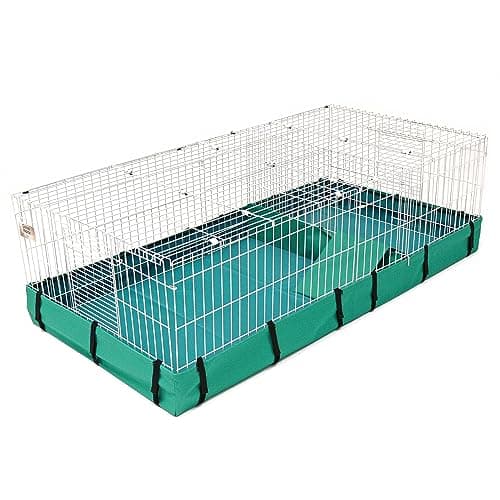
A pair in a house with a cat, or two pigs that need separating
MidWest Guinea Habitat Plus
47 x 24 = 1,128 sq in, about 7.8 sq ft
7.8 sq ft clears the bare minimum for a pair and misses the preferred figure, but it is the only cage here that ships with both a lid and a divider.
$85.99View on AmazonPrice as of October 29, 2026. #ad Disclosure
The degu is the real diurnal answer, and the page you cannot buy from
If diurnal is the requirement rather than merely daytime-active, there is one answer in the small-pet category and all three UK welfare bodies agree on it. PDSA: degus are diurnal, meaning they are awake during the day and asleep at night. PDSA also publishes a lifespan of six to eight years, occasionally nine — longer than a hamster, a mouse or a rat, and shorter than a chinchilla.
Degu enclosure size · no figure published
no figure published - PDSA states that degus are diurnal and that the bigger the cage the better, without publishing any dimension
And here is where this site stops. PDSA, which publishes a hamster floor minimum to the centimeter, a 25cm bedding depth and separate wheel diameters for dwarfs and Syrians, publishes no enclosure dimension for a degu at all — only that the bigger the cage the better. We have no figure to measure a cage against, so there is no degu buying page here and we are not going to write one off the back of forum consensus. If you are set on a degu, the practical route is a tall multi-level cage of the kind sold for chinchillas, which is a species-adjacent judgment rather than a published standard, and we would rather say that plainly than dress it up.
The cage a degu owner usually ends up with
No welfare body publishes a degu enclosure figure, so this is a judgment rather than a measured recommendation: the multi-level unit that clears the published chinchilla minimum, which is the nearest species with a figure. We assess it in full on the chinchilla cage pages, and we have labeled this as an inference rather than a standard.
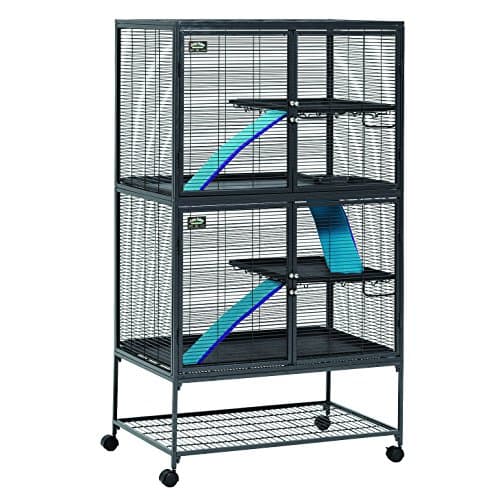
Ferrets of any age, and kits especially
MidWest Critter Nation Double Unit (162)
36 x 24 = 864 sq in (6 sq ft) per level, two levels
The half-inch bar spacing is the whole argument: it is the same cage as the Ferret Nation with a gap a ferret kit cannot get its head through.
$327.99View on AmazonPrice as of October 29, 2026. #ad Disclosure
What nocturnal actually means for the room the cage is in
The practical consequence of the table above is not disappointment, it is placement. An animal that is awake from dusk to dawn is an animal running a wheel, chewing bars and digging at two in the morning, and the single most common reason a small pet ends up rehomed or moved to a garage is that the cage went in a bedroom.
- Do not put a nocturnal animal's cage in a bedroom you need to sleep in. The RSPCA's rat advice makes the same point from the animal's side: keep the cage away from daytime disturbance so the animals can rest undisturbed. It cuts both ways.
- Budget for a quiet wheel if the species uses one. This is the one purchase that reliably decides whether a nocturnal hamster is tolerable in a shared space. The quietest hamster wheels is the page that assesses them, and the bearing is the specification that matters.
- Match your routine to the animal's, not the reverse. The RSPCA's rat page is explicit: keep feeding, cleaning and interaction to the night, dawn and dusk windows wherever possible. PDSA's mouse page is the only one that suggests an animal can adjust to a new routine, and it says can, not will.
- Expect to see a ferret asleep most of the time either way. VCA's figure is 12 to 18 hours a day of sleep, which is not a schedule but a duration, and it is the one statement in the table that holds whatever time you walk in.
If the real question is a pet for a child
Then nocturnal is a bigger problem than it looks, because a child's waking hours and a hamster's barely overlap. A hamster woken in the afternoon to be handled is a hamster woken in the middle of its night, repeatedly, by someone it did not choose. That is the single strongest argument for a guinea pig pair over a hamster for a household with young children, and it has nothing to do with temperament.
The best small pets for kids works through it alongside the space and cost figures, and the best small pets compared on what they need is the page that puts floor area, housing cost and lifespan side by side for every species here. Best pocket pets covers the narrower group the phrase usually means, and reaches the same conclusion from a different direction.
What we would choose
A pair of guinea pigs, if you have the 10.5 square feet the preferred figure asks for and you want an animal that is awake when you are. It is the only species on this site with a published daytime-activity statement behind it, and the published floor figure is the entire cost of that choice.
A hamster, knowingly, if the constraint is space — and then the wheel, the bedding depth and the room the cage goes in all become decisions rather than afterthoughts. How big a hamster cage should be and the best hamster cages start from the published 775 square inches, which is a lot of floor for an animal you will mostly hear rather than see.
If you are choosing a hamster anyway
A nocturnal animal in a properly sized enclosure beats a nocturnal animal in a small one, and the floor area is the part the pet-shop kit gets wrong. This is the solid-panelled box that clears the published 775 square inch minimum; the hamster pages assess it in full.
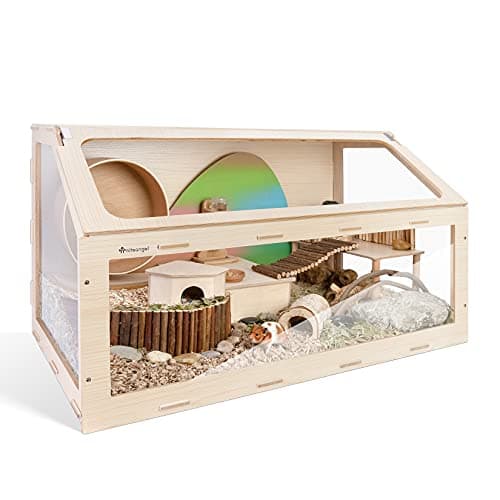
A Syrian that needs real burrowing depth
Niteangel Vista Hamster Cage, Large
47.1 x 22.7 = 1,069 sq in external footprint
The largest mainstream single-piece hamster enclosure we could verify, and the only one whose external footprint clears our 775 sq in floor with room to spare even after you allow for wall thickness.
$309.95View on AmazonPrice as of October 29, 2026. #ad Disclosure
Questions people ask
Which small pets are not nocturnal?
Are guinea pigs nocturnal?
Are hamsters nocturnal?
Is a degu a good pet if I want a daytime animal?
Do ferrets sleep during the day?
Can a nocturnal pet adjust to my schedule?
Sources
- RSPCA — Guinea pig behaviour — The statement that guinea pigs are active animals during the day and night and need daily exercise
- Humane World for Animals — Guinea pig housing — The most-active-in-the-morning-and-evening statement, and the 7.5 and 10.5 square foot floor figures quoted on this page
- PDSA — Are degus good pets? — The diurnal statement, the six to eight year lifespan, and the absence of any published enclosure dimension
- RSPCA — Rabbit behaviour — The early morning, late afternoon and overnight activity periods
- RSPCA — Rat behaviour — The nocturnal statement with night, dawn and dusk peaks, and the advice to match owner activity to the rats'
- PDSA — The ideal home for your hamster — The statement that hamsters tend to sleep during the day and are active in the evenings and at night
- PDSA — The ideal home for your mice — The statement that mice are active at night but can adjust to a new routine
- VCA Animal Hospitals — Chinchillas: Owning — The statement that chinchillas are nocturnal and prefer to sleep during the day
- VCA Animal Hospitals — Ferrets: Housing — The figure that ferrets sleep 12 to 18 hours a day