Guides
Best chinchilla dust, against the only published figures
This is the best-specified product category on the site: VCA publishes four separate numbers for the dust bath. Not one jar on sale publishes a volume to check against them.
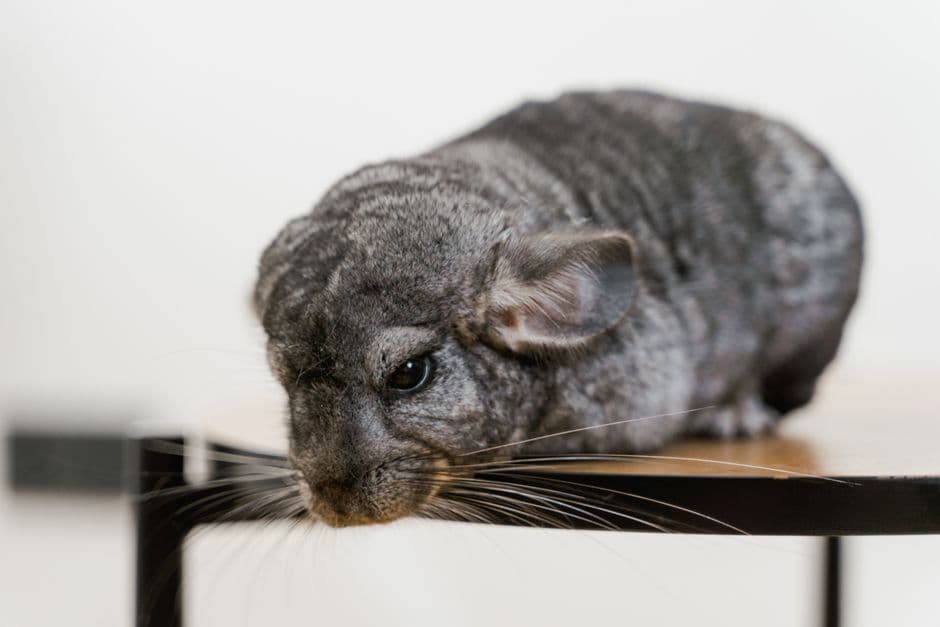
Buy the Oxbow POOF! 2.5 lb tub, because it is the only mid-sized dust that names the material in it rather than calling it natural and stopping. Then buy a box bigger than VCA's figure. VCA publishes everything you need for the routine — a dust box of at least 6 x 6 x 9 in with 1 to 2 in of dust in the bottom, a 10 to 15 minute bath daily, the dust removed after use and changed every week — and asks that the product be one made specifically for chinchillas. What no maker publishes is a volume. Every chinchilla dust on sale is sold by weight, which means you cannot work out how many box-fills a jar holds before you open it, and this site will not invent a bulk density to pretend otherwise.
Dust bath container and routine (chinchillas) · minimum
a dust box for bathing should be at least 6 x 6 x 9 in and have 1 to 2 in of dust in the bottom; dust baths should be provided for 10-15 minutes daily and removed after use, and the dust changed every week
Our conversion: 15 x 15 x 23cm, with 2.5 to 5cm of material
One thing to settle before the shortlist: this is a page about dust, for chinchillas. If you landed here for a hamster or a gerbil, you want sand instead, and the best sand baths is the page that ranks it and explains at length why the two products are not interchangeable. The short version is that dust is a milled powder sized to penetrate a coat too dense to wash, it is meant to be offered for a quarter of an hour and then taken out, and a permanently sited tray of it in a deep-bedded hamster enclosure is a ventilation problem rather than a grooming one.
The category with the most published numbers and the least published data
Most product categories on this site start with an absence. The sand bath has no welfare figure at all. Gerbil enclosures have two issuers who disagree. Chinchilla dust is the opposite: VCA's chinchillas housing page gives a container minimum, a fill depth, a session length, a removal instruction and a change interval, which is four more numbers than the sand aisle has between all of its brands.
And then the products arrive and publish almost nothing. Across the five currently-sold dusts we verified on 29 October 2026, not one states a volume. Two name no mineral whatsoever. None publishes a particle size, which is the specification that would actually tell you how much of a jar can become airborne in a room. Two publish their jar dimensions; three do not. One is willing to make a claim about free silica, and it is the smallest jar on the page.
The four things we buy dust on
- 1.Made specifically for chinchillas. VCA's housing page asks for this in those words, and it is the first filter. Two of the five lead with chinchillas and nothing else; three widen the label to degus, gerbils, mice, reptiles and in one case chickens. A wide label is not automatically a bad product - the mineral does not change - but it is a marketing decision rather than a husbandry one, and it is how a hamster owner ends up with dust in a permanent tray.
- 2.A named mineral, not a named mood. All-natural is not a composition. Pumice is. Of the five, one states pumice outright, two state Blue Beauty dust - a trade name rather than a geology, but at least a specific product with a consistent source - and one states nothing but quality ingredients. We rank a named material above an unnamed one every time, because it is the only part of the label a buyer can independently check.
- 3.Something said about the respiratory risk. This is a milled powder an animal rolls in and a person breathes in the same room. Exactly one jar on this page states that it contains no free silica, which is the single most relevant compositional claim anyone in this category makes. No maker publishes a particle size distribution. Nobody - including us - can tell you what fraction of a given jar is fine enough to stay suspended.
- 4.Enough of it to follow VCA's routine, in packaging that survives being opened weekly. The published routine is a daily bath with the dust removed afterwards, and a full change every week. That is a consumable schedule, not an occasional purchase. Pack weight and a resealable container are therefore real criteria: three of the five come in a resealable jar, and the two 2.5 lb packs are cartons and tubs you will end up decanting.
| # | Product | Best for | Score | Price |
|---|---|---|---|---|
| 1 | 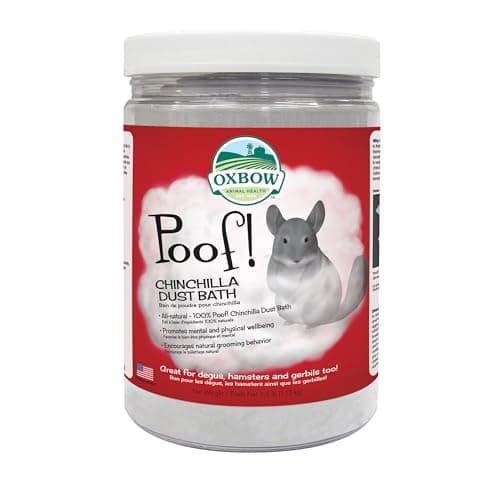 Oxbow POOF! Chinchilla Dust Bath, 2.5 lbNot applicable | A buyer who wants the mineral named on the tub | 8.8out of 10 | $11.49View on Amazon Price as of October 29, 2026. #ad Disclosure |
| 2 | 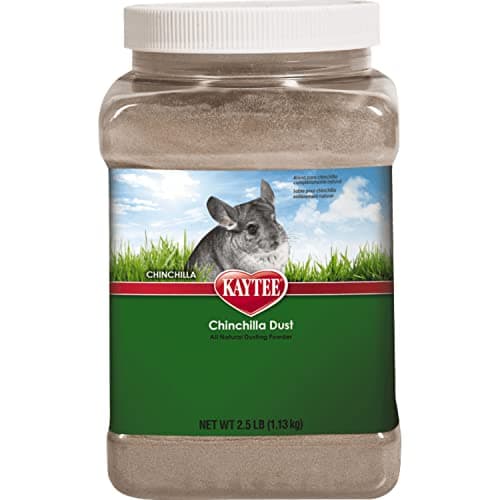 Kaytee Chinchilla All Natural Dusting Powder, 2.5 lbNot applicable | A chinchilla owner who wants the product VCA describes | 8.6out of 10 | $13.98View on Amazon Price as of October 29, 2026. #ad Disclosure |
| 3 | 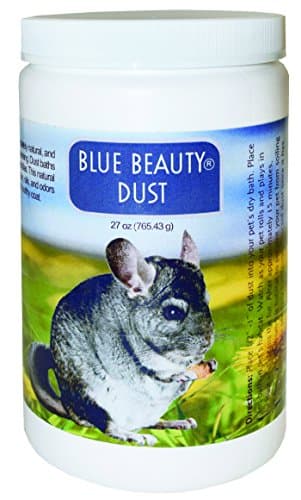 Lixit Blue Beauty Chinchilla Dust Bath, 1.5 lbNot applicable | A buyer whose first question is what is in the air afterwards | 8.5out of 10 | $9.99View on Amazon Price as of October 29, 2026. #ad Disclosure |
| 4 | 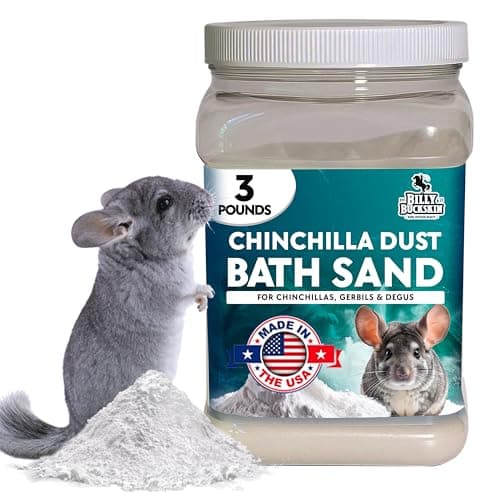 Billy Buckskin Chinchilla Dust Bath Jar, Pumice, 3 lbNot applicable | One chinchilla, following the published weekly change | 8.4out of 10 | $16.80View on Amazon Price as of October 29, 2026. #ad Disclosure |
| 5 | 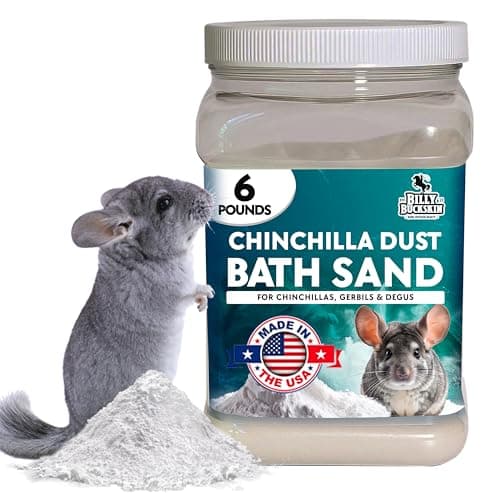 Billy Buckskin Chinchilla Dust Bath Jar, Pumice, 6 lbNot applicable | Multiple chinchillas, or a weekly change you actually keep to | 8.3out of 10 | $31.20View on Amazon Price as of October 29, 2026. #ad Disclosure |
Scores are our own assessment of published specifications against the thresholds set out in how we assess products. They are not test results and not customer ratings. Tap a row to read the full assessment.
The five, and what each jar will commit to
| Dust | Pack weight | Stated material | Species on the label | Jar dimensions published? |
|---|---|---|---|---|
| Oxbow POOF! | 2.5 lb | 100 percent Blue Beauty dust, ultra-fine, no additives | Chinchillas, plus degus, gerbils and hamsters | Yes, 4.5 x 4.5 x 4.5 in |
| Kaytee All Natural Dusting Powder | 2.5 lb | Quality ingredients; no mineral named | Chinchillas only | Yes, 6.75 x 4.25 x 4 in |
| Lixit Blue Beauty | 1.5 lb | Blue Beauty dust, USA-mined, stated no free silica | Chinchillas and other small animals | Yes, 6.5 x 3.5 x 3.5 in |
| Billy Buckskin, 3 lb | 3 lb | Pure cleansing pumice, USA-mined and processed | Chinchillas, degus, gerbils, mice, reptiles | Yes, 7 x 4.5 x 4.5 in |
| Billy Buckskin, 6 lb | 6 lb | Pure cleansing pumice, USA-mined and processed | Chinchillas, degus, gerbils, mice, reptiles, chickens | No |
Every figure is the maker's or listing's own, read on 29 October 2026 and linked on each product card below. No volume appears in this table because no maker publishes one. No particle size appears because no maker publishes that either. VCA's dust box figure of at least 6 x 6 x 9 in is a container specification, not a jar size, and none of these jars is the box.
1. Oxbow POOF!, 2.5 lb - the only mid-sized tub that names its material
Oxbow states 100 percent Blue Beauty dust and no additives, which puts it ahead of the Kaytee carton on the one axis a buyer can check. It is also the same 2.5 lb as the Kaytee carton for less, and it comes from the brand with the longest published small-animal range on this site — the same Oxbow whose paper bedding appears on best chinchilla bedding. The honest marks against it: Blue Beauty is a trade name rather than a mineral name, and the label widens to gerbils and hamsters, which is a recommendation we do not follow and which sits awkwardly on an otherwise careful product.
2. Kaytee All Natural Dusting Powder, 2.5 lb - the one VCA's wording describes
If you want the product VCA's sentence points at, this is it: designed specifically for chinchillas, sold for nothing else, no species creep anywhere on the label. It publishes pack dimensions, a model number and a written satisfaction guarantee with a postal address. What it will not do is tell you what is in it — the ingredient line is quality ingredients, which is not a composition. It is also a carton rather than a resealable jar, which matters for something you open once a week. First on species fit, second overall because of the blank where the mineral should be.
3. Lixit Blue Beauty, 1.5 lb - the only free-silica statement in the aisle
This is the smallest jar here and it makes the most important claim: no added chemicals and no free silica. In a category built on breathing in a powder, that is the one sentence worth paying for, and nothing else on this page says it. The jar is resealable and the maker suggests reusing it. Against that: 1.5 lb is the shortest-lived pack under a weekly change, the listing copy has several spelling errors including inside the sourcing claim, and there is no independent test behind the silica statement — it is the maker's own, like every other claim on this page.
4. Billy Buckskin, 3 lb - the right size of the only named rock
Pumice is a mineral rather than a brand, and Billy Buckskin is the only maker here willing to name one. The 3 lb jar is, to our reading, the most sensible pack size in the whole category for one chinchilla on VCA's weekly change: enough for a couple of months, in a resealable jar with published dimensions. The deductions are the listing's trusted by vets and groomers line, which names no practice and no study, and a species label spanning five animal groups including reptiles.
5. Billy Buckskin, 6 lb - the same pumice, for more than one chinchilla
Identical stated composition to the 3 lb jar and more than twice the dust, in the only genuinely bulk pack on sale. For two or more chinchillas, or for an owner who actually keeps to a weekly change, it is the cheaper route per pound. It is last here because it publishes no jar dimensions at all, it is the biggest single outlay in the category, the species label widens again to include chickens, and six pounds of opened mineral powder needs somewhere dry to live for several months.
| Product | Continuous floor | Bar spacing | Species on the label | Material |
|---|---|---|---|---|
| Oxbow POOF! Chinchilla Dust Bath, 2.5 lb | Not applicableclears our threshold | Not applicable | Chinchillas first, with degus, gerbils and hamsters named as also safe - a wider label than VCA's wording implies | Stated 100 percent Blue Beauty dust, described on the listing as an ultra-fine mineral dust and made without additives |
| Kaytee Chinchilla All Natural Dusting Powder, 2.5 lb | Not applicableclears our threshold | Not applicable | Chinchillas only - the listing says designed specifically for chinchillas, which is the wording VCA asks for | All-natural dusting powder; the listing names no mineral and states only that it is made with quality ingredients |
| Lixit Blue Beauty Chinchilla Dust Bath, 1.5 lb | Not applicableclears our threshold | Not applicable | The only dust on this page that states no free silica - the one compositional claim in the category that bears on a respiratory risk | Blue Beauty dust, mined in the USA; the listing states no added chemicals and contains no free silica |
| Billy Buckskin Chinchilla Dust Bath Jar, Pumice, 3 lb | Not applicableclears our threshold | Not applicable | Same wide label as the 6 lb jar: chinchillas, degus, gerbils, mice and reptiles | Stated pure cleansing pumice, mined and processed in the USA, chemical-free with no additives |
| Billy Buckskin Chinchilla Dust Bath Jar, Pumice, 6 lb | Not applicableclears our threshold | Not applicable | Chinchillas, degus, gerbils, mice, reptiles and chickens - the widest label of the five, and a point against it | Stated pure cleansing pumice, mined and processed in the USA, chemical-free with no additives |
Dimensions as published by each manufacturer or its retailer, read 27 September 2026 and linked in each assessment below. A tick marks a product that clears our own floor-area threshold; a cross marks one that does not. Where a manufacturer does not publish a figure, the cell says so rather than estimating it.
The container, and the figure to beat
VCA's dust box is at least 6 x 6 x 9 in with 1 to 2 in of dust in the bottom. That is 36 square inches of floor, and the 9 in is height rather than length — a tall-sided box, because a rolling chinchilla throws dust. Treat 36 square inches as the absolute floor rather than the target: a chinchilla is a much larger animal than anything else on this site, and a box it can barely turn over in will be used as a toilet instead of a bath.
Our own line, labeled as ours: at least 10 x 10 in of floor with sides around 8 to 10 in tall, enclosed or hooded if the cage sits in a living room, because the dust that leaves the box lands on everything within a few feet. A heavy ceramic or glass container works and costs nothing if you already own one. The wooden sand boxes we assess on the sand bath page are built for hamster-sized animals and are too small here, which is why there is no container pick on this page: we could not verify a chinchilla-sized dust house currently on sale that publishes its dimensions.
The routine, and why the jar size follows from it
- Daily, for 10 to 15 minutes, then out. VCA's wording is a bath provided daily and removed after use. The dust is not a permanent fixture in the cage — leaving it in is the single most common mistake in this category and it turns a grooming tool into a litter tray.
- Changed weekly. A full change every week, per the same page. Hold that against a 1.5 lb jar and the arithmetic is obvious even without a volume figure: the smallest pack here is a short-term purchase.
- Less often if the coat gets dry or flaky. VCA's figure is a maximum-frequency routine rather than a quota. A chinchilla with dry skin needs fewer baths, not a different dust, and that is a conversation with a vet rather than a shopping decision.
- Never water. The whole reason this product exists is that a chinchilla's coat is too dense to dry properly after a wash. This is not a preference; it is why dust bathing is in the housing advice at all.
Dust versus sand, settled in one paragraph
Chinchillas get dust. Hamsters and gerbils get sand. The products sit side by side in the same aisle with overlapping words on the labels, and three of the five jars on this page name gerbils or hamsters on the tub, which is where the confusion comes from. Dust is milled fine enough to penetrate a coat that cannot be washed; sand is graded as grains and does the coat-conditioning job without the airborne fraction. PDSA names chinchilla sand for a gerbil dust bath on its gerbil page, which is the closest any welfare body comes to crossing the line, and it says sand rather than dust.
The practical consequence: do not share a tub between a chinchilla and a hamster, however much the label invites you to. If you keep both, buy two products. The best sand baths covers the sand half, including which bags state calcium-free and why that matters more than the color of the grain.
Where the dust bath sits in the rest of the setup
It is the cheapest item in a chinchilla setup and the one most likely to be bought first, which gets the order backwards. The enclosure is the decision: VCA publishes a cage minimum and chinchilla cage size works through it, with the best chinchilla cages naming the multi-level units that clear it. Best chinchilla bedding covers the substrate, where VCA names paper-based bedding and fleece and rules out cedar and pine by name.
One more thing worth knowing before you buy any of this. VCA states that chinchillas are nocturnal, most active at night and preferring to sleep during the day, and that they generally live about 15 to 20 years. A daily dust bath is therefore an evening routine for the next decade and a half. If that is the part you had not factored in, which small pets are not nocturnal is the page that lays out what every welfare body publishes about when each species is actually awake.
What we would actually buy
The Oxbow POOF! tub for a first purchase, because it names its material and undercuts the Kaytee carton at the same weight, and a 10 x 10 in container with tall sides rather than the 36 square inch minimum. Then the Billy Buckskin 3 lb jar as the repeat buy once you know your animal uses the box, because pumice is a real answer to what is in this and the resealable jar suits a weekly change.
If the question in your head is what this is doing to the air in the room, buy the Lixit jar first. It is the only one that addresses it, the outlay is small, and finding out whether the free-silica statement matters to you is cheaper than finding out later.
Questions people ask
How big should a chinchilla dust bath be?
How often should a chinchilla have a dust bath?
What is chinchilla dust made of?
Is chinchilla dust safe to breathe?
Can I use chinchilla dust for a hamster or a gerbil?
Can chinchilla dust be reused?
Sources
- VCA Animal Hospitals — Chinchillas: Housing — The 6 x 6 x 9 in dust box minimum, the 1 to 2 in depth, the 10 to 15 minute daily session, the removal instruction, the weekly change, and the request for a product made specifically for chinchillas
- VCA Animal Hospitals — Chinchillas: Owning — The statement that chinchillas are nocturnal and prefer to sleep during the day, and the 15 to 20 year lifespan
- Lixit Blue Beauty Chinchilla Dust Bath — listing — The no-free-silica and no-added-chemicals statements, the 1.5 lb jar weight and the published jar dimensions
- Billy Buckskin Chinchilla Dust Bath Jar, 6 lb — listing — The pure cleansing pumice composition, the USA mining and processing claim, and the species label spanning chinchillas, degus, gerbils, mice, reptiles and chickens