Guides
Best small pets for adults
An adult household can meet requirements a child's cannot. That opens up the two most interesting species and rules out the usual starter pet.
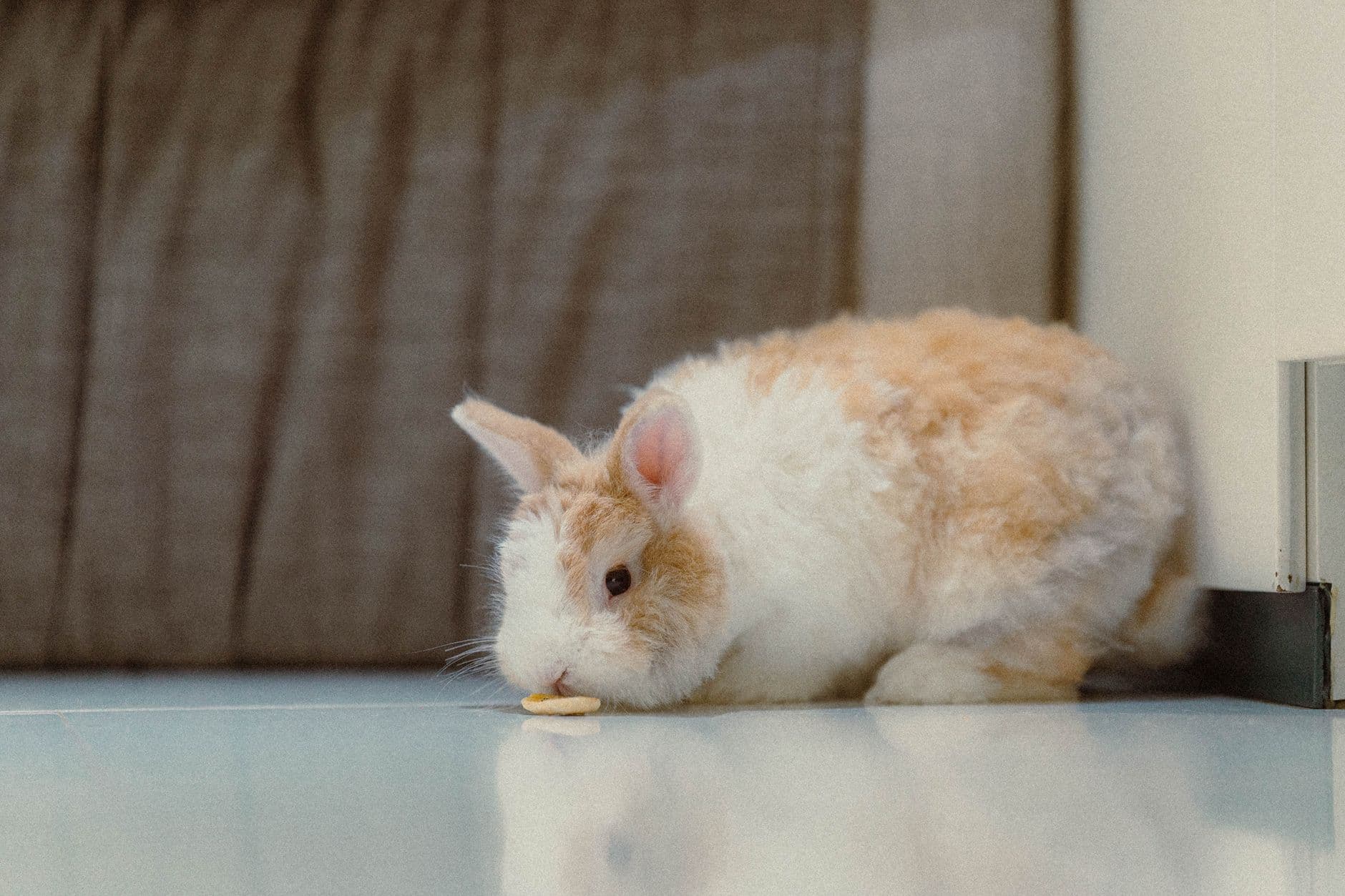
Rabbits, if you can give up the floor space — they are the most rewarding small pet to live with and the largest housing commitment. Ferrets, if you have two to three hours a day and a room you can proof, because they are the most interactive animal on this site. Hamsters are a genuinely good adult pet for anyone who enjoys building the setup as much as keeping the animal.
The reason an adult-specific version of this question is worth answering is that most small-pet advice is written for a child's household, and it optimises for the wrong things. It rules out species on the grounds that they bite during play, need daily supervised exercise, or cannot be picked up — all of which are disqualifying for a nine-year-old and none of which is disqualifying for an adult.
What replaces those constraints for an adult household is harder and more honest: floor space, daily hours, and a ten-year horizon.
Rabbits
Rabbit enclosure minimum · minimum
a single enclosed area of at least 3m x 2m by 1m high
Our conversion: 9ft 10in x 6ft 7in x 3ft 3in, about 64.5 square feet of floor
That figure is the whole decision, and it is worth reading carefully. RWAF is explicit that it must be a single unbroken block, and that upper floors, raised platforms, tunnels and connectors do not count towards it. It is also stated for two rabbits and does not reduce for one, because rabbits are social.
In practice this means a room, or a substantial part of one, for eight to twelve years. Almost no commercially sold hutch-and-run package clears it on its own, which is why our best rabbit hutches page reads the way it does.
What you get for it is the closest thing to a cat in small-pet form: an animal that litter-trains, recognizes you, seeks you out, has strong opinions, and lives long enough to be a real part of a household. Adults who have kept house rabbits rarely go back to anything else.
Ferrets
Ferret cage suggested minimum · suggested minimum
24in x 24in x 18in high (60cm x 60cm x 45cm)
Our conversion: 576 square inches, or 4 square feet, of floor
The cage figure is the least important number here, and we say so on ferret cage size: it is a suggested minimum smaller than every mainstream ferret cage actually sold. The real requirement is the daily two to three hours out of it, in a room that has been genuinely proofed.
Genuinely proofed means something specific. Ferrets get through gaps that look impossible, get inside reclining furniture and appliances, and will investigate anything. This is the requirement that decides whether a ferret is right for a household, and it is not negotiable down.
In return they are the most interactive small pet by a wide margin — playful, funny, recognizably attached to their people, and busy in a way that is genuinely entertaining. They also nip during play, which is normal ferret behavior and a real consideration.
Ferret environmental temperature · minimum
at or below 80F (27C)
Guinea pigs
Guinea pig cage minimum · minimum
7.5 sq ft (about 30in x 36in) bare minimum for one; 7.5 sq ft minimum for two, with at least 10.5 sq ft (30in x 50in) preferred
The easiest of the four to get right, and that is a genuine recommendation rather than a consolation. Adequate housing for a pair is a purchase rather than a project, they are awake during the day, they are quiet, and they are the most straightforwardly affectionate species here.
For an adult household that wants an animal to enjoy rather than a commitment to organize around, this is probably the right answer and it is not the exciting one.
Hamsters
Hamster cage minimum size · minimum
100cm x 50cm
Our conversion: 5,000 cm2, or 775 square inches of continuous floor
Hamsters are the species most often bought for children and best suited to adults, for two reasons. They are nocturnal, so they are active in the evening, which is when an adult is available and a child is not. And their housing is a project, which is a problem for a household that wanted a purchase and the entire appeal for a household that wanted something to build.
A large enclosure with ten inches of substrate, a correctly sized wheel and a considered layout is a genuinely satisfying thing to make, and watching a hamster use it properly is the payoff. Best large hamster cages and the bin cage guide are the two ends of how people do it.
The honest downside for an adult specifically: two to three years. That is short enough that people who bond with them find it hard.
Choosing on the three constraints
| Species | Published space figure | Daily time | Lifespan |
|---|---|---|---|
| Rabbits (pair) | 3m x 2m in one unbroken block, 1m high | Moderate, plus litter tray | 8-12 years |
| Ferrets | Cage plus 2-3 hours out, in a proofed room | High, and non-negotiable | 6-10 years |
| Guinea pigs (pair) | 10.5 sq ft preferred for two | Low, and very predictable | 5-7 years |
| Hamster | 775 sq in of continuous floor | Low, in the evening | 2-3 years |
Space figures are as published by RWAF, VCA, Humane World for Animals and PDSA respectively, each linked in the sources below. Daily time and lifespan are summarised from the same guidance rather than measured by us.
Housing worth buying once
Three enclosures that clear the relevant published figure for an adult household: a double-unit ferret cage, a 6x2 C&C for guinea pigs, and the exercise pen that does the real work in most indoor rabbit setups.
 Illustrative
Ferrets of any age, and kits especially
MidWest Critter Nation Double Unit (162)
36 x 24 = 864 sq in (6 sq ft) per level, two levels
The half-inch bar spacing is the whole argument: it is the same cage as the Ferret Nation with a gap a ferret kit cannot get its head through.
Check price on AmazonWe do not print prices. #ad Disclosure
 Illustrative
Three or four guinea pigs, or a pair with real running room
Kavee 6x2 C&C Cage for Guinea Pigs
About 15.8 sq ft, by extending the verified 4x2 base by two grids
About 15.8 sq ft, which is the size at which a pair stops pacing and starts using the far end, and the size we would buy if the wall allows it.
Check price on AmazonWe do not print prices. #ad Disclosure
 Illustrative
Building a footprint that actually clears the published minimum
MidWest Homes for Pets 48 in Exercise Pen, 8 panels
16 sq ft (2,304 sq in) enclosed as an octagon
The cheapest honest route to the 64.5 sq ft minimum, because four of these pens joined together get you there and a single hutch never will.
Check price on AmazonWe do not print prices. #ad Disclosure
The short version
If you have the room: rabbits. If you have the hours: ferrets. If you want the least friction between a good outcome and a normal life: guinea pigs. If you want a project and evening company: hamsters.
The full comparison on space, cost and lifespan is on the best small pets, and the apartment-constrained version is best small pets for apartments.
Questions people ask
What is the best small pet for an adult?
Are hamsters better for adults than children?
What small pet needs the least time?
Are ferrets a lot of work?
Which small pet lives the longest?
Sources
- Rabbit Welfare Association & Fund — Minimum space requirements — The single-block 3m x 2m x 1m figure and the exclusion of platforms and tunnels.
- VCA Animal Hospitals — Ferrets, housing — Cage suggestion, daily out-of-cage time and the temperature ceiling.
- Humane World for Animals — Guinea pig housing requirements — Minimum and preferred areas for one to four guinea pigs.
- PDSA — The ideal home for your hamster — Floor area, bedding depth and wheel diameter.