Hamsters
Bin cage guide: the cheapest enclosure that clears the figure
A storage tub, a piece of hardware cloth and an hour. The result has more floor than anything in a pet shop.
A large food-grade polypropylene storage tub with a mesh panel cut into the lid clears the 775 square inch published hamster minimum for less than most pet-store cages cost, and takes about an hour. The part people get wrong is ventilation: a tub with a small vent is a humidity trap, and the mesh panel needs to be most of the lid rather than a token square.
This is the honest cheapest answer to hamster housing, and we recommend it knowing it earns us almost nothing. A tub conversion beats every pet-store cage on floor area and on bedding depth, which are the two specifications that matter most.
Choosing the tub
| Property | What you want | Why |
|---|---|---|
| Footprint | At least 34 x 23in internal | 34 x 23 = 782 sq in, just over the 775 minimum |
| Capacity as sold | Roughly 100 to 120 quarts / 95 to 115 liters | This is the size band where footprints reach the minimum |
| Wall height | 14in or more | You need 10in of substrate plus freeboard so it is not kicked out |
| Material | Polypropylene or polyethylene, food-grade | Inert, does not absorb urine, easy to disinfect |
| Clarity | Clear or translucent | You can see the burrow structure and the substrate line |
| Sides | As vertical as possible | Heavily tapered tubs lose a lot of floor at the base |
| Lid | Rigid, well-fitting | It has to hold a mesh panel and stay on |
Measure the INSIDE of the base, not the quoted external dimensions. Tubs taper, and a tub sold as 36 x 24 inches can measure 33 x 21 at the floor.
The taper point matters more than any other on that list. Storage tubs are molded to stack, which means the base is always smaller than the rim, sometimes by three inches per side. Take a tape measure to the shop and measure the floor.
The ventilation calculation
This is the part that decides whether the conversion works. A sealed plastic box over ten inches of damp substrate is a humidity trap, and high humidity over damp bedding means mold — which is a genuinely worse problem than a slightly small cage.
- 1.Cut out most of the lid. Leave a frame of two to three inches around the edge for strength and remove the rest. A token six-inch vent square is not enough, and it is the most common mistake in these builds.
- 2.Add a side panel too, if the tub is tall. A lid-only vent gives you vertical airflow and no cross-flow. A panel cut high on one long side, above the substrate line, makes a real difference.
- 3.Use galvanized hardware cloth, quarter-inch or eighth-inch aperture. Quarter-inch holds a Syrian; eighth-inch is the safer choice for a dwarf and is what we would use by default. Not plastic mesh, which gets chewed through.
- 4.Attach it properly. Sandwich the mesh between the lid and a frame, bolted or riveted, with no gap between the mesh edge and the plastic. A loose mesh edge is both an escape route and something an animal can get caught in.
- 5.File or cover every cut edge. Cut hardware cloth is sharp, and a chewed galvanized edge is the one scenario where the zinc question in cage materials safety actually matters.
The build, step by step
- 1.Mark the lid. Draw the panel you intend to remove, leaving a two to three inch frame.
- 2.Cut it. A rotary tool or a jigsaw with a fine blade; drill a starter hole in a corner. Go slowly — polypropylene melts and grabs a fast blade.
- 3.Cut the mesh two inches larger than the opening on every side.
- 4.Sandwich and fix. Mesh over the opening, a second frame of plastic or thin ply over the mesh, then bolts or rivets every three or four inches. Washers on the inside.
- 5.Deburr everything. Run a file over every cut plastic edge and fold or cover every mesh edge.
- 6.Wash and dry the tub thoroughly before anything goes in.
- 7.Fill to ten inches, layered and lightly damped per deep bedding.
- 8.Add the wheel, hides and food areas, then leave the setup a few hours before the animal moves in.
What a tub conversion is bad at
- It looks like a storage tub. No amount of care changes that. If the enclosure lives in a living room this is the real argument against it, and it is a fair one.
- Scratched plastic clouds. Polypropylene marks, and the view degrades over a couple of years.
- No climbing surface. Same limitation as every solid-walled enclosure.
- Lid security depends on your build. A bought cage has a latch designed by someone. A tub has whatever you fitted, so check it.
- Height for a 12-inch wheel can be tight. A 14-inch tub with ten inches of substrate leaves four inches. Grade the bedding, or use a taller tub.
Two things not to do
Do not stack two tubs with a hole between them. It is a popular build and it creates a fall hazard, a ventilation dead zone in the lower tub, and no additional continuous floor — which is the thing you were trying to add.
Do not use a tub with no mesh at all and prop the lid. A propped lid is not a lid. A hamster that can push a lid will push it, usually at three in the morning.
What to put in it
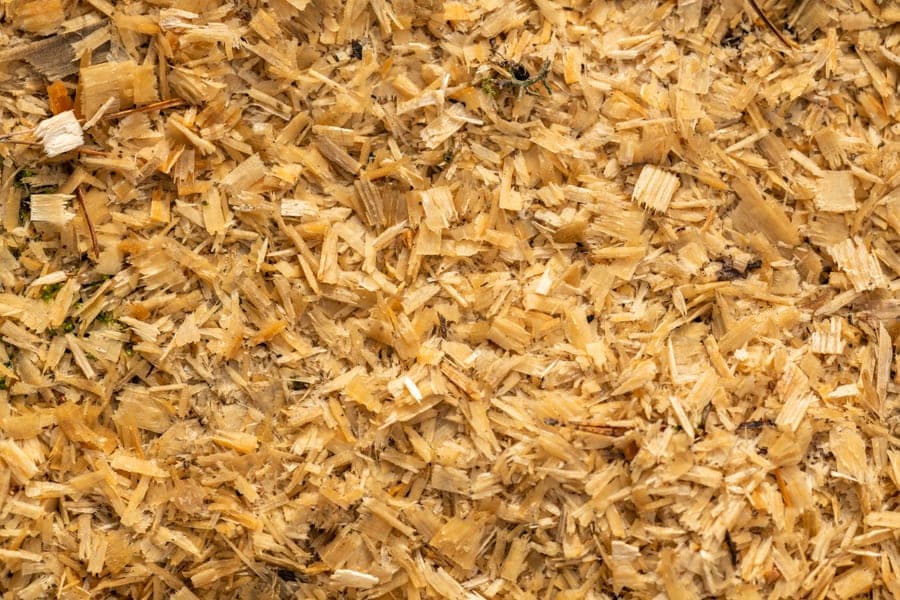
A tub conversion needs the same substrate and the same compliant wheel as any enclosure. Aspen for the structural layer, kraft paper on top, and a wheel that clears the published diameter.
 Illustrative
Deep burrowing on a budget
Kaytee Aspen Small Animal Bedding
Not applicable
The cheapest substrate we are willing to recommend, and the best tunnel-holder of the three, at the cost of visible dust in the bag.
Check price on AmazonWe do not print prices. #ad Disclosure
 Illustrative
Reaching a 10 in burrow depth without buying six bags
Kaytee Clean & Cozy White Paper Bedding
One 85 L bag fills roughly 10 in deep over a 500 sq in footprint
Paper, dust-controlled and sold in a volume large enough to actually reach 10 in of depth, which is the spec that matters and the one most bedding bags fail on.
Check price on AmazonWe do not print prices. #ad Disclosure
 Illustrative
Any Syrian hamster
Niteangel Super-Silent Hamster Exercise Wheel, 12.8 in
Occupies roughly 13 x 6 in of enclosure floor
The only wheel in this range that clears PDSA's 30cm minimum for a Syrian, which makes the size choice within the range more important than the choice of range.
Check price on AmazonWe do not print prices. #ad Disclosure
One closing comparison. A tub conversion typically costs less than a Kaytee CritterTrail Super and gives roughly 780 square inches against that cage's 448, with ten inches of possible substrate against about two. That is the whole argument, and it is the reason this page exists on a site that makes its money from product links.
Questions people ask
What size bin do you need for a hamster cage?
Are bin cages safe for hamsters?
What mesh should I use on a bin cage?
How much ventilation does a bin cage need?
Is a bin cage better than a pet-store cage?
Can you stack two bin cages together?
Sources
- PDSA — The ideal home for your hamster — The 100 x 50cm floor figure and the 25cm bedding figure this build targets
- Kaytee CritterTrail Super — retailer listing — Used as the price and floor-area comparison