Hamsters
Is my hamster cage too small?
Two minutes with a tape measure tells you. Then here are the options, cheapest first, with no lecture attached.
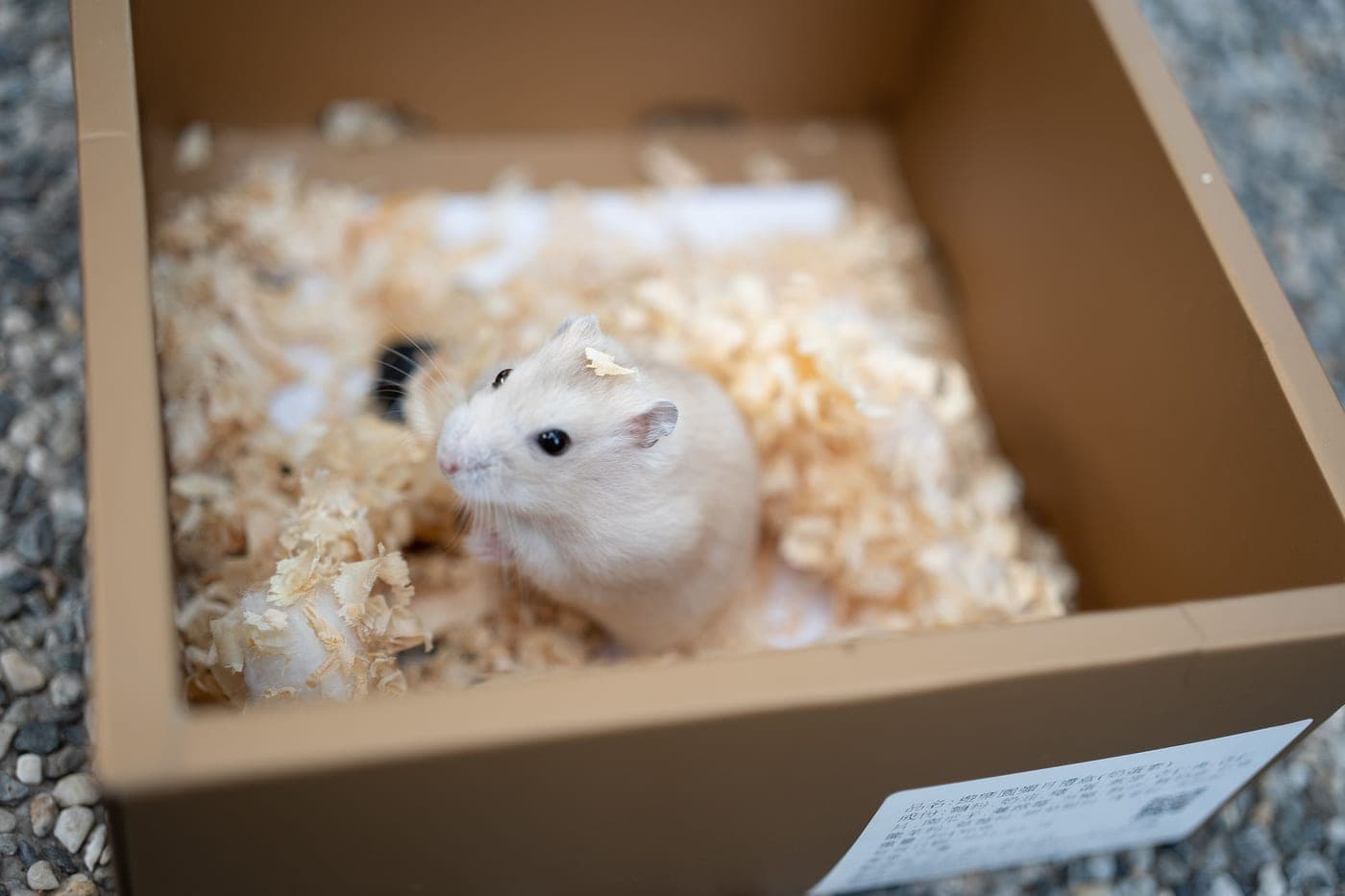
Measure the inside of the cage base, multiply length by width, and compare the result to 775 square inches — the minimum PDSA publishes as 100 x 50cm. If you are under it, you are in the same position as most hamster owners, because almost every cage sold as a hamster cage is under it. The routes to fixing it start at the price of a storage tub.
If you have just discovered that the cage you bought in good faith is short of a published figure, this page is written for that moment. Nobody is going to tell you off here. Most people arrive at this subject having already bought a cage from a shop that sold it for this purpose, and that is a market problem rather than a personal failing.
How to measure, in two minutes
- 1.Measure the inside of the base. Not the outside of the cage. On a wire cage the plastic base often tapers, so use the floor the animal walks on. The Prevue 528, for example, is 32.5 x 19 inches externally and 30 x 16 inches inside the base.
- 2.Multiply. 30 x 16 = 480 square inches. That is the entire calculation.
- 3.Add nothing. No shelves, no upper levels, no tube volume, no attached pods. Every published figure is about continuous, unbroken floor.
- 4.Compare to 775. 480 is 62 percent. Now you know where you stand instead of how it looks.
Hamster cage minimum size · minimum
100cm x 50cm
Our conversion: 5,000 cm2, or 775 square inches of continuous floor
Where common cages land
| Cage | Continuous floor | Percentage of the minimum |
|---|---|---|
| Kaytee CritterTrail Quick Clean | 168 sq in | 22% |
| Kaytee CritterTrail One Level | 230 sq in | 30% |
| 10 gallon tank | 200 sq in | 26% |
| 20 gallon long tank | 360 sq in | 46% |
| Kaytee CritterTrail Super | about 448 sq in | 58% |
| Prevue 528 | 480 sq in | 62% |
| BUCATSTATE 2.0 31in | 552 sq in | 71% |
| Savic Hamster Heaven Metro | 620 sq in | 80% |
| 40 gallon breeder tank | 648 sq in | 84% |
| BUCATSTATE 3.0 39in | 774 sq in | 99.9% |
Dimensions from manufacturer and retailer listings, read 27 September 2026. Percentages are our arithmetic.
What the behavior tells you
Numbers aside, there are signs an enclosure is too small for the animal in it. None of these is diagnostic on its own, and together they are worth paying attention to:
- Persistent bar-chewing, particularly at the same spot and particularly at night. A hamster that chews bars for long stretches is usually trying to leave.
- Climbing the bars and dropping, repeatedly. This is a common stereotypy in undersized housing and it also carries a fall-injury risk.
- Pacing the same route, especially along one wall.
- Nesting where it toilets, or toileting in the nest. This is the clearest sign that the animal does not have enough separable areas.
- Rearranging the entire enclosure nightly. Some of this is normal; doing it every night to the whole floor usually means the floor is too small to settle.
What is not a sign: running on the wheel a lot. That is normal and healthy, and a hamster covers a remarkable distance overnight in any enclosure.
The options, cheapest first
Free: fix the bedding depth first
If your cage has a deep enough base to hold more substrate than it currently does, adding depth costs only bedding and is the single highest-value change available in an undersized enclosure. A hamster with six inches of substrate in a 480 square inch cage has meaningfully more usable environment than one with two inches, because the burrow adds a dimension the floor plan does not have. It does not fix the floor-area shortfall, and it is the best thing you can do this afternoon. See deep bedding.
Cheapest real fix: a storage tub
A large food-grade polypropylene tub with a mesh panel cut into the lid clears 775 square inches for less than most pet-store cages cost. It takes about an hour, needs a drill and a piece of hardware cloth, and the result is a better enclosure than anything in the table above. Full instructions, including the ventilation part people get wrong, in the bin cage guide.
Best floor per dollar: a DETOLF conversion
An IKEA DETOLF display cabinet laid on its back gives 1,086 square inches of continuous glass floor — 140 percent of the minimum — for a fraction of what a purpose-built enclosure of that size costs. The work is building a mesh lid, which is a genuine afternoon's project. Conversion guide.
Buy something that clears it
Three purpose-built enclosures do. They cost more than any of the above and require no work. Best hamster cages has the arithmetic for all of them.
What does not work
- Adding a second level. A platform is somewhere to sit. It creates no continuous floor and no published figure counts it.
- Adding tubes or another pod. Two undersized enclosures joined by a tube are two undersized enclosures. This is the most commonly suggested fix and it is the least effective.
- More toys and accessories. Enrichment inside a too-small floor plan takes up floor. Past a point, adding things makes the space problem worse.
- A bigger wheel alone. The wheel matters enormously — see wheel size — and in a small cage a compliant wheel takes a significant share of the floor. Do both, not one.
What we would move to
A glass cabinet conversion for the most floor per dollar, and the two purpose-built enclosures that clear the figure with no work required.
 Illustrative
The most floor area per dollar, if you will build a lid
IKEA DETOLF glass display cabinet
laid on its back, 163 x 43 cm = 7,009 cm2, or 1,086 sq in
A furniture cabinet that gives 1,086 sq in of continuous floor for less than any purpose-built enclosure of that size, provided you accept that it ships without a lid.
View at IKEAWe earn no commission here. #ad Disclosure
- Illustrative
Deep burrowing without a DIY build
BUCATSTATE Hamster Cage 3.0, 47 in
47 x 23.6 = 1,109 sq in (7.7 sq ft) by our arithmetic
The deepest substrate capacity we could verify on a mainstream enclosure: an 11 in bedding claim on a 1,109 sq in floor is the combination almost nothing else offers.
Check price on AmazonWe do not print prices. #ad Disclosure
 Illustrative
A Syrian that needs real burrowing depth
Niteangel Vista Hamster Cage, Large
47.1 x 22.7 = 1,069 sq in external footprint
The largest mainstream single-piece hamster enclosure we could verify, and the only one whose external footprint clears our 775 sq in floor with room to spare even after you allow for wall thickness.
Check price on AmazonWe do not print prices. #ad Disclosure
One last thing worth saying plainly. 775 square inches is a minimum published by veterinary charities, not a moral threshold, and the difference between 480 and 775 square inches is not the difference between cruelty and care. It is the difference between housing that meets a published standard and housing that does not, which is a real thing and a smaller thing than the tone of some of the internet would suggest. Getting there matters. Feeling terrible about the interval does not help the animal.
Questions people ask
Is my hamster cage too small?
What happens if a hamster cage is too small?
Are small cages bad for hamsters?
Can I make a small cage bigger by adding levels?
What is the cheapest way to fix a cage that is too small?
Sources
- PDSA — The ideal home for your hamster
- Prevue Pet Products — Small Animal Home 528 — The external versus base-interior dimensions used as the worked example