Guides
Mouse or hamster?
Both are sold from the same shelf with the same equipment. The published figures for them have almost nothing in common.

Buy a hamster if you want one animal you will handle regularly and you have room for a 100 x 50cm enclosure. Buy mice if you would rather watch a small colony than handle one animal, or if the space you have is closer to two feet than four. The two species are sold from the same shelf with the same equipment and the published figures for them point in opposite directions: PDSA publishes a 775 square inch floor minimum for a hamster and no bar-spacing figure, and for mice it publishes a 6mm bar-spacing figure and no floor minimum. A hamster lives alone — PDSA states hamsters do not need company — and mice should not be kept alone at all. Those two facts between them decide what you can buy, how much of it, and whether the cage in front of you is suitable for either.
The two species, on the figures that constrain you
| Hamster | Mouse | |
|---|---|---|
| Floor area published | 100 x 50cm (775 sq in), PDSA | None published. MSPCA gives 12 x 12 x 20in or a 20 gallon tank for one to three |
| Bar spacing published | None by any welfare body | 6mm maximum, PDSA |
| Bedding depth published | At least 25cm (10 in), PDSA | At least 2cm, RSPCA |
| Wheel diameter published | 30cm Syrian, 20cm dwarf, PDSA | None; solid and axle-free, RSPCA |
| Kept alone or in company | Alone. Syrians fight; PDSA states hamsters do not need company | In company. Females together, or a neutered male with females |
| Typical adult weight | 120-200g Syrian, 25-50g dwarf | 20-40g |
| Enclosure formats that work | Solid-walled box, or wire at 3/8 in for a dwarf | Solid-walled box, or 6mm bars |
Every figure here is quoted from the body named beside it and linked under Sources; the weight ranges are widely published reference figures rather than one organization's. Where a body publishes nothing, the cell says so rather than borrowing a figure from the other species.
Hamster cage minimum size · minimum
100cm x 50cm
Our conversion: 5,000 cm2, or 775 square inches of continuous floor
Mouse cage bar spacing · minimum
barred cages are best as long as the bars are no more than 6mm apart
Our conversion: about 1/4 inch, which is half the 1/2 inch spacing of a typical small-animal cage
Put those two thresholds next to each other and the practical difference is stark. For a hamster, the question is whether an enclosure is big enough, and a 620 square inch Savic Hamster Heaven at 9.5mm bars fails on area while being perfectly secure. For mice, the question is whether the enclosure is sealed, and that same cage has a floor that would be adequate for three mice and a bar gap 58 percent wider than the published figure. The same product fails both species, for opposite reasons.
Where the two species genuinely differ to live with
Handling. A Syrian hamster is a single animal that can become genuinely tame, and that is the main reason people choose one. Mice are quicker, lighter and harder to hold, and a colony is something you watch rather than handle. If a child wants an animal to pick up, the hamster is the honest answer — with the caveat in the best hamster cages for kids that the enclosure is the parent's problem rather than the child's.
Smell. This one goes the hamster's way and nobody mentions it at the point of sale. A single hamster in ten inches of substrate with one latrine corner is close to odorless if you spot-clean. Several mice marking a solid-walled enclosure is not, and the enclosure material matters: acrylic and glass wipe clean, MDF and timber absorb. It is the reason our top mouse pick in the best mouse cages is chosen on wall material rather than on floor area.
Depth versus breadth. A hamster uses depth. PDSA publishes ten inches of substrate and the animal builds a burrow system in it, which is why deep bedding is the most important hamster page on this site. Mice use the whole volume, including the vertical: they climb, they nest above ground as readily as below it, and the published depth figure for them is 2cm. If you want to watch tunnelling, buy a hamster or a gerbil. If you want to watch activity, buy mice.
Numbers. One hamster is one enclosure. Mice come in twos and threes at least, and a male and a female will become eight. PDSA is specific: females can live together, males usually only accept each other if they have been together since birth, and a neutered male with females often works. Getting that wrong is the most common way a mouse setup goes from manageable to not.
What each species needs, from one shortlist
The 47 inch acrylic enclosure suits either species and is our first pick for mice on wall material. The Niteangel Vista Medium clears the hamster figure in under four feet of shelf. The Prevue 528 is the tightest-barred wire cage in the category — good for a dwarf hamster, and still 58 percent over the published mouse figure.
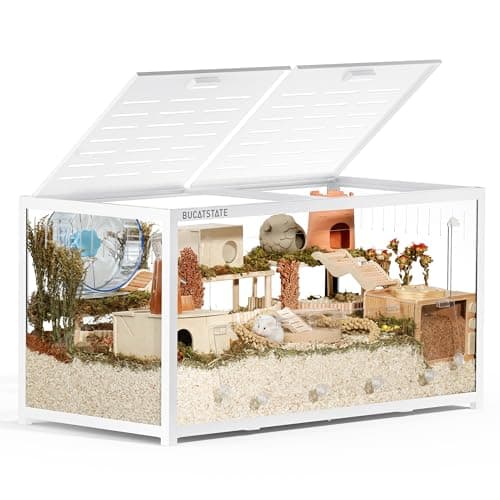
Deep burrowing without a DIY build
BUCATSTATE Hamster Cage 3.0, 47 in
47 x 23.6 = 1,109 sq in (7.7 sq ft) by our arithmetic
The deepest substrate capacity we could verify on a mainstream enclosure: an 11 in bedding claim on a 1,109 sq in floor is the combination almost nothing else offers.
$265.99$279.995% offView on AmazonPrice as of October 17, 2026. #ad Disclosure
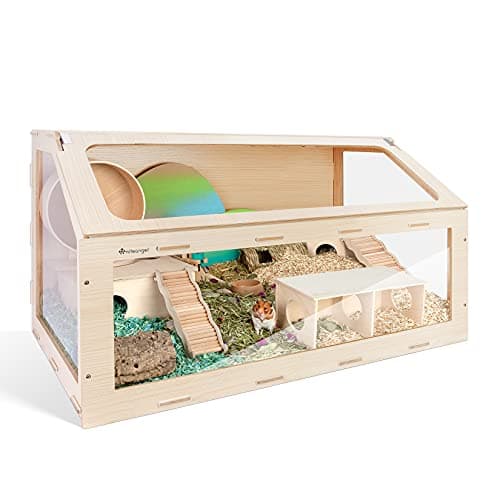
Clearing the threshold in under four feet of shelf
Niteangel Vista Hamster Cage, Medium
40.7 x 22.7 = 924 sq in external footprint
The same design as the Large in a footprint that still clears 775 sq in, for a room that cannot take a four-foot enclosure.
$256.90View on AmazonPrice as of October 17, 2026. #ad Disclosure
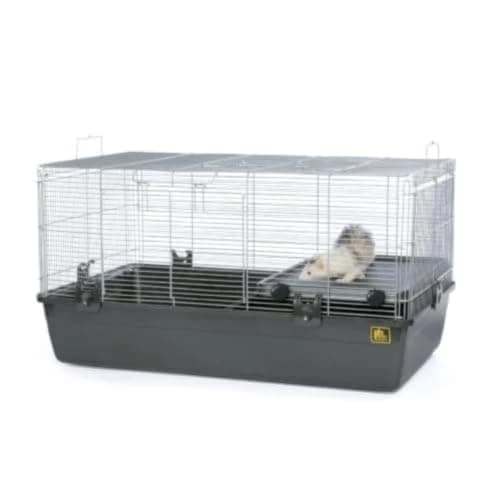
A dwarf hamster or a bar-spacing problem
Prevue Pet Products Universal Small Animal Home 528
30 x 16 = 480 sq in of interior base floor
The tightest bar spacing on any mainstream wire cage at 3/8 in, on a floor that falls well short of 775 sq in — a safety win and a space failure in the same product.
$119.99View on AmazonPrice as of October 17, 2026. #ad Disclosure
Cost, honestly
Housing a hamster properly costs more than housing mice properly, because the floor figure is published and it is large: 775 square inches of continuous floor with ten inches of substrate in it. Mice have no published floor figure, and the 360 square inch reading we buy to is less than half of the hamster minimum. Where mice cost more is in consumables and attention: more animals marking a smaller box means more substrate turned over per month and a spot-clean routine you cannot skip. Neither animal is expensive. Both are more expensive than the pet-store kit implies, which is the whole argument of small pet housing.
The verdict, by buyer
- A child who wants to hold the animal: hamster, with the enclosure bought by an adult to the published figure.
- A small room or a shelf under four feet: mice, in a solid-walled enclosure of 360 square inches or more. A compliant hamster enclosure needs the better part of four feet of wall.
- Someone who wants to watch burrowing: hamster, in ten inches of substrate, or gerbils — gerbil versus hamster is the closer comparison there.
- Someone who wants social behavior to watch: mice, in a group of females.
- Someone with an existing barred cage at 1/2 inch spacing: neither, without changing something. It is too small for a hamster at most sizes and too open for a mouse at any size.
Questions people ask
Are mice easier to keep than hamsters?
Can a mouse and a hamster live together?
Which lives longer, a mouse or a hamster?
Can I use a hamster cage for mice?
Sources
- PDSA: the ideal home for your hamster — The 100 x 50cm floor minimum, the 25cm bedding depth and the wheel diameters.
- PDSA: the ideal home for your mice — The 6mm bar-spacing figure and the guidance on which mice can live together.
- RSPCA: mice environment — The 2cm bedding depth and the solid axle-free wheel requirement.
- RSPCA: hamster company — Guidance on housing hamsters alone rather than in company.
- MSPCA: suggestions for housing small animals — The only numeric mouse cage dimensions from a named welfare organization.