Guides
How big should a mouse cage be?
Three published documents, one number between them, and two readings of that number that are not the same size.
Buy at least 360 square inches of continuous floor for up to three mice, and understand that this is our figure rather than a published standard. The reason we have to say that is unusual: neither the RSPCA nor PDSA publishes a floor area for mice at all. The only numeric dimensions we could find from a named welfare organization come from the MSPCA, which suggests a 12 x 12 x 20 inch wire cage or a 20 gallon aquarium for one to three mice. Those two options are not the same size. If the 20 inches is height, the wire cage gives 144 square inches of floor; a 20 gallon long tank gives 360. We take the largest reading, because the same page also says that generally the bigger the better, and because floor is the part of an enclosure an animal actually uses.
Mouse cage suggested dimensions · suggested minimum
a 12in x 12in x 20in wire cage or a 20 gallon aquarium for one to three mice, ideally with a mesh topper and multiple levels
Our conversion: 144 sq in of floor if the 20in figure is the height, or 288 to 360 sq in depending on which 20 gallon tank is meant
Every other species on this site has a cleaner answer than that. Hamsters have PDSA's 100 x 50cm. Rabbits have RWAF and the RSPCA independently publishing 3m x 2m. Guinea pigs have Humane World for Animals publishing figures for one, two, three and four animals. Gerbils have Woodgreen's 100 x 50 x 50cm. Mice have a bar-spacing figure, a bedding depth and a sentence saying most cages sold in pet shops are not nearly big enough. So this page does the arithmetic the guidance does not.
What the three bodies actually publish
| Body | Floor area | Other figures published |
|---|---|---|
| PDSA | None. States that most mouse cages sold in pet shops are not nearly big enough | Bars no more than 6mm apart; ideal temperature 18-22C |
| RSPCA | None. Asks for plenty of space, noting wild mice can have very large territories | Bedding at least 2cm deep; wheel solid and axle-free |
| MSPCA | 12 x 12 x 20in wire cage or a 20 gallon aquarium for one to three mice | Solid bottom; no wire mesh bottoms or platforms; 30 minutes a day outside the cage |
Read from each organization's own published advice on 17 October 2026 and linked in full under Sources. Where a body publishes no figure, we record the absence rather than filling it in from somewhere else.
The MSPCA figure, worked out both ways
MSPCA writes its small-animal figures as three dimensions without labelling which is which, and the convention across its table is length by width by height. On that reading a mouse cage is 12 inches long, 12 inches wide and 20 inches tall, which is 144 square inches of floor under a column of air nearly two feet high. That is a tall, narrow box, and the floor is smaller than a sheet of A3 paper.
The alternative in the same sentence is a 20 gallon aquarium, and here the arithmetic depends on which 20 gallon tank you buy, because two different tanks are sold under that name:
| Tank | Published dimensions | Floor area | Against our 360 sq in reading |
|---|---|---|---|
| 10 gallon | 20 x 10 x 12 in | 200 sq in | Short by 44 percent |
| 20 gallon high | 24 x 12 x 16 in | 288 sq in | Short by 20 percent |
| 20 gallon long | 30 x 12 x 12 in | 360 sq in | Meets it exactly |
| 29 gallon | 30 x 12 x 18 in | 360 sq in | Meets it, with more height |
| 40 gallon breeder | 36 x 18 x 16 in | 648 sq in | Clears it by 80 percent |
| 75 gallon | 48 x 18 x 21 in | 864 sq in | Clears it by 140 percent |
Tank dimensions are the standard figures published in the retail chart cited under Sources; the floor areas and the comparison column are our arithmetic. Gallons describe water volume, which is a height specification as much as a floor one, so two tanks sold under the same nominal size can differ by a quarter in floor area.
So the honest summary of the one published figure is this: it ranges from 144 to 360 square inches depending on which half of the sentence you act on, and we act on the larger one. A 20 gallon long tank, a 29 gallon tank, or any enclosure with 360 square inches of continuous floor is our buying line for up to three mice.
Why we do not scale it per animal
MSPCA publishes its figure for a range, one to three mice, rather than per mouse, exactly as it does for rats and hamsters. We keep that structure instead of dividing it, for the same reason we do not divide the rabbit figure: a floor that is only just large enough for one animal to move around on is not made adequate for three by multiplying it, and mice are social animals that should not be kept alone anyway. If you keep four or more, go up a size class rather than adding 120 square inches per animal — and note that the step from 360 to 648 square inches costs very little once you are buying a tank or a solid enclosure at all.
How to measure the enclosure in front of you
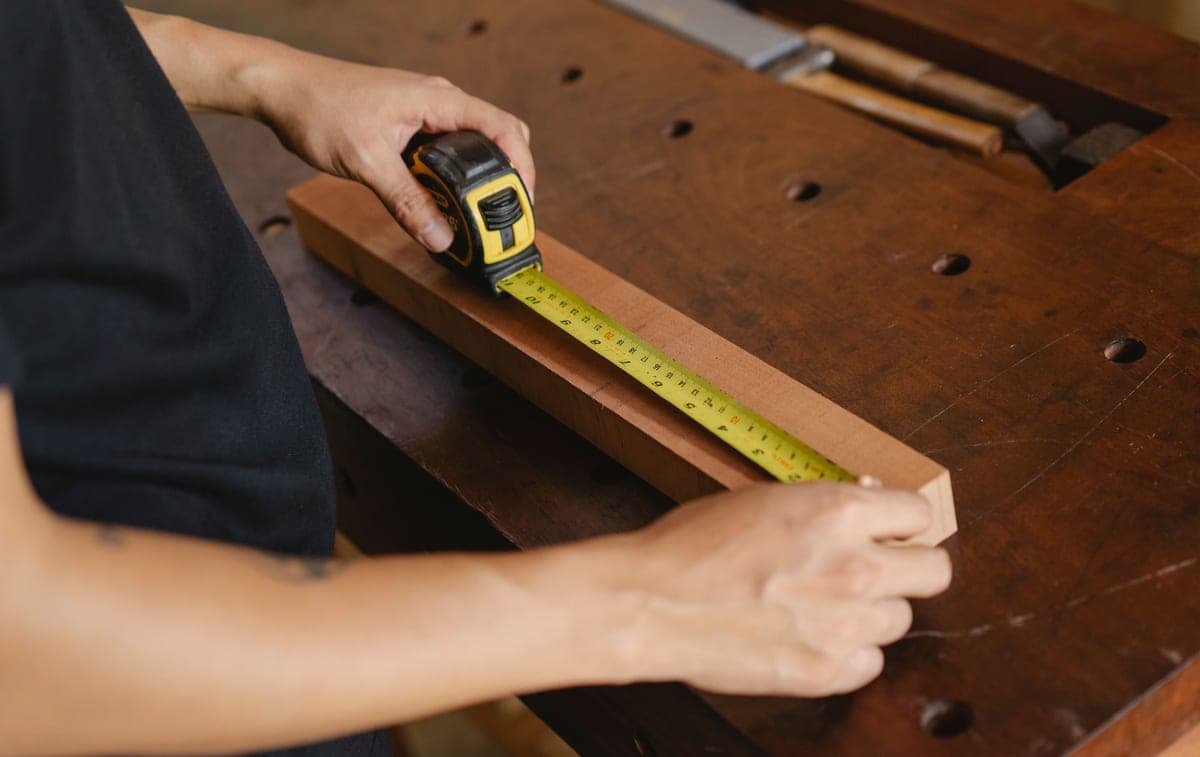
- 1.Measure the inside of the base, not the outside of the box. On a wire cage the base tray is often two inches narrower per side than the external footprint. The Prevue 528 is 32.5 x 19 inches outside and 30 x 16 inches inside, which is 138 square inches of difference.
- 2.Count one level only. Shelves, platforms, lofts and tube chambers are enrichment and they are not floor. Every figure on this site is continuous floor at one level.
- 3.Subtract nothing for the wheel or the hide. An 8 inch wheel sits on about 40 square inches and we do not deduct it, because the published figures do not either. Just do not let a crowded floor plan be the reason the enclosure feels small.
- 4.Check the usable height above the bedding. Mice climb, and a tank filled 6 inches deep in a 12 inch tall format leaves very little air above the substrate. This is the one respect in which the tall MSPCA wire-cage option is better than its own tank alternative.
- 5.Check the bar gap before anything else. A compliant floor behind a 12.7mm bar gap is not housing. Mouse cage bar spacing is the figure that removes most of the market.
Three enclosures that clear 360 square inches by more than double
All three are solid-walled with a mesh top, which removes the 6mm bar-spacing problem rather than trying to meet it. Floor figures are each manufacturer's published dimensions with our arithmetic shown.
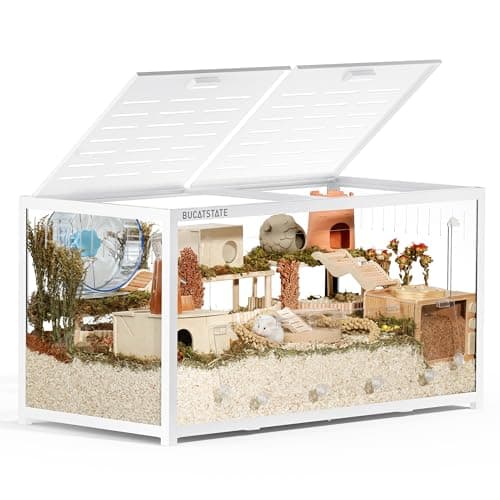
Deep burrowing without a DIY build
BUCATSTATE Hamster Cage 3.0, 47 in
47 x 23.6 = 1,109 sq in (7.7 sq ft) by our arithmetic
The deepest substrate capacity we could verify on a mainstream enclosure: an 11 in bedding claim on a 1,109 sq in floor is the combination almost nothing else offers.
$265.99$279.995% offView on AmazonPrice as of October 17, 2026. #ad Disclosure
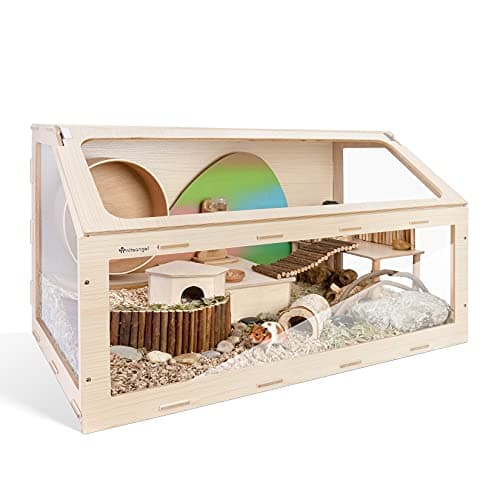
A Syrian that needs real burrowing depth
Niteangel Vista Hamster Cage, Large
47.1 x 22.7 = 1,069 sq in external footprint
The largest mainstream single-piece hamster enclosure we could verify, and the only one whose external footprint clears our 775 sq in floor with room to spare even after you allow for wall thickness.
$309.95View on AmazonPrice as of October 17, 2026. #ad Disclosure
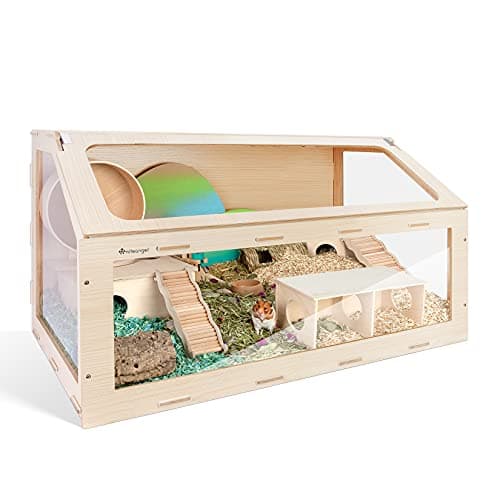
Clearing the threshold in under four feet of shelf
Niteangel Vista Hamster Cage, Medium
40.7 x 22.7 = 924 sq in external footprint
The same design as the Large in a footprint that still clears 775 sq in, for a room that cannot take a four-foot enclosure.
$256.90View on AmazonPrice as of October 17, 2026. #ad Disclosure
If none of those fits the space you have, the ranked version of this decision is the best mouse cages, and the substrate half of it is the best bedding for mice — which matters more here than for most species, because the only published depth figure for mice is 2cm and that is nowhere near enough to be interesting.
Questions people ask
Is a 10 gallon tank big enough for two mice?
Do mice need a big cage if they have a wheel?
How tall should a mouse cage be?
Sources
- MSPCA: suggestions for housing small animals — The only numeric mouse cage dimensions we could find from a named welfare organization.
- PDSA: the ideal home for your mice — States that most pet-shop mouse cages are not nearly big enough, and publishes no floor area.
- RSPCA: mice environment — Asks for plenty of space without a figure; publishes the 2cm bedding depth.
- Standard aquarium dimensions chart — Published tank dimensions used for the floor-area conversions in the table above.