Guides
Best bedding for mice
The published depth figure for mice is 2cm, which is far too shallow to be the point. Dust and ammonia are the point.
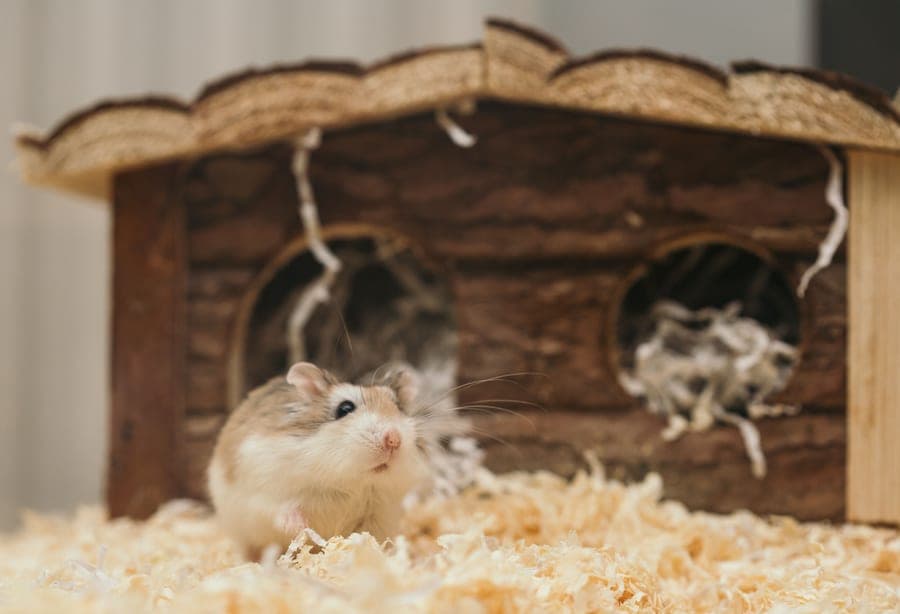
Buy Kaytee Clean & Cozy White, and buy more of it than the published depth figure implies. It is virgin kraft paper, the manufacturer states it is 99 percent dust-free, and dust is the specification that matters most for a species housed in a solid-walled box with its nose in the substrate. If your mice are in a small or sealed enclosure where ammonia builds, Oxbow Pure Comfort in the urine corner on top of a cheaper whole-cage substrate is the better configuration. What you should not do is take the published depth figure literally: the RSPCA asks for bedding at least 2cm deep to allow mice to dig, which is three quarters of an inch, and that is the depth at which digging becomes possible rather than the depth to aim for. We fill a mouse enclosure to four to six inches for the same reason we fill a hamster's to ten — a burrow that collapses is not a burrow.
Mouse bedding depth and wheel design · no figure published
bedding at least 2cm deep to allow mice to dig; wheels should be a solid structure and axle-free
Our conversion: about three quarters of an inch of substrate, the lowest published digging depth for any rodent on this site
That 2cm figure is the strangest number on this site. The same charity asks for 20 to 30cm for gerbils, ten to fifteen times as much, for an animal of broadly comparable size that burrows in broadly the same way. We are not going to pretend the discrepancy away: 2cm is what the RSPCA publishes for mice and we report it as published. We also think any owner reading this should treat it as a floor and go several inches deeper, and we say so as our own view rather than anyone else's.
What actually separates mouse substrates
- 1.Dust. First, and not close. PDSA's mouse housing advice asks for a deep layer of pet-safe, dust-free bedding, and dust matters more for mice than for any other species on this site for a structural reason: the formats that solve the 6mm bar problem are solid-walled, and a solid-walled box has nowhere for airborne dust to go. A screened or dust-extracted product costs more per liter and is worth it here.
- 2.Ammonia control. Mice produce a sharper-smelling urine than their size suggests and they mark constantly. A substrate that holds urine and releases ammonia slowly buys you days between spot-cleans; one that wicks and dries leaves the smell in the room.
- 3.Nest quality. Mice build proper nests, and both the RSPCA and PDSA name the same materials: hay, shredded paper, paper strips and paper tissues. Both rule out cotton-wool style fluff — PDSA by naming cotton-like materials, the RSPCA by warning against anything that separates into thin strands. A substrate a mouse can shred and shape is better than one it has to live on top of.
- 4.Whether it holds a tunnel. Less critical than for gerbils and still real. Coarse, interlocking material holds a wall; short, soft, compacting fiber does not.
- 5.Material safety as a gate, not a ranking. Paper and aspen pass. Pine and cedar do not, for the phenol reason set out in pine and cedar bedding, and the rat literature on the same question is summarised in the best bedding for rats.
Pine and cedar shavings · recommendation
phenols in softwood shavings raise liver enzyme levels; in rodents, constant exposure to phenol-containing litters is reported to have reduced drug effectiveness by more than 40 percent
| # | Product | Best for | Score | Price |
|---|---|---|---|---|
| 1 | 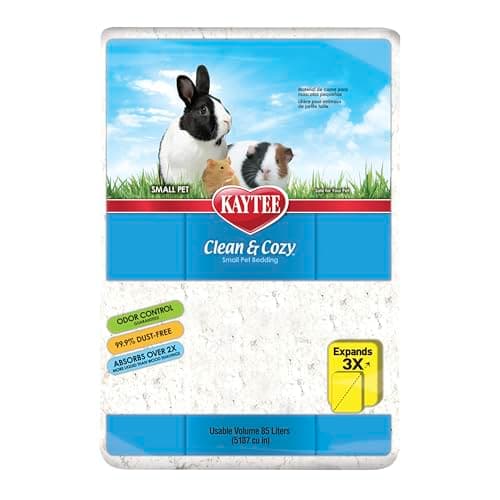 Kaytee Clean & Cozy White Paper BeddingOne 85 L bag fills roughly 10 in deep over a 500 sq in footprint | Reaching a 10 in burrow depth without buying six bags | 9.0out of 10 | $23.95View on Amazon Price as of October 17, 2026. #ad Disclosure |
| 2 | 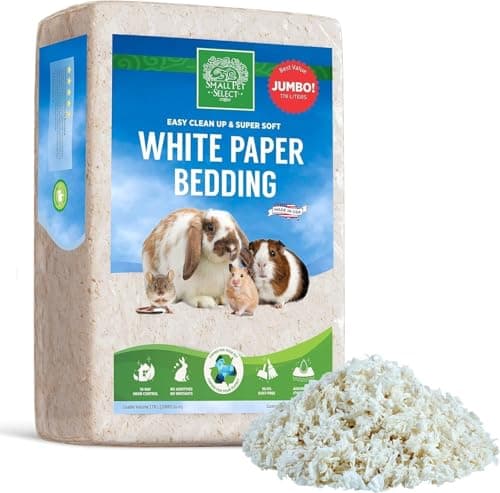 Small Pet Select Unbleached White Paper Bedding, 178 LNot applicable | The litter corner of a ferret cage | 8.2out of 10 | $45.99View on Amazon Price as of October 17, 2026. #ad Disclosure |
| 3 | 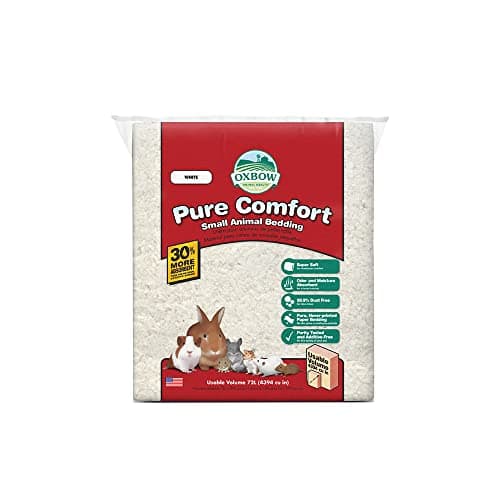 Oxbow Pure Comfort BeddingNot applicable | The toilet corner of a deep-bedded enclosure | 8.1out of 10 | $17.99View on Amazon Price as of October 17, 2026. #ad Disclosure |
| 4 | 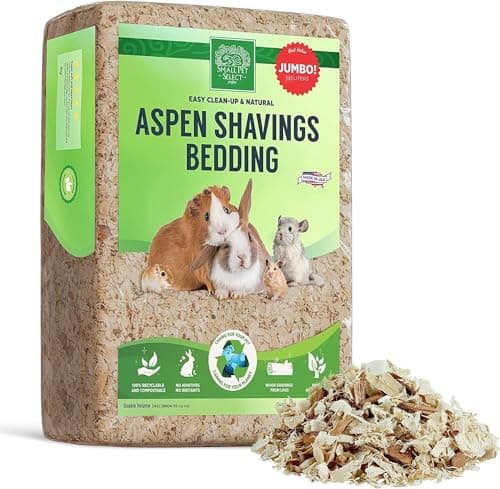 Small Pet Select Aspen BeddingNot applicable | Aspen without the dust | 8.7out of 10 | $34.99View on Amazon Price as of October 17, 2026. #ad Disclosure |
| 5 | 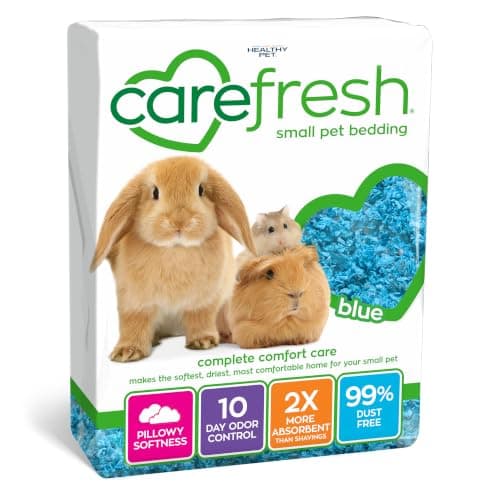 Carefresh Natural Paper Small Pet Bedding, 50 LNot applicable | Availability and softness | 8.0out of 10 | $22.99$29.9923% offView on Amazon Price as of October 17, 2026. #ad Disclosure |
Scores are our own assessment of published specifications against the thresholds set out in how we assess products. They are not test results and not customer ratings. Tap a row to read the full assessment.
The five, on dust, ammonia and nest behavior
| Bedding | Material | Largest pack | Dust | Best used as |
|---|---|---|---|---|
| Kaytee Clean & Cozy White | Virgin kraft paper; 99 percent dust-free per the manufacturer | 85 L | Lowest of the paper products | The whole-enclosure substrate |
| Small Pet Select unbleached paper | Unbleached paper fiber | 178 L box | Low | Tray and litter-corner bedding |
| Oxbow Pure Comfort | Paper fiber, unbleached options sold | 178 L | Low | The urine corner, on top of a cheaper base |
| Small Pet Select aspen | Kiln-dried aspen, screened for dust | 282 L | Low for a wood product | A structural lower layer that holds a tunnel |
| carefresh natural | Reclaimed paper fiber | 50 L | Moderate; short fiber packs down | Softness and availability |
Materials and pack sizes are each manufacturer's published figures, recorded in our product registry with the listing they were read from. The dust column is our assessment of published dust claims and material type, not a measurement; nobody publishes a dust figure in a comparable unit.
Our pick · Reaching a 10 in burrow depth without buying six bags
Kaytee Clean & Cozy White Paper Bedding
Paper, dust-controlled and sold in a volume large enough to actually reach 10 in of depth, which is the spec that matters and the one most bedding bags fail on.
- Dimensions
- Sold in sizes up to 85 L (5,184 cu in) expanded; the 85 L pack is the one we price
- Continuous floor
- One 85 L bag fills roughly 10 in deep over a 500 sq in footprint
- Bar spacing
- Not applicable
- Material
- Virgin kraft paper; manufacturer states 99 percent dust-free
- Absorbency
- Manufacturer states it absorbs up to six times its weight
What it gets right
- Paper, so none of the softwood phenol question applies
- 99 percent dust-free by the manufacturer's own claim
- 85 L pack is one of the few that fills a large enclosure in a single bag
- Holds a burrow shape well once slightly damped
What it gets wrong
- Paper is more expensive per liter than aspen
- The white version shows soiling immediately, which some owners dislike
- Scented variants exist in the range and we would avoid all of them
Who should buy something else
Not for anyone who wants the cheapest possible substrate by volume. Aspen costs less; the trade-off is dust and a less stable tunnel structure.
Specifications read from Kaytee product listing on 27 September 2026. Floor-area arithmetic is ours and is shown above so you can redo it.
- Material safety10
- Dust9
- Burrow stability9
- Volume per pack9
- Value per liter7
Price as of October 17, 2026. #ad Disclosure
Number 2 · The litter corner of a ferret cage
Small Pet Select Unbleached White Paper Bedding, 178 L
A paper bedding for the one place a ferret cage needs loose material, which is the litter corner and nowhere else.
- Dimensions
- 178 L box (manufacturer-listed)
- Continuous floor
- Not applicable
- Bar spacing
- Not applicable
- Material
- Unbleached paper fiber
- Use case
- Litter-corner and tray bedding rather than a whole-cage substrate
What it gets right
- Paper, unbleached, no softwood phenols
- Absorbs well in a concentrated corner
- Large boxes, so a weekly change is not an event
What it gets wrong
- Ferrets kick loose bedding out of a tray, so expect it on the pan
- Not a cage-wide substrate for an animal that does not burrow
Who should buy something else
Not for lining a whole ferret level. Use a fleece liner for that and keep this for the tray.
Specifications read from Manufacturer listing on 27 September 2026. Floor-area arithmetic is ours and is shown above so you can redo it.
- Material safety10
- Dust8
- Absorbency9
- Containment6
- Value8
Price as of October 17, 2026. #ad Disclosure
Number 3 · The toilet corner of a deep-bedded enclosure
Oxbow Pure Comfort Bedding
A paper bedding with better odor behavior than most, which matters in the one corner of the enclosure that always needs it.
- Dimensions
- Sold in 28 L, 36 L, 56 L, 72 L and 178 L packs; the 72 L white pack is the one we price
- Continuous floor
- Not applicable
- Bar spacing
- Not applicable
- Material
- Paper fiber, unbleached options available
- Odor handling
- Marketed on odor control; performs well in a urine corner
What it gets right
- Paper, so no softwood question
- Handles a concentrated urine corner better than aspen
- Unbleached versions avoid the optical brighteners in white paper beddings
What it gets wrong
- Premium price per liter
- Compacts more than kraft paper, so it is not the best deep-burrow substrate
Who should buy something else
Not the whole-enclosure substrate at this price. Buy it for the wet corner and something cheaper for the other nine inches.
Specifications read from Manufacturer listing on 27 September 2026. Floor-area arithmetic is ours and is shown above so you can redo it.
- Material safety10
- Dust8
- Burrow stability6
- Volume per pack8
- Value per liter6
Price as of October 17, 2026. #ad Disclosure
Number 4 · Aspen without the dust
Small Pet Select Aspen Bedding
Aspen with the dust problem largely solved, which is the one reason to pay more than the supermarket bale costs.
- Dimensions
- Sold in 41 L, 141 L and 282 L packs; the 141 L pack is the one we price
- Continuous floor
- Not applicable
- Bar spacing
- Not applicable
- Material
- Kiln-dried aspen, screened for dust
- Dust handling
- Screened product; noticeably cleaner in the bag than budget aspen
What it gets right
- Screened, so appreciably less dust than standard aspen bales
- Same hardwood safety position and the same good tunnel structure
- Large boxes suit a deep fill
What it gets wrong
- Costs more per liter than standard aspen
- Less widely stocked in physical stores
Who should buy something else
Not worth the premium if the enclosure lives in a garage or utility room where a little dust is irrelevant.
Specifications read from Manufacturer listing on 27 September 2026. Floor-area arithmetic is ours and is shown above so you can redo it.
- Material safety9
- Dust8
- Burrow stability10
- Volume per pack9
- Value per liter7
Price as of October 17, 2026. #ad Disclosure
Number 5 · Availability and softness
Carefresh Natural Paper Small Pet Bedding, 50 L
The most widely stocked paper bedding, and a safe default whose only real weakness is that it compacts rather than holding an open tunnel.
- Dimensions
- Sold in compressed packs from 23 L to 50 L expanded; the 50 L pack is the one we price
- Continuous floor
- Not applicable
- Bar spacing
- Not applicable
- Material
- Reclaimed paper fiber
- Handling
- Soft, short fiber that packs down more than kraft paper
What it gets right
- Paper fiber, so the softwood phenol question does not arise
- Stocked almost everywhere, which matters when you need a bag today
- Very soft, and good in nest boxes
What it gets wrong
- Compacts under its own weight, so deep burrows collapse more readily
- Short fiber means more dust in the bag than kraft-paper products
- The largest pack is 50 L, so a 10 in fill of a large enclosure takes several of them
Who should buy something else
Not the choice if deep burrowing is the point of your setup. Use it in the nest and a kraft-paper or aspen substrate for the depth.
Specifications read from Manufacturer listing on 27 September 2026. Floor-area arithmetic is ours and is shown above so you can redo it.
- Material safety10
- Dust7
- Burrow stability6
- Volume per pack7
- Value per liter8
Price as of October 17, 2026. #ad Disclosure
The layered setup we would actually run
- Bottom two to three inches: screened aspen. The structural layer. It interlocks, holds a tunnel wall and costs a third of paper per liter, which matters because you are filling a box rather than a corner.
- Top two to three inches: white kraft paper. Where the animals dig in, and where you can see the state of things at a glance through a clear wall.
- Urine corner: a paper product with odor control, changed every two or three days. This is the only part of the enclosure that needs frequent attention, and dealing with it is also the real answer to the ventilation question in hamster cage ventilation.
- Nest: plain loose tissue or shredded paper, never fibrous nesting fluff. Both charities name the safe materials and rule out the strand-forming ones.
- Hay as nest material rather than substrate. The RSPCA names hay among suitable nesting materials for mice. It is not an absorbent base layer and should not be used as one.
What not to put in a mouse enclosure
- Pine or cedar shavings. The House Rabbit Society's account of softwood phenols is quoted above and Rat Guide reaches the same conclusion for rats. No welfare body names softwood as suitable for mice.
- Scented or dyed bedding. Kaytee's own Clean & Cozy range includes dyed confetti and a lavender-scented version, and we would not put either in a nest. A mouse cannot leave the smell, and a solid-walled enclosure concentrates it.
- Cotton-wool nesting fluff. Named and ruled out by PDSA for mice. The strands wrap limbs.
- Corn cob. Rat Guide warns that it rots and grows mold when wet, and a mouse urine corner is wet by definition.
- Cat litter of any kind. Too dusty to line a cage floor, which is Rat Guide's objection, and clumping litters are worse again.
The three-product setup
A dust-extracted paper top layer, a screened aspen structural layer underneath it, and an odor-control paper for the one corner that needs changing twice a week.
Reaching a 10 in burrow depth without buying six bags
Kaytee Clean & Cozy White Paper Bedding
One 85 L bag fills roughly 10 in deep over a 500 sq in footprint
Paper, dust-controlled and sold in a volume large enough to actually reach 10 in of depth, which is the spec that matters and the one most bedding bags fail on.
$23.95View on AmazonPrice as of October 17, 2026. #ad Disclosure
Aspen without the dust
Small Pet Select Aspen Bedding
Not applicable
Aspen with the dust problem largely solved, which is the one reason to pay more than the supermarket bale costs.
$34.99View on AmazonPrice as of October 17, 2026. #ad Disclosure
The toilet corner of a deep-bedded enclosure
Oxbow Pure Comfort Bedding
Not applicable
A paper bedding with better odor behavior than most, which matters in the one corner of the enclosure that always needs it.
$17.99View on AmazonPrice as of October 17, 2026. #ad Disclosure
The enclosure half of this decision is the best mouse cages, and it is worth reading first, because the box decides the bedding bill: a 1,109 square inch enclosure filled four inches deep is about 70 liters of substrate, and that is a different shopping trip from a 230 square inch habitat.
Questions people ask
How deep should mouse bedding be?
Is aspen safe for mice?
Can mice use hay as bedding?
Why does dust matter more for mice?
Sources
- RSPCA: mice environment — The 2cm bedding depth and the named nesting materials.
- PDSA: the ideal home for your mice — The dust-free bedding requirement and the prohibition on cotton-like nesting materials.
- House Rabbit Society: the dangers of softwood shavings — The phenol account behind our exclusion of pine and cedar for every species on this site.
- Rat Guide: cage bedding and litter — Names aspen as a very good choice and warns about corn cob and clay litter.