Guides
Best bedding for pet rats
Rats get respiratory disease more than any other small pet. Bedding is one of the few things about that an owner actually controls.
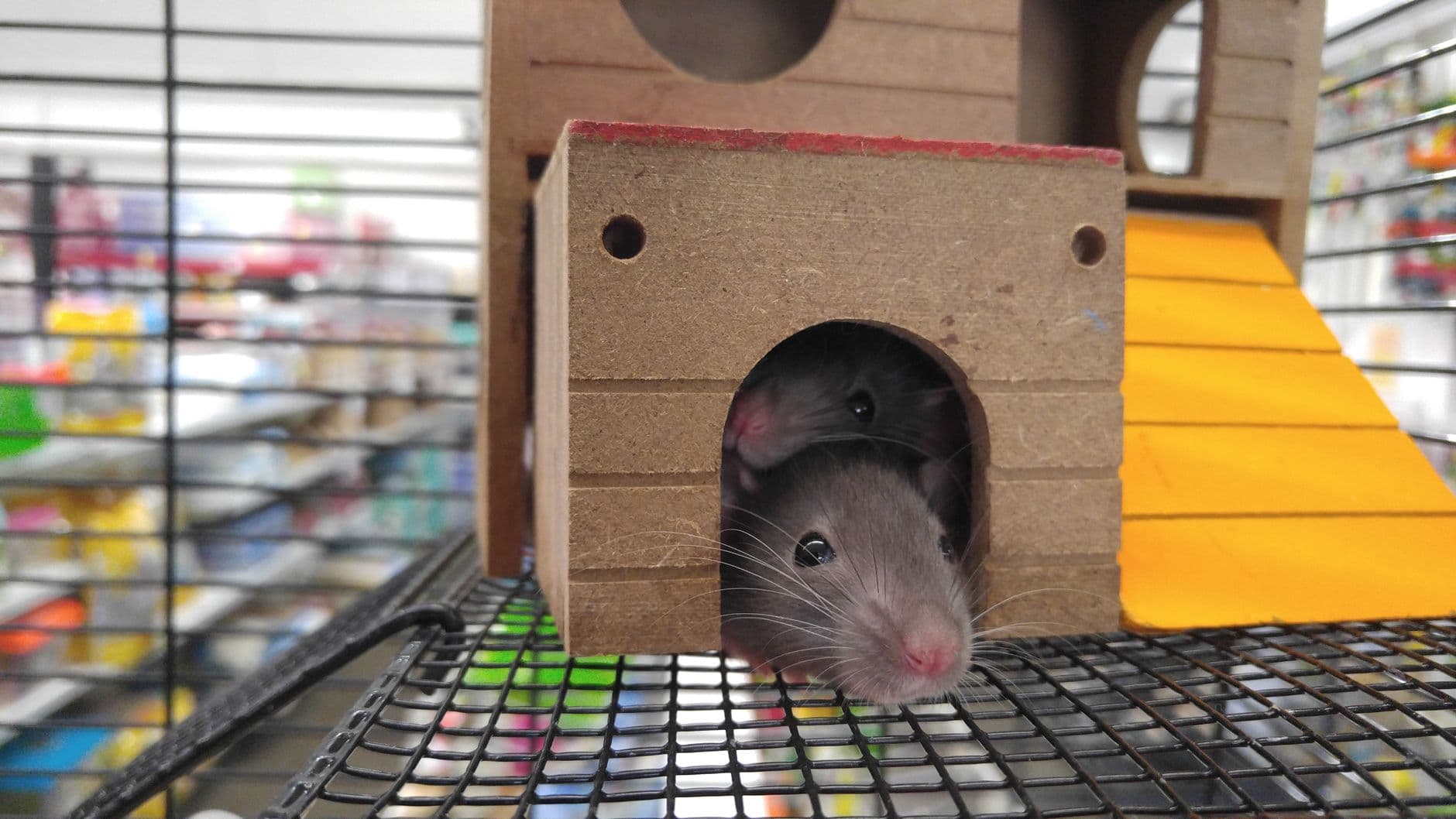
A low-dust paper bedding — Kaytee Clean & Cozy or Small Pet Select's unbleached paper. Rats are unusually prone to respiratory disease, so dust is the property that matters most and absorbency comes second. Aspen is a safe hardwood alternative. Never pine or cedar: the phenol evidence is specifically documented in rats.
Pine and cedar bedding for rats · recommendation
phenols in cedar and pine may adversely affect the liver and can compromise the immune system, making a rat more prone to respiratory problems resulting from mycoplasma
That is the clearest rat-specific statement of the problem we have found, and the mechanism it describes is why this page ranks bedding differently from the hamster equivalent. For a hamster, substrate is primarily about depth and burrow structure. For a rat, it is primarily about what is in the air six inches above it, because that is where the animal's nose is for most of its life.
Why rats are the special case
Respiratory disease is the most common serious health problem in pet rats, and mycoplasma is close to universal in the pet population — most rats carry it and stay well until something tips the balance. The things that tip it are the things an owner controls: ammonia from a cage cleaned too rarely, poor ventilation, and airborne dust.
That reframes the bedding decision. A bedding that is slightly less absorbent but visibly less dusty is the better buy for a rat, which is the reverse of how most small-pet bedding is marketed and the reverse of how we would rank the same products for a hamster.
The materials, ranked for a rat
- Paper beddings — the default. No phenols, low dust when you buy a screened product, and highly absorbent. Unbleached versions avoid the optical brighteners used to make paper bedding white.
- Aspen — a hardwood, so no phenol question. Rat Guide names it as a very good choice on exactly that ground. Slightly dustier than a screened paper product and considerably cheaper by volume.
- Hemp — low dust and absorbent, less widely stocked, and we have not assessed a specific product against a manufacturer listing so it is not in the table below.
- Pine and cedar — no. This is the one material with a rat-specific evidence base against it, and paper costs about the same.
- Clay cat litter — Rat Guide rules it out for lining a cage floor as too dusty. Large-granule, non-dusty litter in a litter box only is a different use.
- Corn cob — rots and grows mold when wet, per the same source. Not a cage-floor substrate.
- Fabric and fleece liners — genuinely good for rats, and a different product category from loose bedding. Worth knowing they exist; a liner plus a litter box is a common and clean setup.
| # | Product | Best for | Score | Price |
|---|---|---|---|---|
| 1 |  Illustrative IllustrativeKaytee Clean & Cozy White Paper BeddingOne 85 L bag fills roughly 10 in deep over a 500 sq in footprint | Reaching a 10 in burrow depth without buying six bags | 9.0out of 10 | Check price on Amazon We do not print prices. #ad Disclosure |
| 2 | Illustrative Small Pet Select Paper BeddingNot applicable | The litter corner of a ferret cage | 8.2out of 10 | Check price on Amazon We do not print prices. #ad Disclosure |
| 3 | Illustrative carefresh Small Pet BeddingNot applicable | Availability and softness | 8.0out of 10 | Check price on Amazon We do not print prices. #ad Disclosure |
| 4 |  Illustrative IllustrativeKaytee Aspen Small Animal BeddingNot applicable | Deep burrowing on a budget | 8.3out of 10 | Check price on Amazon We do not print prices. #ad Disclosure |
| 5 | Illustrative Oxbow Pure Comfort BeddingNot applicable | The toilet corner of a deep-bedded enclosure | 8.1out of 10 | Check price on Amazon We do not print prices. #ad Disclosure |
Scores are our own assessment of published specifications against the thresholds set out in how we assess products. They are not test results and not customer ratings. Tap a row to read the full assessment.
| Product | Continuous floor | Bar spacing | Absorbency | Material |
|---|---|---|---|---|
| Kaytee Clean & Cozy White Paper Bedding | One 85 L bag fills roughly 10 in deep over a 500 sq in footprintclears our threshold | Not applicable | Manufacturer states it absorbs up to six times its weight | Virgin kraft paper; manufacturer states 99 percent dust-free |
| Small Pet Select Paper Bedding | Not applicableclears our threshold | Not applicable | Litter-corner and tray bedding rather than a whole-cage substrate | Unbleached paper fiber |
| carefresh Small Pet Bedding | Not applicableclears our threshold | Not applicable | Soft, short fiber that packs down more than kraft paper | Reclaimed paper fiber |
| Kaytee Aspen Small Animal Bedding | Not applicableclears our threshold | Not applicable | Coarse shavings interlock and hold tunnel walls well | Aspen, a hardwood, so no softwood phenols |
| Oxbow Pure Comfort Bedding | Not applicableclears our threshold | Not applicable | Marketed on odor control; performs well in a urine corner | Paper fiber, unbleached options available |
Dimensions as published by each manufacturer or its retailer, read 27 September 2026 and linked in each assessment below. A tick marks a product that clears our own floor-area threshold; a cross marks one that does not. Where a manufacturer does not publish a figure, the cell says so rather than estimating it.
A note on what this page does not cover
Rats are not one of the four species this site houses, and we are not going to pretend otherwise by publishing a rat cage roundup we have not done the work for. Rat housing has its own requirements — vertical space and climbing matter in a way they do not for a hamster, and bar spacing is a different calculation — and we would rather point you elsewhere for that than guess.
What does carry across is the substrate evidence, because the phenol and dust research is on rodents generally and much of it is on rats specifically. That is the part of the question we can answer properly, so it is the part this page answers.
If you are still choosing a species, the best small pets compared covers the four we do house, on published space figures rather than temperament.
The assessments
Our pick · Reaching a 10 in burrow depth without buying six bags
Kaytee Clean & Cozy White Paper Bedding
Paper, dust-controlled and sold in a volume large enough to actually reach 10 in of depth, which is the spec that matters and the one most bedding bags fail on.
- Dimensions
- Sold in sizes up to 85 liters (5,184 cu in) expanded
- Continuous floor
- One 85 L bag fills roughly 10 in deep over a 500 sq in footprint
- Bar spacing
- Not applicable
- Material
- Virgin kraft paper; manufacturer states 99 percent dust-free
- Absorbency
- Manufacturer states it absorbs up to six times its weight
What it gets right
- Paper, so none of the softwood phenol question applies
- 99 percent dust-free by the manufacturer's own claim
- 85 L pack is one of the few that fills a large enclosure in a single bag
- Holds a burrow shape well once slightly damped
What it gets wrong
- Paper is more expensive per liter than aspen
- The white version shows soiling immediately, which some owners dislike
- Scented variants exist in the range and we would avoid all of them
Who should buy something else
Not for anyone who wants the cheapest possible substrate by volume. Aspen costs less; the trade-off is dust and a less stable tunnel structure.
Specifications read from Kaytee product listing on 27 September 2026. Floor-area arithmetic is ours and is shown above so you can redo it.
Illustrative- Material safety10
- Dust9
- Burrow stability9
- Volume per pack9
- Value per liter7
We do not print prices. #ad Disclosure
Number 2 · The litter corner of a ferret cage
Small Pet Select Paper Bedding
A paper bedding for the one place a ferret cage needs loose material, which is the litter corner and nowhere else.
- Dimensions
- Large-volume boxes
- Continuous floor
- Not applicable
- Bar spacing
- Not applicable
- Material
- Unbleached paper fiber
- Use case
- Litter-corner and tray bedding rather than a whole-cage substrate
What it gets right
- Paper, unbleached, no softwood phenols
- Absorbs well in a concentrated corner
- Large boxes, so a weekly change is not an event
What it gets wrong
- Ferrets kick loose bedding out of a tray, so expect it on the pan
- Not a cage-wide substrate for an animal that does not burrow
Who should buy something else
Not for lining a whole ferret level. Use a fleece liner for that and keep this for the tray.
Specifications read from Manufacturer listing on 27 September 2026. Floor-area arithmetic is ours and is shown above so you can redo it.
Illustrative- Material safety10
- Dust8
- Absorbency9
- Containment6
- Value8
We do not print prices. #ad Disclosure
Number 3 · Availability and softness
carefresh Small Pet Bedding
The most widely stocked paper bedding, and a safe default whose only real weakness is that it compacts rather than holding an open tunnel.
- Dimensions
- Sold in compressed packs from 14 L to 60 L expanded
- Continuous floor
- Not applicable
- Bar spacing
- Not applicable
- Material
- Reclaimed paper fiber
- Handling
- Soft, short fiber that packs down more than kraft paper
What it gets right
- Paper fiber, so the softwood phenol question does not arise
- Stocked almost everywhere, which matters when you need a bag today
- Very soft, and good in nest boxes
What it gets wrong
- Compacts under its own weight, so deep burrows collapse more readily
- Short fiber means more dust in the bag than kraft-paper products
- Smaller pack sizes make a 10 in fill expensive
Who should buy something else
Not the choice if deep burrowing is the point of your setup. Use it in the nest and a kraft-paper or aspen substrate for the depth.
Specifications read from Manufacturer listing on 27 September 2026. Floor-area arithmetic is ours and is shown above so you can redo it.
Illustrative- Material safety10
- Dust7
- Burrow stability6
- Volume per pack7
- Value per liter8
We do not print prices. #ad Disclosure
Number 4 · Deep burrowing on a budget
Kaytee Aspen Small Animal Bedding
The cheapest substrate we are willing to recommend, and the best tunnel-holder of the three, at the cost of visible dust in the bag.
- Dimensions
- Sold in compressed bales, commonly 8 L to 52.4 L expanded
- Continuous floor
- Not applicable
- Bar spacing
- Not applicable
- Material
- Aspen, a hardwood, so no softwood phenols
- Burrow behavior
- Coarse shavings interlock and hold tunnel walls well
What it gets right
- Aspen is a hardwood, so the phenol issue that rules out pine and cedar does not apply
- Coarse shavings interlock, so a 10 in burrow holds its shape
- Much cheaper per liter than paper
What it gets wrong
- Noticeably dusty; sift or shake it out before it goes in
- Absorbs less than paper, so spot-cleaning is more frequent
- Bale sizes vary between retailers, so plan the fill volume before you buy
Who should buy something else
Avoid if anyone in the household reacts to wood dust, or if the enclosure sits in a bedroom where you would notice it.
Specifications read from Manufacturer listing on 27 September 2026. Floor-area arithmetic is ours and is shown above so you can redo it.
Illustrative- Material safety9
- Dust5
- Burrow stability10
- Volume per pack8
- Value per liter10
We do not print prices. #ad Disclosure
Number 5 · The toilet corner of a deep-bedded enclosure
Oxbow Pure Comfort Bedding
A paper bedding with better odor behavior than most, which matters in the one corner of the enclosure that always needs it.
- Dimensions
- Sold in compressed packs up to 72 L expanded
- Continuous floor
- Not applicable
- Bar spacing
- Not applicable
- Material
- Paper fiber, unbleached options available
- Odor handling
- Marketed on odor control; performs well in a urine corner
What it gets right
- Paper, so no softwood question
- Handles a concentrated urine corner better than aspen
- Unbleached versions avoid the optical brighteners in white paper beddings
What it gets wrong
- Premium price per liter
- Compacts more than kraft paper, so it is not the best deep-burrow substrate
Who should buy something else
Not the whole-enclosure substrate at this price. Buy it for the wet corner and something cheaper for the other nine inches.
Specifications read from Manufacturer listing on 27 September 2026. Floor-area arithmetic is ours and is shown above so you can redo it.
Illustrative- Material safety10
- Dust8
- Burrow stability6
- Volume per pack8
- Value per liter6
We do not print prices. #ad Disclosure
What we would buy
Kaytee Clean & Cozy as the main bedding. It is virgin kraft paper, the manufacturer makes a dust claim for it, and it is the most absorbent product here, which matters because ammonia is the thing you are actually managing.
Small Pet Select's unbleached paper is the alternative for anyone who would rather not have optical brighteners in the cage at all, and it comes in larger volumes.
Kaytee aspen if the budget is the constraint. It is a hardwood so the phenol question does not arise, it is much cheaper by volume, and the trade-off is a little more dust than a screened paper product — which is exactly the trade-off to think hardest about for this species.
Questions people ask
What is the best bedding for pet rats?
Is pine bedding safe for rats?
Is kiln-dried pine safe for rats?
Can rats use corn cob bedding?
How deep should rat bedding be?
Do fleece liners work for rats?
Sources
- Rat Guide — Cage bedding and litter — Rat-specific phenol, dust, clay litter and corn cob guidance. Read 29 September 2026.
- House Rabbit Society — The dangers of softwood shavings — The liver enzyme evidence, and the recommendation of recycled paper and aspen.