Hamsters
Best hamster cages for kids
The cages with cartoon packaging have the least floor in the shop. What a child needs is a clear side panel and an animal that is awake.
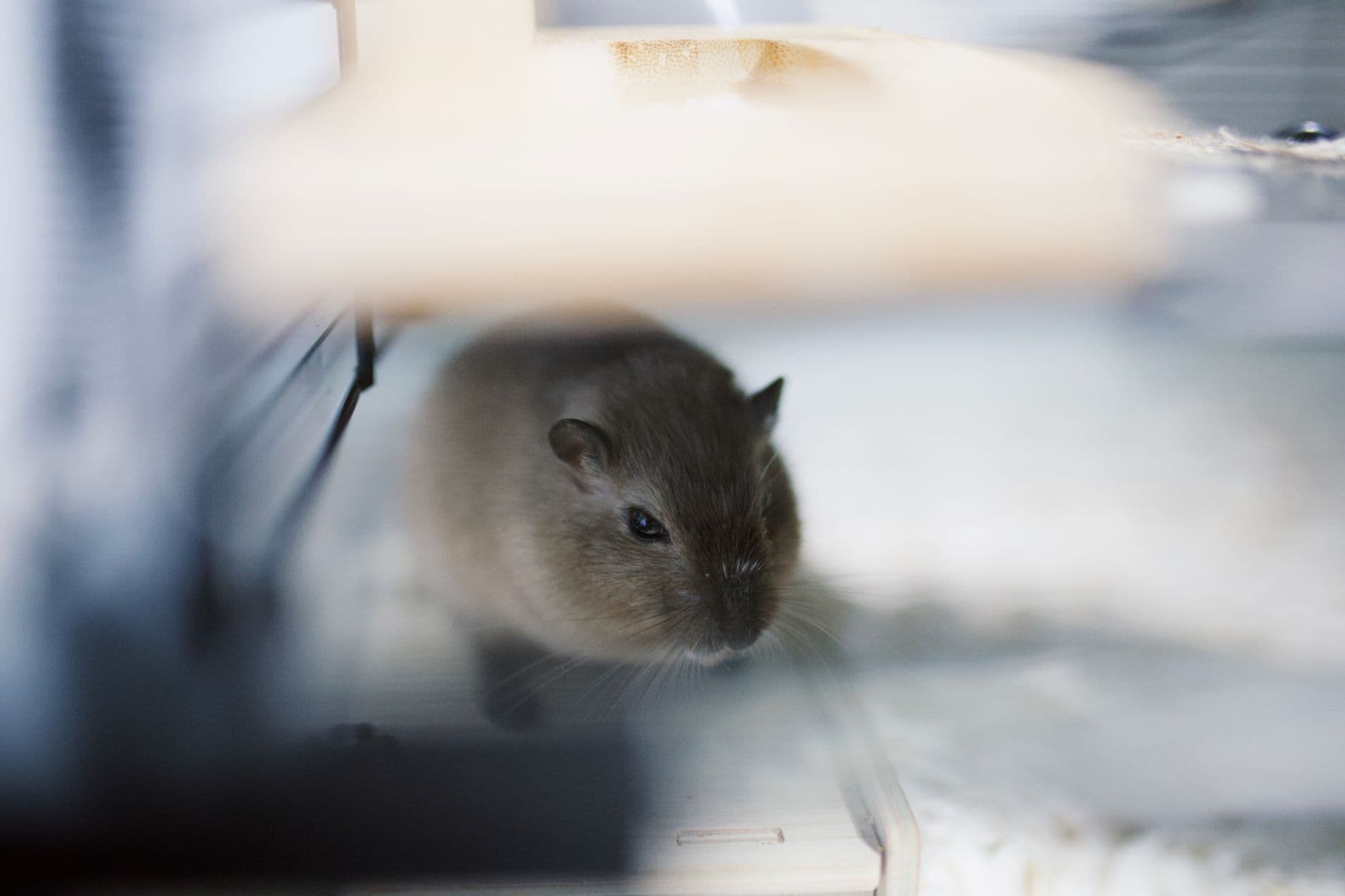
The Niteangel Vista Large, because a full-height glass front is the single feature that decides whether a child sees the animal or sees a wall of bedding. It also clears the published floor minimum by 38 percent. Avoid the tube-and-pod cages with the brightest packaging: the biggest of them holds 448 square inches against a 775 square inch minimum.
Hamster cage minimum size · minimum
100cm x 50cm
Our conversion: 5,000 cm2, or 775 square inches of continuous floor
Before the cages, the thing that decides how this goes: hamsters are nocturnal. A hamster sleeps from roughly dawn until dusk, which is the whole of a primary-school child's day, and no enclosure fixes that. If the household has not already bought the animal, best small pets for kids is the more useful page and it recommends a different species.
If the hamster is already home, or a hamster is definitely the decision, then the enclosure is where a good outcome is still available — and the features that matter for a child are not the ones the packaging leads with.
Three features that matter, and one that does not
- 1.A clear side panel at the child's eye level. A wire cage with ten inches of bedding in it is an opaque box with a hamster somewhere inside. A glass or acrylic front turns the same setup into something a child can watch, including the burrowing, which is the most interesting thing a hamster does.
- 2.An opening the child can reach into without lifting anything. A front-opening door beats a lift-off lid, because a lift-off lid means an adult has to be present for every interaction, and interactions that need scheduling stop happening.
- 3.A non-porous interior. Children spill water. An MDF carcass with a breached liner absorbs it; acrylic and glass do not.
- 4.Colour is not a feature. The colored tube systems are the smallest cages in the shop, and the tubes themselves are a documented problem — see tube cage safety.
| # | Product | Best for | Score | Price |
|---|---|---|---|---|
| 1 |  Illustrative IllustrativeNiteangel Vista Hamster Cage, Large47.1 x 22.7 = 1,069 sq in external footprint | A Syrian that needs real burrowing depth | 9.1out of 10 | Check price on Amazon We do not print prices. #ad Disclosure |
| 2 |  Illustrative IllustrativeBUCATSTATE Hamster Cage 3.0, 47 in47 x 23.6 = 1,109 sq in (7.7 sq ft) by our arithmetic | Deep burrowing without a DIY build | 9.0out of 10 | Check price on Amazon We do not print prices. #ad Disclosure |
| 3 |  Illustrative IllustrativeKaytee CritterTrail Super Habitatbase measures nearer 28 x 16 in, about 448 sq in of usable floor | Nothing we would recommend it for as a primary enclosure | 4.1out of 10 | Check price on Amazon We do not print prices. #ad Disclosure |
| 4 | Illustrative Prevue Pet Products Universal Small Animal Home 52830 x 16 = 480 sq in of interior base floor | A dwarf hamster or a bar-spacing problem | 6.2out of 10 | Check price on Amazon We do not print prices. #ad Disclosure |
Scores are our own assessment of published specifications against the thresholds set out in how we assess products. They are not test results and not customer ratings. Tap a row to read the full assessment.
| Product | Continuous floor | Bar spacing | Bedding depth possible | Material |
|---|---|---|---|---|
| Niteangel Vista Hamster Cage, Large | 47.1 x 22.7 = 1,069 sq in external footprintclears our threshold | No bars on the long walls: MDF panels with a mesh top | Deep front glass panel takes roughly 10 in of substrate | MDF carcass with aspen veneer, glass front, wire mesh lid |
| BUCATSTATE Hamster Cage 3.0, 47 in | 47 x 23.6 = 1,109 sq in (7.7 sq ft) by our arithmeticclears our threshold | No bars: clear acrylic panels in an aluminum frame | Manufacturer states the deep base takes up to 11 in of bedding | Aluminum frame with thickened clear acrylic panels |
| Kaytee CritterTrail Super Habitat | base measures nearer 28 x 16 in, about 448 sq in of usable floorbelow our threshold | Not published for this model | Connects to other CritterTrail units and tube accessories | Plastic base and shell with wire panels and tube connectors |
| Prevue Pet Products Universal Small Animal Home 528 | 30 x 16 = 480 sq in of interior base floorbelow our threshold | 3/8 in (9.5mm) wire spacing | 6.25 in deep tubby base | Powder-coated wire on a deep plastic base |
Dimensions as published by each manufacturer or its retailer, read 27 September 2026 and linked in each assessment below. A tick marks a product that clears our own floor-area threshold; a cross marks one that does not. Where a manufacturer does not publish a figure, the cell says so rather than estimating it.
Where to put it
Not in the child's bedroom, if that can be avoided. A hamster becomes active at the point a child goes to sleep, and a wheel — even a good silent one — plus digging and bar contact at two in the morning is a real problem that gets solved by moving the animal somewhere worse. A living room or landing keeps the animal in family space and the child's sleep intact. The full set of placement rules is on where to put a cage.
Height matters too. An enclosure on the floor is out of sight; an enclosure on a surface a child cannot reach is out of reach. Something at the child's chest height, on furniture rated for the load, is the arrangement that works.
The assessments
Our pick · A Syrian that needs real burrowing depth
Niteangel Vista Hamster Cage, Large
The largest mainstream single-piece hamster enclosure we could verify, and the only one whose external footprint clears our 775 sq in floor with room to spare even after you allow for wall thickness.
- Dimensions
- 47.1 x 22.7 x 26.9 in external (manufacturer-listed)
- Continuous floor
- 47.1 x 22.7 = 1,069 sq in external footprint
- Bar spacing
- No bars on the long walls: MDF panels with a mesh top
- Material
- MDF carcass with aspen veneer, glass front, wire mesh lid
- Bedding depth possible
- Deep front glass panel takes roughly 10 in of substrate
What it gets right
- 1,069 sq in external footprint clears the 775 sq in PDSA minimum by a wide margin
- Solid panels on three sides mean substrate can be piled deep without spilling
- Mesh lid takes a 12 in wheel mounted from above
- Front glass makes bedding depth visible, so you can see when it drops below 10 in
What it gets wrong
- MDF absorbs urine if the liner is breached; it is not a wipe-clean surface
- Heavy and awkward to move once filled with 10 in of substrate
- Assembly is not tool-free
Who should buy something else
Skip it if you want to hose the enclosure out. MDF and water are a bad combination, and a glass tank or a coated-steel cage is the better choice for anyone who cleans that way.
Specifications read from Niteangel product listing on 27 September 2026. Floor-area arithmetic is ours and is shown above so you can redo it.
Illustrative- Floor area vs threshold10
- Bedding depth9
- Wheel compatibility9
- Material durability7
- Cleaning access8
We do not print prices. #ad Disclosure
Number 2 · Deep burrowing without a DIY build
BUCATSTATE Hamster Cage 3.0, 47 in
The deepest substrate capacity we could verify on a mainstream enclosure: an 11 in bedding claim on a 1,109 sq in floor is the combination almost nothing else offers.
- Dimensions
- 47 x 23.6 x 25.5 in; manufacturer states 7.8 sq ft of floor
- Continuous floor
- 47 x 23.6 = 1,109 sq in (7.7 sq ft) by our arithmetic
- Bar spacing
- No bars: clear acrylic panels in an aluminum frame
- Material
- Aluminum frame with thickened clear acrylic panels
- Bedding depth possible
- Manufacturer states the deep base takes up to 11 in of bedding
What it gets right
- 1,109 sq in clears our 775 sq in floor by 43 percent
- 11 in of stated bedding capacity exceeds PDSA's 25cm (10 in) figure
- Acrylic and aluminum wipe clean and do not absorb urine
- Stackable frame, so a second unit can go above without extra floor space
What it gets wrong
- Acrylic scratches, and a scratched panel is permanently cloudy
- No bars means no climbing surface; enrichment has to come from the layout
- A full 11 in of substrate in this footprint is a lot of bedding to buy and replace
Who should buy something else
Wrong for a hamster that climbs rather than digs. If your animal spends its waking hours on the bars, an enclosure with no bars removes most of what it does.
Specifications read from BUCATSTATE product listing on 27 September 2026. Floor-area arithmetic is ours and is shown above so you can redo it.
Illustrative- Floor area vs threshold10
- Bedding depth10
- Wheel compatibility8
- Material durability8
- Cleaning access9
We do not print prices. #ad Disclosure
Number 3 · Nothing we would recommend it for as a primary enclosure
Kaytee CritterTrail Super Habitat
The largest of the pet-store tube habitats and still barely more than half the floor area a published minimum asks for, with tube runs standing in for space it does not have.
- Dimensions
- 30 x 18 x 16.5 in external; manufacturer states 540 sq in of living space
- Continuous floor
- base measures nearer 28 x 16 in, about 448 sq in of usable floor
- Bar spacing
- Not published for this model
- Material
- Plastic base and shell with wire panels and tube connectors
- Expandability
- Connects to other CritterTrail units and tube accessories
What it gets right
- The largest CritterTrail, so if you already own the range this is the best of it
- Genuinely easy to clean and to open
What it gets wrong
- 448 sq in of usable floor is 42 percent short of the 775 sq in minimum
- Tube volume is counted by shoppers as space; it is not continuous floor
- Shallow base, so deep substrate is not possible
- Bar spacing is not published, so you cannot check it before buying
Who should buy something else
Not a primary enclosure for a Syrian or a dwarf hamster. We include it because it is what most buyers are shown first, and because naming the gap is more useful than pretending the product does not exist.
Specifications read from Retailer listing of Kaytee specifications on 27 September 2026. Floor-area arithmetic is ours and is shown above so you can redo it.
Illustrative- Floor area vs threshold2
- Bedding depth2
- Bar spacing safety5
- Material durability6
- Cleaning access8
We do not print prices. #ad Disclosure
Number 4 · A dwarf hamster or a bar-spacing problem
Prevue Pet Products Universal Small Animal Home 528
The tightest bar spacing on any mainstream wire cage at 3/8 in, on a floor that falls well short of 775 sq in — a safety win and a space failure in the same product.
- Dimensions
- 32.5 x 19 x 17.5 in external; base interior 30 x 16 in
- Continuous floor
- 30 x 16 = 480 sq in of interior base floor
- Bar spacing
- 3/8 in (9.5mm) wire spacing
- Material
- Powder-coated wire on a deep plastic base
- Base depth
- 6.25 in deep tubby base
What it gets right
- 3/8 in spacing is narrow enough for a dwarf hamster, where 1/2 in is not
- 6.25 in base is unusually deep for a wire cage
- Two large access doors, front and roof
- Wire walls give a climbing surface the acrylic enclosures do not
What it gets wrong
- 480 sq in of interior floor is 38 percent short of the 775 sq in minimum
- 6.25 in of base depth caps substrate well below PDSA's 10 in figure
- The listing notes wider gaps at the corners than the 3/8 in quoted spacing
Who should buy something else
Not a primary enclosure for any hamster if you are measuring against a published minimum. We list it because its bar spacing solves a real problem, not because its floor is adequate.
Specifications read from Prevue Pet Products listing on 27 September 2026. Floor-area arithmetic is ours and is shown above so you can redo it.
Illustrative- Floor area vs threshold3
- Bedding depth4
- Bar spacing safety10
- Material durability8
- Cleaning access9
We do not print prices. #ad Disclosure
What we would buy
The Niteangel Vista Large. The glass front is the feature that does the work here, and it clears the floor figure by a wide margin. Its weakness is the MDF carcass, which matters more in a household with a child in it than in an adult one, so line the base and check it.
The BUCATSTATE 3.0 at 47 inches is the better object on materials — acrylic throughout, nothing to absorb a spill — and has more floor. Choose it over the Vista if spills are the likely failure and the slightly less warm look does not matter.
On a tight budget, a bin cage is clear-sided by definition, clears the floor figure easily, and is a project a child can genuinely help with, which is worth more than most of what is on this page.
Questions people ask
What is the best hamster cage for a child?
Are hamsters good pets for children?
Can a hamster cage go in a child's bedroom?
Are CritterTrail cages big enough?
Should a child clean the hamster cage?
Sources
- PDSA — The ideal home for your hamster — Floor area, bedding depth and the nocturnal activity pattern.
- RSPCA — Hamster environment — Guidance on digging depth and handling a hamster that is awake.
- San Diego Humane Society — Hamster care — Bedding depth band and wheel sizing by hamster type.