Rabbits
Rabbit hutch flooring
Published guidance rules out wire floors outright. Here is what to use instead, and how to fix a hutch that has one.
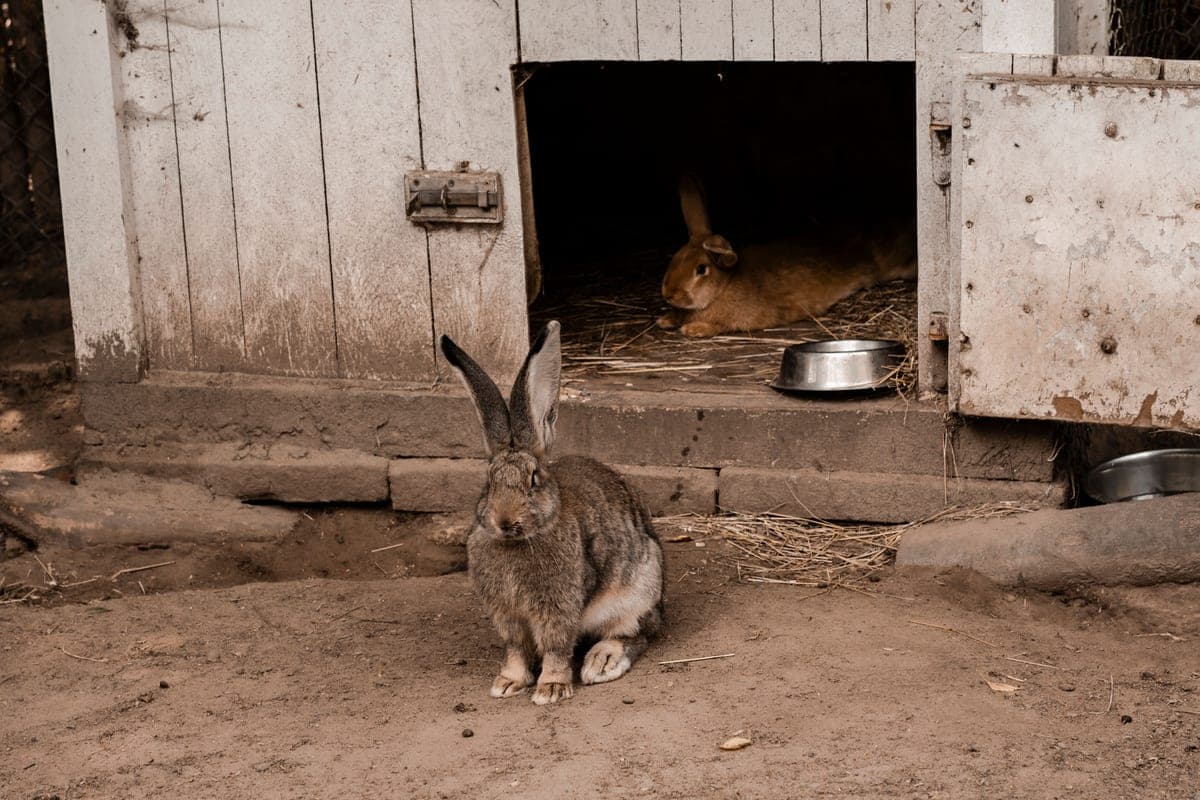
Wire floors are ruled out. Published guidance for small pets states that cages with wire floors are not acceptable, and in rabbits standing on wire causes sore hocks — ulcerated pressure sores on the underside of the foot. Use a solid floor with absorbent bedding, a rubber or washable mat, or grass. If your hutch came with a wire floor, cover most of its area before the rabbit stands on it.
Guinea pig flooring · minimum
plastic tubs, glass aquariums and cages with wire floors are stated to be not acceptable
We cite the guinea pig guidance because it is the clearest published statement of the point and the mechanism is the same: a rabbit's foot has no protective pad the way a dog's does. It is fur over bone, and a rabbit stands on it all day. Wire concentrates load on a small area, the fur wears, and the skin underneath ulcerates.
Sore hocks, briefly
Pododermatitis — sore hocks — starts as thinning fur on the underside of the hind foot, progresses to a bald patch, then to a reddened area, then to an open ulcer. Once it is an open lesion it is a veterinary problem that treats slowly, because the animal keeps standing on it.
Wire flooring is the most common cause and not the only one. Excess weight increases load; a permanently wet floor softens the skin; and a floor with no soft resting area means the animal never gets relief. That last point is the practical one: even on a solid floor, a rabbit needs somewhere soft to sit.
What to use
| Option | Where | Grip | Washable | Notes |
|---|---|---|---|---|
| Solid hutch floor with paper bedding | Outdoors and indoors | Good | Bedding replaced | The default. Needs the floor sealed or lined so urine does not soak the timber |
| Rubber matting | Both | Excellent | Yes | Hoses clean, lasts years, gives relief from a hard floor |
| Washable non-slip mats and rubber-backed rugs | Indoors | Excellent | Machine, mostly | The best indoor answer; buy two and rotate |
| Vinyl or lino sheet | Both | Moderate | Yes | Waterproofs a timber floor underneath; can be slippery, so add a mat on top |
| Interlocking foam tiles | Indoors | Good | Wipe | Must be covered; bare foam gets chewed and swallowed |
| Grass | Outdoors | Excellent | n/a | Ideal, and needs a dug-in mesh skirt so the rabbit does not dig out |
| Carpet | Indoors | Excellent | No | Grips well and gets eaten. Ingested fiber is a genuine veterinary problem |
| Bare laminate or tile | Indoors | Poor | Yes | Slippery. Bad for joints and hazardous at speed |
| Wire | Neither | Poor | Yes | Ruled out by published guidance. Cover it |
How to cover a wire floor
Several budget hutches ship with a wire bottom over a pull-out tray, because it is easy to clean. The Aivituvin AIR15 is one we assessed. It needs fixing rather than avoiding, if you already own it.
- 1.Cut a rubber mat or a sheet of vinyl to cover at least three quarters of the wire area. Not all of it — leaving a strip of wire over the tray preserves some of the drainage the design was built around.
- 2.Weight it or fix it down. A mat a rabbit can pull up is a mat that will be under the rabbit rather than under its feet.
- 3.Add absorbent bedding on top in the area the rabbit rests, so there is a soft surface as well as a solid one.
- 4.Leave the wire strip over the tray as the toilet area. Most rabbits will use it, which keeps the resting area dry and the cleaning easy.
- 5.Check the feet monthly. Thinning fur on the underside of a hind foot is the early sign, and it is much easier to fix at that stage.
Indoors: the specific problem
Indoors your floor is the rabbit's floor, and the two common household surfaces are both wrong in opposite directions. Laminate and tile are slippery, which is bad for joints and genuinely hazardous when a rabbit sprints and cannot stop. Carpet grips beautifully and gets eaten, and ingested carpet fiber causes gut obstructions.
What works is washable non-slip matting over whatever you have: rubber-backed rugs, bath-mat style matting, or rubber sheet. Buy two sets so one can be in the wash. This is a small recurring cost that people do not plan for and that determines whether indoor rabbit keeping is pleasant — see best indoor rabbit housing.
Outdoors: grass, and the dig problem
Grass is the best surface a rabbit can stand on — grippy, soft, and it allows grazing, which is a behavior rather than a feeding method. The problem is that a rabbit on grass digs, and a rabbit that digs under a run wall is gone.
The fix is the same mesh skirt that keeps a fox out: half-inch hardware cloth laid flat at ground level extending about 12 inches outward from the run perimeter, pegged down, and grassed over. It stops digging at the wall while leaving the rest of the run diggable, which is a reasonable compromise. Predator-proof rabbit hutches covers the security half of the same measure.
The products this bears on
One with a solid shelter floor and supplied underfloor wire, one that sits on your ground so the surface is your choice, and one that ships with the wire floor this page is about.
 Illustrative
The shelter half of a compliant setup
Omlet Eglu Go Rabbit Hutch with 2m Run
9ft 6in x 5ft 5in = about 51.5 sq ft of enclosed footprint
The best-engineered shelter in the category, on a package footprint of about 51.5 sq ft that still falls 13 sq ft short of the 3m x 2m minimum RWAF and the RSPCA both publish.
View at OmletWe earn no commission here. #ad Disclosure
 Illustrative
Building a footprint that actually clears the published minimum
MidWest Homes for Pets 48 in Exercise Pen, 8 panels
16 sq ft (2,304 sq in) enclosed as an octagon
The cheapest honest route to the 64.5 sq ft minimum, because four of these pens joined together get you there and a single hutch never will.
Check price on AmazonWe do not print prices. #ad Disclosure
- Illustrative
A cheap weatherproof shelter you will re-floor
Aivituvin AIR15 Outdoor Rabbit Hutch
9.6 sq ft (1,382 sq in) as stated by the manufacturer
An honest budget outdoor shelter whose wire floor is the specification you need to solve before a rabbit stands on it.
Check price on AmazonWe do not print prices. #ad Disclosure
Questions people ask
What is the best flooring for a rabbit hutch?
Is a wire bottom bad for rabbits?
How do I cover a wire hutch floor?
What flooring should an indoor rabbit have?
Can rabbits live on grass?
How do I check for sore hocks?
Sources
- Humane World for Animals — Guinea pig housing requirements — Plastic tubs, glass aquariums and cages with wire floors stated to be unacceptable
- Aivituvin AIR15 product listing — Wire bottom over two deep trays — the design this guide addresses
- Omlet — Eglu Go Rabbit Hutch — Solid shelter floor with supplied underfloor run wire