Rabbits
Rabbit enclosure setup checklist
Ten things, each tied to a figure or a behavior, and four commonly sold items to leave out.
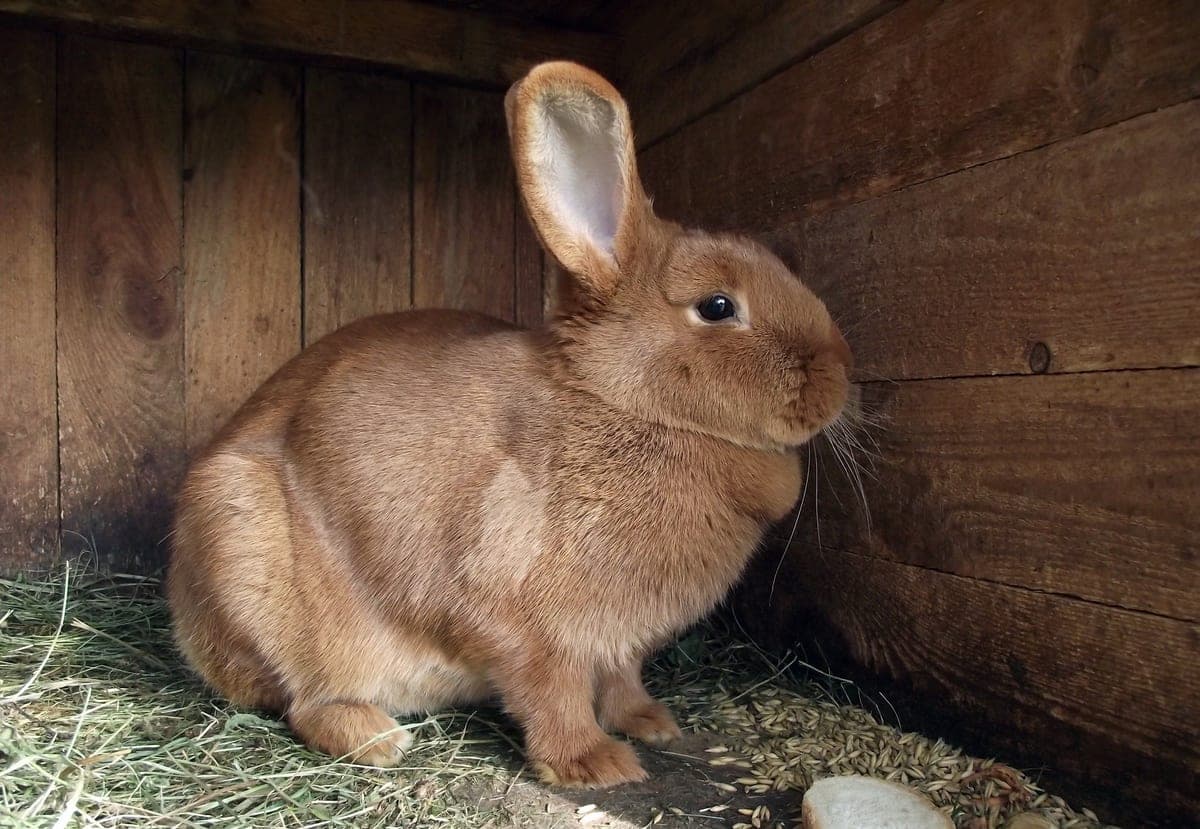
A rabbit enclosure needs ten things: 64.5 square feet of continuous floor, 3ft 3in of height, a shelter of at least 6ft x 2ft x 2ft, non-slip washable flooring, unlimited hay in a rack, a large litter tray, two water sources, hides with two exits each, safe chew material, and a dig box. Four commonly sold items are worth leaving out.
The ten, each with its reason
1. Floor: 64.5 square feet in one unbroken block
Rabbit enclosure minimum · minimum
a single enclosed area of at least 3m x 2m by 1m high
Our conversion: 9ft 10in x 6ft 7in x 3ft 3in, about 64.5 square feet of floor
The figure both RWAF and the RSPCA publish, and the one item on this list that nothing else compensates for. Platforms, upper levels and tunnels do not count towards it. How to measure and how to reach it.
2. Height: 3ft 3in (1m)
Enough for the rabbit to stand on its hind legs without its ears touching. RWAF states that a rabbit unable to do this can develop spinal deformity. This is the easiest figure on the list to check and the one most hutches fail.
3. A shelter, at least 6ft x 2ft x 2ft
Rabbit sleeping quarters minimum · minimum
1.8m x 0.6m x 0.6m high (6ft x 2ft x 2ft)
Dark, dry and enclosed, sitting inside the enclosure. For a pair, two smaller shelters beat one large one, because a single-entrance shelter can be guarded — see housing two rabbits.
4. Non-slip, washable flooring
Wire floors are ruled out by published guidance and cause sore hocks. Laminate and tile are slippery; bare carpet gets eaten. Rubber matting or washable non-slip mats, with a soft resting area on top. Rabbit hutch flooring.
5. Unlimited hay, in a rack
Hay is most of a rabbit's diet and most of its day. A rack keeps it off the floor and out of the litter, which means less waste and cleaner hay. For a pair, two racks well apart, because hay is the resource most worth guarding.
6. A large litter tray
Rabbits litter-train readily, and the trick is putting the tray where the rabbit has already chosen rather than where you would prefer. Use a cat litter tray rather than a rabbit-sized one — bigger than you think is necessary — with paper-based litter and hay on top, since rabbits eat and toilet at the same time.
7. Two water sources
Bowls rather than bottles as the primary source: a rabbit drinks more from a bowl and a bottle spout is slow. Two sources so a single failure — a knocked bowl, a frozen spout — is not a crisis. In winter this becomes a twice-daily check, per protecting an outdoor hutch in winter.
8. Hides, each with two exits
Cardboard boxes with two holes cut in them, tunnels open at both ends, or a raised platform to get under. The two-exit rule is the important part: a hide with one entrance is a dead end, and most escalation between rabbits happens somewhere one of them cannot leave.
9. Safe chew material
Untreated apple, willow or hazel wood, plain cardboard, and seagrass mats. Rabbit teeth grow continuously and chewing is not optional behavior — the choice is between material you provide and your skirting boards. Avoid treated or painted wood, and avoid softwood for the reasons in cage materials safety.
10. A dig box
A shallow tub or a large cardboard box filled with shredded paper, safe soil or hay. Digging is core rabbit behavior, and a rabbit without somewhere to do it digs at the carpet, the enclosure corner or under the run wall. A dig box redirects it for almost nothing.
What to leave out
- Wire-floored anything. Ruled out by published guidance and the main cause of sore hocks.
- Muesli-style rabbit food. Selective feeding means the rabbit eats the tasty parts and leaves the fiber, which is the opposite of what a rabbit's gut needs. Hay plus a measured pellet.
- Exercise balls and harnesses. A ball is inappropriate for a rabbit's spine; a harness risks injury if the animal bolts, which it will.
- Cedar or pine shavings. The same phenol question as for every species on this site. Paper-based litter and straw bedding instead.
The order to set it up in
- 1.Site the enclosure. Shade first if outdoors — rabbits are more at risk from heat than cold. Drafts, then everything else. Cage placement.
- 2.Sort the security if outdoors: mesh apron at ground level, welded mesh not woven, a two-action latch. Predator-proof hutches.
- 3.Lay the flooring, then the shelter, at the end furthest from the litter corner.
- 4.Place the litter tray in the corner the rabbit has already chosen, or the corner furthest from the shelter if this is a new setup.
- 5.Hay rack near the litter tray, because rabbits eat and toilet together and putting them together is working with the animal rather than against it.
- 6.Water away from both, so it stays clean.
- 7.Hides and the dig box in the open area, with through-routes and no dead ends.
- 8.Leave it a few hours before the rabbit goes in, and put some used bedding from the old setup in so it smells partly familiar.
The structural purchases
Pens for the footprint, a shelter that will not rot, or an indoor hutch as the shelter inside a pen. Everything else on this checklist is cheap or improvised.
 Illustrative
Building a footprint that actually clears the published minimum
MidWest Homes for Pets 48 in Exercise Pen, 8 panels
16 sq ft (2,304 sq in) enclosed as an octagon
The cheapest honest route to the 64.5 sq ft minimum, because four of these pens joined together get you there and a single hutch never will.
Check price on AmazonWe do not print prices. #ad Disclosure
 Illustrative
The shelter half of a compliant setup
Omlet Eglu Go Rabbit Hutch with 2m Run
9ft 6in x 5ft 5in = about 51.5 sq ft of enclosed footprint
The best-engineered shelter in the category, on a package footprint of about 51.5 sq ft that still falls 13 sq ft short of the 3m x 2m minimum RWAF and the RSPCA both publish.
View at OmletWe earn no commission here. #ad Disclosure
- Illustrative
An indoor shelter beside a free-roam area
Aivituvin AIR19 Indoor Rabbit Hutch
9.6 sq ft (1,382 sq in) as stated by the manufacturer
A well-organized indoor shelter at 9.6 sq ft, which is 15 percent of the published minimum and therefore a bedroom rather than a home.
Check price on AmazonWe do not print prices. #ad Disclosure
Worth noticing about that list: the two items that matter most — floor area and height — are properties of the enclosure rather than things you put in it, and most of what is sold for rabbits is in the second category. A large enclosure with hay, a litter tray, a dig box and two cardboard hides beats a small hutch full of accessories every time.
Questions people ask
How should a rabbit cage be set up?
What does a rabbit need in its enclosure?
Do rabbits need a dig box?
Bowl or bottle for rabbit water?
Where should a rabbit's litter tray go?
Why should hides have two exits?
Sources
- Rabbit Welfare Association & Fund — Minimum space requirements — Enclosure and shelter figures used throughout this checklist
- RSPCA — Rabbit environment
- Humane World for Animals — Guinea pig housing requirements — Cited for the wire-floor prohibition and the cedar and pine recommendation