Rabbits
Housing two rabbits
The published figure is already for two. What changes is how many of everything, and having somewhere to separate them.
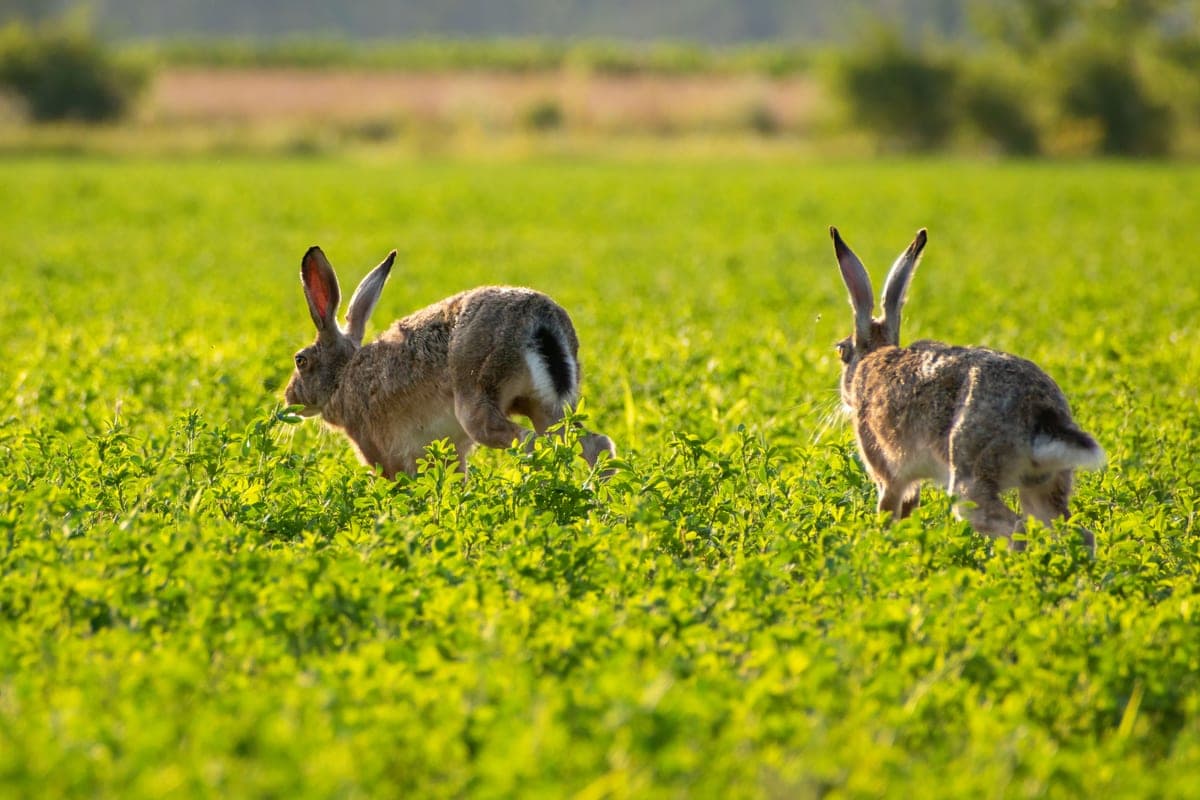
The published minimum of 3m x 2m x 1m — about 64.5 square feet — is already stated for two rabbits, so a pair does not need more than the figure and a single rabbit does not need less. What changes for a pair is provisioning: two shelters or one with two exits, two litter areas, two hay sources, and a realistic plan for separating them if the bond breaks.
Rabbit enclosure minimum · minimum
a single enclosed area of at least 3m x 2m by 1m high
Our conversion: 9ft 10in x 6ft 7in x 3ft 3in, about 64.5 square feet of floor
Rabbits are social and RWAF's position is that they should not be kept alone, so a pair is the normal case rather than the exception. Which makes this page less about a bigger enclosure and more about what a shared enclosure needs that a single one does not.
Why the figure does not double
Because it was never a per-animal allowance. RWAF derives 3m x 2m from what one rabbit needs in order to run rather than hop, and says explicitly that a single rabbit needs the same minimum. Two rabbits share the running space in the same way two people share a corridor.
That said, 64.5 square feet is a floor for two, not a target. A pair in an enclosure at exactly the minimum has less margin than a single rabbit in the same space, because two animals occasionally need to be apart and a minimum-sized enclosure gives them nowhere to go. If you have the room, going above the figure matters more for a pair than for a single.
Two of everything, or one with two exits
This is the practical content of housing a pair, and it is about resource competition rather than area.
- Shelters: two, or one with two openings. A single-entrance shelter can be guarded by one rabbit, and a guarded shelter is not available to the other. Two exits removes the chokepoint.
- Litter areas: two, in different corners. Rabbits are territorial about toileting, and a shared tray can become a flashpoint.
- Hay: two sources, well apart. Hay is the resource most worth guarding because they eat it all day. One rack for two rabbits is the most common avoidable cause of friction.
- Water: two sources. Same reasoning, lower stakes.
- Hides and tunnels: more than two, with through-routes. A tunnel with one entrance is a trap in a squabble; a tunnel with two is an escape route.
You need a way to separate them
Bonds break. It happens after illness, after one animal is taken to a vet and comes back smelling different, after neutering hormones shift, and sometimes for no reason an owner can identify. A broken bond between rabbits can escalate to serious injury quickly, so the practical requirement is a way to separate them today, not a plan to buy something.
The cheapest version: an extra exercise pen panel or two, kept aside, which can divide the enclosure into two halves. Mesh-divided halves are also how re-bonding is done, so the same kit does both jobs. This is the single most useful thing to have and not need.
What to buy for a pair
| # | Product | Best for | Score | Price |
|---|---|---|---|---|
| 1 |  Illustrative IllustrativeMidWest Homes for Pets 48 in Exercise Pen, 8 panels16 sq ft (2,304 sq in) enclosed as an octagon | Building a footprint that actually clears the published minimum | 8.7out of 10 | Check price on Amazon We do not print prices. #ad Disclosure |
| 2 | 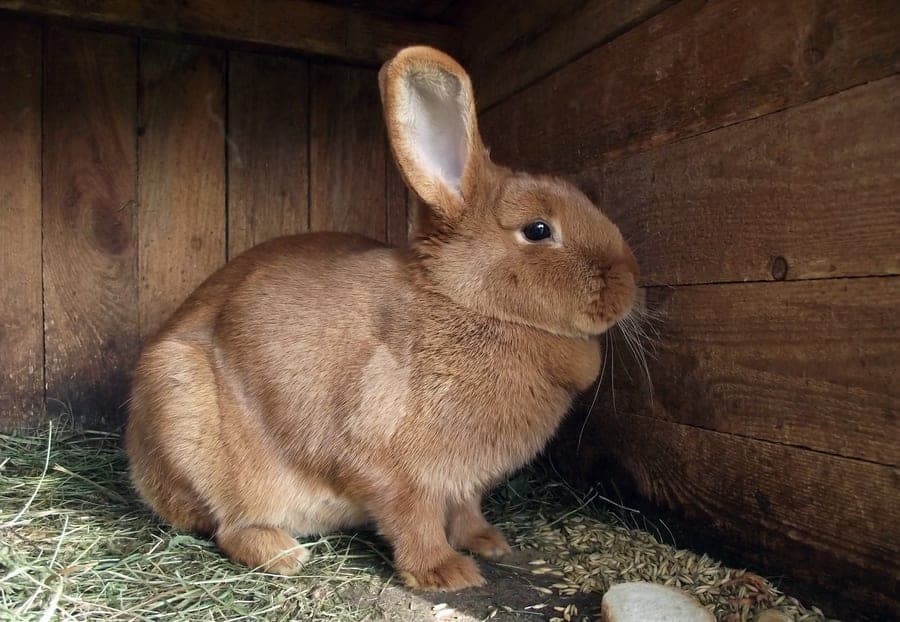 Illustrative IllustrativeOmlet Eglu Go Rabbit Hutch with 2m Run9ft 6in x 5ft 5in = about 51.5 sq ft of enclosed footprint | The shelter half of a compliant setup | 8.5out of 10 | View at Omlet We earn no commission here. #ad Disclosure |
| 3 | Illustrative Aivituvin AIR28 Rabbit Hutch with Large Run17.46 sq ft (2,514 sq in) as stated by the manufacturer | A large shelter inside a bigger pen | 7.2out of 10 | Check price on Amazon We do not print prices. #ad Disclosure |
Scores are our own assessment of published specifications against the thresholds set out in how we assess products. They are not test results and not customer ratings. Tap a row to read the full assessment.
| Product | Continuous floor | Bar spacing | Expandability | Material |
|---|---|---|---|---|
| MidWest Homes for Pets 48 in Exercise Pen, 8 panels | 16 sq ft (2,304 sq in) enclosed as an octagonclears our threshold | Mesh aperture listed as 1.5 x 6 in | Add-on panels sold separately; pens clip together into one footprint | Heavy-gauge wire with an e-coat finish |
| Omlet Eglu Go Rabbit Hutch with 2m Run | 9ft 6in x 5ft 5in = about 51.5 sq ft of enclosed footprint | Run is double-layer fully coated steel weld mesh; gauge not published | Underfloor wire supplied to stop digging out; anti-tunnel base | UV-stabilized twin-wall polyethylene shelter, coated steel weld-mesh run |
| Aivituvin AIR28 Rabbit Hutch with Large Run | 17.46 sq ft (2,514 sq in) as stated by the manufacturerbelow our threshold | Galvanized wire mesh; gauge and aperture not published | Wire mesh floor panel on the run section | Solid fir timber with waterproof asphalt roof and galvanized mesh |
Dimensions as published by each manufacturer or its retailer, read 27 September 2026 and linked in each assessment below. A tick marks a product that clears our own floor-area threshold; a cross marks one that does not. Where a manufacturer does not publish a figure, the cell says so rather than estimating it.
Exercise pens come first here for a reason specific to pairs: they are modular, so the enclosure can be divided and rejoined without buying different equipment. That is exactly the property you want when a bond is uncertain. Four pens make the footprint; a fifth divides it.
The assessments
Our pick · Building a footprint that actually clears the published minimum
MidWest Homes for Pets 48 in Exercise Pen, 8 panels
The cheapest honest route to the 64.5 sq ft minimum, because four of these pens joined together get you there and a single hutch never will.
- Dimensions
- Eight panels, each 24 in wide by 48 in high; 16 sq ft enclosed
- Continuous floor
- 16 sq ft (2,304 sq in) enclosed as an octagon
- Bar spacing
- Mesh aperture listed as 1.5 x 6 in
- Material
- Heavy-gauge wire with an e-coat finish
- Expandability
- Add-on panels sold separately; pens clip together into one footprint
What it gets right
- 16 sq ft per pen, and add-on panels let you build one large block rather than several small ones
- 48 in height clears the 3ft 3in RWAF asks for
- Folds flat, so it can be moved or stored
- Ground anchors are included, which most pens leave out
What it gets wrong
- 1.5 x 6 in mesh apertures are wide enough for a small or young rabbit to push through; line the lower section
- No roof, so it is not predator-proof outdoors on its own
- Wire floor is the ground, which means digging out unless you lay mesh underneath
Who should buy something else
Not an outdoor enclosure by itself. Without a roof and a dug-in mesh skirt it is an exercise area, not secure housing, and a fox will treat it as a bowl.
Specifications read from MidWest product listing on 27 September 2026. Floor-area arithmetic is ours and is shown above so you can redo it.
Illustrative- Footprint vs threshold10
- Predator resistance4
- Height9
- Material durability8
- Flexibility10
We do not print prices. #ad Disclosure
Number 2 · The shelter half of a compliant setup
Omlet Eglu Go Rabbit Hutch with 2m Run
The best-engineered shelter in the category, on a package footprint of about 51.5 sq ft that still falls 13 sq ft short of the 3m x 2m minimum RWAF and the RSPCA both publish.
- Dimensions
- Hutch 2ft 6in x 2ft 5in x 1ft 11in; with the 2m run, 9ft 6in x 5ft 5in x 2ft 7.5in overall
- Continuous floor
- 9ft 6in x 5ft 5in = about 51.5 sq ft of enclosed footprint
- Bar spacing
- Run is double-layer fully coated steel weld mesh; gauge not published
- Material
- UV-stabilized twin-wall polyethylene shelter, coated steel weld-mesh run
- Predator and dig protection
- Underfloor wire supplied to stop digging out; anti-tunnel base
What it gets right
- Twin-wall polyethylene does not rot, does not harbour mite, and hoses clean
- Double-layer coated weld mesh is a genuine step above stapled chicken wire
- Underfloor wire against digging is supplied rather than sold separately
- Run extensions are made to fit, so the footprint can be grown to the real minimum
What it gets wrong
- 51.5 sq ft as sold is short of the 64.5 sq ft RWAF asks for
- Mesh gauge is not published, so you cannot check it against a fox before buying
- The shelter alone, at 2ft 6in x 2ft 5in, is smaller than RWAF's 6ft x 2ft shelter figure
- Costs more than a timber hutch of the same footprint
Who should buy something else
Not a complete enclosure straight out of the box, whatever the product page implies. Budget for at least one run extension from the start, or it will not clear the published minimum.
Specifications read from Omlet product listing on 27 September 2026. Floor-area arithmetic is ours and is shown above so you can redo it.
Illustrative- Footprint vs threshold7
- Predator resistance9
- Weather performance10
- Material durability10
- Cleaning10
We earn no commission here. #ad Disclosure
Number 3 · A large shelter inside a bigger pen
Aivituvin AIR28 Rabbit Hutch with Large Run
The largest timber hutch-and-run package we could verify at 17.46 sq ft, which is about 27 percent of the enclosure RWAF publishes as a minimum.
- Dimensions
- Manufacturer states 17.46 sq ft of inner space
- Continuous floor
- 17.46 sq ft (2,514 sq in) as stated by the manufacturer
- Bar spacing
- Galvanized wire mesh; gauge and aperture not published
- Material
- Solid fir timber with waterproof asphalt roof and galvanized mesh
- Dig protection
- Wire mesh floor panel on the run section
What it gets right
- 17.46 sq ft of stated inner space is at the top of the timber hutch class
- Two stories, so the shelter section is genuinely separate from the run
- Asphalt roof and treated fir handle rain better than untreated pine hutches
What it gets wrong
- 17.46 sq ft is far below the 64.5 sq ft minimum, so this cannot be the whole enclosure
- Mesh gauge and aperture are not published, which is the spec a fox cares about
- Timber absorbs urine at the corners and needs re-treating annually
- Wire mesh run floor is hard on rabbit feet without a solid mat over part of it
Who should buy something else
Wrong as a standalone home. It is a shelter, and it works only inside a pen that brings the footprint up to the published minimum.
Specifications read from Aivituvin product listing on 27 September 2026. Floor-area arithmetic is ours and is shown above so you can redo it.
Illustrative- Footprint vs threshold4
- Predator resistance6
- Weather performance8
- Material durability7
- Cleaning7
We do not print prices. #ad Disclosure
Height and shelter for two
Rabbit sleeping quarters minimum · minimum
1.8m x 0.6m x 0.6m high (6ft x 2ft x 2ft)
RWAF's shelter figure of 1.8m x 0.6m x 0.6m is stated in the context of the same two-rabbit enclosure, so a 6ft x 2ft shelter is sized for a pair. In practice two shelters of half that length each work better than one of full length, because it removes the guarding problem entirely.
The 1m height requirement is unchanged and is the figure most products fail. Both bodies require enough height for a rabbit to stand on its hind legs without its ears touching the roof — see rabbit welfare minimums for the exact wording and the spinal reasoning behind it.
Questions people ask
What size hutch do 2 rabbits need?
Do two rabbits need more space than one?
How many litter trays do two rabbits need?
What if my bonded rabbits start fighting?
Is one big shelter or two small ones better for a pair?
Sources
- Rabbit Welfare Association & Fund — Minimum space requirements — 3m x 2m x 1m for two average-sized rabbits; same minimum for a single rabbit; shelter 1.8 x 0.6 x 0.6m
- RSPCA — Rabbit environment
- MidWest Homes for Pets — 48in Exercise Pen