Rabbits
Housing a large breed rabbit
The published figure is for medium rabbits. A Flemish Giant is not a medium rabbit, and almost nothing on sale fits one.
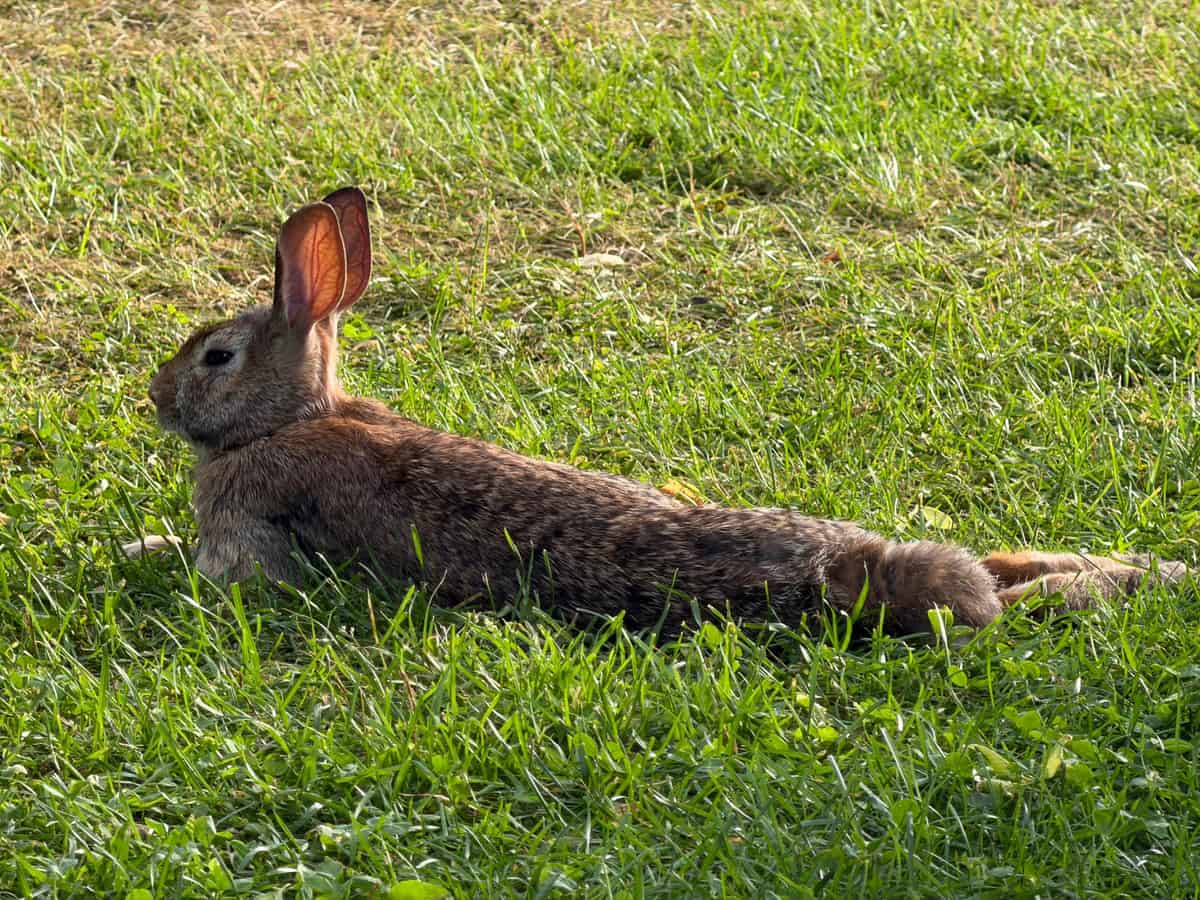
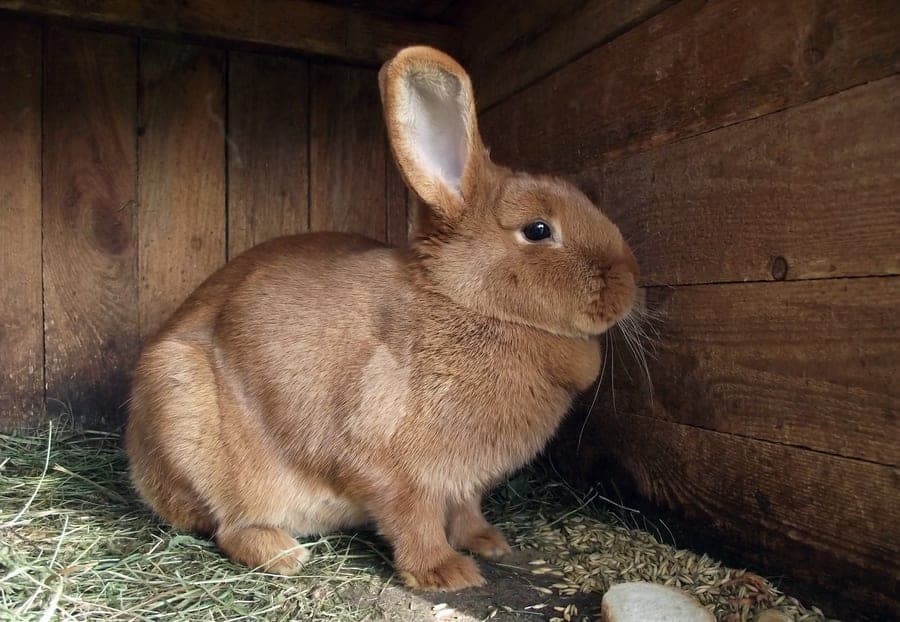
The published minimum of 3m x 2m x 1m is stated for two average-sized rabbits, and a Flemish Giant is not average-sized. For a large breed, size the enclosure from the animal: a shelter at least three times the rabbit's stretched length, height enough to stand fully upright with clearance, and a footprint that lets it reach speed — which for a rabbit this size means more than 64.5 square feet, not less.
Rabbit enclosure minimum · minimum
a single enclosed area of at least 3m x 2m by 1m high
Our conversion: 9ft 10in x 6ft 7in x 3ft 3in, about 64.5 square feet of floor
RWAF and the RSPCA both word their figure for medium rabbits, which is the honest limit of what they publish. Neither publishes a large-breed figure, so what follows is our own reasoning, labeled as ours, derived from the same behavioral logic the published figure rests on.
How to size from the animal
The published rabbit figures are derived from behavior: enough length to run, enough height to stand on the hind legs without the ears touching. Both of those scale with the animal, which gives you a method rather than a number.
- 1.Measure the rabbit stretched out, nose to base of tail, while it is lying extended. For a Flemish Giant this is commonly 2ft 6in or more.
- 2.Shelter length: at least three times that. A rabbit needs to be able to lie fully extended, turn without contorting, and have a separate area it has not just been lying in. Three lengths is the established rule of thumb and for a 2ft 6in rabbit that is 7ft 6in — longer than RWAF's 6ft shelter figure.
- 3.Height: the rabbit standing fully upright on its hind legs, plus clearance for the ears. For a large breed this frequently exceeds the published 1m. Measure it rather than assuming.
- 4.Footprint: more than 64.5 square feet. A bigger animal needs more run-up to reach speed, not less. Treat the published figure as the floor and go up from it.
Why no hutch fits
The largest timber hutch-and-run package we could verify offers 17.46 square feet of inner space, and most hutches have 18 to 24 inches of internal height. For a medium rabbit those are shortfalls; for a Flemish Giant the height figure is not a shortfall but a structural impossibility — the animal cannot stand up in it at all.
So for a large breed the routes narrow to three, and all of them are enclosures rather than products:
- A shed. A 6ft x 8ft shed is 48 square feet with full standing height for you as well as the rabbit, and a shed with an attached run clears any figure comfortably. For a large breed this is the most realistic outdoor answer.
- A room, or free-roam. Indoors, a proofed room beats every product and has no height constraint at all. See best indoor rabbit housing.
- Joined exercise pens, which have 48 inches of height — comfortably above what a large breed needs — and give 16 square feet per pen. Five or six pens rather than four, given the reasoning above.
The other large-breed specifics
Flooring matters more
Weight increases load on the foot, and sore hocks are a documented large-breed problem for exactly that reason. Wire flooring is ruled out for all rabbits and is a faster route to an ulcer in a heavy animal. Provide a soft resting surface as well as a solid one — see rabbit hutch flooring.
Doorways and ramps
A hutch door sized for a medium rabbit is a squeeze for a large one, and a rabbit that has to compress itself to get into its shelter will eventually stop using it. Ramps need to be wider and shallower than standard, because a heavy rabbit on a steep narrow ramp is a fall risk.
Litter trays and food
Standard rabbit litter trays are too small for a large breed to turn in. A cat litter tray of the largest size, or a shallow storage tub, works better. Water bowls rather than bottles, because a large rabbit drinks a lot and a bottle spout is slow.
Handling and the enclosure
A Flemish Giant is heavy enough that most people cannot comfortably lift one, which means the enclosure needs to be arranged so you rarely have to. Doors you can reach the whole interior through, and an enclosure you can step into, matter much more here than on a medium rabbit's hutch.
What works, with caveats
Exercise pens have the height a large breed needs and are the most scalable option. The two shelters here are sized for medium rabbits: assess the door and the internal height against your own animal before committing.
 Illustrative
Building a footprint that actually clears the published minimum
MidWest Homes for Pets 48 in Exercise Pen, 8 panels
16 sq ft (2,304 sq in) enclosed as an octagon
The cheapest honest route to the 64.5 sq ft minimum, because four of these pens joined together get you there and a single hutch never will.
Check price on AmazonWe do not print prices. #ad Disclosure
 Illustrative
The shelter half of a compliant setup
Omlet Eglu Go Rabbit Hutch with 2m Run
9ft 6in x 5ft 5in = about 51.5 sq ft of enclosed footprint
The best-engineered shelter in the category, on a package footprint of about 51.5 sq ft that still falls 13 sq ft short of the 3m x 2m minimum RWAF and the RSPCA both publish.
View at OmletWe earn no commission here. #ad Disclosure
- Illustrative
A large shelter inside a bigger pen
Aivituvin AIR28 Rabbit Hutch with Large Run
17.46 sq ft (2,514 sq in) as stated by the manufacturer
The largest timber hutch-and-run package we could verify at 17.46 sq ft, which is about 27 percent of the enclosure RWAF publishes as a minimum.
Check price on AmazonWe do not print prices. #ad Disclosure
One closing note on honesty. If you are choosing a breed rather than housing one you already have, a Flemish Giant is a demanding housing commitment — an animal needing more than 64.5 square feet in one block, for up to a decade, that most people cannot lift. That is worth knowing before rather than after, and it is the kind of thing our guides section is for.
Questions people ask
What size hutch does a Flemish Giant need?
Does the published rabbit space figure apply to large breeds?
What is the best housing for a large breed rabbit?
Are large rabbits more prone to sore hocks?
Do large rabbits need bigger litter trays?
Sources
- Rabbit Welfare Association & Fund — Minimum space requirements — 3m x 2m x 1m stated for two average-sized rabbits; the spinal-deformity reasoning behind the height requirement
- RSPCA — Rabbit environment — Height to stand on hind legs without ears touching the roof
- Humane World for Animals — Guinea pig housing requirements — Cited for the wire-floor prohibition