Rabbits
Protecting an outdoor hutch in winter
Rabbits handle cold far better than damp. Most of what helps costs nothing, and one popular measure makes things worse.
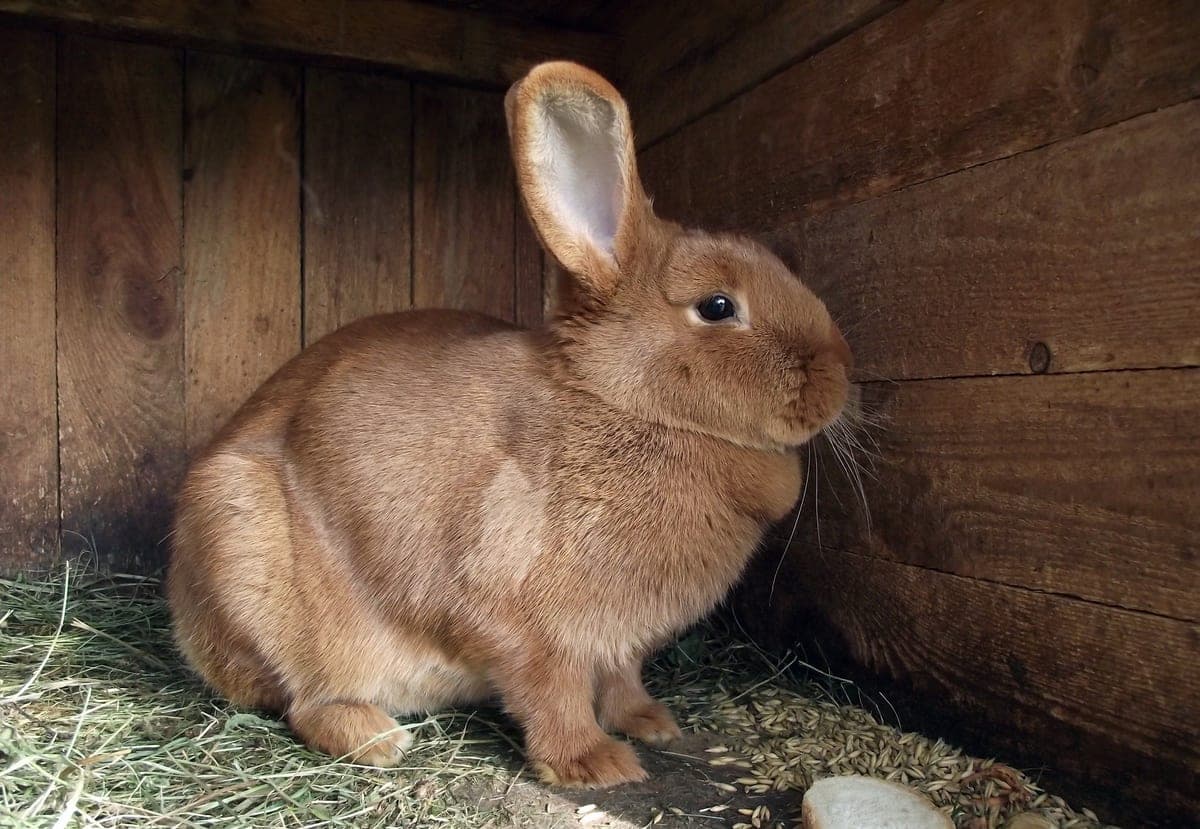
Rabbits tolerate cold well and tolerate damp and drafts badly, so winter protection is mostly about keeping the hutch dry and still rather than warm. In order of value: get it out of the wind, raise it off wet ground, cover the front at night while leaving ventilation, add deep straw, and check the water twice a day because it freezes. Insulation is the last thing on that list, not the first.
A rabbit in good condition with a dry, draft-free shelter and plenty of bedding copes with a cold winter better than most owners expect. The animals that suffer are the ones in a damp hutch, or one where wind blows straight through the sleeping compartment, and both of those are situations rather than temperatures.
In order of value
1. Get it out of the wind (free)
The single most effective measure. Move the hutch so the open front faces away from the prevailing wind, and put it against a wall, a fence or a hedge rather than in the open. A draft through the sleeping compartment defeats everything else you do, because the rabbit cannot escape moving air even inside a nest.
Check it properly: hold the back of your hand inside the sleeping compartment on a windy day. If you can feel air moving, the hutch is in the wrong place or has a gap to close.
2. Raise it off wet ground (usually free)
Most timber hutches come on legs, and if yours does not, put it on bricks or pallets. Ground contact wicks moisture into the floor, which is both cold and the beginning of the rot that ends a timber hutch's life. Four inches of clearance is enough.
3. Cover the front at night, with ventilation (cheap)
A tarpaulin or purpose-made hutch cover over the front at night cuts wind-chill and keeps driving rain out of the mesh. Two rules: leave a gap for airflow, and take it off or fold it back during the day.
A fully sealed hutch is a damp hutch. Rabbits produce moisture, urine evaporates, and with no air exchange that condenses on cold surfaces — which gives you the damp you were trying to avoid, plus respiratory irritation from ammonia. Cover most of the front, not all of it.
4. More bedding, and the right kind (cheap)
Deep straw in the sleeping compartment. Straw rather than hay: straw is hollow-stemmed and traps air, which makes it a much better insulator, while hay is food and gets eaten rather than nested in. Provide both — straw to sleep in, hay to eat.
Change it more often in winter than in summer, not less. Damp bedding is worse than thin bedding, and a compartment that is not drying out needs the bedding replaced rather than topped up. Materials to avoid are the same year-round — see is pine bedding safe.
5. Water, twice a day (free, and the one that bites)
Water freezes, and a rabbit that cannot drink stops eating, and a rabbit that stops eating is in gut stasis within hours. This is the most likely winter emergency and the most preventable one.
- Check twice a day, morning and evening. A bottle can look full and be frozen solid at the spout.
- Bowls freeze more slowly than bottle spouts and are easier to break ice out of.
- Insulate a bottle with a sock or a purpose-made cover, and position it out of the wind.
- Two water sources rather than one, so a single freeze is not a crisis.
6. Insulation, last
Insulating panels, an insulated shell, or polystyrene sheets inside a hutch wall all help, and they help much less than the five measures above. The TRIXIE Natura insulated two-story is the only shelter we could verify with an insulated shell, and it earns its premium in a genuinely cold climate and not in a mild one.
If you add insulation yourself, cover it. Exposed polystyrene gets chewed and swallowed. Line it with plywood or thin hardboard.
The thing not to do
Also avoid heat pads and heat lamps in an outdoor hutch. They create a hot spot the rabbit cannot regulate around, they are a fire risk in a straw-filled timber box, and they undo the acclimation that is doing most of the work.
What to check through the winter
- 1.Water, twice daily. The one non-negotiable.
- 2.Bedding dryness, daily. Damp bedding gets replaced, not topped up.
- 3.That the rabbit is eating and producing droppings. Both reduce in a cold snap; either stopping is an emergency.
- 4.Feet and rear end weekly. A wet floor plus cold gives you sore hocks and urine scald — see rabbit hutch flooring.
- 5.The roof felt after every storm. A hutch roof that has lifted is a wet hutch by the next day.
And a note about summer
Rabbits are far more at risk from heat than from cold. They cannot pant effectively, and a hutch in full summer sun is a more urgent problem than the same hutch in January. If you are going to move a hutch once a year for the weather, move it into shade for the summer rather than anywhere for the winter. Temperature bands and placement generally are in cage placement.
Shelters that handle winter best
The only insulated shell we could verify, a twin-wall plastic shelter that provides a thermal break without rotting, and the largest timber hutch with an asphalt roof. Full assessments in best outdoor rabbit hutches.
 Illustrative
Cold-winter shelter inside a larger pen
TRIXIE Natura Insulated Two-Story Rabbit Hutch
45.5 x 44.5 = 2,025 sq in, about 14.1 sq ft across both levels
The only insulated shelter we could verify, which makes it the right answer to a cold-winter question and still not an enclosure on its own.
Check price on AmazonWe do not print prices. #ad Disclosure
- Illustrative
The shelter half of a compliant setup
Omlet Eglu Go Rabbit Hutch with 2m Run
9ft 6in x 5ft 5in = about 51.5 sq ft of enclosed footprint
The best-engineered shelter in the category, on a package footprint of about 51.5 sq ft that still falls 13 sq ft short of the 3m x 2m minimum RWAF and the RSPCA both publish.
View at OmletWe earn no commission here. #ad Disclosure
- Illustrative
A large shelter inside a bigger pen
Aivituvin AIR28 Rabbit Hutch with Large Run
17.46 sq ft (2,514 sq in) as stated by the manufacturer
The largest timber hutch-and-run package we could verify at 17.46 sq ft, which is about 27 percent of the enclosure RWAF publishes as a minimum.
Check price on AmazonWe do not print prices. #ad Disclosure
Questions people ask
How cold is too cold for an outdoor rabbit?
Should I bring my outdoor rabbit indoors for winter?
Should I cover a rabbit hutch at night in winter?
Is straw or hay better for winter bedding?
How do I stop a rabbit's water freezing?
Can I use a heat pad in a rabbit hutch?
Sources
- RSPCA — Rabbit environment — Shelter, height and environment requirements
- RSPCA — Guinea pig environment — Cited for the published small-pet temperature band: 17-20C ideal, indoors below 15C, heatstroke above 26C
- TRIXIE Natura insulated two-story hutch — retailer listing — The only insulated shell we could verify