Rabbits
Wood, metal or plastic for a rabbit hutch?
Three materials, assessed on what they do after two winters rather than out of the box.
Molded polyethylene is the best hutch material: it does not rot, does not absorb urine, harbours no mite in joints, and hoses clean. Coated steel is the best material for a run, because welded coated mesh resists a predator and does not present a chewable galvanized edge. Timber is the cheapest and needs annual re-treating, absorbs urine at the corners, and gives parasites somewhere to live you cannot reach.
Material is the specification that decides how long a rabbit hutch lasts and how often you are replacing it, and it is usually discussed as a matter of taste. It is not. Each of these materials has a specific failure mode, and knowing which one you are buying is more useful than knowing which looks nicer in a garden.
Timber
What it does well. Cheap for the footprint, insulating in itself, looks right in a garden, and easy to modify — you can screw a shelf or a second door into a timber hutch, which you cannot do to a molded shell. Most of the largest hutch-and-run packages are timber, which is how you get 17 square feet of shelter at a sane price.
How it fails. Water. Timber absorbs urine at the internal corners, where it does not dry, and it takes on rain at any point the treatment has worn through. Once a corner has gone soft, that corner is gone, and the failure spreads along the grain. Annual re-treating with an animal-safe wood preservative is the maintenance that determines whether the hutch lasts two years or eight.
The mite problem, which is the real one. Timber joints give parasites somewhere to live that cannot be reached with a cloth or a spray. When a mite treatment works on the rabbit and the infestation returns, the hutch is a common reason. This is the strongest argument for a non-porous shell and it is almost never mentioned in a product listing.
Chewing. Rabbits chew timber, which is partly fine — untreated wood is legitimate chew material — and becomes a problem at a structural edge or where treatment has been applied. Use animal-safe preservatives only, and expect corners to be worked.
Galvanized and coated steel
Steel appears in this category as mesh rather than as a shell, so the comparison is really about run construction. Two distinctions matter more than the metal itself: welded versus woven, and coated versus bare galvanized.
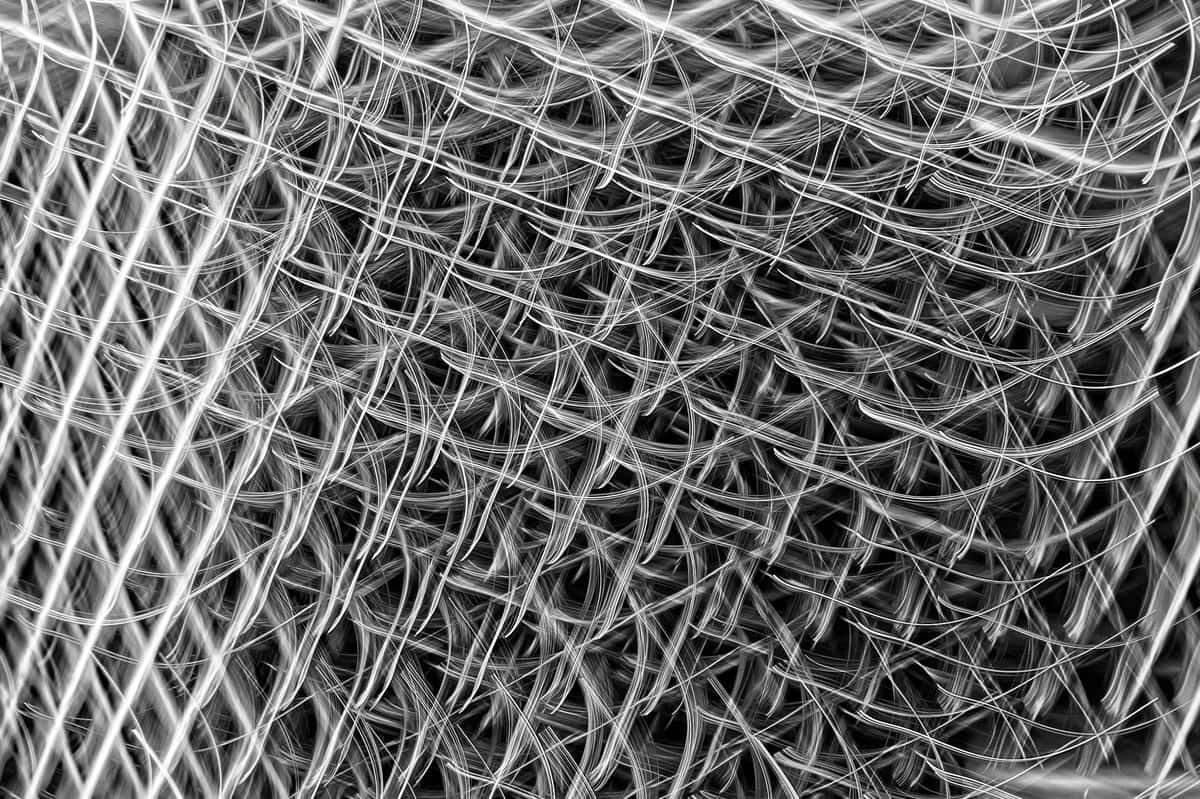
Welded beats woven, decisively. Woven mesh — chicken wire — can be unpicked, because deforming one intersection loosens its neighbors. Welded mesh has to be broken. This is the single clearest quality distinction in outdoor rabbit housing and it is usually visible in a photograph. Predator-proof rabbit hutches scores products on it.
Coated beats bare galvanized, for a narrow reason. Intact galvanized wire is not a meaningful ingestion risk and is used throughout outdoor animal housing. The scenario that does warrant care is a rabbit persistently chewing a cut or damaged galvanized edge, because the flaking is then both reachable and ingestible. A polyester or PVC coating removes that, and it also stops rust creeping from a cut end. Full discussion in cage materials safety.
Where steel fails: rust at cut ends and at staples, and — for pen panels specifically — a published aperture that is often too wide. The MidWest pen's 1.5 x 6 inch mesh is heavy-gauge and welded and still wide enough for a young rabbit to push through.
Molded polyethylene
What it does well. Everything timber does badly. Non-porous, so no urine absorption and no soft corners. No joints for mite. Hoses clean. UV-stabilized grades do not go brittle in sunlight the way cheap plastic does. Twin-wall construction gives a genuine thermal break with ventilation, which is a better winter solution than a single-skin timber wall.
How it fails. Cost, mainly, and rigidity: you cannot modify a molded shell, so what you buy is what you have. Cheap non-UV-stabilized plastic does become brittle and crack, which is worth checking, because the material argument only holds for the stabilized grades.
The comparison table
| Timber | Coated steel (run) | Molded polyethylene | |
|---|---|---|---|
| Cost per square foot | Lowest | Low | Highest |
| Absorbs urine | Yes, at corners | No | No |
| Rots | Yes, where treatment fails | No, rusts at cut ends | No |
| Harbours mite in joints | Yes | No | No |
| Can be hosed out | No | Yes | Yes |
| Annual maintenance | Re-treat with animal-safe preservative | Check staples and cut ends | None |
| Modifiable | Yes | Yes | No |
| Insulation | Moderate | None | Good, twin-wall |
| Chew resistance | Low; expect worked corners | High when coated | Moderate |
| Realistic outdoor life | 2 to 8 years, depending on maintenance | Long, with staple checks | Longest |
| # | Product | Best for | Score | Price |
|---|---|---|---|---|
| 1 |  Illustrative IllustrativeOmlet Eglu Go Rabbit Hutch with 2m Run9ft 6in x 5ft 5in = about 51.5 sq ft of enclosed footprint | The shelter half of a compliant setup | 8.5out of 10 | View at Omlet We earn no commission here. #ad Disclosure |
| 2 | Illustrative Aivituvin AIR28 Rabbit Hutch with Large Run17.46 sq ft (2,514 sq in) as stated by the manufacturer | A large shelter inside a bigger pen | 7.2out of 10 | Check price on Amazon We do not print prices. #ad Disclosure |
| 3 |  Illustrative IllustrativeMidWest Homes for Pets 48 in Exercise Pen, 8 panels16 sq ft (2,304 sq in) enclosed as an octagon | Building a footprint that actually clears the published minimum | 8.7out of 10 | Check price on Amazon We do not print prices. #ad Disclosure |
Scores are our own assessment of published specifications against the thresholds set out in how we assess products. They are not test results and not customer ratings. Tap a row to read the full assessment.
The verdict, by situation
- Long-term outdoor housing, maintenance-averse: molded polyethylene shelter with a coated weld-mesh run. Most expensive, longest life, no annual job.
- Best floor area per pound: timber shelter inside coated steel pens. Accept the annual re-treat and the eventual replacement.
- A rabbit with a history of mite: non-porous shell, not timber. This is the situation where the material choice is closest to a medical decision.
- Indoors: material matters much less, since there is no rain and no predator. Timber is fine indoors provided it has pull-out trays, because indoor timber stains faster than outdoor timber weathers.
The assessments
Our pick · The shelter half of a compliant setup
Omlet Eglu Go Rabbit Hutch with 2m Run
The best-engineered shelter in the category, on a package footprint of about 51.5 sq ft that still falls 13 sq ft short of the 3m x 2m minimum RWAF and the RSPCA both publish.
- Dimensions
- Hutch 2ft 6in x 2ft 5in x 1ft 11in; with the 2m run, 9ft 6in x 5ft 5in x 2ft 7.5in overall
- Continuous floor
- 9ft 6in x 5ft 5in = about 51.5 sq ft of enclosed footprint
- Bar spacing
- Run is double-layer fully coated steel weld mesh; gauge not published
- Material
- UV-stabilized twin-wall polyethylene shelter, coated steel weld-mesh run
- Predator and dig protection
- Underfloor wire supplied to stop digging out; anti-tunnel base
What it gets right
- Twin-wall polyethylene does not rot, does not harbour mite, and hoses clean
- Double-layer coated weld mesh is a genuine step above stapled chicken wire
- Underfloor wire against digging is supplied rather than sold separately
- Run extensions are made to fit, so the footprint can be grown to the real minimum
What it gets wrong
- 51.5 sq ft as sold is short of the 64.5 sq ft RWAF asks for
- Mesh gauge is not published, so you cannot check it against a fox before buying
- The shelter alone, at 2ft 6in x 2ft 5in, is smaller than RWAF's 6ft x 2ft shelter figure
- Costs more than a timber hutch of the same footprint
Who should buy something else
Not a complete enclosure straight out of the box, whatever the product page implies. Budget for at least one run extension from the start, or it will not clear the published minimum.
Specifications read from Omlet product listing on 27 September 2026. Floor-area arithmetic is ours and is shown above so you can redo it.
Illustrative- Footprint vs threshold7
- Predator resistance9
- Weather performance10
- Material durability10
- Cleaning10
We earn no commission here. #ad Disclosure
Number 2 · A large shelter inside a bigger pen
Aivituvin AIR28 Rabbit Hutch with Large Run
The largest timber hutch-and-run package we could verify at 17.46 sq ft, which is about 27 percent of the enclosure RWAF publishes as a minimum.
- Dimensions
- Manufacturer states 17.46 sq ft of inner space
- Continuous floor
- 17.46 sq ft (2,514 sq in) as stated by the manufacturer
- Bar spacing
- Galvanized wire mesh; gauge and aperture not published
- Material
- Solid fir timber with waterproof asphalt roof and galvanized mesh
- Dig protection
- Wire mesh floor panel on the run section
What it gets right
- 17.46 sq ft of stated inner space is at the top of the timber hutch class
- Two stories, so the shelter section is genuinely separate from the run
- Asphalt roof and treated fir handle rain better than untreated pine hutches
What it gets wrong
- 17.46 sq ft is far below the 64.5 sq ft minimum, so this cannot be the whole enclosure
- Mesh gauge and aperture are not published, which is the spec a fox cares about
- Timber absorbs urine at the corners and needs re-treating annually
- Wire mesh run floor is hard on rabbit feet without a solid mat over part of it
Who should buy something else
Wrong as a standalone home. It is a shelter, and it works only inside a pen that brings the footprint up to the published minimum.
Specifications read from Aivituvin product listing on 27 September 2026. Floor-area arithmetic is ours and is shown above so you can redo it.
Illustrative- Footprint vs threshold4
- Predator resistance6
- Weather performance8
- Material durability7
- Cleaning7
We do not print prices. #ad Disclosure
Number 3 · Building a footprint that actually clears the published minimum
MidWest Homes for Pets 48 in Exercise Pen, 8 panels
The cheapest honest route to the 64.5 sq ft minimum, because four of these pens joined together get you there and a single hutch never will.
- Dimensions
- Eight panels, each 24 in wide by 48 in high; 16 sq ft enclosed
- Continuous floor
- 16 sq ft (2,304 sq in) enclosed as an octagon
- Bar spacing
- Mesh aperture listed as 1.5 x 6 in
- Material
- Heavy-gauge wire with an e-coat finish
- Expandability
- Add-on panels sold separately; pens clip together into one footprint
What it gets right
- 16 sq ft per pen, and add-on panels let you build one large block rather than several small ones
- 48 in height clears the 3ft 3in RWAF asks for
- Folds flat, so it can be moved or stored
- Ground anchors are included, which most pens leave out
What it gets wrong
- 1.5 x 6 in mesh apertures are wide enough for a small or young rabbit to push through; line the lower section
- No roof, so it is not predator-proof outdoors on its own
- Wire floor is the ground, which means digging out unless you lay mesh underneath
Who should buy something else
Not an outdoor enclosure by itself. Without a roof and a dug-in mesh skirt it is an exercise area, not secure housing, and a fox will treat it as a bowl.
Specifications read from MidWest product listing on 27 September 2026. Floor-area arithmetic is ours and is shown above so you can redo it.
Illustrative- Footprint vs threshold10
- Predator resistance4
- Height9
- Material durability8
- Flexibility10
We do not print prices. #ad Disclosure
Whichever material you choose, it does not change the figure any of these products has to clear: 64.5 square feet in one unbroken block, per rabbit hutch size. Material decides how long your housing lasts. It does not decide whether it is big enough.
Questions people ask
Is a wooden or plastic rabbit hutch better?
Is galvanized wire safe for rabbits?
Is welded mesh better than chicken wire for a rabbit run?
How often does a wooden rabbit hutch need treating?
Can rabbit hutch timber cause mites?
Sources
- Omlet — Eglu Go Rabbit Hutch — UV-stabilized twin-wall polyethylene; double-layer fully coated steel weld mesh
- MidWest Homes for Pets — 48in Exercise Pen — Heavy-gauge welded wire with e-coat finish; mesh 1.5 x 6in
- Aivituvin AIR28 product listing — Solid fir timber with asphalt roof and galvanized mesh
- House Rabbit Society — The dangers of softwood shavings — Cited for the softwood question as it applies to bedding rather than structure