Rabbits
Best insulated rabbit hutches
One hutch in this category is sold as insulated. The other three are timber you have to finish yourself, and this page says exactly what finishing means.
Buy the TRIXIE Natura insulated two-storey hutch: it is the only hutch we assess that is sold as insulated rather than as bare timber, it has an enclosed upper sleeping compartment reached by a ramp, and the insulation is a factory specification rather than something you add at the first frost. The budget pick is the Aivituvin AIR28, the cheapest hutch here with a large attached run, and the right answer if the plan is to add a hutch cover and a deep straw bed yourself. The Aivituvin AIR15 is the pick for the largest outdoor footprint of the four. The AIR19 is the indoor option, and it is on this page only to say clearly that it is not a winter hutch. Nothing here meets the published space figure on its own, which we come back to below. Prices are live from each listing with the as-of date beneath the button.
Rabbit sleeping quarters minimum · minimum
1.8m x 0.6m x 0.6m high (6ft x 2ft x 2ft)
Winter protection for a hutch sets out the method — lift it off the ground, turn the opening away from the prevailing wind, add depth of bedding, cover the front at night, check the water twice a day. What that page has never had is a list of hutches that start the winter in better shape than others. This is that list.
It is a short list, and the reason is worth knowing before you shop: almost nothing sold as an outdoor rabbit hutch is insulated. It is thin timber with a felted roof, and the insulation is a job you do.
What insulated means, and what it usually does not
- 1.A genuinely insulated hutch has material between two skins. One of the four below is built that way and says so on its own listing. The others are single-skin timber.
- 2.Tongue-and-groove is not insulation. It is a better joint than overlapping board and it resists draughts better, which is worth having. It is not a thermal layer.
- 3.A felted roof is weatherproofing, not insulation. It keeps rain out of the timber. Heat still leaves through it.
- 4.An enclosed sleeping compartment is the single most useful winter feature. A smaller internal box that a rabbit's own body heat can warm, with a door that breaks the draught. Every hutch worth buying for winter has one.
- 5.Height off the ground matters more than wall thickness. Cold and damp come up from below, and legs are the cheapest insulation on the market.
| # | Product | Best for | Score | Price |
|---|---|---|---|---|
| 1 | 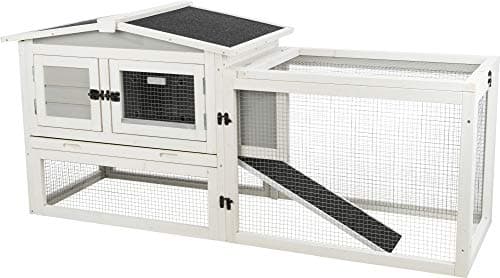 TRIXIE Natura Insulated Rabbit Hutch with Run61 x 21 = 1,281 sq in, about 8.9 sq ft of ground footprint | Cold-winter shelter inside a larger pen | 7.5out of 10 | $134.69View on Amazon Price as of November 11, 2026. #ad Disclosure |
| 2 | 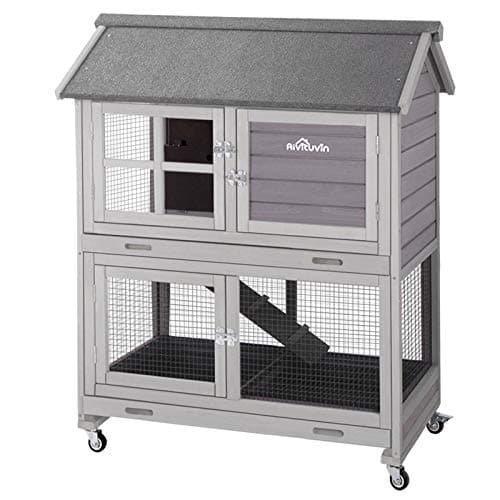 Aivituvin AIR15 Outdoor Rabbit Hutch9.6 sq ft (1,382 sq in) as stated by the manufacturer | A cheap weatherproof shelter you will re-floor | 5.9out of 10 | $164.99View on Amazon Price as of November 11, 2026. #ad Disclosure |
| 3 | 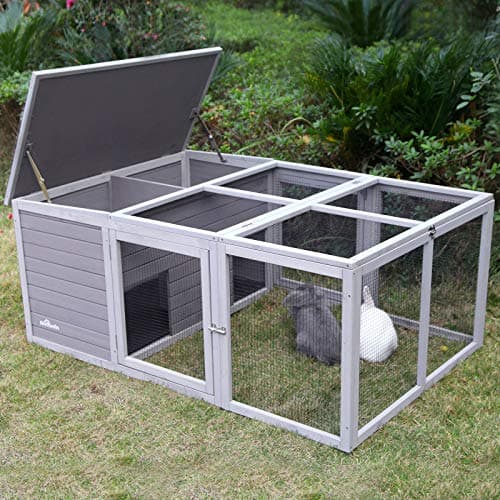 Aivituvin AIR28 Rabbit Hutch with Large Run17.46 sq ft (2,514 sq in) as stated by the manufacturer | A large shelter inside a bigger pen | 7.2out of 10 | $99.99View on Amazon Price as of November 11, 2026. #ad Disclosure |
| 4 | 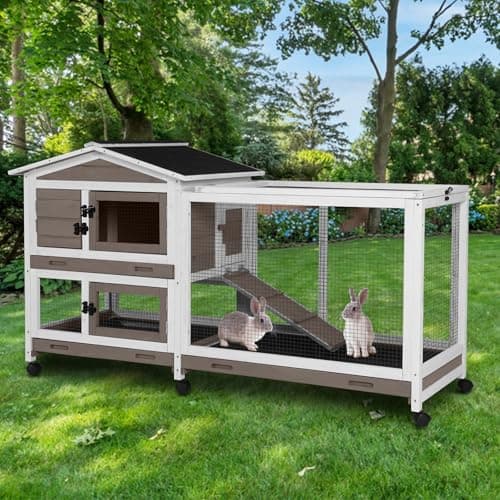 Aivituvin AIR19 Indoor Rabbit Hutch9.6 sq ft (1,382 sq in) as stated by the manufacturer | An indoor shelter beside a free-roam area | 6.8out of 10 | $89.99View on Amazon Price as of November 11, 2026. #ad Disclosure |
Scores are our own assessment of published specifications against the thresholds set out in how we assess products. They are not test results and not customer ratings. Tap a row to read the full assessment.
What each one publishes about winter
| Hutch | Insulation stated | Enclosed sleeping area | Raised off the ground | What you still add |
|---|---|---|---|---|
| TRIXIE Natura two-storey | Yes - sold as insulated | Yes, upper storey with a ramp | Yes, on legs | Deep straw, a night cover in hard frost, a water check twice daily |
| Aivituvin AIR15 | No - single-skin timber | Yes, enclosed box section | Yes | A hutch cover, insulation board inside the box, deep straw |
| Aivituvin AIR28 | No - single-skin timber | Yes, enclosed box with a large attached run | Yes | A hutch cover, insulation board inside the box, deep straw |
| Aivituvin AIR19 | No - indoor hutch | Yes | Yes | Not suitable outdoors in winter; this is an indoor enclosure |
Every entry is read from each manufacturer's own published listing as cited on the cards below. Only the TRIXIE states insulation; the rest are described by their own makers as timber hutches. No welfare body publishes a wall construction, an insulation value or a temperature floor for a rabbit hutch, so the right-hand column is our advice rather than anybody's standard.
Notice what is absent: a temperature. The RWAF and the RSPCA both publish space figures and neither publishes a cold limit for rabbits, which is in fact reassuring — a healthy adult rabbit with a dry, draught-free, well-bedded shelter copes with a British or North American winter far better than most owners expect. The danger is wet and wind, not cold.
The space figure none of these meets
Rabbit living space minimum · minimum
no smaller than 3m x 2m x 1m, including shelter and exercise area
Our conversion: about 64.5 square feet of floor
This has to be said on any hutch page and it is worth saying first rather than last. The published figure from both the RSPCA and the RWAF is a single enclosed area of 3m x 2m x 1m including exercise space. No hutch on this page is that, and no hutch at any price is. A hutch is the shelter part of a setup, and the published figure describes the whole thing.
So the honest winter arrangement is a hutch plus a permanently attached run, which is why the AIR28 earns its place here despite being uninsulated, and why best rabbit runs is the other half of this purchase. Run size does the arithmetic.
Our pick · Cold-winter shelter inside a larger pen
TRIXIE Natura Insulated Rabbit Hutch with Run
The only insulated shelter we could verify on sale, which makes it the right answer to a cold-winter question and still 55 sq ft short of being an enclosure on its own.
- Dimensions
- 61 x 21 x 28 in overall: hutch 30 x 21 x 28, run 31 x 21 x 23 (retailer-listed)
- Continuous floor
- 61 x 21 = 1,281 sq in, about 8.9 sq ft of ground footprint
- Bar spacing
- Powder-coated metal lattice; aperture not published
- Material
- Glazed pine with foam insulation in the outer walls, roof and tray area, composite asphalt shingles, powder-coated metal lattice
- Winter performance
- Foam-insulated walls, roof and tray area, plus removable plastic window panes — the only insulated shelter on this list
What it gets right
- Foam insulation in the walls, roof and tray area is a genuine winter advantage over single-skin timber
- Removable plastic window panes let you close the hutch up in a cold snap and open it in summer
- Hinged roof with a locking arm gives full access for cleaning, and the metal tray pulls out
- A retreat level above the ramp, so the rabbit can get out of the weather without leaving the hutch
What it gets wrong
- 8.9 sq ft of ground footprint is a seventh of the 64.5 sq ft RWAF asks for
- Glazed pine still needs annual re-treating
- Mesh aperture is not published, so you cannot check it against a fox before buying
Who should buy something else
Not for a mild climate where the insulation buys nothing. In a mild winter you are paying for a feature you will not use and getting less footprint than the money would buy elsewhere.
Specifications read from TRIXIE 62330 listing on 16 October 2026. Floor-area arithmetic is ours and is shown above so you can redo it.
- Footprint vs threshold4
- Predator resistance6
- Weather performance10
- Material durability7
- Cleaning8
Price as of November 11, 2026. #ad Disclosure
Number 2 · A cheap weatherproof shelter you will re-floor
Aivituvin AIR15 Outdoor Rabbit Hutch
An honest budget outdoor shelter whose wire floor is the specification you need to solve before a rabbit stands on it.
- Dimensions
- Manufacturer states 9.6 sq ft of inner space
- Continuous floor
- 9.6 sq ft (1,382 sq in) as stated by the manufacturer
- Bar spacing
- Galvanized wire mesh; gauge not published
- Material
- Fir timber with asphalt roof, wire bottom on the lower section
- Floor type
- Wire bottom over two deep trays
What it gets right
- Raised off wet ground, which matters more than most hutch features
- Asphalt roof sheds rain properly
- Two deep trays make it quick to clean out
What it gets wrong
- Wire bottom is exactly what Humane World for Animals rules out for small pets, and rabbits get sore hocks on it
- 9.6 sq ft is a shelter, not an enclosure
- Mesh gauge not published, so predator resistance is unknown
Who should buy something else
Do not use it as supplied. The wire floor needs a solid mat over most of its area before a rabbit lives on it, and if you will not do that, buy something else.
Specifications read from Aivituvin product listing on 27 September 2026. Floor-area arithmetic is ours and is shown above so you can redo it.
- Footprint vs threshold3
- Predator resistance5
- Weather performance8
- Flooring safety3
- Cleaning9
Price as of November 11, 2026. #ad Disclosure
Number 3 · A large shelter inside a bigger pen
Aivituvin AIR28 Rabbit Hutch with Large Run
The largest timber hutch-and-run package we could verify at 17.46 sq ft, which is about 27 percent of the enclosure RWAF publishes as a minimum.
- Dimensions
- Manufacturer states 17.46 sq ft of inner space
- Continuous floor
- 17.46 sq ft (2,514 sq in) as stated by the manufacturer
- Bar spacing
- Galvanized wire mesh; gauge and aperture not published
- Material
- Solid fir timber with waterproof asphalt roof and galvanized mesh
- Dig protection
- Wire mesh floor panel on the run section
What it gets right
- 17.46 sq ft of stated inner space is at the top of the timber hutch class
- Two stories, so the shelter section is genuinely separate from the run
- Asphalt roof and treated fir handle rain better than untreated pine hutches
What it gets wrong
- 17.46 sq ft is far below the 64.5 sq ft minimum, so this cannot be the whole enclosure
- Mesh gauge and aperture are not published, which is the spec a fox cares about
- Timber absorbs urine at the corners and needs re-treating annually
- Wire mesh run floor is hard on rabbit feet without a solid mat over part of it
Who should buy something else
Wrong as a standalone home. It is a shelter, and it works only inside a pen that brings the footprint up to the published minimum.
Specifications read from Aivituvin product listing on 27 September 2026. Floor-area arithmetic is ours and is shown above so you can redo it.
- Footprint vs threshold4
- Predator resistance6
- Weather performance8
- Material durability7
- Cleaning7
Price as of November 11, 2026. #ad Disclosure
Number 4 · An indoor shelter beside a free-roam area
Aivituvin AIR19 Indoor Rabbit Hutch
A well-organized indoor shelter at 9.6 sq ft, which is 15 percent of the published minimum and therefore a bedroom rather than a home.
- Dimensions
- Manufacturer states 9.6 sq ft of inner space
- Continuous floor
- 9.6 sq ft (1,382 sq in) as stated by the manufacturer
- Bar spacing
- Wire mesh; gauge and aperture not published
- Material
- Fir timber frame with wire mesh panels and pull-out trays
- Cleaning
- Deep pull-out trays under both levels
What it gets right
- Pull-out trays make daily cleaning quick, which matters indoors
- 9.6 sq ft is generous for a shelter section
- Timber looks acceptable in a living room, which is why people actually use it
What it gets wrong
- 9.6 sq ft is nowhere near a complete enclosure
- Indoor timber stains from urine faster than outdoor timber weathers
- Mesh aperture not published
Who should buy something else
Not for a rabbit that will be shut in it. This only works if the door stays open onto a room or a pen for most of the day.
Specifications read from Aivituvin product listing on 27 September 2026. Floor-area arithmetic is ours and is shown above so you can redo it.
- Footprint vs threshold3
- Indoor practicality9
- Weather performance5
- Material durability6
- Cleaning9
Price as of November 11, 2026. #ad Disclosure
Turning any of these into a winter hutch
- Deep straw in the sleeping box, not hay. Straw insulates because it is hollow; hay is food and goes moldy when damp. Both belong in a hutch and they do different jobs.
- Insulation board inside the sleeping compartment. Cut to fit the walls of the box and covered with thin plywood so it cannot be chewed. The cheapest real upgrade available to a single-skin hutch.
- A cover at night, lifted by day. The purpose is to break the wind across the mesh front. A sealed cover left on all day is a ventilation problem instead of a warmth solution.
- Off the ground and out of the wind. Against a wall, opening away from the prevailing weather, on legs or paving slabs.
- Water twice a day. The thing that actually goes wrong in a cold snap. A frozen bottle is the commonest winter emergency in a hutch and no amount of insulation prevents it.
All five of those are covered properly on hutch winter protection. The point of repeating them here is that the hutch you buy changes how much of that list you have to do, and only the TRIXIE shortens it.
What this page does not claim
We have not measured a thermal performance, we have no temperature logs, and no welfare body publishes an insulation standard or a cold limit for rabbits. The insulation claim for the TRIXIE is the manufacturer's own, cited on its card and nowhere treated as verified by us. Everything in the what-you-still-add column is our advice, labeled as ours.
Questions people ask
What is the best insulated rabbit hutch?
Can rabbits live outside in winter?
How do you insulate a rabbit hutch?
Is straw or hay better for a winter hutch?
Is a hutch big enough for a rabbit on its own?
Sources
- Rabbit Welfare Association & Fund - Rabbit housing — The 1.8m x 0.6m x 0.6m shelter figure and the 3m x 2m x 1m overall figure. Checked for an insulation or temperature statement and publishes none. Read 10 November 2026.
- RSPCA - Rabbit environment — The 3m x 2m x 1m figure including shelter and exercise, which no hutch on this page meets alone.
- House Rabbit Society - The dangers of softwood shavings — Cited for the bedding material question, which is why straw rather than softwood shavings is recommended in the sleeping box.