Hamsters
The best hamster nesting material, and the kind to take out today
Nest material is a different purchase from substrate, and it is judged on one thing first: whether it can separate into a strand that wraps a toe.
Give a hamster plain undyed paper, loose, and let it build the nest itself. Our pick of the bagged products is Kaytee Clean & Cozy Natural, because it is undyed, unscented and crumbled rather than stranded. Plain white unscented toilet paper works as well as anything sold for the job and costs almost nothing, and we make nothing when you buy it. The material to get out of the cage today is anything fluffy — cotton wool, kapok and bamboo fluff are all named by the PDSA — because those separate into thin strands that wrap around limbs.
Hamster nesting materials named as suitable · recommendation
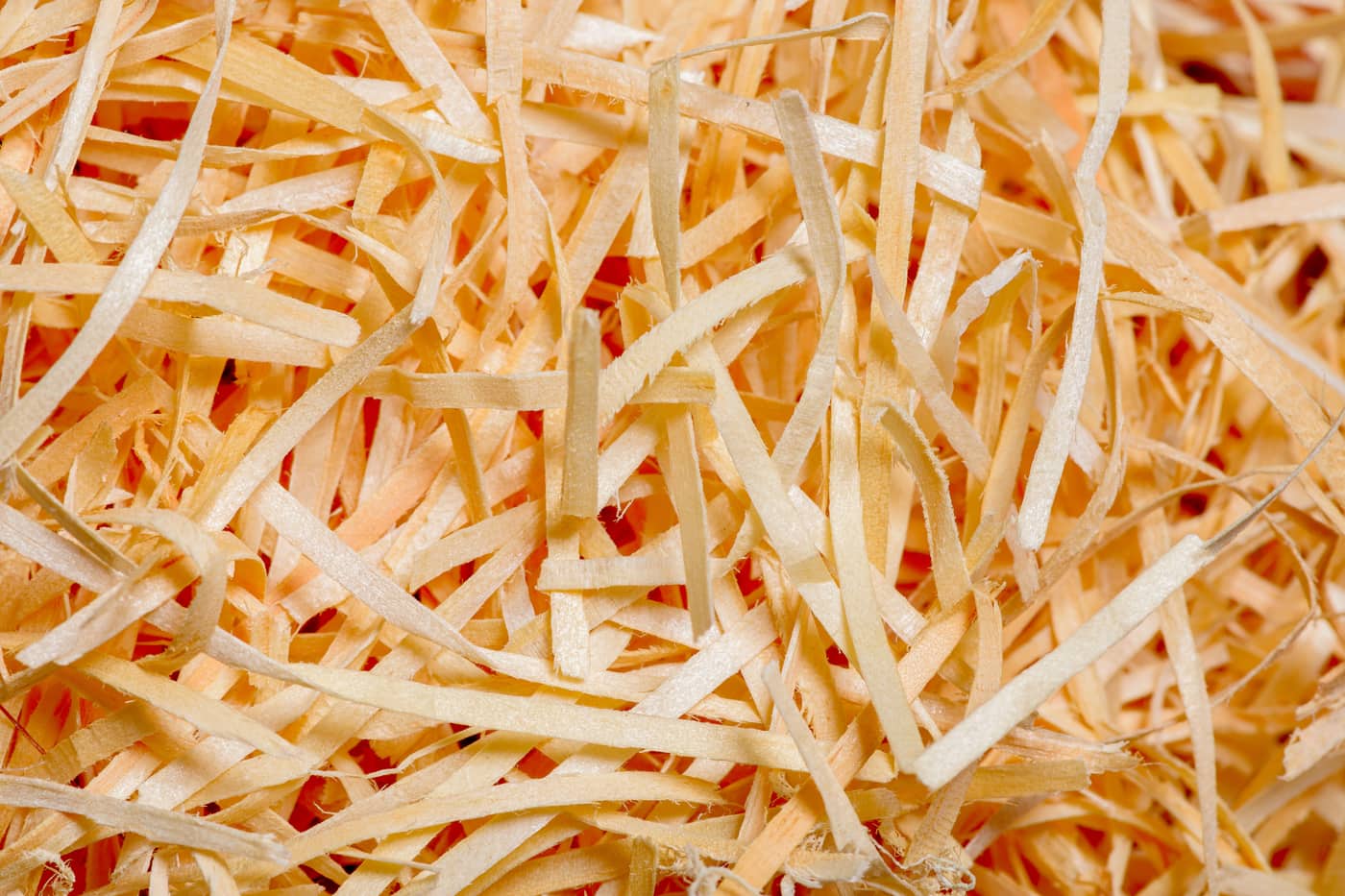
good-quality hay, wood wool, shredded paper or cardboard
Nest material and substrate are sold next to each other and treated as one purchase, and they are not one purchase. Substrate is the ten inches of bedding on the floor of the enclosure, bought by the liter, and the test it has to pass is whether a tunnel dug through it holds its shape. Nest material is the handful of soft stuff the animal carries into the chamber at the end of that tunnel, bought by the bag that lasts months, and the test it has to pass is whether it can injure the animal sleeping in it. Our bedding roundup covers the first job. This page covers the second.
The distinction matters commercially as well as practically, because the fluffy nesting products that cause injuries are not sold as substrate. Nobody fills an enclosure with cotton wool. They are sold in small bags, next to the hides, specifically as nesting material, and they are bought by owners doing the attentive thing rather than the lazy thing.
The criteria
- 1.Strand behavior, first and by a distance. Can the material separate into a long thin fiber? If yes, it is excluded, whatever it is made of and however it is marketed. This is the only criterion on this page that is a pass or fail rather than a score.
- 2.Dye, bleach and scent. A nest is where the animal spends most of its life with its face pressed into the material. Anything added for the owner's benefit — lavender, color, odor masking — is in the wrong place.
- 3.Dust. Judged by what comes off the product when a handful is squeezed and dropped. The nest is the single worst place in an enclosure for a dusty material, because it is also the least ventilated.
- 4.Shreddability. The behavior you want is the hamster tearing the material down and packing it, not the owner arranging it. Material that comes pre-shredded into neat soft pieces is easier to carry; material the animal has to work on is better enrichment. The best products allow both.
- 5.Quantity per bag, last. A hamster uses a remarkably small amount of nest material, so a 24 liter bag is a year of nests. This is the one place on the site where we do not weight pack size heavily, because unlike substrate you are not trying to reach a depth figure.
| # | Product | Best for | Score | Price |
|---|---|---|---|---|
| 1 |  Illustrative IllustrativeKaytee Clean & Cozy Natural Paper Bedding49.2 L pack is about 3,000 cu in expanded, per the retailer listing | Loose nest material a hamster arranges itself | 8.8out of 10 | Check price on Amazon We do not print prices. #ad Disclosure |
| 2 | Illustrative Kaytee Clean & Cozy White Paper BeddingOne 85 L bag fills roughly 10 in deep over a 500 sq in footprint | Reaching a 10 in burrow depth without buying six bags | 9.0out of 10 | Check price on Amazon We do not print prices. #ad Disclosure |
| 3 | Illustrative carefresh Small Pet BeddingNot applicable | Availability and softness | 8.0out of 10 | Check price on Amazon We do not print prices. #ad Disclosure |
| 4 | Illustrative Oxbow Pure Comfort BeddingNot applicable | The toilet corner of a deep-bedded enclosure | 8.1out of 10 | Check price on Amazon We do not print prices. #ad Disclosure |
| 5 |  Illustrative IllustrativeOxbow Western Timothy HayNot applicable | Availability, small bags, and topping up between deliveries | 7.6out of 10 | Check price on Amazon We do not print prices. #ad Disclosure |
Scores are our own assessment of published specifications against the thresholds set out in how we assess products. They are not test results and not customer ratings. Tap a row to read the full assessment.
The three worth buying for the nest itself
Undyed crumbled paper as the default, the softest paper fiber for a hamster that packs a tight nest, and a small bag of grass hay because the RSPCA names hay and because it gives the animal something to do. Full assessments of all five below.
- Illustrative
Loose nest material a hamster arranges itself
Kaytee Clean & Cozy Natural Paper Bedding
49.2 L pack is about 3,000 cu in expanded, per the retailer listing
The nest material we would buy first: undyed, unscented paper in short crumbled pieces that a hamster can carry and pack, with none of the strand behavior that makes fluffy nesting products dangerous.
Check price on AmazonWe do not print prices. #ad Disclosure
- Illustrative
Availability and softness
carefresh Small Pet Bedding
Not applicable
The most widely stocked paper bedding, and a safe default whose only real weakness is that it compacts rather than holding an open tunnel.
Check price on AmazonWe do not print prices. #ad Disclosure
- Illustrative
Availability, small bags, and topping up between deliveries
Oxbow Western Timothy Hay
Not applicable
The hay you can buy at eight on a Sunday evening in almost any pet shop in the country, which is a real advantage bought at the price of knowing what texture is in the bag.
Check price on AmazonWe do not print prices. #ad Disclosure
The one test that matters: can it make a strand?
Every other question on this page is a preference. This one is not, and it is worth being precise about the mechanism rather than repeating a warning.
A fluffy nesting product is made of long fibers held together loosely. A hamster pulls that apart — which is the entire point of giving it nest material — and ends up surrounded by individual strands that are strong, thin and very hard to break. It then moves through that nest dozens of times a day. A strand that catches on a foot does not come off; it tightens with each pass, and what follows is a tourniquet on a toe or a leg. The RSPCA's hamster guidance describes exactly this sequence, and the end of the sequence it describes is loss of circulation, amputation or euthanasia.
The second failure mode is swallowing. Hamsters stuff nest material into their cheek pouches to move it, and the PDSA names life-threatening gut blockages as the consequence when a fibrous nesting product is eaten rather than carried.
What the welfare bodies actually name
There is no square-inch figure for nest material, so the published guidance takes the form of named materials instead. Three bodies name them, and the lists agree with one another more closely than published guidance on this site usually does.
| Body | Named as suitable | Named as unsuitable |
|---|---|---|
| RSPCA | Good-quality hay, wood wool, shredded paper or cardboard | Cotton wool and similar fluffy products — anything that separates into thin strands |
| PDSA | Bedding placed outside the nest box so the hamster fills the box itself | Cotton wool, kapok, bamboo fluff and other fluffy beddings |
| San Diego Humane Society | Paper towels or tissue for nesting; timothy hay among acceptable beddings | Cedar and pine, on fumes rather than on strand behavior |
Read from each body's own published hamster guidance, 1 October 2026, and linked in full in the sources at the foot of this page. The wording is each body's own; the grouping into columns is ours.
Two things stand out from that table. The first is that the safe list is mostly not products: hay, shredded paper, cardboard and tissue are things you already own or can buy for a dollar. The second is that wood wool, which the RSPCA names, is genuinely hard to buy in the United States as a small-pet product — it is a European staple and an American packing material. We are not going to recommend buying industrial packing excelsior on the assumption it is clean, so it is named here and not shortlisted.
The free option that beats most of the bagged ones
Plain white unscented toilet paper, torn into a heap and left on the substrate near the nest chamber, is as good a nest material as anything on this page. It is soft, it is paper, it shreds beautifully, it has no dye and no scent, and a hamster will spend a happy evening reducing it to exactly the texture it wants. The San Diego Humane Society names paper towels or tissue for nesting, which is the same material.
We earn nothing from that recommendation and it is still the one we make first, because the honest answer to what the best hamster nesting material is turns out to be something most households already have. The bagged products below are worth buying for specific reasons — bulk, texture, the convenience of one bag that does the nest and the latrine corner — and not because the free option is inadequate.
The assessments
Our pick · Loose nest material a hamster arranges itself
Kaytee Clean & Cozy Natural Paper Bedding
The nest material we would buy first: undyed, unscented paper in short crumbled pieces that a hamster can carry and pack, with none of the strand behavior that makes fluffy nesting products dangerous.
- Dimensions
- Sold in 24.6 L, 49.2 L and 72 L packs (manufacturer-listed)
- Continuous floor
- 49.2 L pack is about 3,000 cu in expanded, per the retailer listing
- Bar spacing
- Not applicable
- Material
- 100 percent recycled natural paper; Kaytee states it is free of any harmful chemicals or by-products
- Dye and scent
- Undyed and unscented. The same range also sells dyed confetti and lavender-scented versions, which we would not put in a nest
What it gets right
- Undyed and unscented, so nothing the animal sleeps with its face in is there for the owner's benefit
- Kaytee states 99.9 percent dust-free, which matters more in a nest than anywhere else in the enclosure
- Crumbled rather than stranded, so it cannot wrap a toe
- Sold in a 24.6 L pack, which is a sensible quantity if you only want nest material
What it gets wrong
- Recycled fiber is shorter than virgin kraft, so it packs down and needs topping up more often
- The 72 L pack is the largest, where the plain Clean & Cozy goes to 85 L
- Sits in a range that also contains scented and dyed variants, and the packs look similar on a shelf
- Absorbency figures are published for the range rather than this variant specifically
Who should buy something else
Not the cheapest way to fill ten inches of enclosure. If this bag is also your substrate, buy aspen or the 85 L kraft-paper pack for the depth and keep this for the nest.
Specifications read from Kaytee product listing on 1 October 2026. Floor-area arithmetic is ours and is shown above so you can redo it.
Illustrative- Material safety10
- Dust9
- Nest building9
- Dye and scent10
- Value per liter7
We do not print prices. #ad Disclosure
Number 2 · Reaching a 10 in burrow depth without buying six bags
Kaytee Clean & Cozy White Paper Bedding
Paper, dust-controlled and sold in a volume large enough to actually reach 10 in of depth, which is the spec that matters and the one most bedding bags fail on.
- Dimensions
- Sold in sizes up to 85 liters (5,184 cu in) expanded
- Continuous floor
- One 85 L bag fills roughly 10 in deep over a 500 sq in footprint
- Bar spacing
- Not applicable
- Material
- Virgin kraft paper; manufacturer states 99 percent dust-free
- Absorbency
- Manufacturer states it absorbs up to six times its weight
What it gets right
- Paper, so none of the softwood phenol question applies
- 99 percent dust-free by the manufacturer's own claim
- 85 L pack is one of the few that fills a large enclosure in a single bag
- Holds a burrow shape well once slightly damped
What it gets wrong
- Paper is more expensive per liter than aspen
- The white version shows soiling immediately, which some owners dislike
- Scented variants exist in the range and we would avoid all of them
Who should buy something else
Not for anyone who wants the cheapest possible substrate by volume. Aspen costs less; the trade-off is dust and a less stable tunnel structure.
Specifications read from Kaytee product listing on 27 September 2026. Floor-area arithmetic is ours and is shown above so you can redo it.
Illustrative- Material safety10
- Dust9
- Burrow stability9
- Volume per pack9
- Value per liter7
We do not print prices. #ad Disclosure
Number 3 · Availability and softness
carefresh Small Pet Bedding
The most widely stocked paper bedding, and a safe default whose only real weakness is that it compacts rather than holding an open tunnel.
- Dimensions
- Sold in compressed packs from 14 L to 60 L expanded
- Continuous floor
- Not applicable
- Bar spacing
- Not applicable
- Material
- Reclaimed paper fiber
- Handling
- Soft, short fiber that packs down more than kraft paper
What it gets right
- Paper fiber, so the softwood phenol question does not arise
- Stocked almost everywhere, which matters when you need a bag today
- Very soft, and good in nest boxes
What it gets wrong
- Compacts under its own weight, so deep burrows collapse more readily
- Short fiber means more dust in the bag than kraft-paper products
- Smaller pack sizes make a 10 in fill expensive
Who should buy something else
Not the choice if deep burrowing is the point of your setup. Use it in the nest and a kraft-paper or aspen substrate for the depth.
Specifications read from Manufacturer listing on 27 September 2026. Floor-area arithmetic is ours and is shown above so you can redo it.
Illustrative- Material safety10
- Dust7
- Burrow stability6
- Volume per pack7
- Value per liter8
We do not print prices. #ad Disclosure
Number 4 · The toilet corner of a deep-bedded enclosure
Oxbow Pure Comfort Bedding
A paper bedding with better odor behavior than most, which matters in the one corner of the enclosure that always needs it.
- Dimensions
- Sold in compressed packs up to 72 L expanded
- Continuous floor
- Not applicable
- Bar spacing
- Not applicable
- Material
- Paper fiber, unbleached options available
- Odor handling
- Marketed on odor control; performs well in a urine corner
What it gets right
- Paper, so no softwood question
- Handles a concentrated urine corner better than aspen
- Unbleached versions avoid the optical brighteners in white paper beddings
What it gets wrong
- Premium price per liter
- Compacts more than kraft paper, so it is not the best deep-burrow substrate
Who should buy something else
Not the whole-enclosure substrate at this price. Buy it for the wet corner and something cheaper for the other nine inches.
Specifications read from Manufacturer listing on 27 September 2026. Floor-area arithmetic is ours and is shown above so you can redo it.
Illustrative- Material safety10
- Dust8
- Burrow stability6
- Volume per pack8
- Value per liter6
We do not print prices. #ad Disclosure
Number 5 · Availability, small bags, and topping up between deliveries
Oxbow Western Timothy Hay
The hay you can buy at eight on a Sunday evening in almost any pet shop in the country, which is a real advantage bought at the price of knowing what texture is in the bag.
- Dimensions
- Sold in 15 oz, 40 oz, 90 oz, 9 lb, 25 lb and 50 lb (manufacturer-listed)
- Continuous floor
- Not applicable
- Bar spacing
- Not applicable
- Material
- Timothy grass hay. Guaranteed analysis lists crude fiber at 32.00% maximum
- Cut sold
- None stated. Oxbow does not sell hay by cutting number and prints no cutting on the bag
What it gets right
- Stocked almost everywhere, in the smallest bag sizes here
- Publishes a guaranteed analysis, which neither cut-specific seller prints
- 15 oz and 40 oz bags make it cheap to trial on a new or fussy animal
- Oxbow states the hay is hand-sorted and hand-packed and grown specifically for small pets
What it gets wrong
- No cutting on the bag, so texture varies between bags and between seasons
- Among the more expensive per pound once you are past the small bags
- An animal that liked one bag may refuse the next, and you have no way to see why
Who should buy something else
Not the right buy if your animal is fussy about texture, because a repeatable texture is the one thing this product does not offer. Buy a stated cutting instead.
Specifications read from Oxbow product page on 29 September 2026. Floor-area arithmetic is ours and is shown above so you can redo it.
Illustrative- Consistency between orders5
- Texture for an adult8
- Availability10
- Dust and leaf loss7
- Value per pound6
We do not print prices. #ad Disclosure
How much to give, and where to put it
The PDSA guidance contains one practical instruction that changes how most people set a cage up: put the nest material outside the nest box, so the hamster fills the box itself. That is not fussiness. Nest building is one of the few natural behaviors a captive hamster can perform in full, and an owner who arranges a tidy nest inside the hide has done the animal's job for it.
- A loose double handful at a time, dropped on the substrate near the burrow entrance rather than pushed into the hide. Top it up when you see it has all been moved.
- Deep substrate first, nest material second. The material in this roundup is not a substitute for the ten inches of bedding a hamster needs to dig in — see how deep hamster bedding should be.
- Mix two textures if the animal will use both. A crumbled paper for bulk and a few strips of tissue for lining is closer to what a wild nest looks like than either on its own.
- Leave the nest alone when you clean. Spot-clean the latrine corner and the walkways; move the nest only if it is wet or soiled, and when you do, put a handful of the old material back so the smell survives the clean. The cage cleaning guide covers why a full strip-out is both more work and worse for the animal.
- Never pre-build the nest, and never pack material into a hide to make it look finished. A hamster that finds a made bed will usually pull it apart and rebuild it anyway, which is fine, but an owner who keeps remaking it is removing the behavior.
Hay as nest material
Hay is the one entry on the RSPCA list that is not paper, and it earns its place for a reason paper does not: a hamster can eat it, sit in it, carry it and shred it, so one handful is nest material and forage at once. It is also the cheapest possible way to add a texture to an enclosure that is otherwise entirely uniform.
Two honest cautions. Hay is dustier than paper bedding, and the dust is in the same place as the animal's face; buy the smallest bag, open it outdoors and shake it out before it goes in. And hay molds if it gets damp, so it does not belong in the latrine corner or under a water bottle. We shortlist the smallest widely stocked bag rather than the best hay on the site, because a hamster uses a few ounces a year and a 25 pound box is a storage problem, not a bargain. The hay comparisons under rabbits go into cut and texture properly if you also keep a larger animal.
What we would buy
If you want one thing: a small bag of undyed paper bedding for the nest and a roll of plain toilet paper from the cupboard, with the substrate bought separately and in bulk. If you already have a big bag of plain kraft-paper bedding for the floor, you do not need a second product at all — use that, and spend the money on depth instead. And if there is a bag of fluffy nesting material in the cage right now, that is the one thing on this page worth acting on this evening.
Questions people ask
What is the best nesting material for hamsters?
Is fluffy nesting material safe for hamsters?
Is bamboo nesting material safe for hamsters?
Can hamsters use toilet paper as nesting material?
Can hamsters have hay for nesting?
How much nesting material does a hamster need?
Should I throw away my hamster's nest when I clean the cage?
Sources
- RSPCA — Hamster environment — Names good-quality hay, wood wool, shredded paper or cardboard as suitable, and warns against materials that separate into thin strands
- PDSA — The ideal home for your hamster — Names cotton wool, kapok and bamboo fluff as unsafe, and advises placing bedding outside the nest box
- San Diego Humane Society — Hamster care — Names paper towels or tissue for nesting and timothy hay among acceptable beddings
- Kaytee — Clean & Cozy Natural Bedding — 100 percent recycled natural paper, 99.9 percent dust-free, pack sizes 24.6 L, 49.2 L and 72 L
- Oxbow — Pure Comfort Natural Bedding — 100 percent never-printed paper, 99.9 percent dust-free, 28 L and 56 L packs