Guinea pigs
How often should you clean a guinea pig cage?
There is a published cadence, and it comes with a warning most cleaning advice leaves off: cleaning too often is its own problem.
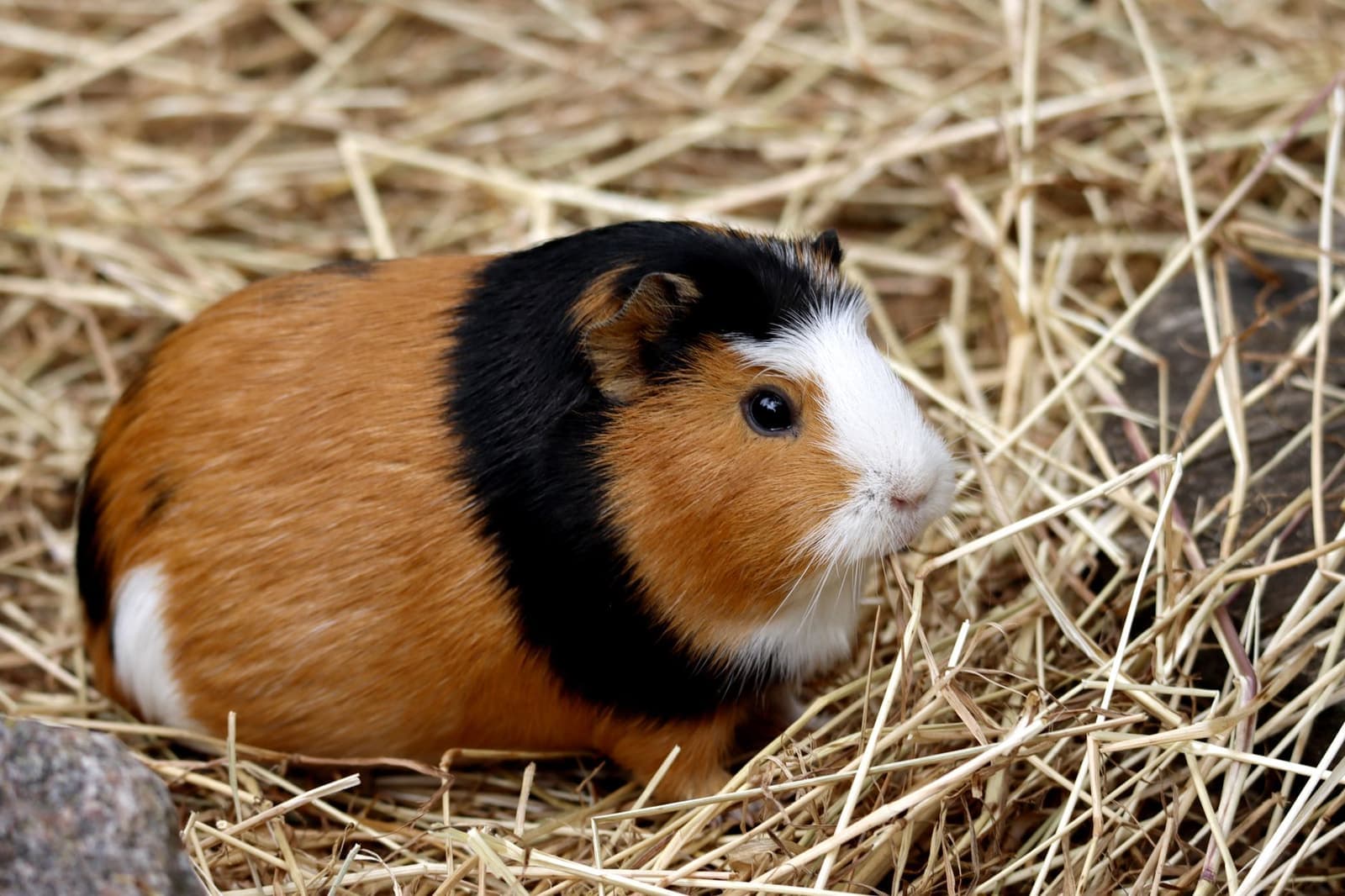
Deep clean at least once a week and spot clean every day. That is the RSPCA's published figure, and it attaches two qualifiers that matter as much as the number: how thorough the weekly clean needs to be depends on the size of the enclosure and the number of guinea pigs in it, and you should clean often but not so often that the animals are frequently disturbed. A larger cage with fewer animals and daily spot-cleaning can genuinely go a week. A small cage with three animals cannot, whatever the schedule says.
Guinea pig cage cleaning frequency · recommendation
deep cleaned at least once a week, with spot cleaning carried out daily
Cleaning advice in this category is usually given as a number with no reasoning attached, which is why the same cage gets told to clean daily on one page and fortnightly on another. The RSPCA is the only body we found that publishes a cadence for guinea pigs at all, and the useful part is not the number. It is that the guidance is explicitly conditional, and names what it is conditional on.
Worth noting what is not published: Humane World for Animals, which publishes the most detailed guinea pig housing figures anywhere — minimum and preferred areas for one to four animals, wall height, bedding depth, flooring exclusions — says nothing about cleaning frequency at all. We record that as an absence rather than filling it in.
The two jobs, which are not the same job
| Job | Frequency | What it covers |
|---|---|---|
| Spot clean | Daily | Soiled bedding from the latrine corner, droppings from walkways, uneaten fresh food, wet hay under the water bottle |
| Deep clean | At least once a week | All bedding out, base wiped down, bottles and bowls washed, hides cleaned, everything dry before fresh bedding goes in |
The RSPCA's published guinea pig guidance, read 4 October 2026. It states that on average guinea pig accommodation should be deep cleaned at least once a week and that spot cleaning should be carried out daily.
Almost every problem people describe with guinea pig cage smell is a spot-cleaning problem rather than a deep-cleaning one. Guinea pigs are reliable about where they urinate, which means one corner of the cage is doing nearly all the work, and the smell comes from ammonia building up in that corner over days. Lifting that corner out every morning takes under a minute and does more than moving the weekly clean to twice weekly.
What legitimately changes the interval
- Floor area per animal. The RSPCA names enclosure size as the first variable. Three guinea pigs in the published minimum of 10.5 square feet concentrate waste far more than three in 15.8 square feet, which is one of the arguments on the cage for three.
- How many animals. The second variable the RSPCA names. It does not scale linearly, because a trio tends to establish more than one latrine corner.
- Bedding depth. Humane World publishes 2 to 3 inches, and a cage bedded at the published depth holds a week where the same cage bedded at an inch does not. Owners who find themselves cleaning twice a week are usually under-bedding rather than under-cleaning.
- Bedding material. Absorbency decides when ammonia reaches the air rather than staying in the bedding, which is the real clock. Our bedding roundup ranks the shortlist on exactly that.
- Fleece or disposable. Fleece changes the shape of the job rather than the frequency: the liner comes out and goes in a washing machine, so the weekly clean is faster and the daily sweep is more necessary, because fleece does not hide anything.
What makes the weekly clean quicker
Two washable liners sized to standard cage footprints, and the paper bedding we would buy if you are staying disposable. The full washable-against-disposable comparison is a separate page.
 Illustrative
Replacing disposable bedding entirely
GuineaDad Fleece Liner
Covers the cage base it is sized for
A washable liner with a built-in pocket, which is the one fleece feature that addresses a real guinea pig behavior rather than just absorbency.
Check price on AmazonWe do not print prices. #ad Disclosure
- Illustrative
Anyone already running a Kavee cage
Kavee Fleece Liner for C&C Cages
Covers the cage base it is sized for
The liner that actually fits the cage, which sounds trivial until you have chased a folded corner full of urine around a 4x2 for a week.
Check price on AmazonWe do not print prices. #ad Disclosure
 Illustrative
Availability and softness
carefresh Small Pet Bedding
Not applicable
The most widely stocked paper bedding, and a safe default whose only real weakness is that it compacts rather than holding an open tunnel.
Check price on AmazonWe do not print prices. #ad Disclosure
Why cleaning too often is a real problem
This is the half of the RSPCA's guidance that almost never gets quoted, and it is the half that changes behavior. The wording is to clean often, but not so often that the animals are frequently disturbed.
A guinea pig navigates by smell. Its own scent on the bedding, the hides and the corners is what tells it the enclosure is its own, and a full strip-out removes all of it at once. Do that every two or three days and the animal spends a meaningful share of its life re-establishing a territory that keeps being taken away. The visible version of this is a cage that goes quiet after cleaning, or animals that re-mark heavily for a day afterwards.
The practical fix is the one the RSPCA publishes for rats on its own guidance page and that works identically here: when you clean out, leave a handful of unsoiled clean nesting material behind so some familiar smell survives the clean. One hide left unwashed does the same job.
A weekly routine that matches the published cadence
- 1.Every morning, under a minute. Lift the latrine corner out, pick droppings off the walkways, remove uneaten fresh vegetables, and pull any hay that has gone damp under the bottle. Top the corner back up with fresh bedding.
- 2.Every morning, also. Rinse and refill the water bottle. This is the one daily job that is about the water rather than the cage, and standing water in a bottle is the usual source of the film you find in the spout.
- 3.Once a week, bedding out. All of it, including under the hides. This is the point at which you will discover whichever corner you have not been spot-cleaning.
- 4.Once a week, base and furniture. Wipe the base down and let it dry fully before fresh bedding goes in. Wash hides, bowls and the bottle. Damp under bedding is how a clean cage smells by Wednesday.
- 5.Once a week, keep something. A handful of unsoiled bedding or one unwashed hide back in the cage, so the enclosure still smells like theirs.
- 6.Once a month, look rather than clean. Check the cage itself: grid connectors, the base for splits, the bottle for a sticking ball bearing, and whether the latrine corner has moved, which is usually the first sign something has changed socially.
If that routine is not holding a week, the answer is almost always more bedding or more floor rather than more cleaning. Both are covered in the cage size pillar, and both are a better use of an hour than a second deep clean.
Questions people ask
How often should you clean a guinea pig cage?
Should I clean my guinea pig cage every day?
How often should you spot clean a guinea pig cage?
Why does my guinea pig cage smell after two days?
Does fleece bedding need cleaning more often?
Can I use disinfectant in a guinea pig cage?
Sources
- RSPCA — Guinea pig environment — States guinea pig accommodation should be deep cleaned at least once a week with spot cleaning carried out daily, and warns against cleaning so often that the animals are frequently disturbed
- RSPCA — Rat environment — Source of the leave-a-handful-of-unsoiled-material practice and the warning against air fresheners and strong artificial smells
- Humane World for Animals — Guinea pig housing requirements — Publishes 2 to 3 inches of paper bedding and detailed area figures, and publishes nothing on cleaning frequency