Guinea pigs
Best bedding for guinea pigs
The two bodies that publish guidance here do not recommend the same material. They do rule out the same one, and that is the part worth acting on.
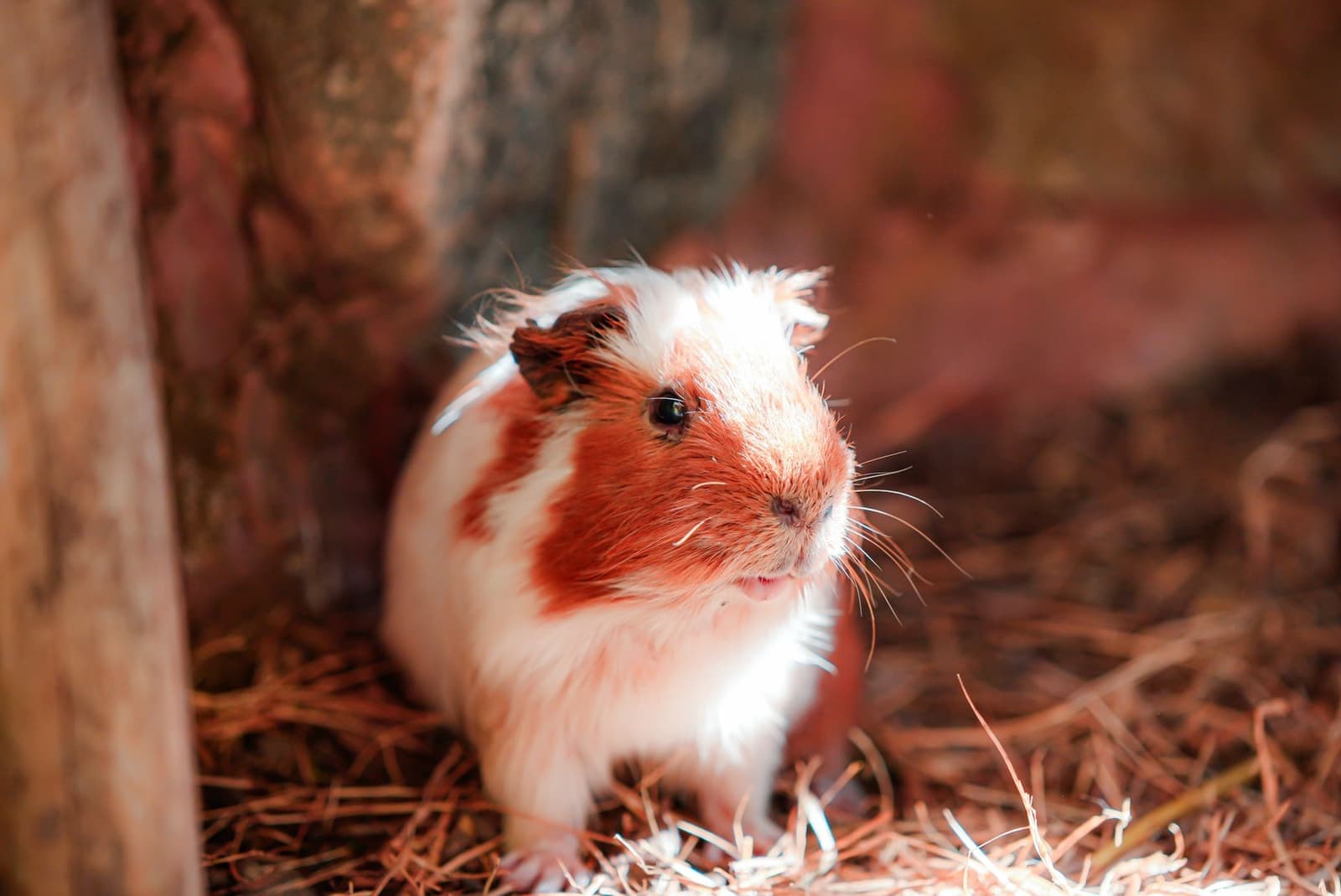
Buy a paper bedding and lay it 2 to 3 inches deep. Our pick is carefresh, because it is a reclaimed paper fiber, it is the softest product here under an animal that lies down rather than burrows, and it is stocked almost everywhere. Humane World for Animals states plainly that guinea pig bedding should be made from paper, at 2 to 3 inches so absorption is maximized. Screened aspen is a legitimate second answer and the RSPCA's wording supports it. What both bodies rule out is softwood: cedar and pine are named by Humane World because of chemicals they contain, and by the RSPCA as a cause of illness.
Guinea pig bedding · recommendation
2 to 3 inches of paper bedding; cedar and pine shavings are stated to be not recommended because of chemicals they both contain
This page covers disposable bedding, which is what most guinea pig owners buy and what most of them replace weekly for the life of the animal. The washable alternative is a separate decision with a separate economics, and it has its own roundup and its own head-to-head against disposables. Nothing here is an argument against fleece. It is an argument about which bag to buy if you have decided on a bag.
The two published positions, which are not the same
It is worth setting this out properly, because most pages in this category quote whichever body supports the product they are selling.
| Body | Recommends | Rules out |
|---|---|---|
| Humane World for Animals | Bedding made from paper, 2 to 3 inches deep so absorption is maximized | Cedar and pine shavings, because of chemicals they both contain |
| RSPCA | Dust-free hay, and dry, dust-free, absorbent wood shavings supplemented with hay; wood wool for hiding in | Softwood products such as pine; cotton wool and fluffy bedding; coarse materials like straw, which can cause eye injuries |
Each body's own wording, read from its published guinea pig guidance on 4 October 2026 and linked at the foot of this page. The grouping into columns is ours.
The disagreement is narrow and real. Humane World names paper as the material. The RSPCA permits wood shavings provided they are dry and dust-free and are supplemented with hay. Both exclude softwood, so the shavings the RSPCA permits are hardwood shavings, which in the United States means aspen.
We resolve it in favor of paper, and we label that as our choice rather than anyone's standard. The reason is the RSPCA's own qualifier: dust-free. Aspen varies enormously between a screened product and a cheap one, the variation is invisible until you open the bag, and the animal in question has a respiratory system that is the usual cause of its vet bills. Paper arrives at a known dust level. That is the whole of the argument.
The softwood question, with the evidence
Both bodies rule out cedar and pine, and neither publishes the mechanism, so here it is from the source this site uses across every species. The House Rabbit Society's softwood guidance sets out the phenol problem: the aromatic compounds that give cedar and pine their smell are what raise liver enzymes and affect how an animal metabolizes drugs. It is the same evidence behind our hamster page on pine and cedar bedding, and it applies here unchanged.
Aspen is a hardwood and carries no such phenols, which is why it is not swept up in the same objection and why both the RSPCA's wording and our own shortlist leave room for it. The distinction is between softwood and hardwood, not between wood and paper, and getting that right is the difference between avoiding a real hazard and avoiding a whole material category for no reason.
| # | Product | Best for | Score | Price |
|---|---|---|---|---|
| 1 |  Illustrative Illustrativecarefresh Small Pet BeddingNot applicable | Availability and softness | 8.0out of 10 | Check price on Amazon We do not print prices. #ad Disclosure |
| 2 | Illustrative Kaytee Clean & Cozy White Paper BeddingOne 85 L bag fills roughly 10 in deep over a 500 sq in footprint | Reaching a 10 in burrow depth without buying six bags | 9.0out of 10 | Check price on Amazon We do not print prices. #ad Disclosure |
| 3 | Illustrative Oxbow Pure Comfort BeddingNot applicable | The toilet corner of a deep-bedded enclosure | 8.1out of 10 | Check price on Amazon We do not print prices. #ad Disclosure |
| 4 |  Illustrative IllustrativeSmall Pet Select Aspen BeddingNot applicable | Aspen without the dust | 8.7out of 10 | Check price on Amazon We do not print prices. #ad Disclosure |
| 5 | Illustrative Kaytee Aspen Small Animal BeddingNot applicable | Deep burrowing on a budget | 8.3out of 10 | Check price on Amazon We do not print prices. #ad Disclosure |
Scores are our own assessment of published specifications against the thresholds set out in how we assess products. They are not test results and not customer ratings. Tap a row to read the full assessment.
The three worth buying
The softest paper for an animal that lies on its bedding rather than tunnels through it, the most absorbent paper for a cage you are stretching to a week, and the screened aspen for anyone who would rather buy wood. Full assessments of all five below.
- Illustrative
Availability and softness
carefresh Small Pet Bedding
Not applicable
The most widely stocked paper bedding, and a safe default whose only real weakness is that it compacts rather than holding an open tunnel.
Check price on AmazonWe do not print prices. #ad Disclosure
- Illustrative
Reaching a 10 in burrow depth without buying six bags
Kaytee Clean & Cozy White Paper Bedding
One 85 L bag fills roughly 10 in deep over a 500 sq in footprint
Paper, dust-controlled and sold in a volume large enough to actually reach 10 in of depth, which is the spec that matters and the one most bedding bags fail on.
Check price on AmazonWe do not print prices. #ad Disclosure
- Illustrative
Aspen without the dust
Small Pet Select Aspen Bedding
Not applicable
Aspen with the dust problem largely solved, which is the one reason to pay more than the supermarket bale costs.
Check price on AmazonWe do not print prices. #ad Disclosure
What a guinea pig actually does to bedding
The reason the shortlist here is not the same as the hamster one is behavioral, and it is worth a paragraph because it changes which product wins.
A hamster digs. Our hamster bedding roundup is won on burrow-wall stability and on whether you can reach ten inches of depth without buying six bags, because the animal lives inside the substrate. A guinea pig does not dig. It walks on bedding, lies on it and urinates in a corner of it, which means the criteria reorder completely: softness under a body that is in contact with the floor all day, absorbency in one corner rather than throughout, and dust, because the animal's face is at substrate level permanently.
That is also why the published depth is 2 to 3 inches rather than the ten inches a hamster needs. A deeper layer for a guinea pig buys you a longer interval between changes and nothing for the animal.
The criteria, in order
- 1.Material, as a pass or fail. Paper or hardwood. Softwood is excluded by both issuing bodies and by the phenol evidence, whatever the bag says about kiln drying.
- 2.Dust. The RSPCA attaches dust-free to every material it permits, and it is the criterion with the clearest link to a vet bill in a species prone to respiratory trouble.
- 3.Absorbency. Guinea pigs produce a great deal of urine for their size and concentrate it in one area. Absorbency is what decides whether the cage smells on day five, which is in turn what decides whether you clean on schedule or early.
- 4.Softness underfoot. A specific guinea pig criterion rather than a general one, because the animal is in contact with the floor almost permanently and because coarse material is implicated in sore hocks.
- 5.Volume per pack, last. It matters more here than on most pages, because a 15.8 square foot cage at 3 inches deep is a lot of bedding per change, and bulk is the difference between the published depth and a thin layer you talk yourself into.
The assessments
Our pick · Availability and softness
carefresh Small Pet Bedding
The most widely stocked paper bedding, and a safe default whose only real weakness is that it compacts rather than holding an open tunnel.
- Dimensions
- Sold in compressed packs from 14 L to 60 L expanded
- Continuous floor
- Not applicable
- Bar spacing
- Not applicable
- Material
- Reclaimed paper fiber
- Handling
- Soft, short fiber that packs down more than kraft paper
What it gets right
- Paper fiber, so the softwood phenol question does not arise
- Stocked almost everywhere, which matters when you need a bag today
- Very soft, and good in nest boxes
What it gets wrong
- Compacts under its own weight, so deep burrows collapse more readily
- Short fiber means more dust in the bag than kraft-paper products
- Smaller pack sizes make a 10 in fill expensive
Who should buy something else
Not the choice if deep burrowing is the point of your setup. Use it in the nest and a kraft-paper or aspen substrate for the depth.
Specifications read from Manufacturer listing on 27 September 2026. Floor-area arithmetic is ours and is shown above so you can redo it.
Illustrative- Material safety10
- Dust7
- Burrow stability6
- Volume per pack7
- Value per liter8
We do not print prices. #ad Disclosure
Number 2 · Reaching a 10 in burrow depth without buying six bags
Kaytee Clean & Cozy White Paper Bedding
Paper, dust-controlled and sold in a volume large enough to actually reach 10 in of depth, which is the spec that matters and the one most bedding bags fail on.
- Dimensions
- Sold in sizes up to 85 liters (5,184 cu in) expanded
- Continuous floor
- One 85 L bag fills roughly 10 in deep over a 500 sq in footprint
- Bar spacing
- Not applicable
- Material
- Virgin kraft paper; manufacturer states 99 percent dust-free
- Absorbency
- Manufacturer states it absorbs up to six times its weight
What it gets right
- Paper, so none of the softwood phenol question applies
- 99 percent dust-free by the manufacturer's own claim
- 85 L pack is one of the few that fills a large enclosure in a single bag
- Holds a burrow shape well once slightly damped
What it gets wrong
- Paper is more expensive per liter than aspen
- The white version shows soiling immediately, which some owners dislike
- Scented variants exist in the range and we would avoid all of them
Who should buy something else
Not for anyone who wants the cheapest possible substrate by volume. Aspen costs less; the trade-off is dust and a less stable tunnel structure.
Specifications read from Kaytee product listing on 27 September 2026. Floor-area arithmetic is ours and is shown above so you can redo it.
Illustrative- Material safety10
- Dust9
- Burrow stability9
- Volume per pack9
- Value per liter7
We do not print prices. #ad Disclosure
Number 3 · The toilet corner of a deep-bedded enclosure
Oxbow Pure Comfort Bedding
A paper bedding with better odor behavior than most, which matters in the one corner of the enclosure that always needs it.
- Dimensions
- Sold in compressed packs up to 72 L expanded
- Continuous floor
- Not applicable
- Bar spacing
- Not applicable
- Material
- Paper fiber, unbleached options available
- Odor handling
- Marketed on odor control; performs well in a urine corner
What it gets right
- Paper, so no softwood question
- Handles a concentrated urine corner better than aspen
- Unbleached versions avoid the optical brighteners in white paper beddings
What it gets wrong
- Premium price per liter
- Compacts more than kraft paper, so it is not the best deep-burrow substrate
Who should buy something else
Not the whole-enclosure substrate at this price. Buy it for the wet corner and something cheaper for the other nine inches.
Specifications read from Manufacturer listing on 27 September 2026. Floor-area arithmetic is ours and is shown above so you can redo it.
Illustrative- Material safety10
- Dust8
- Burrow stability6
- Volume per pack8
- Value per liter6
We do not print prices. #ad Disclosure
Number 4 · Aspen without the dust
Small Pet Select Aspen Bedding
Aspen with the dust problem largely solved, which is the one reason to pay more than the supermarket bale costs.
- Dimensions
- Sold in large-volume boxes
- Continuous floor
- Not applicable
- Bar spacing
- Not applicable
- Material
- Kiln-dried aspen, screened for dust
- Dust handling
- Screened product; noticeably cleaner in the bag than budget aspen
What it gets right
- Screened, so appreciably less dust than standard aspen bales
- Same hardwood safety position and the same good tunnel structure
- Large boxes suit a deep fill
What it gets wrong
- Costs more per liter than standard aspen
- Less widely stocked in physical stores
Who should buy something else
Not worth the premium if the enclosure lives in a garage or utility room where a little dust is irrelevant.
Specifications read from Manufacturer listing on 27 September 2026. Floor-area arithmetic is ours and is shown above so you can redo it.
Illustrative- Material safety9
- Dust8
- Burrow stability10
- Volume per pack9
- Value per liter7
We do not print prices. #ad Disclosure
Number 5 · Deep burrowing on a budget
Kaytee Aspen Small Animal Bedding
The cheapest substrate we are willing to recommend, and the best tunnel-holder of the three, at the cost of visible dust in the bag.
- Dimensions
- Sold in compressed bales, commonly 8 L to 52.4 L expanded
- Continuous floor
- Not applicable
- Bar spacing
- Not applicable
- Material
- Aspen, a hardwood, so no softwood phenols
- Burrow behavior
- Coarse shavings interlock and hold tunnel walls well
What it gets right
- Aspen is a hardwood, so the phenol issue that rules out pine and cedar does not apply
- Coarse shavings interlock, so a 10 in burrow holds its shape
- Much cheaper per liter than paper
What it gets wrong
- Noticeably dusty; sift or shake it out before it goes in
- Absorbs less than paper, so spot-cleaning is more frequent
- Bale sizes vary between retailers, so plan the fill volume before you buy
Who should buy something else
Avoid if anyone in the household reacts to wood dust, or if the enclosure sits in a bedroom where you would notice it.
Specifications read from Manufacturer listing on 27 September 2026. Floor-area arithmetic is ours and is shown above so you can redo it.
Illustrative- Material safety9
- Dust5
- Burrow stability10
- Volume per pack8
- Value per liter10
We do not print prices. #ad Disclosure
What we would buy
carefresh as the main bedding. Reclaimed paper fiber, soft and short, and it packs down under an animal that lies on it rather than tunnels through it, which is the behavior that matters here. It is also stocked in every pet shop, which is a real advantage for a product you buy fifty times a year.
Kaytee Clean and Cozy if the cage is large and you are trying to reach a week between changes. It is virgin kraft paper and the most absorbent product on the shortlist, and the large bags are the only sensible way to put 3 inches across 15 square feet.
Small Pet Select's screened aspen if you would rather buy wood. It is a hardwood so the phenol objection does not arise, it is screened for dust, and the RSPCA's wording explicitly permits dry dust-free shavings supplemented with hay. Buy the screened product rather than the budget one; the dust difference is the entire reason to spend the extra.
And whichever you buy, add hay on top. The RSPCA names dust-free hay as bedding material in its own right, and hay is the one thing in the cage that is bedding, forage and enrichment at once. The timothy hay roundup covers which hay and why.
Questions people ask
What is the best bedding for guinea pigs?
Is pine bedding safe for guinea pigs?
Is aspen bedding good for guinea pigs?
How deep should guinea pig bedding be?
What bedding is best for guinea pig smell?
Can guinea pigs have hay as bedding?
Is straw safe for guinea pigs?
Sources
- Humane World for Animals — Guinea pig housing requirements — States bedding should be made from paper at 2 to 3 inches deep, and that cedar and pine shavings are not recommended because of chemicals they both contain
- RSPCA — Guinea pig environment — Names dust-free hay and dry, dust-free, absorbent wood shavings supplemented with hay; rules out softwood such as pine, cotton wool and fluffy bedding, and coarse materials like straw
- House Rabbit Society — The dangers of softwood shavings — The phenol evidence behind both bodies' softwood exclusions