Guides
Best cage cleaners for small pets
One of these five names the chemical doing the work. One states that it is unscented. One publishes a rinse step. None of them is the same product, and the published veterinary baseline is still soap and water.
Buy the Nature's Miracle Small Animal Cage & Surface Cleaner for routine weekly cleaning, because it is the only one of these five that states unscented in its own bullet points and it costs the least. Add a canister of REScue One-Step wipes if you need to actually disinfect — a second-hand cage, a sick animal, a new arrival — because it is the only product here that names its active chemistry and publishes a contact time. Use the Absolutely Clean bottle on wood and anything porous, because its own instructions include the rinse step the others leave out. And know the thing the category does not want you to know: VCA Animal Hospitals' published instruction is to clean the cage with soap and water at least weekly and rinse well, no welfare or veterinary body we have read endorses a branded cleaner, and dilute white vinegar does most of this job for a few cents.
What to clean a ferret cage with · recommendation
clean the cage with soap and water at least weekly, and rinse well
This page exists to finish a sentence we wrote a year ago. Cleaning a small-pet enclosure without poisoning it tells you to use dilute white vinegar or a fragrance-free small-animal cage cleaner, and then names no cleaner at all, because at the time we had not verified one. How to clean a ferret cage and how often to clean a guinea pig cage have the same hole in them: a method with no product behind it.
So this is the product layer under those three pages, and it starts from the uncomfortable fact that the published guidance does not ask you to buy anything.
What is actually published about cleaning products
- 1.Soap and water, weekly, rinsed well. VCA Animal Hospitals' ferret housing page states: clean the cage with soap and water at least weekly, and rinse well. That is the most specific product instruction we have found from a named veterinary body for any species on this site.
- 2.Deep clean weekly, spot clean daily. The RSPCA publishes this cadence for guinea pigs, and qualifies it twice — how deep a clean depends on the size of the enclosure and the number of animals, and the cage should be cleaned often but not so often that the animals are frequently disturbed.
- 3.No named product, from anyone. Not VCA, not the RSPCA, not PDSA, not Humane World for Animals. No brand is endorsed, no chemical class is recommended, and no ingredient is named as one to avoid.
- 4.No contact time, from anyone. This is the gap that matters if you think of cleaning as disinfecting. A disinfectant works by staying wet on a surface for a stated number of minutes. No welfare body publishes a figure, and of the five products on this page exactly one does.
- 5.Nothing at all about scent. Which is strange, because it is the specification that most obviously matters for an animal that spends twenty hours a day with its nose in the substrate, and it is the one most of these labels are silent on.
Clean, deodorize, disinfect: three jobs, three products
Almost every complaint about cage cleaners comes from using one of these for a job that needed another. They are not interchangeable and the labels rarely say which one you are holding.
| The job | What does it | When you need it | What it will not do |
|---|---|---|---|
| Clean | Soap and water, or an enzymatic spray, plus physical wiping | Every week, and on the wet corner every two or three days | Will not kill a pathogen; a clean surface is not a disinfected one |
| Deodorize | An enzymatic cleaner that breaks down urine residue | When the enclosure smells after cleaning, which means residue is left | Will not reduce ammonia if the soiled substrate is still in there |
| Descale | Dilute white vinegar, roughly one part to three | Rabbit and guinea pig urine deposits, which go chalky and hold odor | Will not disinfect, and must never meet bleach |
| Disinfect | A product with a named active and a published contact time | A second-hand cage, after an illness, before a new animal | Will not work on a dirty surface - it is the step after cleaning |
Our categorization, built from the published guidance above and from what each product on this page claims about itself. No welfare body publishes a framework like this, which is why it is labeled as ours.
The practical consequence: most owners need one cleaner and should buy a disinfectant once. A weekly routine is cleaning, not disinfection, and a disinfectant used instead of a wash does nothing useful because organic soil blocks it. If you only buy one bottle, buy the cleaner.
The five things we judge a cage cleaner on
- 1.Does it state that it is unscented? Our first filter and the one that eliminates most of the category. A fragrance exists to leave a residue, and a small mammal lives at substrate level with no way to move away from it. One of these five states unscented outright. Three say nothing about scent at all, which is not the same as being unscented.
- 2.Does it disclose an active, or an ingredient class? Our second filter. Enzymatic and natural ingredients are categories, not disclosures. One product here names its chemistry. The others offer brand names — OdorCapture 360 — or adjectives.
- 3.Does it publish a rinse step? VCA's instruction ends with rinse well, which tells you the residue is the risk rather than the dirt. One of these five publishes a rinse in its own instructions. One actively markets the opposite, telling you it is safe to spray while the animal is in the habitat, which we would not do.
- 4.Does it claim to clean, or to disinfect? A different claim with different evidence behind it. Only the REScue wipes make a disinfection claim and publish a time to go with it; everything else here cleans and deodorizes, which is what you need weekly and is not what you need after an illness.
- 5.What surfaces does it suit, and what does it cost to use? Wipes are for hard, non-porous surfaces and are the wrong product for a wooden hide or a fleece liner. A 32 oz bottle is the right format for a rabbit hutch and overkill for a hamster tray. We talk about cost in brackets rather than figures, because the price you will pay is the price on the day — every live figure on this page comes from the listing.
| # | Product | Best for | Score | Price |
|---|---|---|---|---|
| 1 | 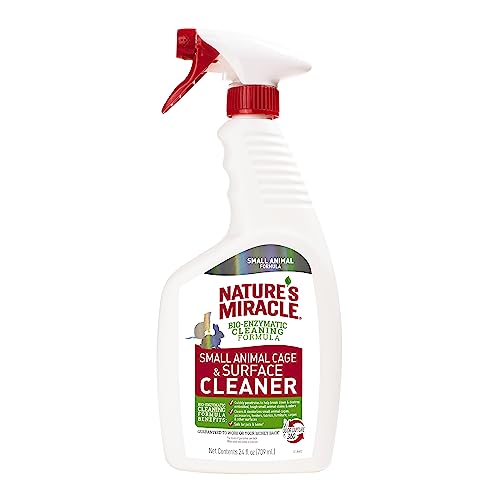 Nature's Miracle Small Animal Cage & Surface Cleaner, 24 ozNot applicable | Weekly cleaning of a plastic base or tray | 8.6out of 10 | $6.19$8.9931% offView on Amazon Price as of November 11, 2026. #ad Disclosure |
| 2 | 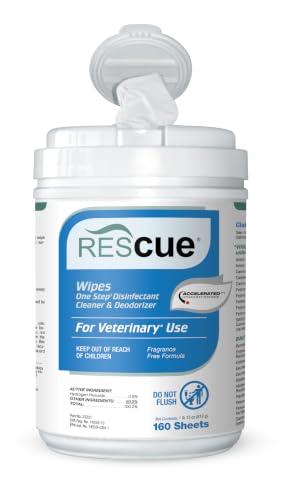 REScue One-Step Disinfectant Cleaner & Deodorizer Wipes, 160 countNot applicable | A second-hand cage, a sick animal, or a new arrival | 9.0out of 10 | $24.99View on Amazon Price as of November 11, 2026. #ad Disclosure |
| 3 | 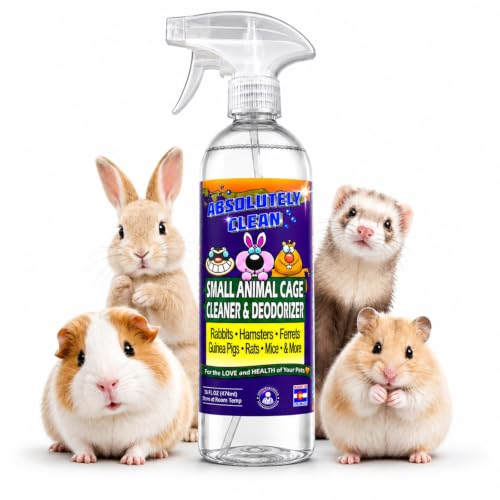 Absolutely Clean Small Animal Cage Cleaner, 16 ozNot applicable | Wooden hides, shelves and anything porous | 8.4out of 10 | $16.99View on Amazon Price as of November 11, 2026. #ad Disclosure |
| 4 | 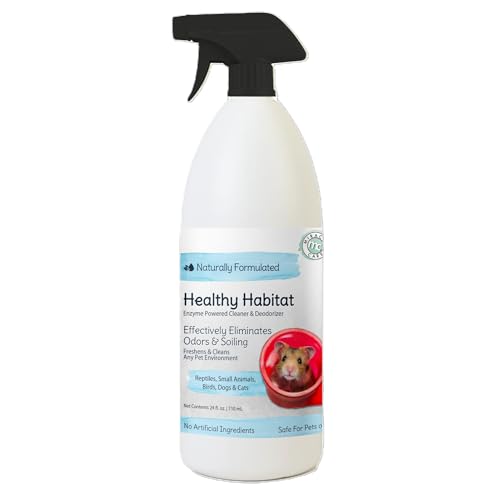 Miracle Care Healthy Habitat Cleaner & Deodorizer, 24 ozNot applicable | Spot-cleaning fabric and carpet outside the cage | 7.6out of 10 | $17.52View on Amazon Price as of November 11, 2026. #ad Disclosure |
| 5 | 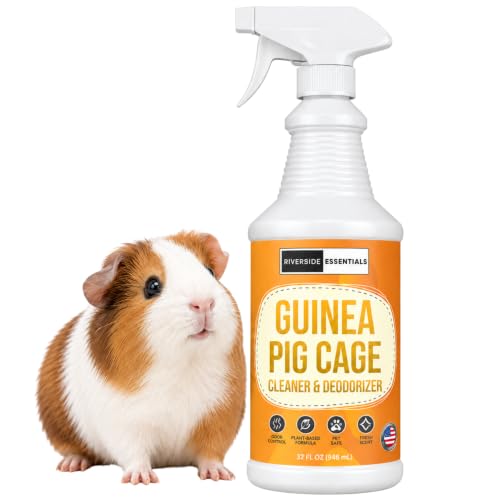 Riverside Essentials Cage Cleaner & Deodorizer, 32 ozNot applicable | Owners who get through a lot of cleaner on a large enclosure | 7.2out of 10 | $18.99View on Amazon Price as of November 11, 2026. #ad Disclosure |
Scores are our own assessment of published specifications against the thresholds set out in how we assess products. They are not test results and not customer ratings. Tap a row to read the full assessment.
The five, measured against those criteria
| Product | States unscented | Names an active or ingredient | Publishes a rinse step | Claims to disinfect | Size |
|---|---|---|---|---|---|
| Nature's Miracle Small Animal | Yes - unscented formula | No - bio-enzymatic only | No | No | 24 fl oz spray |
| REScue One-Step wipes | No - states no harsh smell | Yes - Accelerated Hydrogen Peroxide | Not applicable (wipe) | Yes - stated 1 minute | 160-count canister |
| Absolutely Clean Small Animal | No statement | No - natural enzymes only | Yes - in its own instructions | No | 16 fl oz spray |
| Miracle Care Healthy Habitat | No statement | No - natural ingredients only | No - states use with the pet present | No | 24 oz spray |
| Riverside Essentials | No statement | No - non-toxic and pet-safe only | No | No | 32 fl oz spray |
Every entry read from the product's own Amazon listing on 5 November 2026 and cited on the cards below. No statement means the listing is silent on the point, which is not the same as a negative answer - it means you cannot find out from the label.
What this category does not tell you
Write the five listings out side by side and the pattern is hard to miss. Four of the five tell you nothing about what is inside the bottle beyond an adjective. Three say nothing about fragrance. Two publish claims — safe for pets and home, veterinarian approved, non-toxic — with no evidence, no named vet and no test attached. One is sold under per-species labels, so the same formula appears as a guinea pig cleaner and a hamster cleaner with the same size and the same claims.
That is not a reason to buy none of them. It is a reason to buy the ones that disclose the most, which is exactly how this page is ranked: the unscented one first for routine use, the one that names its chemistry second for the job that needs chemistry, and the two that disclose least at the bottom with the reason printed on the card. Two of the five fail our own line and we have still listed them, because they are what the category contains and because an owner comparing them deserves to see why they came last.
Our pick · Weekly cleaning of a plastic base or tray
Nature's Miracle Small Animal Cage & Surface Cleaner, 24 oz
The only one of these that states unscented in its own bullet points, at the lowest price bracket in the category - which is why it is the routine-cleaning default even though it discloses nothing about what is in it.
- Dimensions
- 24 fl oz trigger spray; part P-98470-1
- Continuous floor
- Not applicable
- Bar spacing
- Not applicable
- Material
- Stated bio-enzymatic formula, unscented, with the maker's OdorCapture 360 technology
- Scent
- Unscented is stated on the listing, the only product here to state it plainly
What it gets right
- Unscented is stated outright, which is the single most important claim for an animal that lives at substrate level
- Lowest price bracket in this group, cheap enough to use generously
- Formulated for birds and small animals rather than adapted from a dog product
- Enzymatic formula is the right tool for urine residue, which is the deposit that actually holds odor
What it gets wrong
- No active ingredient, enzyme class or concentration disclosed anywhere on the listing
- Safe for pets and home is footnoted with when used and stored as directed, and the listing does not say what directed means
- Cleans and deodorizes only - it makes no disinfection claim and is not sold as a registered disinfectant
- OdorCapture 360 is a brand name, not a specification
Who should buy something else
Not the product for disinfecting after an illness or a new animal. Nothing on this listing claims to kill anything; for that you need the REScue wipes further down this page.
Specifications read from Manufacturer listing on 5 November 2026. Floor-area arithmetic is ours and is shown above so you can redo it.
- Scent10
- Disclosure5
- What it actually does7
- Residue risk8
- Price bracket10
Price as of November 11, 2026. #ad Disclosure
Number 2 · A second-hand cage, a sick animal, or a new arrival
REScue One-Step Disinfectant Cleaner & Deodorizer Wipes, 160 count
The only product in this group that names its active chemistry and publishes a contact time, which is the whole difference between disinfecting a cage and wiping it.
- Dimensions
- 160-count canister; part RESAMZ6X7, model RESAM6X7, made by Virox Technologies
- Continuous floor
- Not applicable
- Bar spacing
- Not applicable
- Material
- Stated Accelerated Hydrogen Peroxide technology, described as biodegradable
- Stated contact time
- The listing states it disinfects in just 1 minute, the only contact time published by any product here
What it gets right
- Names its active: Accelerated Hydrogen Peroxide, the chemistry veterinary practices use
- Publishes a 1-minute stated contact time, so you know how long to leave a surface wet
- States no harsh smell, which is what makes a disinfectant usable in the same room as a small pet
- A 160-count canister covers a lot of hard surfaces without mixing or measuring
What it gets wrong
- Wipes carry very little liquid, so a heavily soiled pan still needs washing first
- Highest price bracket in this group by a long way
- Hard non-porous surfaces only - it is the wrong product for a wooden hide or a fleece liner
- Marketed for vet and kennel use, so none of the dosing language is written for a hamster enclosure
Who should buy something else
Not a routine weekly product and not a substitute for cleaning. Disinfectant works on a surface that is already clean; use it after the wash, not instead of it.
Specifications read from Manufacturer listing on 5 November 2026. Floor-area arithmetic is ours and is shown above so you can redo it.
- Scent8
- Disclosure10
- What it actually does10
- Residue risk7
- Price bracket4
Price as of November 11, 2026. #ad Disclosure
Number 3 · Wooden hides, shelves and anything porous
Absolutely Clean Small Animal Cage Cleaner, 16 oz
The only cleaner in this group whose own instructions include the rinse step every welfare source asks for, which is why it is the one we would use on a surface an animal sleeps directly on.
- Dimensions
- 16 fl oz spray bottle; part AbClSACC16
- Continuous floor
- Not applicable
- Bar spacing
- Not applicable
- Material
- Stated natural enzyme formula, made in the USA, stated free of harsh chemicals and noxious fumes
- Rinse step
- The listing's own instructions describe applying, rinsing and then wiping down - the only product here to publish a rinse
What it gets right
- Publishes a rinse step in its own instructions, which matches VCA's soap, water and rinse well guidance
- States no greasy, sticky or filmy residue, the specific failure that matters on a cage floor
- Listed as suitable for metal, wood, glass, vinyl and plastic, so one bottle covers a whole setup
- Small family maker in Colorado with the manufacturing location stated
What it gets wrong
- Says nothing at all about fragrance on the small-animal listing, while the same company's bird cleaner is explicitly labeled fragrance free
- Veterinarian approved appears with no named vet, body or method behind it
- No enzyme named, no concentration, no ingredient list
- Roughly three times the outlay per ounce of the Nature's Miracle bottle
Who should buy something else
Not the one to buy in a 16 oz bottle if you are cleaning a rabbit hutch or a C and C cage weekly - the larger bottles of the same formula exist and the small one will not last.
Specifications read from Manufacturer listing on 5 November 2026. Floor-area arithmetic is ours and is shown above so you can redo it.
- Scent5
- Disclosure5
- What it actually does8
- Residue risk10
- Price bracket6
Price as of November 11, 2026. #ad Disclosure
Number 4 · Spot-cleaning fabric and carpet outside the cage
Miracle Care Healthy Habitat Cleaner & Deodorizer, 24 oz
A cross-species enzymatic spray that works, sold on the one claim we would not act on: that you can spray it around an animal that is still in the enclosure.
- Dimensions
- 24 oz spray bottle; part 11031, made in Dayton, Ohio
- Continuous floor
- Not applicable
- Bar spacing
- Not applicable
- Material
- Stated natural ingredients and enzymatic formula, stated free of harsh chemicals
- Stated use with the animal present
- The listing states it is safe to use while your pet is in its habitat, and names bedding, carpet and furniture as surfaces
What it gets right
- Genuinely cross-species - named for reptiles, hamsters, guinea pigs, ferrets, birds, rabbits, cats and dogs
- Usable on soft furnishings as well as hard surfaces, which the REScue wipes are not
- Maker states a 40-year history and names its manufacturing location
- Enzymatic rather than masking, so it addresses the urine residue rather than covering it
What it gets wrong
- Sold on being safe to use while your pet is in its habitat, a claim with no evidence attached and the opposite of the rinse-and-dry routine we follow
- No fragrance statement anywhere on the listing, so you cannot tell whether it is scented
- Natural ingredients with no ingredient list, no named enzyme and no concentration
- Mid-to-upper price bracket for a product that makes no disinfection claim
Who should buy something else
Not the product to reach for inside an occupied enclosure, whatever the listing says. Move the animal, clean, rinse and dry - that sequence is on our cage cleaning page and it has not changed.
Specifications read from Manufacturer listing on 5 November 2026. Floor-area arithmetic is ours and is shown above so you can redo it.
- Scent4
- Disclosure4
- What it actually does7
- Residue risk4
- Price bracket6
Price as of November 11, 2026. #ad Disclosure
Number 5 · Owners who get through a lot of cleaner on a large enclosure
Riverside Essentials Cage Cleaner & Deodorizer, 32 oz
The biggest bottle in the group at a middling outlay, from the listing that tells you least about what is inside it.
- Dimensions
- 32 fl oz spray bottle; part GPCC32
- Continuous floor
- Not applicable
- Bar spacing
- Not applicable
- Material
- Stated non-toxic, pet-safe, concentrated formula, made in the USA
- Species labeling
- Sold under per-species labels - the guinea pig and hamster bottles carry the same maker, size and claims
What it gets right
- 32 oz is the largest single bottle here, which suits a rabbit hutch or a C and C cage
- Named as safe for guinea pigs, rabbits, hamsters and other small animals
- Stated concentrated, so one bottle covers more surface than its size suggests
- Lower cost per ounce than the Absolutely Clean bottle
What it gets wrong
- Non-toxic and pet-safe appear with no ingredient list, no enzyme named and no concentration
- The same product is relabeled per species, so the guinea pig wording is marketing rather than formulation
- No fragrance statement at all
- No rinse instruction published, on a product sold as concentrated
Who should buy something else
Not the one to buy if the disclosure matters to you, which on a product you are spraying where an animal sleeps it reasonably might. The Nature's Miracle bottle at least states unscented.
Specifications read from Manufacturer listing on 5 November 2026. Floor-area arithmetic is ours and is shown above so you can redo it.
- Scent4
- Disclosure3
- What it actually does6
- Residue risk5
- Price bracket8
Price as of November 11, 2026. #ad Disclosure
The cheapest answer is still vinegar, and we are not going to pretend otherwise
Dilute white vinegar, roughly one part to three parts water, does the two jobs that matter most often. It shifts the chalky calcium deposit that rabbit and guinea pig urine leaves behind, which is the deposit that actually holds odor, and it rinses away completely. It costs almost nothing, it discloses its own ingredient on the bottle, and it is the default we recommend on our cage cleaning page.
So why buy anything on this page? Three honest reasons. Enzymatic cleaners break down organic residue in a way an acid does not, which is why they work better on the smell that survives a wash. A ready-to-use spray gets used, and a bottle you have to mix often does not. And vinegar does not disinfect, so the one job it cannot do is the one the REScue wipes exist for. If none of those three applies to you, buy vinegar and spend the money on bedding instead.
One thing vinegar must never do is meet bleach. Bleach plus acid produces chlorine gas, and bleach plus ammonia — which is what urine supplies — produces chloramine. Both are genuinely dangerous in a small room. If you use dilute bleach for a deep clean of a plastic base, use it alone, rinse it thoroughly, and dry completely.
What not to clean a small-pet enclosure with
- Anything ammonia-based. Urine is already an ammonia source. An ammonia cleaner adds to the load you are removing, and worse, it removes your ability to smell whether the job worked.
- Bleach mixed with anything at all. See above. Alone, dilute, rinsed and dried is defensible on a plastic base. Mixed is not.
- Scented multi-surface sprays, air fresheners and plug-ins. These exist to leave a residue, which is the opposite of the goal. Keep them out of the room, not just off the cage.
- Essential oils, including tea tree and lavender. Marketed as natural, and several are documented as toxic to small mammals. No cleaning job here needs them.
- Pine or cedar-scented products. The same phenol question as the bedding, for no benefit. Pine and cedar bedding covers the argument.
- A disinfectant wipe on wood, fleece or any porous surface. It will not disinfect a porous surface and it will leave the active in the material. Wood gets boiling water; fabric goes in the machine.
- A cleaner used with the animal in the enclosure. One product on this page markets exactly that, and we mark it down for it. Move the animal, clean, rinse, dry, then put it back.
Pine and cedar shavings · recommendation
phenols in softwood shavings raise liver enzyme levels; in rodents, constant exposure to phenol-containing litters is reported to have reduced drug effectiveness by more than 40 percent
A routine per species, and how much cleaner it uses
Hamsters, gerbils and mice
The least cleaner of any species here, because the right routine is spot-cleaning a latrine corner rather than stripping an enclosure. A deep-bedded hamster setup wants the wet corner removed every two or three days and the burrow left alone; the wheel needs wiping more often than anything else, because a hamster that urinates while running spreads it round the track. One 24 oz bottle lasts a long time. Deep bedding explains why the full strip-out is usually the wrong move.
Guinea pigs and rabbits
The two species where cleaning is genuinely frequent, and the two that justify a 32 oz bottle. Both produce a lot of urine and both deposit it in one place, so the calcium scale is the real problem and vinegar is close to essential. The RSPCA's cadence for guinea pigs is a deep clean at least weekly with daily spot cleaning, qualified by enclosure size and animal count. Fleece liners change the arithmetic completely — liners versus disposable bedding does that comparison.
Ferrets
Here the cleaner is almost beside the point. VCA publishes a weekly soap-and-water clean with a rinse, and the litter pan is the daily job. The distinctive ferret smell lives in skin oil on fabric, so the hammocks and liners going through a machine every two or three days does more than any spray — see best ferret hammocks for why washability is the specification that matters most on a ferret textile.
What reduces the cleaning in the first place
The cheapest cleaning product is the one you do not need. A washable liner, an absorbent paper bedding and pellets in the litter pan remove more work than any spray adds.
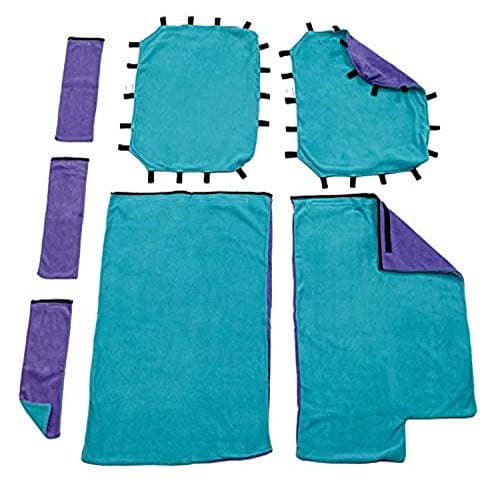
Lining a Ferret Nation or Critter Nation pan
Nation Accessories Fleece Liner Set
Covers a full Nation level
The right answer to ferret bedding, because ferrets do not burrow and a washable liner removes the whole loose-substrate question at once.
$36.89View on AmazonPrice as of November 11, 2026. #ad Disclosure
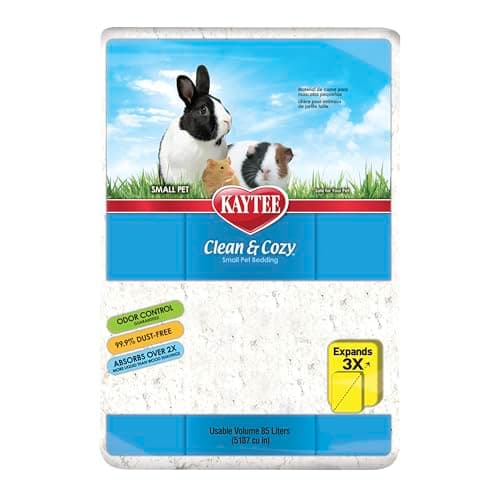
Reaching a 10 in burrow depth without buying six bags
Kaytee Clean & Cozy White Paper Bedding
One 85 L bag fills roughly 10 in deep over a 500 sq in footprint
Paper, dust-controlled and sold in a volume large enough to actually reach 10 in of depth, which is the spec that matters and the one most bedding bags fail on.
$23.95View on AmazonPrice as of November 11, 2026. #ad Disclosure
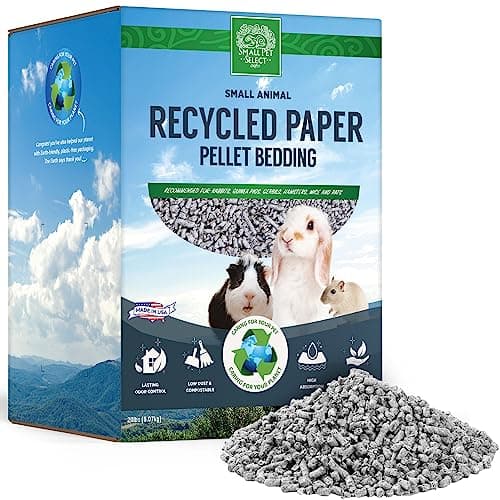
The litter to put in whichever pan you buy
Small Pet Select Recycled Paper Pellet Litter, 20 lb
Not applicable
The litter type VCA names, in the quantity a daily-cleaned pan actually consumes, from a brand whose other products we already rate.
$34.99View on AmazonPrice as of November 11, 2026. #ad Disclosure
Who should skip all of this
If you have one hamster in a deep-bedded enclosure, you do not need a cage cleaner. You need unscented dish soap and hot water for the plastic parts, boiling water for anything wooden, and a habit of removing the wet corner twice a week. That is the whole routine, it is what the published guidance describes, and the money is better spent on substrate.
Buy a cleaner when you have a species that soils heavily, a cage with a lot of hard surface, or a specific problem — a smell that survives a wash, a second-hand cage of unknown history, an animal recovering from something. Those are real jobs and the products on this page do them. Routine tidiness is not one of them.
Questions people ask
What is the safest cleaner for a small pet cage?
Do I need to disinfect a small pet cage?
Can I use vinegar to clean a hamster or rabbit cage?
Are pet-safe cage cleaners actually safe?
Can I spray cage cleaner while my pet is in the cage?
Sources
- VCA Animal Hospitals - Ferrets: Housing — The published cleaning instruction used as this page's baseline: clean the cage with soap and water at least weekly, and rinse well. Read 5 November 2026.
- RSPCA - Guinea pig environment — Deep clean at least weekly with daily spot cleaning, qualified by enclosure size and animal numbers, and the warning against cleaning so often that the animals are disturbed.
- House Rabbit Society - The dangers of softwood shavings — The phenol argument, used here for pine and cedar-scented cleaning products rather than for bedding.
- Amazon listing - Nature's Miracle Small Animal Cage & Surface Cleaner — Bio-enzymatic formula, unscented formula stated, formulated for birds and small animals, safe for pets and home when used and stored as directed, 24 fl oz, part P-98470-1. Read 5 November 2026.
- Amazon listing - REScue One-Step Disinfectant Wipes, 160 count — Accelerated Hydrogen Peroxide technology named, stated to disinfect in 1 minute, no harsh smell, hard non-porous surfaces, made by Virox Technologies. Read 5 November 2026.
- Amazon listing - Absolutely Clean Small Animal Cage Cleaner, 16 oz — Natural enzyme formula, instructions describing apply, rinse and wipe down, no greasy or filmy residue, veterinarian approved claim, made in Colorado, part AbClSACC16. Read 5 November 2026.
- Amazon listing - Miracle Care Healthy Habitat Cleaner & Deodorizer — Natural ingredients and enzymatic formula, stated safe to use while your pet is in its habitat, named for reptiles, hamsters, guinea pigs, ferrets, birds, rabbits, cats and dogs, 24 oz, part 11031. Read 5 November 2026.
- Amazon listing - Riverside Essentials Cage Cleaner & Deodorizer, 32 oz — Non-toxic and pet-safe claims, stated concentrated, made in the USA, 32 fl oz, part GPCC32. Sold under per-species labels with identical claims. Read 5 November 2026.