Ferrets
Do you cover a ferret cage at night?
Generally no. The thing a ferret needs after dark is darkness in the room and an enclosed place to sleep in — not a sheet over the bars.
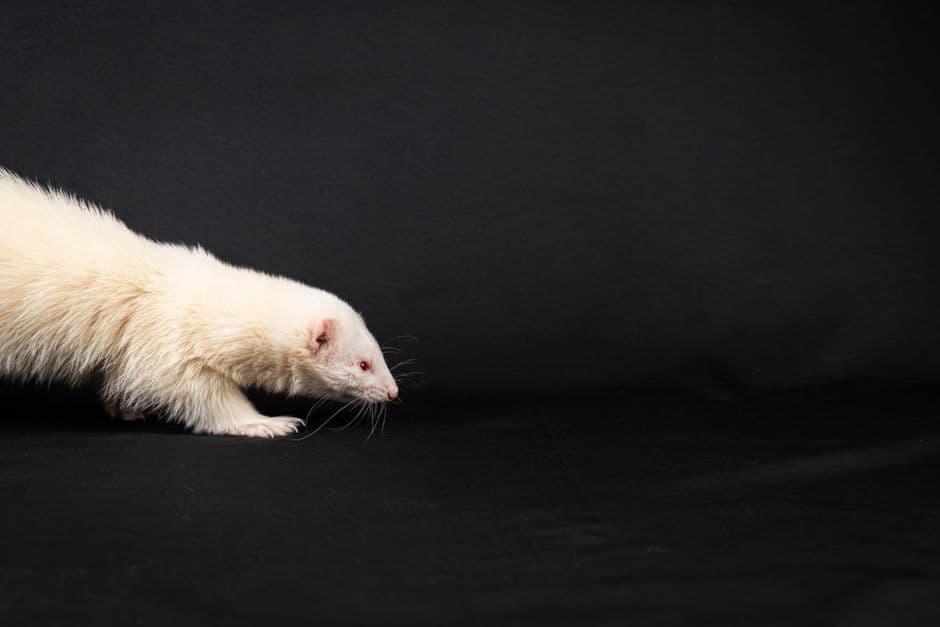
Generally no, and the reason is that it solves a problem the animal does not have while creating one it does. A ferret already sleeps 12 to 18 hours a day in a dark, enclosed sleep area inside the cage, which is where the darkness it needs comes from. Draping the cage reduces airflow through the mesh — and VCA's housing guidance asks specifically for a well-ventilated cage — while trapping humidity from a damp litter corner. The thing genuinely worth managing after dark is the number of hours the room is lit, because long light cycles are a documented factor in ferret adrenal disease. Cover one side to block a specific light source if you need to. Do not cover the top.
The instinct comes from birds, and for birds it is sound: a parrot is diurnal, a covered cage genuinely settles it, and the cover is standard husbandry. Transferring that to a ferret gets two things wrong at once. The animal is not diurnal, and the cage is not ventilated the same way.
What covering actually costs
- Ventilation. On a Nation-style cage, almost all the airflow is through the mesh. A blanket over the top turns the sleeping level into the least ventilated part of the cage, which is also where the animal is.
- Humidity. A litter corner and a water bottle put moisture into the air all night. Covered, it stays there.
- Heat. This is the one that matters most, because ferrets are the heat-sensitive species here. VCA sets the environmental ceiling at 80F (27C). A cover on a warm night moves the cage in the wrong direction.
- Your own visibility. A covered cage is a cage you do not glance into. A ferret tangled in a hammock at 2am is a problem that gets found faster in an uncovered one.
Ferret environmental temperature · minimum
at or below 80F (27C)
What to manage instead: hours of light
There is a real husbandry variable here, and it is not the cover. Virbac's veterinary material on ferret adrenal disease describes long light cycles — light exposure for periods longer than eight hours — as over-stimulating the hormonal cascade that runs from the hypothalamus through the pituitary, and names that over-exposure among the factors associated with adrenal disease in pet ferrets. The practical reading is that a ferret living in a room with a television on until midnight and a lamp on at six is on a much longer light cycle than one in a room that goes properly dark.
We want to be careful about how firmly that is stated. Adrenal disease in ferrets is multifactorial, the photoperiod link is drawn from clinical and veterinary sources rather than from a controlled housing trial we can point you at, and no welfare body publishes a hard maximum number of lit hours for a pet ferret. What is defensible is the direction: a long, artificially extended light day is worth shortening, and the way to shorten it is with the room, not with a sheet over the bars.
- 1.Put the cage in a room that goes dark at night rather than a hallway or a kitchen with a light that gets flicked on.
- 2.Turn the room light off when you go to bed instead of leaving a lamp for the animal. A ferret does not need a night light.
- 3.Let the cage see real daylight through a window during the day, out of direct sun. A natural cycle is the cheapest version of this.
- 4.If the room has to be lit late — a shared living room, a home office — move the cage rather than cover it.
The cases where a partial cover is reasonable
There are a few, and they are all about blocking one specific thing rather than creating night.
- A streetlight or a security light through a window. Cover the one side facing it, or move the cage. A side panel does not touch the airflow through the mesh top.
- A television or a monitor the animal is reacting to. Same answer: one side, and only while the screen is on.
- A draft. This is a real reason to put something against a cage, and the thing to block is the draft at floor level rather than the top. Where to put the cage goes through the placement question across species.
- A new animal that is genuinely not settling. A few nights with one side covered is a reasonable thing to try. If it works, the answer is still to move the cage.
What is not on that list is covering the cage because the ferret is noisy at night. A ferret that is digging at the pan, rattling a bottle or climbing the bars at 3am is awake, and it is awake because that is when ferrets are awake. Covering the cage does not change the animal's clock; it just means you cannot see what it is doing. The real fix is the one nobody wants to hear: more out-of-cage time earlier in the evening, so the animal spends part of the night asleep.
What a ferret actually needs at bedtime
Three things, none of which is a cover. An enclosed, dark place to sleep in — VCA calls a dark, enclosed sleep area critical, and do ferrets like beds covers what that looks like in practice. More than one of them, at more than one height, so the animal can pick its temperature. And a room that goes dark and stays reasonably quiet. Get those right and the cage can stay open, visible and ventilated, which is where you want it.
This page is deliberately not a product page. There is no cage cover in our registry, we are not going to recommend one to fill the slot, and the honest answer to the search is that the thing being sold here is mostly unnecessary.
Questions people ask
Do you cover a ferret cage at night?
Do ferrets need darkness to sleep?
How many hours of light should a ferret have?
Will covering the cage stop my ferret being noisy at night?
Is it ever right to cover part of a ferret cage?
Should I put a blanket over a ferret cage for warmth?
Sources
- VCA Animal Hospitals — Ferrets, housing — Asks for a well-ventilated cage, describes a dark enclosed sleep area as critical, publishes the 12-18 hours sleep figure and the 80F (27C) environmental ceiling
- Virbac USA — Adrenal disease (ferrets) — Describes long light cycles as light exposure longer than eight hours and sets out the hypothalamic-pituitary pathway it stimulates. A veterinary pharmaceutical publisher rather than a welfare body, and attributed as such
- RSPCA — Ferrets — General ferret welfare guidance, including somewhere to hide and sleep away from household activity