Guides
How big should a rat cage be?
Three bodies have published a position on this and no two of them agree. Here is each figure in its own words, and what it means for the cages you can actually buy.
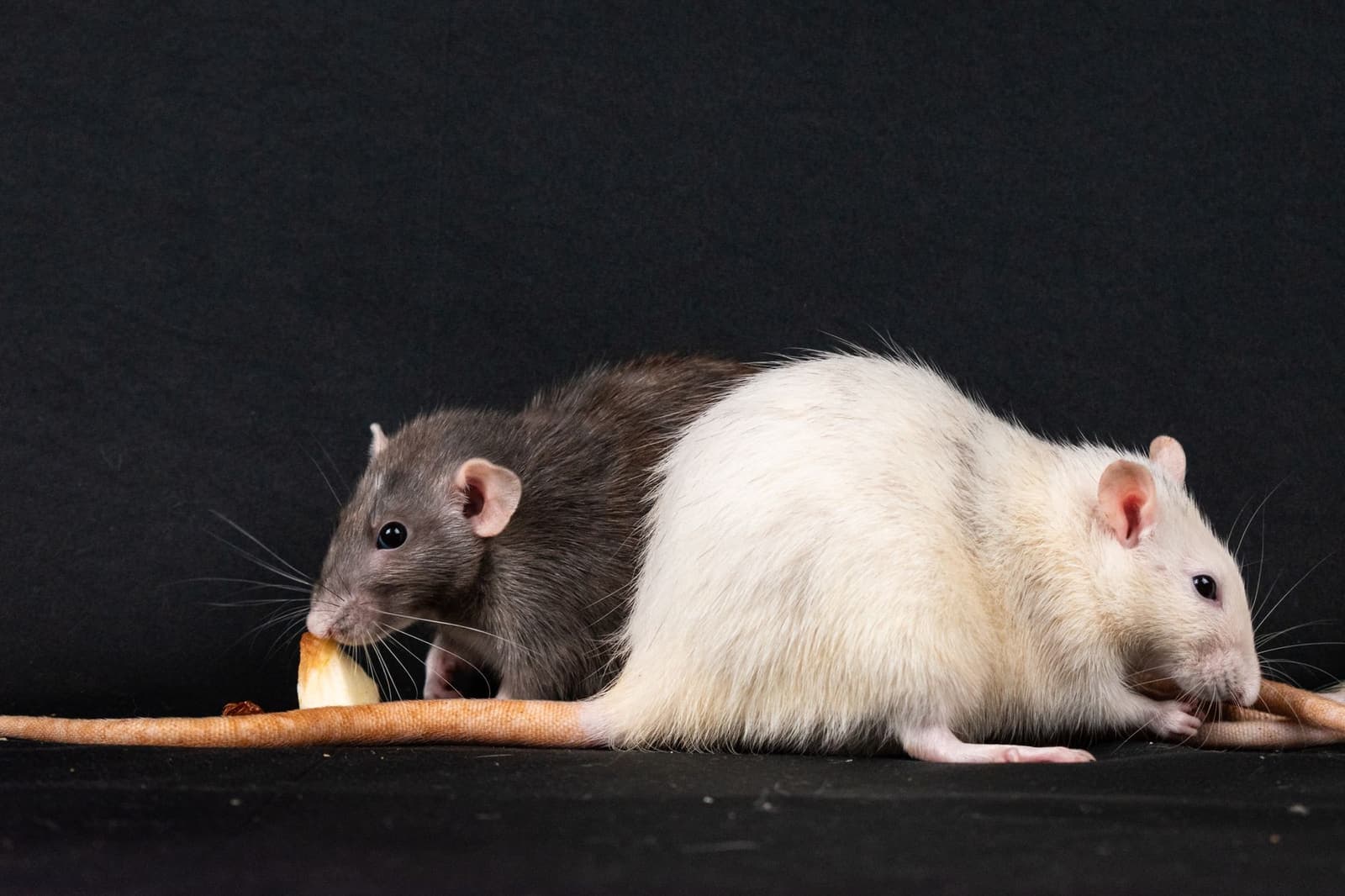
There is no single published figure. The MSPCA suggests a 24 x 24 x 24in cage with multiple levels for one or two rats. An expert panel writing in the Veterinary Record in 2022 ruled out anything below 90-120cm in height or width and asked for at least two tiers, which is three to four times the MSPCA footprint. The RSPCA publishes no number at all and asks only that the cage be as large as possible. We buy to the Veterinary Record figure, because it is the only one of the three derived from the animal's body rather than from what is on sale, and because the cages that meet it are already in the shops.
Pet rat cage dimensions, expert consensus · recommendation
anything below 90-120cm in height, and below 90-120cm in width, is not suitable; a cage with a minimum of two tiers
Our conversion: about 35 to 47 inches in each of height and width
On every other species this site covers, the problem is that one body publishes a figure and almost nothing on sale clears it. Rats are the opposite problem. Several bodies have a position, the positions are far apart, and the cages that satisfy the strictest of them are sold in ordinary pet shops under a different animal's name. The difficulty is not availability. It is knowing which number you are shopping against.
The three positions, in their own words
| Body | What it publishes | What that is in inches |
|---|---|---|
| MSPCA | A 24in x 24in x 24in wire cage with multiple levels for one to two rats, bars 1/2in apart, solid bottom | 576 sq in of footprint, 24in tall |
| Neville et al., Veterinary Record (2022) | Anything below 90-120cm in height, and below 90-120cm in width, is not suitable; a minimum of two tiers | About 35-47in in each of height and width |
| RSPCA | Be as large as possible, with lots of space so that your rats can perform all natural behaviours | No figure published |
Each body's own wording, read from its own published guidance on 4 October 2026 and linked in full at the foot of this page. The inch conversions are ours.
Those are not small differences of emphasis. A 24-inch cube is 2 cubic feet. A cage at the bottom of the Veterinary Record band — 90cm wide and 90cm tall, with the depth left open — is roughly 10 cubic feet once you give it a sensible depth. The strictest published position asks for about five times the volume of the most lenient one, and both were published by bodies that know what a rat is.
Why we buy to the larger figure
Two reasons, and we label both as our own reasoning rather than anyone's standard.
The first is how the Veterinary Record figure was derived. The panel set the floor at about three body lengths in each direction, which is a measurement of the animal rather than a measurement of the market. Figures derived from what is currently on sale have a way of describing the status quo and calling it a minimum. Figures derived from the animal do not move when a manufacturer changes its range.
The second is that this is the rare case where the strict figure costs nothing to meet. A rabbit owner told to find 64.5 square feet in one unbroken block is being asked for something no product provides, as our rabbit hutch pillar sets out at length. A rat owner told to find 90-120cm of height and two tiers can walk into a pet shop and buy a Critter Nation. When the strict standard is also the achievable one, there is no case for the lenient one.
How to measure the cage you are looking at
- 1.Measure the cage, not the stand. The two most common rat cages are listed at 62.5in and 63in tall, and roughly 11 inches of that is a rolling base with nothing in it. The cage section of a double Critter Nation is about 51in. Retail listings do not make this distinction and it is worth about a quarter of the apparent height.
- 2.Measure width and depth at the bars, not at the widest point of the frame or the pan lip. The usable floor is what the animal can walk on.
- 3.Count tiers, not shelves. A tier is a full-depth floor an animal can live on. A half-width shelf is enrichment and does not change the cage's rating against the two-tier consensus.
- 4.Subtract nothing for hammocks and tubes, and add nothing either. Soft furnishing is not floor area. It is also not a space penalty, because a rat uses the volume.
- 5.Check the bar gap last and treat it as a veto. A cage of any size with one-inch bars is the wrong cage. Rat cage bar spacing covers how to measure it and what to do about a cage you already own.
What the figures mean for the cages on sale
Running the three positions against the cages in our registry produces a short and fairly brutal answer. The Savic Royal Suite 95 is 95cm wide and 159cm tall, which clears the Veterinary Record band on width and goes well past it on height. The Critter Nation and Ferret Nation double units are 91cm wide with about 130cm of cage, which clears the bottom of the band on both. The single Critter Nation is 65cm tall on one tier, which fails the band and fails the tier count. Nothing smaller than these gets close.
Width is where the surprise is. Every double-unit cage in common use sits at 91 to 95cm, which is the very bottom of a 90-120cm band. The category has effectively standardized on a 36-inch frame, and if you want more than the minimum width there is no product answer at all — which is worth knowing before you spend a long evening looking for one.
The cages these figures actually point to
Three enclosures with half-inch or 13mm bars, assessed against all three published positions. The full five-cage assessment, including the two that fail on bar spacing, is in the rat cage roundup.
 Illustrative
Ferrets of any age, and kits especially
MidWest Critter Nation Double Unit (162)
36 x 24 = 864 sq in (6 sq ft) per level, two levels
The half-inch bar spacing is the whole argument: it is the same cage as the Ferret Nation with a gap a ferret kit cannot get its head through.
Check price on AmazonWe do not print prices. #ad Disclosure
- Illustrative
Two ferrets that sometimes need separating
Savic Royal Suite 95 Rat and Ferret Cage
95 x 63 cm = 5,985 cm2, about 928 sq in (6.4 sq ft) per level
The most floor per level of the three big ferret cages and the only one that splits into two separate cages, at 13mm spacing that is functionally the Critter Nation's half-inch.
Check price on AmazonWe do not print prices. #ad Disclosure
- Illustrative
A single ferret, or a first half of a double
MidWest Critter Nation Single Unit (161)
36 x 24 = 864 sq in (6 sq ft), one level
The same 6 sq ft floor and the same half-inch bars in one level, which is the right buy only if you are certain you will add the second unit.
Check price on AmazonWe do not print prices. #ad Disclosure
How many rats, and does the figure scale?
None of the three bodies publishes a per-animal allowance, which is a real limit on all of this and we are not going to paper over it. The MSPCA figure is stated for one to two rats. The Veterinary Record guidelines were developed against a baseline of two to four rats per cage. Neither gives you a square-inch-per-rat number to multiply.
What is published, and matters more than most owners expect, is that rats are not to be kept alone. The RSPCA's guidance assumes a group throughout, and asks for one more shelter than there are rats, each with multiple exits and large enough for all of them to sleep in together if they choose. So the planning question is never the cage for one animal. It is the cage for the group you are going to keep, which for most households is two or three, and a double-unit cage is sized for exactly that.
If you are still deciding whether rats are the species for your household, our comparison of small pets on published housing figures covers the four species this site houses in depth, and the honest summary for rats is that the cage is easy to get right and the daily out-of-cage time is not.
Questions people ask
How big should a rat cage be?
How big should a rat cage be for 2 rats?
Is a 24 by 24 inch cage big enough for rats?
Does the RSPCA publish a minimum rat cage size?
Do rat cages need to be tall or wide?
Can rats be kept alone in a smaller cage?
Sources
- MSPCA — Suggestions for housing small animals — 24 x 24 x 24in wire cage with multiple levels for one to two rats, bars 1/2in apart, solid bottom
- Neville, Hunter, Benato, Mendl and Paul — Developing guidelines for pet rat housing through expert consultation, Veterinary Record 192(3):e1839 (2022) — Rules out cages below 90-120cm in height or width, set at about three body lengths, with a minimum of two tiers and a baseline of two to four rats
- RSPCA — Rat environment — Publishes no numeric size; requires a solid floor, adequate bar spacing, and one more shelter than there are rats