Ferrets
Best ferret litter boxes
A ferret aims at the corner, backs up and lifts. Almost every complaint about ferret litter boxes is really a complaint about a pan that is too shallow, too small or not bolted down.
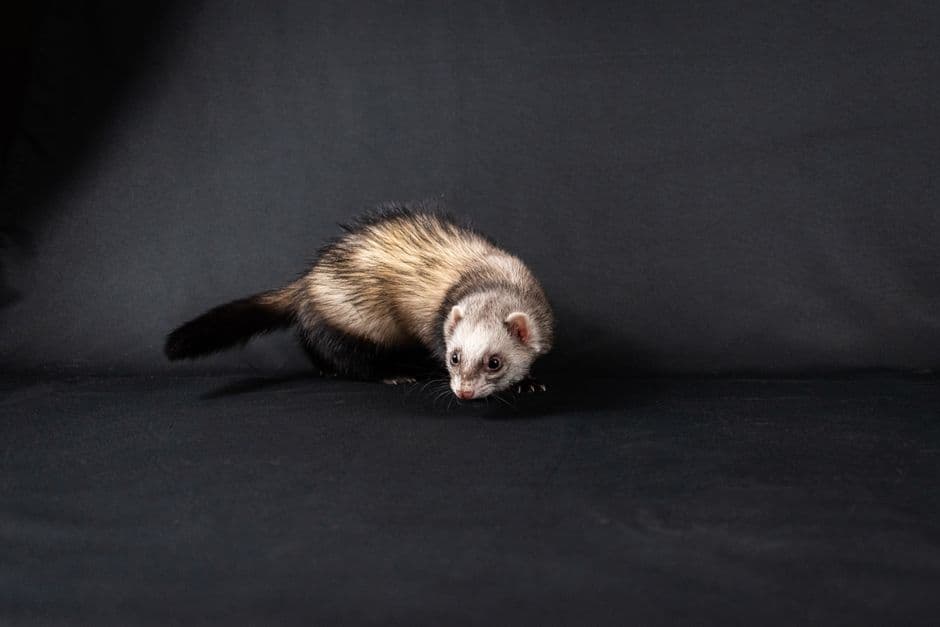
Buy the Marshall High Back Litter Pan if this is your first pan, and the Marshall Lock-On if your ferret has already learned to shove its tray around the cage. VCA Animal Hospitals publishes the only specific guidance in this category and it comes down to four things: a box with reasonably high sides, placed in a cage corner, filled with a recycled paper pelleted litter, and never with cat litter — because a ferret may eat cat litter, and VCA states that can cause intestinal upset and ulceration that may be life-threatening. The same page asks for a second box in the play area and for both to be cleaned and disinfected daily. No wall height in inches is published anywhere, so the figure we work to is ours: at least 6 in of wall at the back or in the corner the animal backs into.
Ferret litter box and litter type · recommendation
ferrets can be trained to use a litter box with a recycled paper, pelleted-type litter; place a box with reasonably high sides in a cage corner, provide another in the play area, clean and disinfect the boxes daily, and do not use cat litter, as ferrets may eat it
This page exists because the best flooring for a ferret cage kept arriving at the litter pan and had nothing to point at. Flooring and litter are the same problem viewed from two directions: a ferret that misses the pan turns the level below it into the toilet, and no liner, pan liner or cleaning schedule fixes a pan with the wrong geometry.
It is also the cheapest fix in the whole setup. A pan is a few dollars against a few hundred for the cage, and the difference between the right shape and the wrong one is the difference between scooping a tray each morning and scrubbing a shelf. How to clean a ferret cage covers the routine; this page covers the hardware the routine depends on.
What VCA publishes, and what it leaves to you
- 1.A recycled paper, pelleted-type litter. Named directly: ferrets can be trained to use a litter box with a recycled paper, pelleted-type litter. Pellets rather than loose fiber, and paper rather than wood or clay.
- 2.A box with reasonably high sides, in a cage corner. VCA explains why in the same breath: ferrets naturally back into corners to defecate. The corner is not a space-saving choice, it is where the animal has already decided to go.
- 3.A second box in the play area. VCA notes that ferrets defecate frequently, so a single box in the cage is not the whole provision. This is the line that should make you buy two pans rather than one good one.
- 4.Daily cleaning and disinfection. Stated plainly, to prevent odor and bacteria build-up. It is also the figure that decides how much litter you buy, because a daily routine gets through pellets at a rate a 10 lb bag does not cover for long.
- 5.Not cat litter. The one prohibition on the page, with the mechanism given: ferrets may eat it, leading to serious intestinal upset and ulceration that may be life-threatening. In practice this is about clay and clumping products, which swell with moisture.
What is absent is any dimension at all. There is no published wall height, no pan footprint, no depth of litter. The phrase doing the work is reasonably high sides, and every number on this page beyond that is either a manufacturer's figure or ours, labeled as such — the same way our standards section records every other figure a well-known body declines to publish.
The five things that separate these pans
- 1.Wall height where the animal aims. Our line, and it is ours: at least 6 in at the back or in the corner. A ferret does not squat, it backs up and lifts, so the urine stream leaves at roughly the height of the raised hind end. A 2 to 3 in tray wall is below that line, which is why so many owners conclude their ferret 'misses' when the pan is simply too low.
- 2.Corner geometry. A triangular or fan-shaped pan sits in the join of two cage walls, which is where the animal was going anyway, and costs you less usable floor than a rectangle across one wall. A rectangular pan with a high back is the alternative and works well — it just occupies more of the level.
- 3.Whether it can be anchored. The single most common ferret litter failure is not aim, it is the pan moving. Ferrets dig, shove and sleep in trays. A pan that bolts or hooks to the bars cannot be relocated into the food bowl; a free-standing pan can and eventually will.
- 4.What it costs you in floor area. A Critter Nation level is 36 x 24 in, which is 864 square inches. A 12 x 14 in pan takes about 19 percent of it; a 20 in wide corner pan takes roughly 30 percent. In a cage that already clears our floor-per-level test that is an acceptable trade; in a smaller cage it is not, and the answer is a smaller pan rather than no pan.
- 5.Cleanability, which means smooth plastic and no grid. VCA asks for daily cleaning and disinfection, so every seam, textured panel and wire grid is friction in a job you are doing every morning. Several pans in this category ship with a grid intended to keep feet out of rabbit litter; for a ferret, take it out. The animal is meant to stand on the pellets.
| # | Product | Best for | Score | Price |
|---|---|---|---|---|
| 1 | 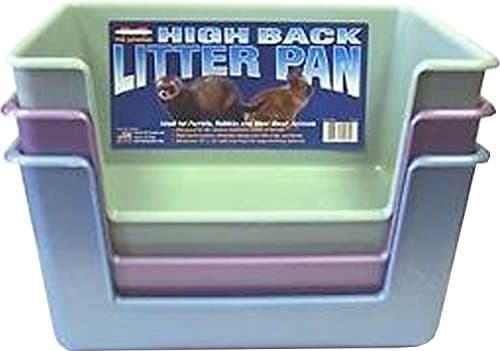 Marshall High Back Litter Pan for Ferrets12 x 14 = 168 sq in of tray floor, our arithmetic from the listed size | The first pan to try in any ferret cage | 8.7out of 10 | $14.95View on Amazon Price as of October 22, 2026. #ad Disclosure |
| 2 | 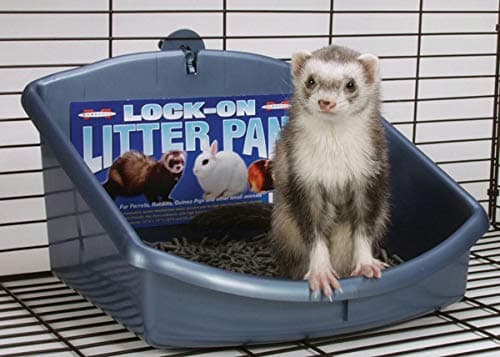 Marshall Lock-On Litter PanAbout 14 x 13 = 182 sq in of tray floor, our arithmetic from the retailer figure | A ferret that tips, shunts or sleeps in its tray | 8.4out of 10 | $32.97View on Amazon Price as of October 22, 2026. #ad Disclosure |
| 3 | 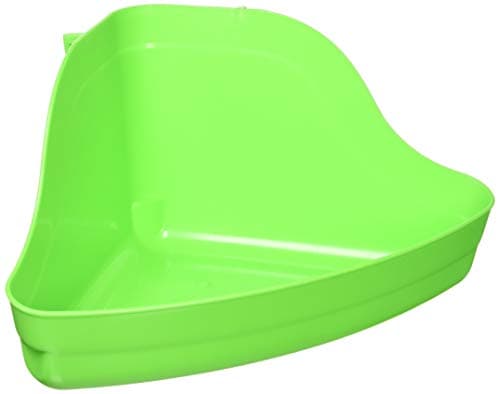 Kaytee Hi-Corner Litter PanThe Large pan's published 12.5 x 20.25 in is a triangular corner footprint, not a full rectangle, so treat the figure as the corner it occupies rather than as tray floor | Using the corner a ferret has already chosen | 8.1out of 10 | $13.95$14.997% offView on Amazon Price as of October 22, 2026. #ad Disclosure |
| 4 | 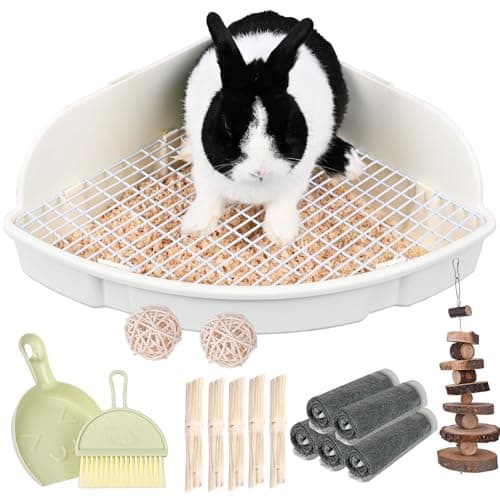 RUBYHOME Large Corner Litter Box, 20 x 13.2 x 6 inA fan-shaped 20 x 13.2 in corner footprint; the usable tray is smaller than the rectangle those figures describe | Three or four ferrets sharing one cage corner | 7.8out of 10 | $27.99View on Amazon Price as of October 22, 2026. #ad Disclosure |
| 5 | 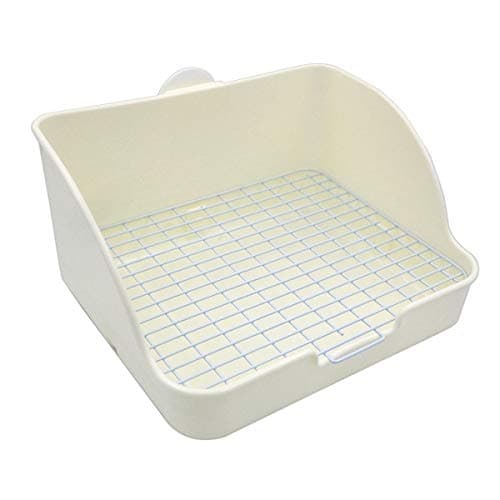 Amakunft Corner Litter Box with Cage Hooks, 10 x 8 in10 x 8 = 80 sq in of corner tray, our arithmetic from the listed size | A small cage or a second tray, hooked to the bars | 7.4out of 10 | $22.99View on Amazon Price as of October 22, 2026. #ad Disclosure |
Scores are our own assessment of published specifications against the thresholds set out in how we assess products. They are not test results and not customer ratings. Tap a row to read the full assessment.
The five, measured against those criteria
| Pan | Footprint | Published wall height | Where that figure comes from | Mounting | Share of an 864 sq in level |
|---|---|---|---|---|---|
| Marshall High Back | 12 x 14 in | Not published | Amazon listing (dimensions only) | Free-standing | About 19 percent |
| Marshall Lock-On | About 14 x 13 in | About 9 in | Pet retailers, not the maker's own page | Bolts to the cage bars | About 21 percent |
| Kaytee Hi-Corner | 12.5 x 20.25 in corner (Large) | 9 in (Large) | Kaytee's own product listing | Free-standing | Up to about 29 percent |
| RUBYHOME Large Corner | 20 x 13.2 in fan | 6 in | The listing itself | Free-standing | Up to about 31 percent |
| Amakunft Corner | 10 x 8 in | 2.4 in inner depth | The listing itself | Hooks over the bars | About 9 percent |
Footprints and heights are each listing's or maker's own published figures, read 22 October 2026 and linked on every product card below. Where a figure comes from a pet retailer rather than the manufacturer, the table says so. The percentages are our arithmetic against the 36 x 24 in (864 sq in) level of a MidWest Critter Nation, and they treat a corner pan's two quoted dimensions as the rectangle it occupies, which overstates the floor a triangular pan actually covers.
The Kaytee size problem, stated plainly
Kaytee makes the Hi-Corner pan in two sizes. Its own listing for the Large publishes 12.5 x 20.25 in with 9 in corners and names ferrets; retailers list the smaller pan at around 13.25 x 10.25 x 7 in. The Amazon listing we link does not state which one ships. We still recommend the pan, because the geometry and the wall height are right in either size and because it is cheap enough to buy two as VCA's second-box advice implies — but on a product whose entire value is a dimension, an unstated size is a genuine defect and it is the reason this one is not our first pick.
The litter that goes in it
VCA names the format: a recycled paper pelleted litter. That rules out most of the small-animal bedding aisle, which is loose paper fiber rather than pellets, and all of the wood shavings aisle. Pellets stay in the pan, do not stick to fur and feet the way damp loose paper does, and break down rather than clumping into a mass if any gets eaten.
Paper pellets, and the cheap route to the same material
The litter format VCA names, in a small-pet bag and in a cat-sized bag of the same material at a much lower cost per pound, plus the loose unbleached paper some owners prefer in the pan's corner. Pellets in the pan; fleece or washable liners on the levels.
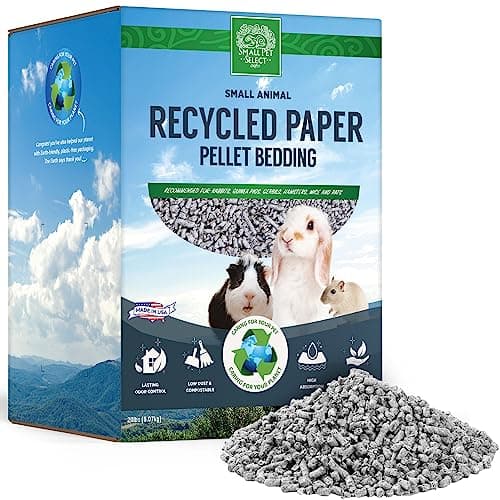
The litter to put in whichever pan you buy
Small Pet Select Recycled Paper Pellet Litter, 20 lb
Not applicable
The litter type VCA names, in the quantity a daily-cleaned pan actually consumes, from a brand whose other products we already rate.
$34.99View on AmazonPrice as of October 22, 2026. #ad Disclosure

Multiple ferrets, or two pans cleaned daily
Fresh News Original Paper Pellet Litter, 25 lb
Not applicable
The cheapest route to the material VCA names, because it is sold as a cat litter: 100 percent recycled paper, non-clumping and unscented, in a 25 lb bag.
$22.99View on AmazonPrice as of October 22, 2026. #ad Disclosure
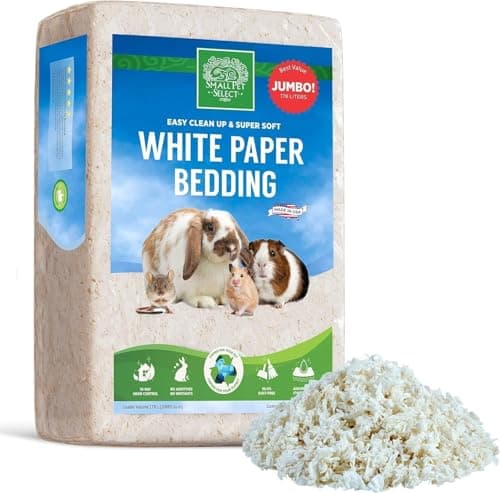
The litter corner of a ferret cage
Small Pet Select Unbleached White Paper Bedding, 178 L
Not applicable
A paper bedding for the one place a ferret cage needs loose material, which is the litter corner and nowhere else.
$45.99View on AmazonPrice as of October 22, 2026. #ad Disclosure
The cheap option needs explaining rather than burying, because it looks like it contradicts the one prohibition on the page. Fresh News is sold as a cat litter, and VCA warns against cat litter. The warning's mechanism is ingestion of a material that swells and compacts, which is clay and clumping litter. Fresh News states 100 percent post-consumer recycled paper, non-clumping and unscented — the same material as the small-pet pellets, in a 25 lb bag. We would use it, we are telling you exactly why, and if that reasoning does not sit comfortably with you then buy the small-pet pellets and pay the difference. That is a defensible choice and we are not going to talk you out of it.
What not to put in a ferret pan
- Clay or clumping cat litter. The one thing VCA names, with the reason given: a ferret may eat it, and the consequence can be life-threatening. Clumping litter is the worst case because it swells.
- Crystal or silica gel litter. Same category of risk and the same reason to skip it. It is also sharp underfoot for an animal with no pads to speak of.
- Pine or cedar shavings. Softwood shavings are a respiratory and liver question rather than a gut one, and the House Rabbit Society's write-up of the phenol problem is the clearest summary of why they are the wrong substrate for any small mammal. VCA separately notes that woodchips are not recommended for ferrets because they are dusty and messy.
- Loose paper bedding as the pan's only filling. It works, but ferrets kick it out and it tracks across the level. Use pellets in the pan and keep loose paper for a corner you want absorbent.
- The grid that came in the box. Supplied with several corner pans to keep rabbits off their own mess. A ferret needs to stand on the litter to use it, and the grid makes the daily clean harder. Take it out and keep it in case you ever house a rabbit.
- A hooded or covered pan. It keeps the mess in and keeps the smell in with the animal, and it gives a ferret somewhere to sleep that you cannot see into. An open pan, cleaned daily, is the better answer.
Pine and cedar shavings · recommendation
phenols in softwood shavings raise liver enzyme levels; in rodents, constant exposure to phenol-containing litters is reported to have reduced drug effectiveness by more than 40 percent
Two pans, not one
VCA's advice to put a second box in the play area is the part of the published guidance most often skipped, and it is the part that decides whether litter training works. Ferrets defecate frequently and will not cross a room to do it. If the only pan is in the cage, free-roam time produces accidents that the animal is then being corrected for — which is a training problem created by hardware.
In practice that means an anchored pan in the cage corner and a free-standing one wherever the ferret plays, which is also why the bolt-on pan cannot be the only pan you own: there is nothing to bolt it to in a play pen. A multi-level cage needs one per level the animal actually sleeps and eats on; what fits in a Critter Nation covers the floor-area arithmetic for the cage this site recommends most often, and the best ferret cages is the page to read first if the cage itself is still in question.
One more thing worth knowing before you buy: ferrets choose the corner, not you. Watch which corner gets used for the first few days and move the pan there rather than trying to move the ferret. Every pan on this page is cheap enough that owning two and relocating one is a better plan than winning an argument with an animal that has already decided.
The assessments
Our pick · The first pan to try in any ferret cage
Marshall High Back Litter Pan for Ferrets
The pan designed around what ferrets actually do: back up to a wall and lift. The high rear panel is the whole product, and it is the only one of these sold for ferrets specifically.
- Dimensions
- 12 x 14 in (listing-stated); no height published for the back wall
- Continuous floor
- 12 x 14 = 168 sq in of tray floor, our arithmetic from the listed size
- Bar spacing
- Not applicable
- Material
- Moulded plastic, wipe-clean
- Back wall
- Raised rear wall with a low front entry — the shape VCA's advice implies for an animal that backs into a corner to toilet
What it gets right
- Sold for ferrets by a ferret brand rather than adapted from a rabbit pan
- High rear wall with a low front lip, so a backed-up ferret hits plastic and not the cage bars
- 168 sq in is enough tray for an adult ferret to stand in rather than straddle
- Smooth moulded plastic that can be scrubbed and disinfected daily, which is what VCA asks for
What it gets wrong
- No height figure is published for the back wall, so you cannot check it before it arrives
- Free-standing: a determined ferret can shunt or flip it, where the lock-on pans cannot be moved
- Rectangular, so it wastes a little space in a cage corner compared with a triangular pan
- Colors are assorted and not chosen by you, which matters to nobody but is worth knowing
Who should buy something else
Not for a ferret that has already learned to tip its tray. Buy a pan that bolts to the bars instead.
Specifications read from Manufacturer listing on 22 October 2026. Floor-area arithmetic is ours and is shown above so you can redo it.
- Shape for a ferret10
- Wall height8
- Tray floor8
- Cleanability9
- Stays put6
Price as of October 22, 2026. #ad Disclosure
Number 2 · A ferret that tips, shunts or sleeps in its tray
Marshall Lock-On Litter Pan
The answer to the single most common ferret litter complaint, which is not the litter and not the pan shape but the pan moving. This one is bolted to the bars.
- Dimensions
- Listed by pet retailers at 14 x 13 x 9 in; the Amazon listing we link publishes no dimensions
- Continuous floor
- About 14 x 13 = 182 sq in of tray floor, our arithmetic from the retailer figure
- Bar spacing
- Not applicable
- Material
- Moulded plastic with cage-bar fixings
- Mounting
- Bolts to the cage bars and unscrews for cleaning, so the pan cannot be tipped, shunted or used as a sled
What it gets right
- Fixed to the cage bars, which removes the failure mode every other pan here shares
- Roughly 9 in of rear wall by the retailer figures, the tallest in this group
- Unscrews for cleaning rather than needing to be scrubbed in place
- Fits the bar spacing of the multi-level ferret cages this site recommends
What it gets wrong
- The Amazon listing publishes no dimensions at all, so the 14 x 13 x 9 in figure comes from pet retailers rather than the maker's own page
- Costs roughly twice the free-standing high-back pan
- Needs cage bars: useless in a glass or solid-walled enclosure, or for the play-area box VCA also asks for
- Mounting it eats a section of bar you might want for a hammock clip
Who should buy something else
Not for the second pan outside the cage. A bolt-on pan has nothing to bolt to in a play pen.
Specifications read from Manufacturer listing on 22 October 2026. Floor-area arithmetic is ours and is shown above so you can redo it.
- Shape for a ferret9
- Wall height9
- Tray floor9
- Cleanability8
- Stays put10
Price as of October 22, 2026. #ad Disclosure
Number 3 · Using the corner a ferret has already chosen
Kaytee Hi-Corner Litter Pan
The right geometry for the problem: ferrets toilet in the corner, and this is a corner, with the tallest walls exactly where the animal aims.
- Dimensions
- Kaytee publishes 12.5 x 20.25 in with 9 in corners for the Large Hi-Corner; the Amazon listing does not state which size of the range ships
- Continuous floor
- The Large pan's published 12.5 x 20.25 in is a triangular corner footprint, not a full rectangle, so treat the figure as the corner it occupies rather than as tray floor
- Bar spacing
- Not applicable
- Material
- Kaytee states easy-to-clean, stain and odor resistant plastic
- Corner walls
- Two raised corner walls, listed by Kaytee at 9 in on the Large, to catch a ferret that backs up into the join of the cage
What it gets right
- Triangular, so it occupies the corner the animal picked rather than a wall of usable floor
- Kaytee's own listing names ferrets and publishes a 9 in corner height for the Large pan
- Stain and odor resistant plastic by the maker's description, and smooth enough to disinfect
- Cheap enough to buy two, which is what VCA's advice about a second box implies
What it gets wrong
- The Amazon listing does not say whether you are buying the small pan or the Large, which is a real risk on a size-critical product
- Free-standing, and a light triangular pan is the easiest of all of these to shunt
- Corner shape means the usable floor is smaller than the two quoted dimensions suggest
- Assorted colors, unspecified on order
Who should buy something else
Not for anyone who needs to know the dimensions before it arrives. Buy the pan whose listing states a size.
Specifications read from Kaytee product listing (Large Hi-Corner) on 22 October 2026. Floor-area arithmetic is ours and is shown above so you can redo it.
- Shape for a ferret10
- Wall height9
- Tray floor7
- Cleanability9
- Stays put5
Price as of October 22, 2026. #ad Disclosure
Number 4 · Three or four ferrets sharing one cage corner
RUBYHOME Large Corner Litter Box, 20 x 13.2 x 6 in
The biggest corner tray we could verify, with its wall height actually printed on the listing, and the one to buy for a cage holding three or four ferrets.
- Dimensions
- 20 x 13.2 x 6 in (listing-stated)
- Continuous floor
- A fan-shaped 20 x 13.2 in corner footprint; the usable tray is smaller than the rectangle those figures describe
- Bar spacing
- Not applicable
- Material
- Moulded plastic
- Published wall height
- 6 in, stated on the listing — the only pan in this group whose height figure comes from the listing itself rather than a retailer or the maker's other page
What it gets right
- Largest published footprint of the pans here, which matters in a cage VCA describes as suitable for three or four ferrets
- States 6 in of wall on the listing, so you can check it before buying
- Fan-shaped to sit into a corner rather than across a wall
- Smooth plastic with no grid to remove
What it gets wrong
- No-name brand with no manufacturer page behind the figures
- Free-standing, with no hooks or bolts, and a big empty tray is light
- Sold for rabbits and guinea pigs first; the ferret claim is a listing add-on
- 20 in across is more corner than a small two-level cage has to give
Who should buy something else
Not for a single ferret in a compact cage. It is a large-cage pan and it will cost you floor area anywhere smaller.
Specifications read from Manufacturer listing on 22 October 2026. Floor-area arithmetic is ours and is shown above so you can redo it.
- Shape for a ferret9
- Wall height7
- Tray floor10
- Cleanability8
- Stays put5
Price as of October 22, 2026. #ad Disclosure
Number 5 · A small cage or a second tray, hooked to the bars
Amakunft Corner Litter Box with Cage Hooks, 10 x 8 in
A hooked corner tray that solves the sliding problem for a fraction of what the bolt-on pan costs, with one real limitation: at a stated 2.4 inches it is the shallowest pan here.
- Dimensions
- 10 x 8 in with a stated 2.4 in inner depth (listing-stated)
- Continuous floor
- 10 x 8 = 80 sq in of corner tray, our arithmetic from the listed size
- Bar spacing
- Not applicable
- Material
- Plastic with wire cage hooks and a removable grid
- Mounting and grid
- Hooks over the cage bars, and the supplied grid lifts out — which is the right call for a ferret, because a grid keeps the animal's feet off the litter it is meant to be using
What it gets right
- Cage hooks, so it stays in the corner without being bolted in
- Publishes an inner depth, which almost nothing else in this aisle does
- Small footprint for a cage where 168 sq in of tray is not available
- The grid is removable, so the pan can be used the way a ferret pan should be
What it gets wrong
- A stated 2.4 in inner depth is below what we would call high sides, and a ferret that lifts clears it
- 80 sq in is tight for a full-grown hob
- Marketed primarily for rats and guinea pigs; ferret use is a secondary listing claim
- Hooks depend on bar diameter, and they are not adjustable
Who should buy something else
Not for a ferret that misses the tray. The shallow walls are exactly the thing a high-back pan exists to fix.
Specifications read from Manufacturer listing on 22 October 2026. Floor-area arithmetic is ours and is shown above so you can redo it.
- Shape for a ferret8
- Wall height4
- Tray floor6
- Cleanability8
- Stays put9
Price as of October 22, 2026. #ad Disclosure
What we would buy
The Marshall High Back, first, in almost every case. It is the only pan here sold for ferrets specifically by a ferret brand, the raised rear panel is the product rather than a feature of it, and 168 square inches is enough tray for a full-grown hob to stand in. Its weakness is that no wall height is published and it is free-standing, so a ferret that has already learned to move its tray will move this one.
The Marshall Lock-On when that has already happened. Bolted to the bars with roughly 9 inches of rear wall by the retailer figures, it removes the one failure mode the rest share, at about twice the price and with no use outside a barred cage.
The RUBYHOME large corner pan for three or four ferrets sharing a cage, where 20 inches across is justified and a 6 in published wall is enough. The Kaytee Hi-Corner as the cheap second pan for the play area, accepting the unstated size. The Amakunft only in a small cage or as a hooked backup — a stated 2.4 in of inner depth is not high sides, and we would rather say that than rank it higher because it hooks on.
Whichever you buy, fill it with paper pellets, clean it daily, and read the best bedding for a ferret cage for what goes on the levels instead. A pan is the one piece of ferret equipment where the cheap option and the correct option are the same object.
Questions people ask
What kind of litter is safe for ferrets?
How high should the sides of a ferret litter box be?
Why does my ferret pee over the edge of the litter box?
How many litter boxes does a ferret need?
Can you use a cat litter box for a ferret?
How often should a ferret litter box be cleaned?
Should a ferret litter box have a grid in it?
Sources
- VCA Animal Hospitals — Ferrets: Housing — The recycled paper pelleted litter, the box with reasonably high sides in a cage corner, the second box in the play area, the daily clean and disinfect, the cat litter warning with its stated consequence, and the note that woodchips are not recommended
- Kaytee — Large Hi-Corner Litter Pan — The 12.5 x 20.25 in footprint and 9 in corner height for the Large pan, and the listing of ferrets as a species it is made for
- House Rabbit Society — The dangers of softwood shavings — The phenol mechanism behind our refusal to recommend pine or cedar in any small-mammal enclosure, including a litter pan