Rabbits
Outdoor hutch or indoor pen?
The space figure is the same either way. Everything else about the two is different.
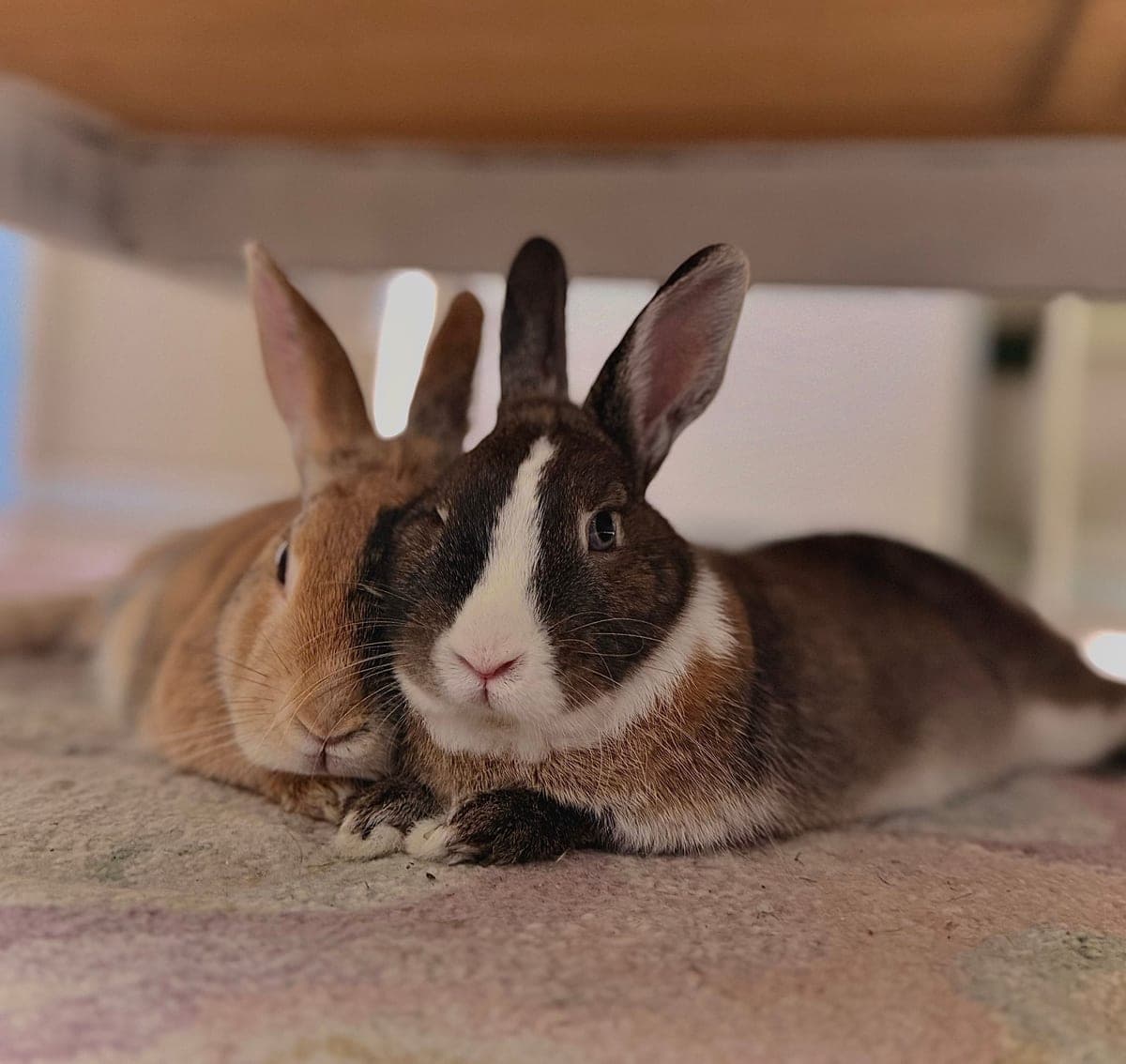
Indoors is easier to do well. The published space figure — 3m x 2m x 1m, about 64.5 square feet — is identical either way, and indoors you reach it with panels and no roof, no mesh gauge to assess and no dig protection needed. Outdoors the same footprint means solving weather and predators too. Outdoors wins on natural light, grazing and not having a rabbit in your living room.
Rabbit enclosure minimum · minimum
a single enclosed area of at least 3m x 2m by 1m high
Our conversion: 9ft 10in x 6ft 7in x 3ft 3in, about 64.5 square feet of floor
This decision is usually framed as a lifestyle preference and it is mostly a practical one, because the two options fail in completely different ways. What follows is each on its own terms.
Side by side
| Indoor pen | Outdoor hutch and run | |
|---|---|---|
| Published space figure | 64.5 sq ft | 64.5 sq ft — identical |
| Reaching it in practice | Four joined pens, easily | Needs a shed or a serious run build |
| Cost to reach it | Lowest of any route | Several times more |
| Roof required | No | Yes, for security |
| Predator risk | Household pets only | Foxes, mustelids, birds of prey |
| Dig protection | Not needed | Essential |
| Temperature | Room temperature; watch summer heat | Winter drafts and summer sun both matter |
| Flooring | Your floor; needs grip and washability | Ground or hutch floor; wire floors ruled out |
| Daily contact with the rabbit | High, which is most of the point | Lower, and the rabbit is easier to overlook |
| Noticing illness early | Much easier | Harder; a rabbit off its food is easy to miss |
| Natural light and grazing | Limited | Genuine advantages |
| Mess in your home | Yes, and litter-training works well | No |
Why indoors is easier
The footprint is cheap indoors. Four joined eight-panel exercise pens give about 64 square feet, and indoors they need no roof, no buried skirt and no attention to mesh aperture. That is the entire security specification gone, and with it most of the cost.
You notice things. This is the underrated argument. Rabbits hide illness, and the two signals that matter most — not eating and not producing droppings — are easy to spot in a pen you walk past twenty times a day and easy to miss in a hutch at the end of a garden. Gut stasis in a rabbit is an emergency measured in hours.
Temperature is mostly solved. A living room sits inside the range these species need without effort, whereas an outdoor hutch is managing both winter wind and summer sun. Rabbits are more at risk from heat than cold and cannot pant effectively, so a sunny hutch in July is a more urgent problem than a cold one in January.
Where indoors is harder
- Flooring. Laminate and tile are slippery, which is bad for joints and hazardous at speed. Carpet grips and gets eaten, and ingested fiber is a real veterinary problem. You need washable non-slip matting, which is a purchase people do not budget for.
- Cables. A rabbit chewing a live cable is the most serious risk in indoor rabbit keeping and it is entirely preventable with conduit. This is non-negotiable rather than advisable.
- Chewing generally. Skirting boards, door frames, furniture legs. Corner guards and a supply of legitimate chew material manage it; nothing eliminates it.
- Summer heat indoors. A conservatory or a room that bakes is worse than a shaded garden. Temperature is solved by default, not automatically — see cage placement.
Where outdoors genuinely wins
Grazing and natural light. A rabbit on grass is doing something it cannot do indoors, and the behavioral value of that is real. Natural light cycles also regulate behavior better than a lit room does.
Space, if you have a garden and no spare room. For many households the honest comparison is 64 square feet outdoors against 20 indoors, and in that case outdoors wins on the figure that matters most.
Nobody's living room contains a rabbit. Not a welfare argument and a real one. An arrangement you resent is an arrangement that degrades.
The hybrid, which is what most good setups actually are
A shelter and a secure run outdoors for daytime, and indoor access or an indoor pen for nights and bad weather. Or an indoor pen with supervised garden time. Both spread the load: the outdoor space supplies footprint and grazing, the indoor space supplies temperature stability and the daily contact that catches illness early.
The one rule for a hybrid: do not move a rabbit repeatedly between very different temperatures. A rabbit acclimated to a heated room and then left out on a cold night is at more risk than one that has lived outdoors throughout. Transition seasonally, not daily.
| # | Product | Best for | Score | Price |
|---|---|---|---|---|
| 1 |  Illustrative IllustrativeMidWest Homes for Pets 48 in Exercise Pen, 8 panels16 sq ft (2,304 sq in) enclosed as an octagon | Building a footprint that actually clears the published minimum | 8.7out of 10 | Check price on Amazon We do not print prices. #ad Disclosure |
| 2 | 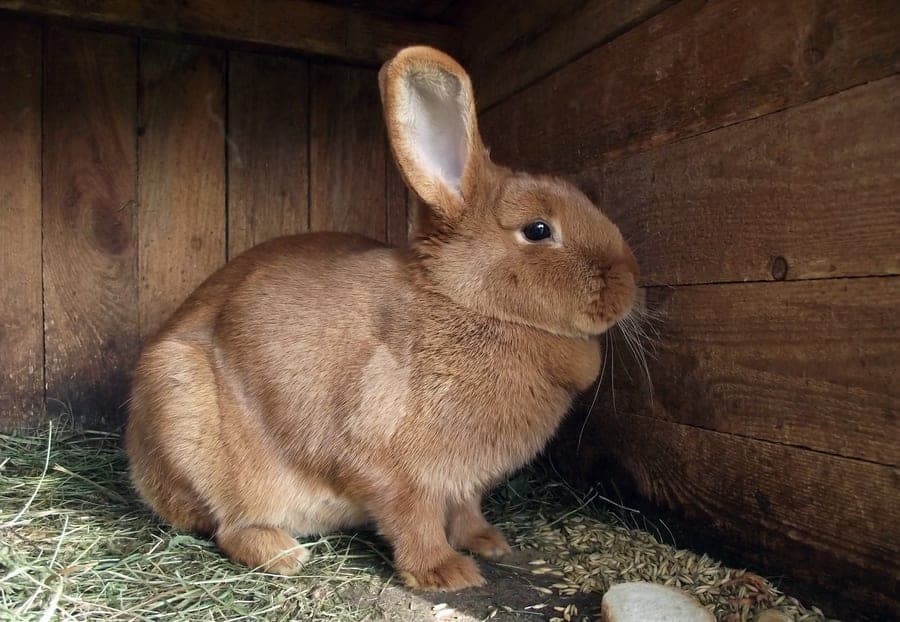 Illustrative IllustrativeOmlet Eglu Go Rabbit Hutch with 2m Run9ft 6in x 5ft 5in = about 51.5 sq ft of enclosed footprint | The shelter half of a compliant setup | 8.5out of 10 | View at Omlet We earn no commission here. #ad Disclosure |
| 3 | Illustrative Aivituvin AIR19 Indoor Rabbit Hutch9.6 sq ft (1,382 sq in) as stated by the manufacturer | An indoor shelter beside a free-roam area | 6.8out of 10 | Check price on Amazon We do not print prices. #ad Disclosure |
Scores are our own assessment of published specifications against the thresholds set out in how we assess products. They are not test results and not customer ratings. Tap a row to read the full assessment.
What each route needs
Pens for an indoor footprint, the best-engineered outdoor shelter-and-run, and an indoor hutch as a shelter within a pen. Full assessments in best indoor rabbit housing and best outdoor rabbit hutches.
- Illustrative
Building a footprint that actually clears the published minimum
MidWest Homes for Pets 48 in Exercise Pen, 8 panels
16 sq ft (2,304 sq in) enclosed as an octagon
The cheapest honest route to the 64.5 sq ft minimum, because four of these pens joined together get you there and a single hutch never will.
Check price on AmazonWe do not print prices. #ad Disclosure
- Illustrative
The shelter half of a compliant setup
Omlet Eglu Go Rabbit Hutch with 2m Run
9ft 6in x 5ft 5in = about 51.5 sq ft of enclosed footprint
The best-engineered shelter in the category, on a package footprint of about 51.5 sq ft that still falls 13 sq ft short of the 3m x 2m minimum RWAF and the RSPCA both publish.
View at OmletWe earn no commission here. #ad Disclosure
- Illustrative
An indoor shelter beside a free-roam area
Aivituvin AIR19 Indoor Rabbit Hutch
9.6 sq ft (1,382 sq in) as stated by the manufacturer
A well-organized indoor shelter at 9.6 sq ft, which is 15 percent of the published minimum and therefore a bedroom rather than a home.
Check price on AmazonWe do not print prices. #ad Disclosure
If you are undecided, our recommendation is indoors, for one reason above the others: it is the option where reaching the published space figure is realistic for most households, and space is the specification with the largest gap between what is published and what people actually provide.
Questions people ask
Is it better to keep a rabbit indoors or outdoors?
Do indoor rabbits need less space?
Can you keep a rabbit indoors and outdoors?
What is the biggest risk with an indoor rabbit?
Are outdoor rabbits more likely to get ill unnoticed?
Sources
- Rabbit Welfare Association & Fund — Minimum space requirements
- RSPCA — Rabbit environment
- Humane World for Animals — Guinea pig housing requirements — Cited for the wire-floor prohibition applied to small pets