Rabbits
Alfalfa or timothy hay?
One of these is a grass and one is a legume, and the published guidance treats them as different foods rather than two grades of the same thing.
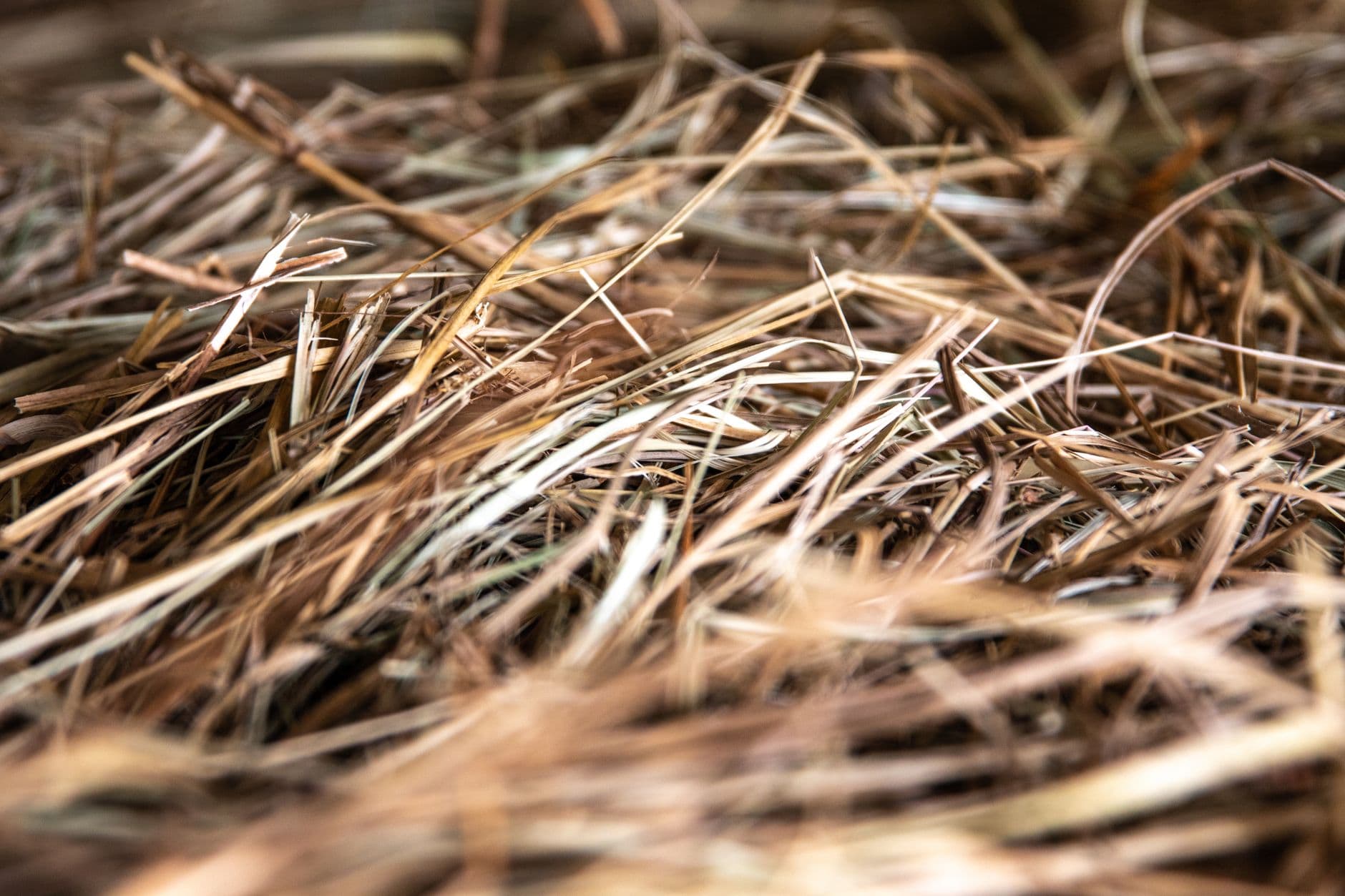
Timothy, for any healthy adult rabbit, offered unlimited and fresh every day. Alfalfa is not a premium grade of hay and it is not a treat version of timothy — it is a legume rather than a grass, and the House Rabbit Society restricts it to babies, nursing mothers and elderly or injured rabbits, on the grounds that it is too calorie-dense and too high in calcium for a healthy adult. The practical rule that follows is simple: feed alfalfa up to about six or seven months of age, transition to grass hay as the animal matures, and then do not go back unless a vet tells you to. If your rabbit is already an adult and eating alfalfa, change it — gradually, mixing the new hay in over a week or two, because a rabbit that stops eating hay is a bigger problem than one eating the wrong hay.
Hay as a share of an adult rabbit's diet · recommendation
hay should comprise 85% of an adult rabbit's diet, offered unlimited and fresh daily
That threshold does two jobs at once and it is worth separating them. The 85 percent figure is about quantity, and it is why hay is a housing decision as much as a feeding one — the arithmetic is in how much hay does a rabbit need a day. The restriction on alfalfa is about type, and it is the part the hay aisle does not explain, because alfalfa is usually sold alongside timothy with no indication that it is for a different animal at a different stage of life.
They are not the same kind of plant
Timothy is a grass. Alfalfa is a legume, in the same family as peas and clover, and legumes fix nitrogen, which is why alfalfa is richer in protein than any grass hay. It is also noticeably higher in calcium. Those two differences are the whole comparison: everything the published guidance says about when to feed which follows from protein and calcium rather than from quality, palatability or price.
| Timothy (grass hay) | Alfalfa (legume hay) | |
|---|---|---|
| Plant type | Grass | Legume |
| Protein | Lower | Higher |
| Calcium | Lower | Higher |
| Calories | Lower | Higher |
| Who it is for, per the House Rabbit Society | Adult rabbits, unlimited and fresh daily, as 85 percent of the diet | Babies, nursing mothers, and elderly or injured rabbits |
| Fed unlimited to a healthy adult | Yes | No |
| Sold on this site's shortlist | Yes, four cuts | No, and this page explains why |
The who-it-is-for row is quoted from House Rabbit Society diet guidance, linked under Sources. The protein, calcium and calorie rows are directional comparisons that follow from the plant families rather than figures from one analysis, because the guaranteed analysis differs between brands and cuts; where a seller publishes a figure we quote it on that product's card. Oxbow's Western Timothy, for instance, lists crude fiber at 32.00 percent maximum on its own guaranteed analysis.
We have deliberately not printed protein or calcium percentages as though they were fixed properties of each hay. They are not: they vary by cutting, by season, by grower and by how the bale was stored, and a number taken from one brand's analysis and applied to a category would be exactly the kind of invented precision this site exists to avoid. What is stable is the ordering, and the ordering is what the guidance acts on.
What the calcium actually does
A rabbit absorbs dietary calcium differently from most mammals and excretes the surplus through the kidneys and bladder. A sustained excess in an adult animal is associated with sludgy urine and urinary stones, which is the clinical reason the House Rabbit Society restricts a high-calcium hay to the animals that need the extra: a growing kit laying down skeleton, a nursing mother supplying it to a litter, or an underweight elderly or injured rabbit that needs calories it cannot otherwise take in. Outside those cases, the surplus has no job to do.
The calorie side is simpler and shows up sooner. Alfalfa is richer, a rabbit will often prefer it, and a healthy adult fed unlimited alfalfa tends to gain weight while eating less grass hay. That second part is the real harm: hay's main job is mechanical. It is the chewing that wears down continuously growing teeth and the long fiber that keeps the gut moving — which is exactly why the Scottish Government's statutory guidance asks for good quality, dust-free feeding hay available throughout the day and night. A rabbit that fills up on a rich hay eats less total fiber, and dental and gut problems follow from that rather than from the calcium.
Daily hay quantity for a rabbit · minimum
an amount equivalent to each rabbit's body size should be provided each day, making up at least 80% of each rabbit's daily food intake
The ages, in order
- 1.Birth to about six or seven months: alfalfa is appropriate. A growing rabbit needs the protein and the calcium, and most breeders and rescues will already have it on alfalfa when you collect it.
- 2.Six or seven months onwards: transition to grass hay. Mix timothy into the alfalfa and shift the ratio over a week or two. A sudden swap risks a rabbit simply eating less, and less hay is the outcome you are trying to avoid.
- 3.Adulthood: timothy or another grass hay, unlimited, replaced fresh daily. This is the 85 percent of the diet the House Rabbit Society describes, and it does not come off as the animal ages.
- 4.Elderly, underweight, injured or recovering: alfalfa may come back, on veterinary advice. It is a calorie-dense food for an animal that needs calories, and that is a clinical judgement rather than a shopping one.
- 5.Pregnant or nursing: alfalfa is appropriate again, for the same reason it suits a growing kit.
Why there is no alfalfa on our shortlist
Our hay shortlist is chosen for the animal the overwhelming majority of readers have, which is a healthy adult rabbit or guinea pig, and for that animal the published guidance rules alfalfa out. So the list is four timothy cuts and we would rather explain the absence than pad the page with a product most readers should not buy. If you need alfalfa for a kit or a nursing doe, every seller on our list sells it, and the cut-naming test we apply in the best timothy hay for rabbits applies to their alfalfa too: a seller that tells you which cutting you are buying is telling you something about consistency.
The grass hays we would feed an adult rabbit
A second cutting as the everyday hay, a widely stocked bagged timothy for topping up between deliveries, and a first cutting where you want a coarser, higher-fiber hay for dental wear. All three are grass hays, which is the point of this page.
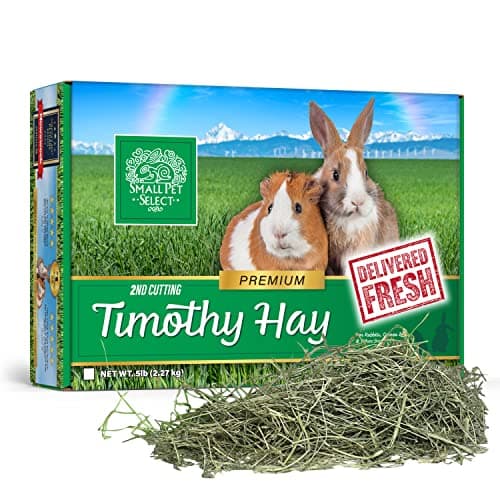
Everyday hay for a healthy adult rabbit or guinea pig
Small Pet Select 2nd Cutting Timothy Hay
Not applicable
The one hay here that tells you which cutting is in the box before you open it, which is the only way to buy the same texture twice.
$26.99View on AmazonPrice as of October 17, 2026. #ad Disclosure
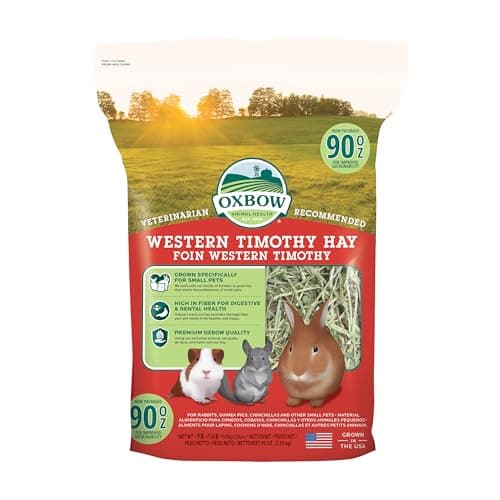
Availability, small bags, and topping up between deliveries
Oxbow Western Timothy Hay
Not applicable
The hay you can buy at eight on a Sunday evening in almost any pet shop in the country, which is a real advantage bought at the price of knowing what texture is in the bag.
$21.68View on AmazonPrice as of October 17, 2026. #ad Disclosure
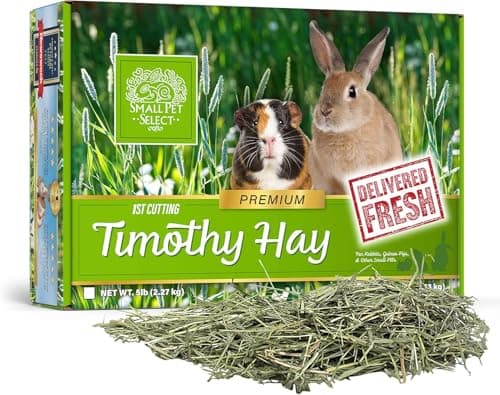
Dental wear and animals that need a higher-fiber, less rich hay
Small Pet Select 1st Cutting Timothy Hay
Not applicable
The coarse end of the same seller's range, and the one to buy when the problem is a rabbit that is overweight or not wearing its teeth down.
$26.99View on AmazonPrice as of October 17, 2026. #ad Disclosure
The comparison, in one line per buyer
- A kit under six months: alfalfa, transitioning to grass hay as it matures.
- A healthy adult: timothy or another grass hay, unlimited, fresh daily. Nothing else.
- A rabbit that will not eat hay: a softer, leafier grass cut rather than a richer legume hay. The cut-by-cut version of that decision is in the best timothy hay.
- An underweight or elderly rabbit: ask a vet. Alfalfa is one of the tools they have.
- A rabbit with a urinary history: ask a vet, and do not add a high-calcium hay on your own initiative.
- A guinea pig: grass hay, for the same reasons plus one more — VCA specifies timothy or another low-calcium hay for guinea pigs by name, and the quantity question is in how much hay do guinea pigs need.
Questions people ask
Can adult rabbits eat alfalfa hay?
At what age should a rabbit switch from alfalfa to timothy?
Is alfalfa better quality than timothy hay?
What about orchard grass or meadow hay?
Sources
- House Rabbit Society: food and diet — The 85 percent figure, and the restriction of alfalfa to babies, nursing mothers and elderly or injured rabbits.
- Scottish Government: pet rabbit welfare guidance — The statutory requirement for good quality, dust-free feeding hay available throughout the day and night.
- VCA Animal Hospitals: guinea pigs feeding — Names timothy or another low-calcium hay for guinea pigs, which is the same grass-versus-legume distinction.